
Reviewed · ULURU & OUTBACK TOURS
7 Day Uluru to Adelaide Cultural and Adventure Tour
Uluru glows red at sunset, Kata Tjuta rises from the desert, and you sleep outside under the stars before crossing into South Australia. This is not a quick sightseeing trip. It is a seven-day overland journey built around walking, campfires, Indigenous culture, and long stretches of open country. I like the mix of major sights and less familiar stops, especially Coober Pedy and Warren Gorge. I also like that a local Yura guide leads a Welcome to Country at Wilpena Pound. The trade-off is clear: you spend many hours on the road, sleep in swags, and need a reasonable level of fitness.
The small maximum group of 20 keeps the trip more personal than a large coach tour, while an air-conditioned vehicle makes the long drives easier. The $964.69 price is fair for the included park fees, activities, six breakfasts, three dinners, and a guide, but meals beyond those inclusions and the optional Field of Lights cost extra.
In This Review
- Key points to know before booking
- Why this Uluru to Adelaide route feels different
- Day 1: Cultural context, Uluru sunset, and your first night outside
- Day 2: Kata Tjuta in the morning, Uluru on foot later
- Day 3: Kings Canyon’s four-hour rim walk
- Day 4: A long crossing into South Australia
- Day 5: Underground Coober Pedy and starry Warren Gorge
- Day 6: Warren Gorge, Hawker, and Wilpena Pound
- Day 7: Arkaroo Rock and the road to Adelaide
- What the $964.69 price includes
- Fitness, comfort, and group realities
- Who should book this seven-day adventure
- Should you book it?
- FAQ
- Where does the tour start?
- Where does the tour finish?
- Is transport from Alice Springs to Yulara included?
- How many people can join the tour?
- What meals are included?
- Is the Field of Lights experience included?
- What happens if I need to cancel?
Key points to know before booking
- Uluru and Kata Tjuta receive real walking time, including the Uluru Base Walk and a three-hour Kata Tjuta visit.
- Kings Canyon’s Rim Walk takes about four hours, so this is an active trip rather than a drive-by tour.
- Coober Pedy adds a rare underground stay and opal noodling at the Old Timers Mine.
- Swag camping puts you under the southern stars, especially at Kings Creek Station and Warren Gorge.
- Cultural experiences are part of the route, including the Uluru-Kata Tjuta Cultural Centre and a Yura Welcome to Country.
- The trip ends in Adelaide, passing through Quorn and the Clare Valley before reaching the Adelaide Central Bus Station.
Why this Uluru to Adelaide route feels different
Many Red Centre trips begin and end at Uluru. This one keeps going south, linking Australia’s best-known desert sights with places that feel stranger and less polished. You move from sacred rock formations to cattle country, an opal-mining town, and the folded ranges of South Australia.
That change in scenery is the main appeal. The first days focus on Anangu culture and the great formations around Uluru. The later days bring long drives, underground buildings, mine shafts, red dust, old railway towns, and dark skies.
Your Storyteller Guide handles the route, national park access, camp setup, meals listed in the inclusions, and the practical rhythm of the trip. With a maximum of 20 people, you should have a better chance to ask questions and get help on the walks than you would on a big sightseeing bus.
The start time is 2:00 pm outside the Desert Gardens Hotel in Yulara. That makes the first day easy to fit around an arrival at the resort area, but you need to arrange your own transfer from Alice Springs to Yulara. The Alice Springs to Yulara transfer bus is not included.
More uluru & outback tours in Adelaide:
- 7 Day Adelaide to Uluru Adventure and Cultural Tour
★ 5.0 · 52 reviews - Gold Coast: Australian Outback Spectacular Dinner & Show
★ 4.6 · 974 reviews - From Alice Springs: Day Trip to Uluru with BBQ Dinner
★ 4.6 · 761 reviews
Day 1: Cultural context, Uluru sunset, and your first night outside
The opening afternoon begins at the Uluru-Kata Tjuta Cultural Centre. This is an important first stop because it gives you a better frame for everything that follows. Exhibitions, art, and optional presentations explain the traditions of the Aṉangu people, the Traditional Owners of the area.
I like this order. You get cultural context before standing at the base of Uluru, rather than treating the rock as only a striking photo backdrop. Take your time here and listen closely to the information about the sacred nature of the site.
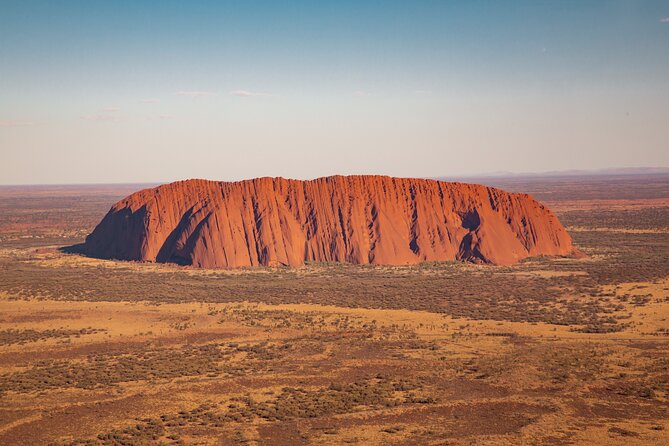
You then set up camp at Ayers Rock Campground before heading to a sunset viewing platform. Uluru changes color as the light drops, and the quiet setting gives the group a natural pause before dinner and the first night outdoors.
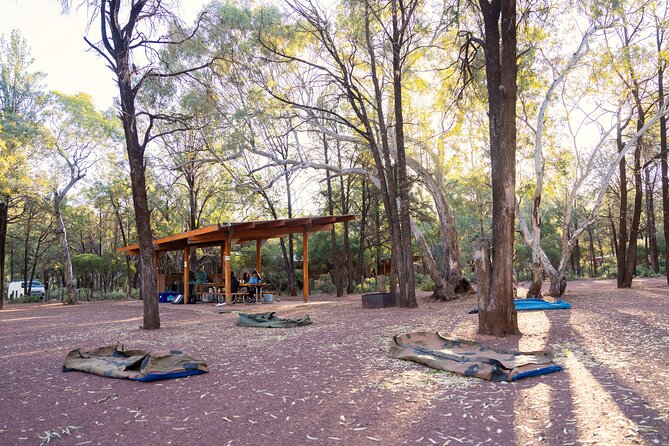
The camping arrangement is central to the experience. Sleeping in a swag under the stars can be memorable, but it is not the right fit for everyone. You should be comfortable with basic outdoor conditions and with sharing the general routines of a group camping trip.
Day 2: Kata Tjuta in the morning, Uluru on foot later
Day two gives you time at both Kata Tjuta and Uluru. In the morning, you visit Kata Tjuta, whose domes rise 546 metres above the surrounding red earth. The site has strong spiritual importance, and your guide helps connect the striking geology with its cultural meaning.
The visit lasts about three hours, enough time to appreciate the scale of the domes rather than stopping only for a quick photograph. Bring water and wear suitable walking shoes. The tour requires moderate fitness, and the heat can make even a steady walk feel demanding.
Back at Ayers Rock Resort, you have about 90 minutes to cool off in the pool, visit the Gallery of Central Australia, or try cultural activities such as bush food tastings and didgeridoo demonstrations. This break matters. The itinerary is active, and a short rest in the middle of the day helps you handle the afternoon.
Later, you return to Uluru for a guided Base Walk of about three hours. This is one of the strongest parts of the trip because you see the monolith at ground level, where its caves, markings, walls, and changing surfaces become easier to appreciate. The walk also gives your guide room to explain why Uluru is a living cultural site, not simply a natural monument.
Day 3: Kings Canyon’s four-hour rim walk
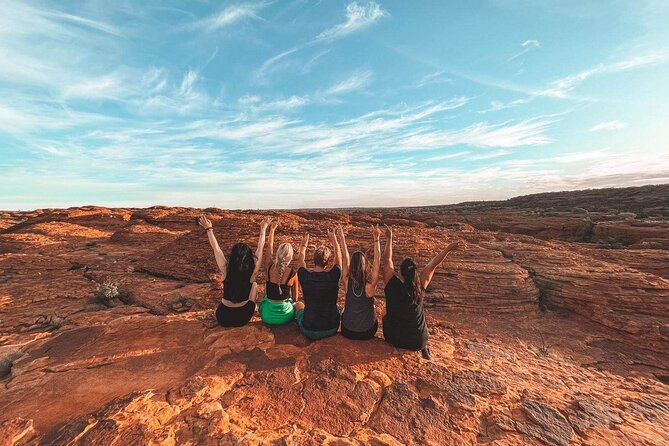
After breakfast, you leave Yulara for Watarrka National Park and Kings Canyon. The main event is the Rim Walk, which takes about four hours.
This is a serious walk within the overall trip. It rewards you with broad views and close looks at the canyon’s unusual rock forms, but it also demands a steady pace and reasonable fitness. Anyone booking this tour should think honestly about handling a four-hour walk in an active desert itinerary.
By afternoon, you reach Kings Creek Station, a working cattle station that also serves as an outback base. You can use the pool, visit the café-bar, or simply rest after the morning walk. This contrast works well: a demanding hike followed by several hours with no major scheduled sight.
The overnight stay here gives you another chance to sleep in a swag. A clear night can bring an impressive view of the southern sky, and campfire time offers the simple pleasure of talking with the group after a full day outside.
A few more Adelaide trips to weigh up
- Barossa Premium Wine Tasting Tour & lunch Departs 7 days a week
★ 5.0 · 1,475 reviews - 7-Day Exmouth Explorer via Pinnacles Monkey Mia Ningaloo Reef returning to Perth
★ 5.0 · 284 reviews - Gold Coast: Movie World, Sea World & Wet’n’Wild 7-Day Pass
★ 4.4 · 156 reviews - Perth: 7 Day Exmouth Explorer & Ningaloo Reef Return Perth
★ 4.5 · 119 reviews
Day 4: A long crossing into South Australia
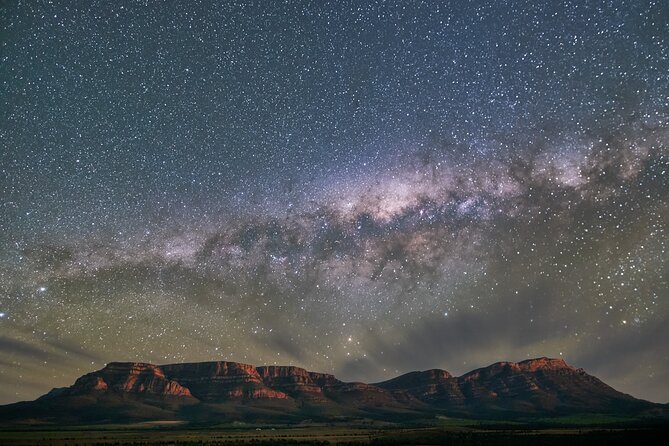
Day four is the least packed with formal activities and one of the longest on the road. You cross from the Northern Territory into South Australia, moving through broad desert plains and changing scenery.
Do not book this tour expecting a new attraction every hour. The long drive is part of the route. It shows you the scale of the interior and creates a clear sense of distance between the Red Centre and South Australia.
By late afternoon, you reach Coober Pedy, the opal capital of the world. The town is famous for underground homes and businesses, a practical response to its very hot daytime conditions. You spend the night in this unusual outback setting, which is a sharp change from sleeping in a swag.
Coober Pedy can feel rough-edged and eccentric compared with the resort area around Uluru. That is exactly why it adds value. You see a working mining town rather than a place designed only for sightseeing.
Day 5: Underground Coober Pedy and starry Warren Gorge
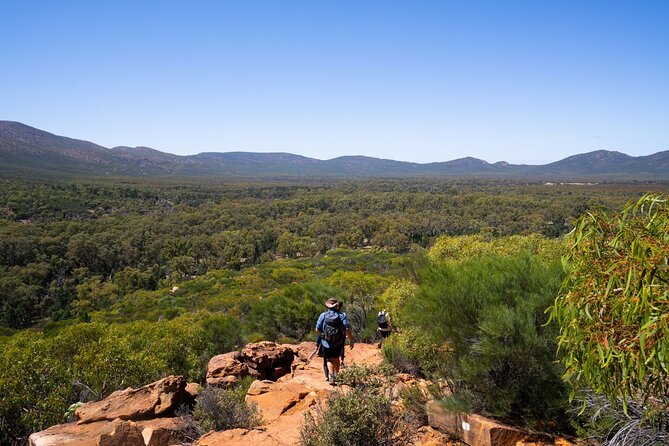
The morning begins at the Old Timers Mine. You learn how opals form and get a chance to try noodling, which means searching through red dust for small pieces of opal. It is a hands-on activity, and even the attempt helps explain how mining shapes life in Coober Pedy.
The mine visit lasts about an hour. It is not a full day at the site, but it gives you a direct look at the town’s underground world before the route heads toward the Flinders Ranges.
The drive includes wide outback scenery and a lunch stop in one of South Australia’s small towns. By late afternoon, you arrive at Warren Gorge and set up camp. Your guide prepares dinner, one of the three evening meals included in the price.
Warren Gorge is particularly good for slowing down. After the mine and another long drive, you can eat outside, roll out your swag, and watch the sky darken. The area is known for clear skies and strong views of the stars, making this one of the most atmospheric nights of the trip.
Day 6: Warren Gorge, Hawker, and Wilpena Pound
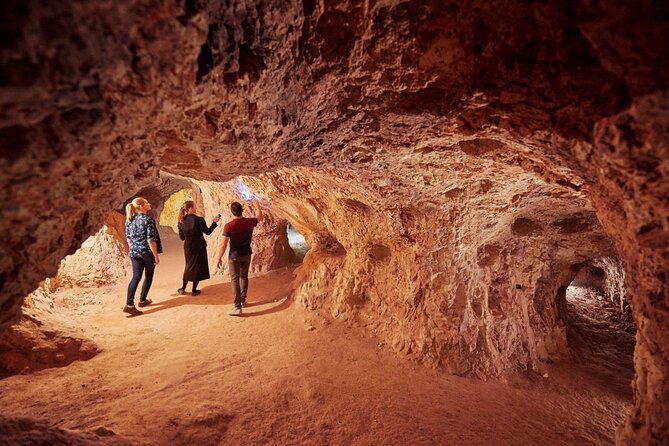
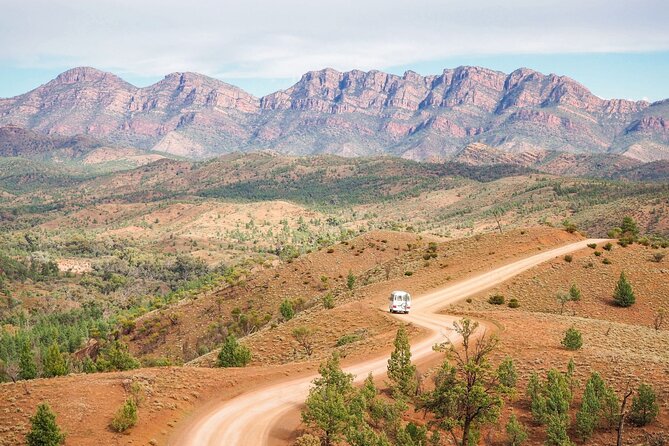
The sixth day is full of walking. The morning begins with the 5 km Warren Gorge Loop Trail, which passes through rugged country filled with changing colors, rock textures, and native life.
You then stop in Hawker for lunch and free time. Hawker is a small town with an artistic side, and the Jeff Morgan Gallery displays large panoramic works based on the outback. This gives the day a welcome change of pace after several hikes and long drives.
Later, you take the Wangara Lookout Hike, a 7 km return walk. The route begins at the visitor centre, passes through Pound Gap and river red gums, and continues by the historic Hills Homestead before climbing toward the lookout.
The walking load is worth stressing. Between the Warren Gorge trail and the Wangara walk, day six asks a lot from your legs. You should bring sturdy walking shoes, water, sun protection, and enough energy for a full outdoor day.
The overnight stop is Wilpena Pound. Here, a local Yura guide leads a Welcome to Country, sharing stories first spoken in Yura Ngawarla before providing an English explanation. This is a valuable cultural meeting because it gives the Flinders Ranges a human and living context. The land is not presented as an empty backdrop. You are asked to consider its continuing importance to the people connected to it.
Day 7: Arkaroo Rock and the road to Adelaide
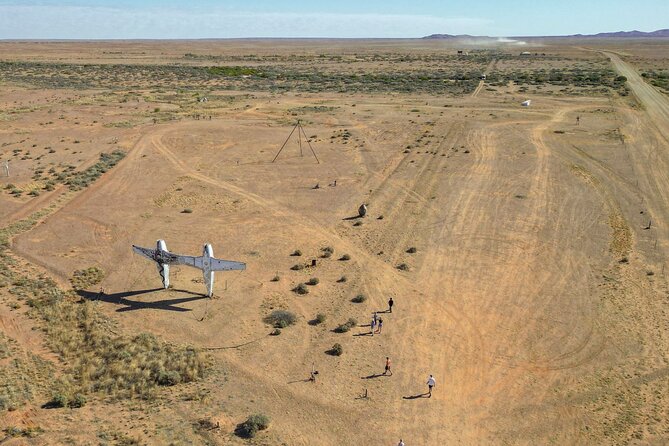
The final morning starts with the Arkaroo Rock Trail, a shorter walk with wide views toward the Chace Range. The site has important cultural meaning for the Adnyamathanha people, and the stop adds one more chance to connect the scenery with Indigenous stories and place.
From there, you continue to Quorn for lunch. This historic railway town is known for its vintage railway and links to film productions. It is a practical break on the journey south and a good place to see how outback towns have adapted after their railway heyday.
The last stretch passes through the Clare Valley wine region before you reach Adelaide. The trip is scheduled to finish around 6:00 to 7:00 pm, with drop-off at the Adelaide Central Bus Station at 91 Franklin Street. Allow some flexibility if you have a fixed evening booking, since the route covers a great deal of country on the final day.
What the $964.69 price includes
At $964.69 per person, the tour offers solid value if you plan to visit Uluru, Kings Canyon, Coober Pedy, and the Flinders Ranges in one continuous trip. National park and entrance fees are covered, along with all listed activities, the air-conditioned vehicle, and the Storyteller Guide.
Six breakfasts and three dinners are included. You still need to budget for other meals, drinks, and personal purchases. The Field of Lights experience is optional and costs A$50 per person, so it is not part of the quoted tour price.
The real value is the transport between remote places. Organizing this route independently would require a vehicle, fuel, accommodation, park access, and careful timing across large distances. The tour also removes much of the planning work, while still giving you access to unusual stops such as Warren Gorge and Coober Pedy.
The price is less attractive if you dislike group travel or want hotel rooms every night. You are paying for access and structure, not luxury.
Fitness, comfort, and group realities
This is an active tour. The itinerary includes the Uluru Base Walk, the Kata Tjuta visit, Kings Canyon’s four-hour Rim Walk, the Warren Gorge Loop, the 7 km Wangara Lookout Hike, and the Arkaroo Rock Trail.
You do not need to be an elite hiker, but you should be ready for repeated walks in an outback setting. The supplied fitness guidance calls for a moderate level, and that should be taken seriously.
Camping in swags is another key consideration. It creates the chance to sleep outdoors beneath the southern stars, a feature praised in the experience feedback, but you should expect less privacy and comfort than in a standard room. The itinerary includes an underground Coober Pedy stay and nights at campgrounds or outdoor bases, so accommodation changes are part of the appeal.
The air-conditioned vehicle is welcome during the long drives. Still, you will spend many hours sitting between stops. Bring a refillable water bottle, sun protection, comfortable clothes, and something to occupy you during road sections.
Who should book this seven-day adventure
I would choose this trip if you want the major Red Centre sights but also care about the journey between them. It suits people who enjoy walking, simple camping, small outback towns, Indigenous cultural experiences, and long scenic drives.
It is especially useful for anyone who wants to travel from Uluru to Adelaide without arranging a complicated one-way route. The seven-day format gives you time at Uluru, Kata Tjuta, Kings Canyon, Coober Pedy, and the Flinders Ranges instead of reducing the trip to a series of rushed photo stops.
I would be cautious if you need soft beds, private rooms, short driving days, or a relaxed schedule. The tour is active from the start, with outdoor nights and several substantial walks. It also requires you to reach Yulara for a 2:00 pm departure, and the transfer from Alice Springs is your responsibility.
Should you book it?
Book this tour if sleeping in a swag, walking through desert country, and learning from Indigenous guides sound like the heart of your Australia trip. The strongest features are the range of places covered, the cultural context around Uluru and Wilpena Pound, and the rare chance to combine Coober Pedy with the Flinders Ranges in one overland route.
Skip it if you want a soft, hotel-based holiday. For the right person, the long drives and basic nights are not obstacles. They are what make the journey feel like a real crossing of the outback.
The experience has a 4.9 rating from 30 reviews, with 100 percent recommending it. Cancellation is flexible only when handled early: cancel at least six full days before departure for a full refund. Poor weather or too few bookings can also lead to a date change or full refund.
FAQ
Where does the tour start?
The tour starts outside the Desert Gardens Hotel at 1 Yulara Drive in Yulara, Northern Territory. Departure is at 2:00 pm.
Where does the tour finish?
The tour finishes in Adelaide at the Adelaide Central Bus Station, 91 Franklin Street. The stated arrival time is around 6:00 to 7:00 pm.
Is transport from Alice Springs to Yulara included?
No. The Alice Springs to Yulara transfer bus ticket is not included, so you need to inquire directly about that transfer.
How many people can join the tour?
The maximum group size is 20 travelers.
What meals are included?
The tour includes six breakfasts and three dinners. Other meals are not listed as included.
Is the Field of Lights experience included?
No. Field of Lights admission is optional and costs A$50 per person.
What happens if I need to cancel?
You can receive a full refund when you cancel at least six full days before the experience starts. Cancellation two to six full days before departure allows a 50 percent refund. Cancellations less than two full days before departure are not refunded.
Just added around Adelaide
- Welcome to Adelaide Walking Tour★ 5.0 · 119 reviews
- d’Arenberg Cube / McLaren Vale Regional Tour★ 4.5 · 26 reviews
- Wild Dolphin Swim Cruise★ 5.0 · 55 reviews
- Ultimate Adelaide City and Hahndorf Tour★ 4.5 · 45 reviews
- Victor Harbor and Fleurieu Peninsula Tour★ 4.5 · 145 reviews
- Victor Harbor and Southern Highlights from Adelaide★ 4.0 · 47 reviews
- Ultimate Adelaide Walking Tour★ 5.0 · 222 reviews
- Adelaide Twilight Cruise from Glenelg★ 4.5 · 94 reviews
Uluru & Outback Tours, compared.


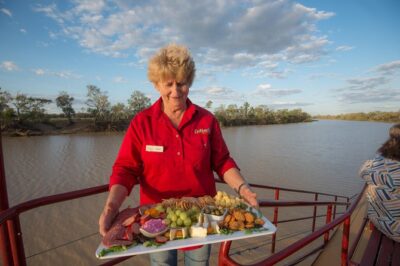
Drover’s Sunset Cruise includes Smithy’s Outback Dinner and Show
Read our review →
Ayers Rock Day Trip from Alice Springs Including BBQ Dinner
Read our review →
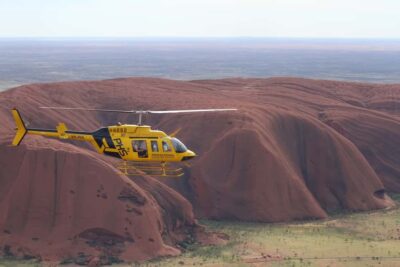
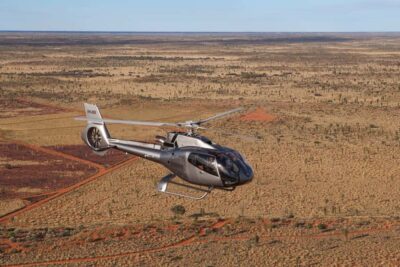
Uluru & Kata Tjuta 25-Minute Helicopter Experience
Read our review →
Browse the lists this tour appears in