
Reviewed · DOLPHIN WATCHING
Adelaide: Dolphin Sanctuary Eco Kayaking Tour
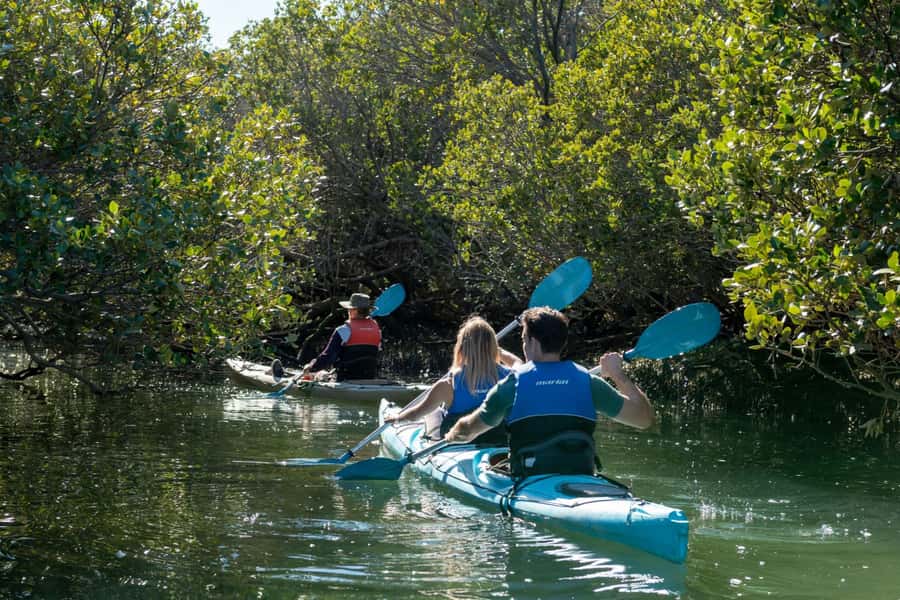
Adelaide’s Dolphin Sanctuary is best seen from a kayak, where narrow mangrove creeks open into tidal water and dolphins may appear beside your boat. The setting feels far removed from the nearby port, with birds overhead, fish below, and old wrecks adding a touch of local mystery.
I like the calm pace for beginners and the care taken to watch dolphins without bait, sounds, or chasing. I also like that guides such as Alex, Mark, Paddy, Kendall, and Liam bring the mangroves, shipwrecks, and local wildlife to life. The main catch is that dolphins and the wreck area depend on wild animals, tides, wind, and weather, so neither can be promised.
In This Review
- Key points to know before you paddle
- Why Adelaide’s Dolphin Sanctuary feels different
- Starting at Angas Inlet Boat Club
- The first 15 minutes: getting comfortable in the kayak
- Into the 10,000-year-old mangroves
- Looking for dolphins without chasing them
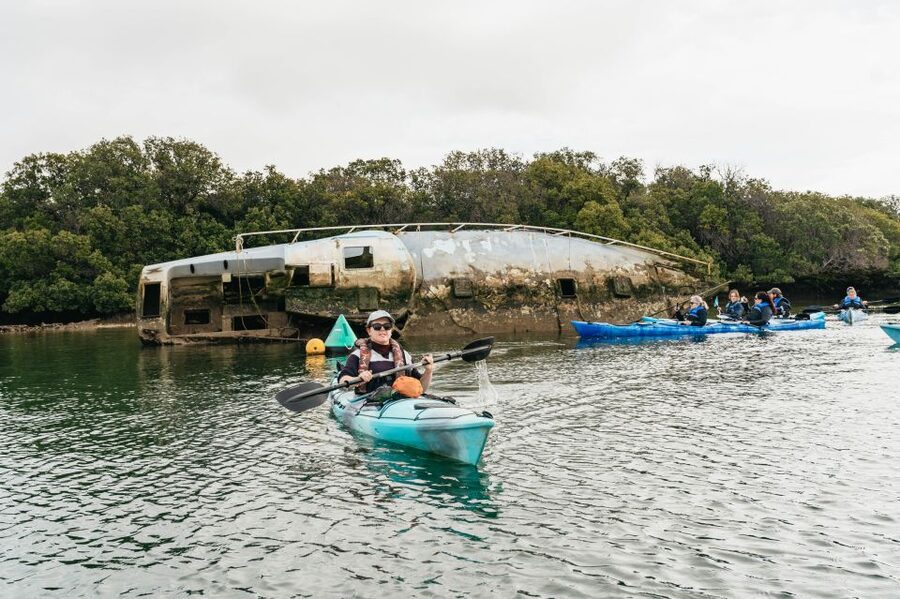
- The old shipwrecks and why you may miss them
- How hard is three hours of kayaking?
- Guides make the difference
- What to bring for a more comfortable trip
- Is the $55 price good value?
- Who should book this Adelaide kayak tour?
- FAQ
- How long is the Adelaide Dolphin Sanctuary kayak tour?
- Do I need previous kayaking experience?
- Are dolphins guaranteed?
- Can I always paddle to the shipwrecks?
- What is included in the price?
- What should I bring?
- Can children join the tour?
- Where does the tour meet?
- Is the tour suitable for wheelchair users?
- Can the tour be canceled because of weather?
- What language is the tour conducted in?
Key points to know before you paddle
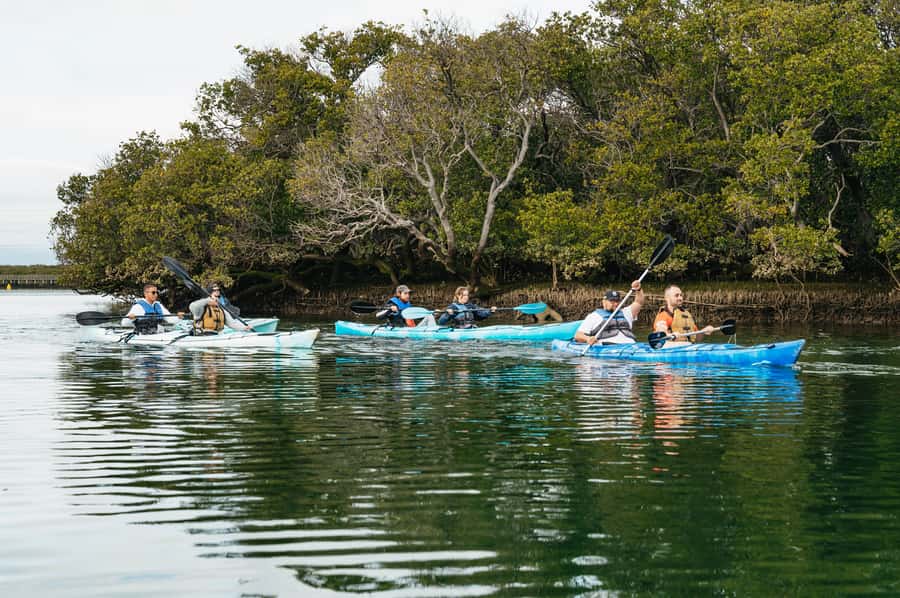
- 10,000-year-old mangrove creeks: Paddle into low, twisting waterways that serve as feeding and breeding areas for local wildlife.
- Dolphins stay wild: You may see them very close, including mothers with calves, but the guides do not lure them with food or sound.
- A real beginner-friendly outing: Equipment, a safety talk, and kayaking instruction are included, with a relaxed pace for first-time paddlers.
- Shipwrecks depend on conditions: You may paddle near abandoned boats from an earlier era, though wind and tides can make that section impossible.
- Three hours on the water: The time is long enough to explore at an easy pace, but there is no toilet stop during the paddle.
- Bring mosquito repellent: The mangroves are beautiful, but mosquitoes can be active, especially on warm days.
Why Adelaide’s Dolphin Sanctuary feels different
This is not a fast kayak ride across open water. The main pleasure comes from moving slowly through a tidal system that is easy to miss from shore.
The sanctuary includes mangroves, seagrass, saltmarsh, tidal flats, and narrow creeks. Together, these areas provide food and shelter for dolphins, fish, birds, and smaller marine creatures. From a kayak, you sit close to the water and can see how the pieces fit together.
The mangroves are the star of the tour for many people, including those who do not see dolphins. Their roots reach into the tidal mud, and the low branches create a shaded, almost tunnel-like route in places. It is a quiet setting, with the occasional splash or bird call breaking the stillness.
You may also see pelicans and other birdlife. The guides explain what lives in the creeks and why mangrove areas matter. That information gives the paddle a purpose beyond simply looking for a dolphin fin.
A few more Adelaide trips to weigh up
- Dolphin Sanctuary Kayak Tour Adelaide
★ 4.5 · 355 reviews - Adelaide Dolphin Sanctuary and Ships Graveyard Kayak Tour
★ 5.0 · 275 reviews - Dolphin Sanctuary and Ships Graveyard Kayak Tour
★ 4.7 · 143 reviews
Starting at Angas Inlet Boat Club
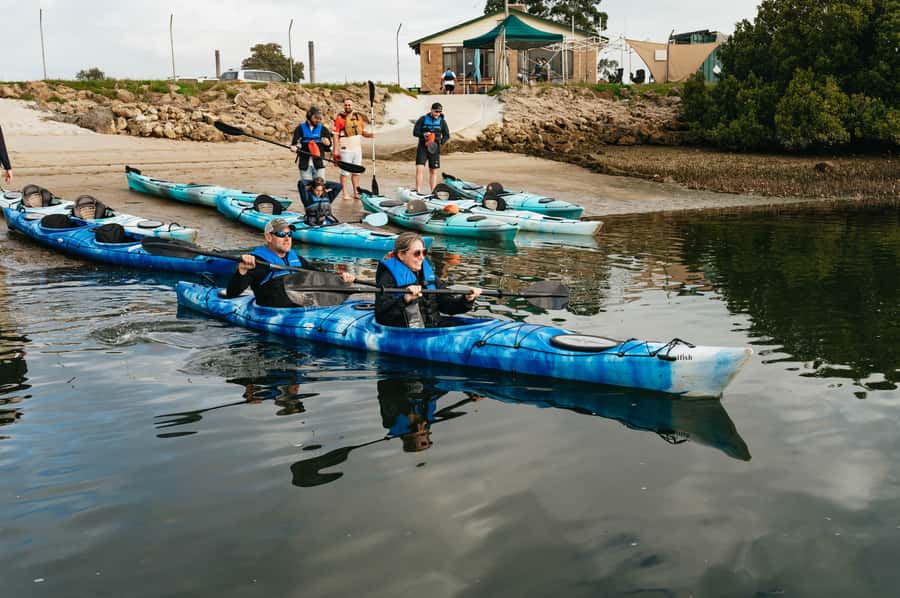
The meeting point is Angas Inlet Boat Club, at Lot 204 Garden Island Road, Port Adelaide SA 5015. You need to arrange your own way there, since hotel pickup is not included. One participant received help getting to Port Adelaide station after the tour, but you should not count on a transfer unless the operator confirms it in advance.
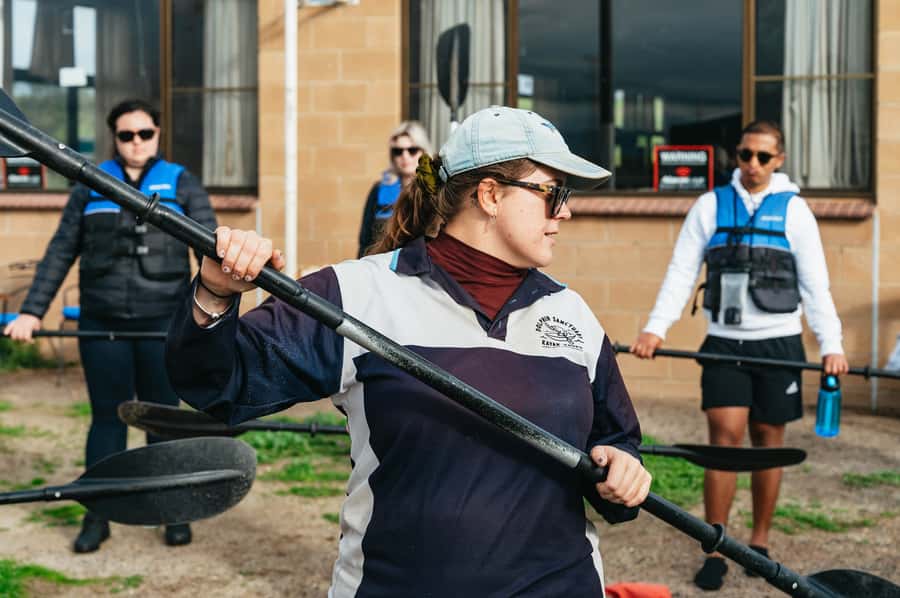
Allow time to arrive before the briefing. The first formal part of the activity lasts about 15 minutes and covers safety, equipment, and basic paddling technique.
You receive a kayak, life jacket, waterproof bag, and water for refilling your bottle. Bring your own food and drinks, though you will need to consider how much you want to carry in a kayak. A waterproof camera or phone is useful, and a waterproof bag gives you a safer place for small essentials.
The operator asks you to bring a sun hat and biodegradable sunscreen. Add mosquito repellent to that list. Warm-weather conditions can bring mosquitoes around the mangroves, and several people found repellent particularly useful.
The first 15 minutes: getting comfortable in the kayak
You do not need previous kayaking experience. The guides demonstrate the basic strokes and explain how to steer, stop, and work with the boat.
That introduction matters. A few minutes of clear instruction can save you from spending the first hour zigzagging behind the group. Guides including Marc, Alex, Liam, and Paddy have been praised for helping beginners find a comfortable rhythm and assisting anyone who struggles with technique.
The kayaks are suitable for people who want a gentle outing, but do not confuse beginner-friendly with effortless. Three hours of paddling still uses your arms, shoulders, and torso. You can paddle harder if you want a workout, while the guide sets a pace intended to keep the group together.
Capsizing is possible, although it appears to be unusual. One couple tipped in near the beginning on a windy day and was looked after promptly by the guide. Wind matters more than the calm promotional image might suggest, so take the weather seriously and wear clothing that can handle a splash.
Into the 10,000-year-old mangroves
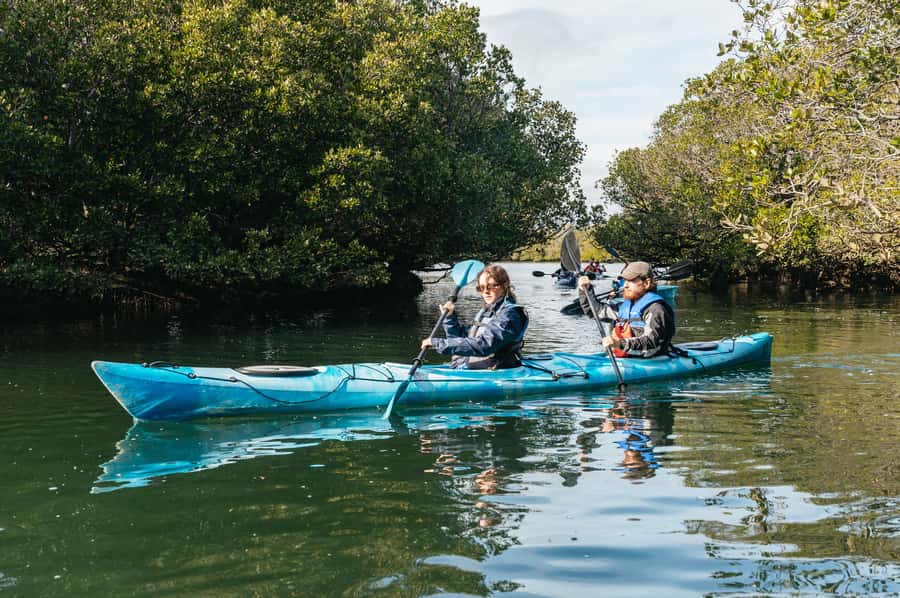
Once the group leaves the boat club, the waterway becomes the focus. You paddle through creeks lined with old mangrove growth, following the guide into parts of the sanctuary that would be difficult to explore on foot.
The route is shaped by the tide. At lower water, kayaks may touch bottom in shallow sections. One account described people getting out briefly to lighten a kayak and walk it toward deeper water. That is not necessarily a problem, but it shows why the route can change from one departure to the next.
At higher water, access may improve, but the current and wind can make paddling more demanding. Your guide decides which creeks and open-water areas are suitable on the day.
This is where the tour feels most peaceful. The low branches and narrow passages encourage you to slow down. You are not simply passing through a stand of trees. You are watching a tidal ecosystem at close range, with roots, mud, water, and birdlife all linked together.
The guides explain how mangroves shelter young fish and how the surrounding seagrass, saltmarsh, and tidal flats help feed dolphins. Guides such as Alex and Fiona have also added local history and stories connected with the area, giving the outing a broader sense of place.
Same coast, a completely different day out:
- Barossa Premium Wine Tasting Tour & lunch Departs 7 days a week
★ 5.0 · 1,475 reviews - Adelaide: Barossa Premium Wine Tasting tour & Winery Lunch
★ 4.8 · 1,452 reviews - Discover Barossa: 4 Wine Tastings, Gourmet Lunch, and Hidden Gems
★ 5.0 · 1,027 reviews - Adelaide: River Torrens Popeye Sightseeing Cruise
★ 4.6 · 949 reviews
Looking for dolphins without chasing them
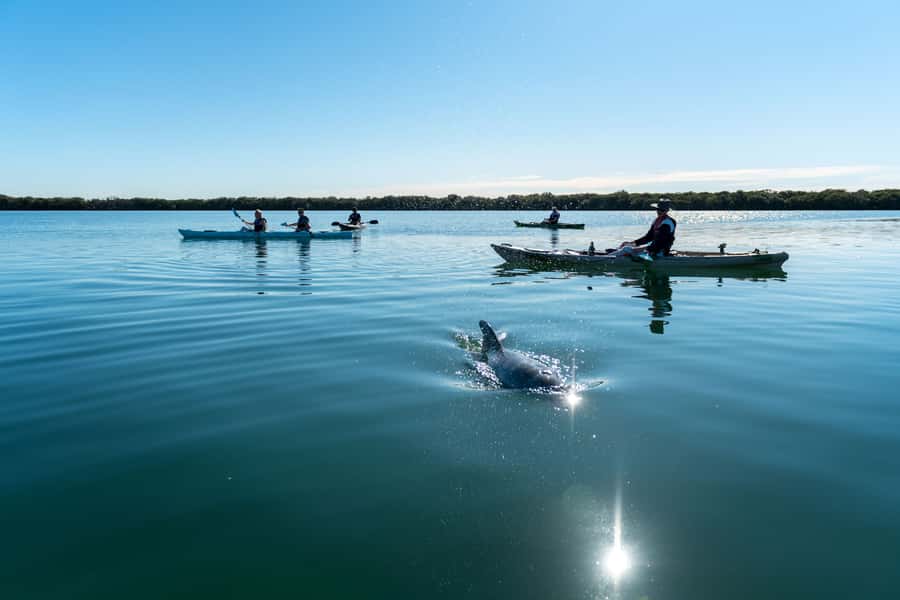
Dolphin sightings are the big draw, and they can be remarkable. Some groups have seen dolphins within a few metres of the kayaks, including mothers with calves. A few have appeared within the first 15 minutes, while others stayed farther away or did not appear at all.
That uncertainty is part of the deal. These are wild dolphins, not performing animals on a schedule. The tour does not use bait or underwater sounds to attract them, and the guides ask you to watch quietly and keep a respectful distance.
If dolphins enter the area, you may be asked to stop paddling. That pause gives the animals space to choose their own direction. You might see them feeding, passing through the group, or slipping away toward open water.
I consider this approach a major strength. A close sighting is exciting, but the experience is better when the animals remain in control. You should book this as a sanctuary and mangrove tour with a chance of dolphins, not as a guaranteed dolphin show.
Even without a sighting, the route still includes the mangroves, birdlife, marine setting, and guide commentary. Some people have found the trees and quiet waterways more memorable than the brief appearance of dolphins. Others have been lucky enough to watch a mother and calf nearby or see several dolphins moving around the group.
The old shipwrecks and why you may miss them
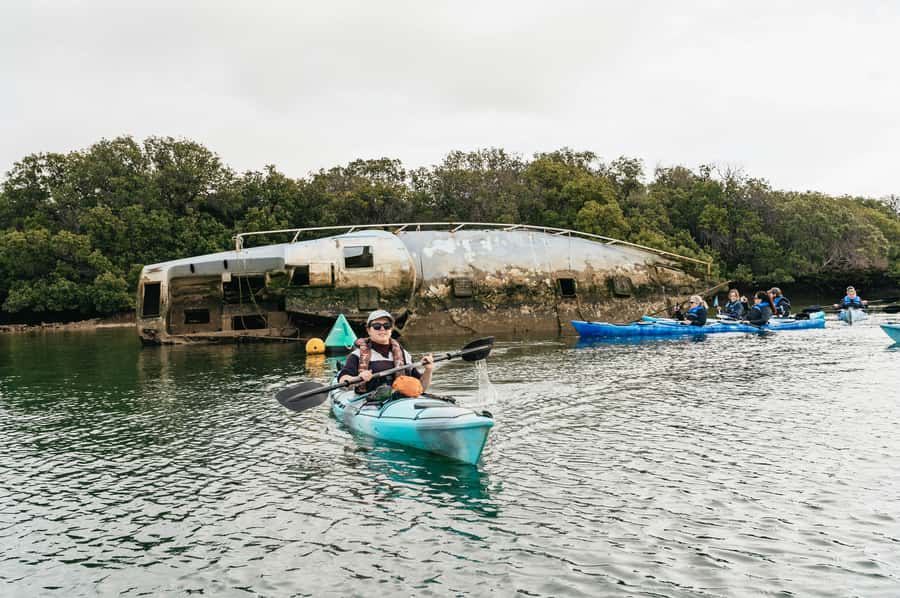
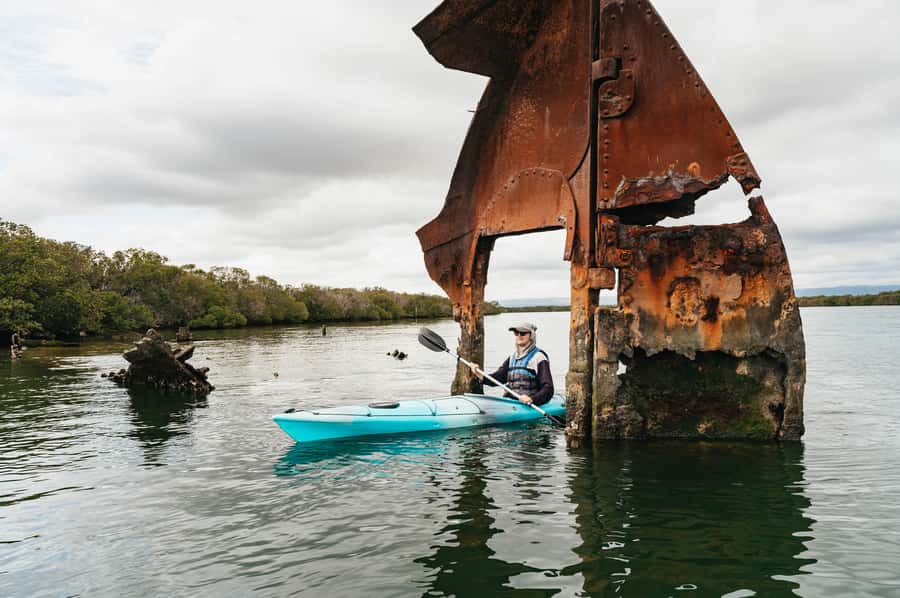
The sanctuary also contains abandoned boats and shipwrecks from an earlier period. Paddling close to these remains gives the tour a second theme: part nature outing, part glimpse into Port Adelaide’s working past.
The wrecks add visual interest and provide a clear contrast with the living mangrove system. You may hear about the boats, the surrounding area, and how the remains have become part of the waterway.
Access is not guaranteed. Strong wind may make the route unsafe or unpleasant, and the tide can limit where the kayaks go. One group saw few wrecks but had excellent dolphin sightings, while another completed the wreck section on a calmer day after missing it in windy conditions.
If the shipwrecks matter most to you, pick the most settled weather available and accept that the guide may change the plan. Safety and the welfare of the sanctuary come first.
How hard is three hours of kayaking?
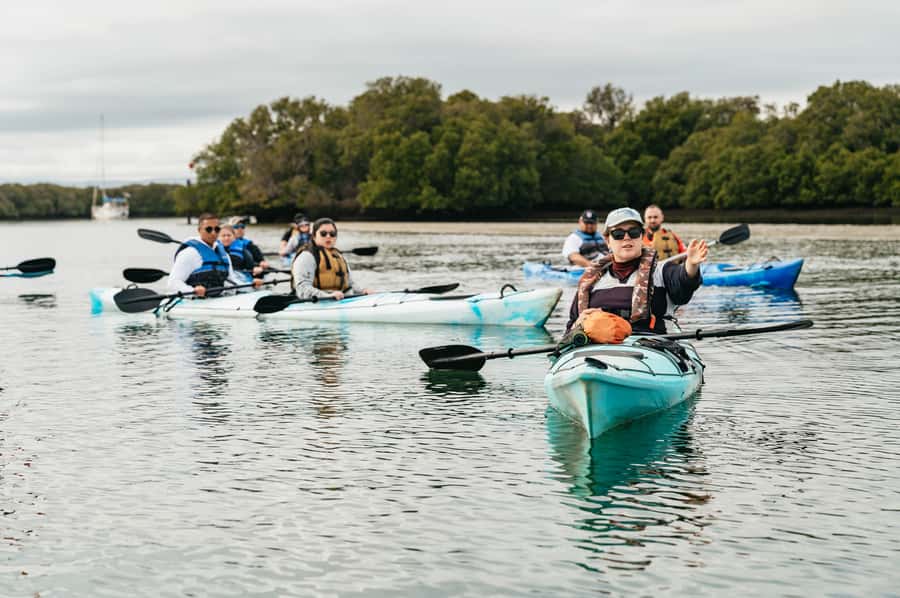
The tour is paced as a relaxed outing, not a race. First-time kayakers have found the instruction reassuring, and guides generally stop to explain the area or help anyone falling behind.
Still, three hours is a meaningful amount of time on the water. You need to be able to paddle, sit in a kayak, and manage the activity without mobility assistance. It is not suitable for wheelchair users or people with mobility impairments.
Children must be at least 10 years old. Those aged 10 to 15 must share a double kayak with a parent or another adult and must be able to paddle. This is not a sit-back-and-watch activity for children.
The water may be shallow in parts, but that does not remove the need for balance and basic physical effort. If you have concerns about hips, knees, or endurance, judge the activity by your own ability to paddle for three hours. One 66-year-old participant with two prosthetic hips found the outing manageable because the guide set a sensible pace, but individual comfort will vary.
There is no toilet stop during the three hours. Plan accordingly before launch, especially if you are traveling with children or know that extended time on the water may be difficult.
Guides make the difference
The guide is not just there to point the way. This outing works best when the person leading it can explain the animals, tides, mangroves, and wrecks while also keeping the group safe.
Past guides have included Alex, Mark, Paddy, Kendall, Liam, Fiona, Brayden, Sarah, Hannah, Sam, Lewis, Phoenix, and Scott. The most praised qualities are patience, clear instruction, a friendly manner, and care around the dolphins.
Alex has been especially effective at explaining the sanctuary and helping first-time kayakers feel at ease. Paddy has been noted for setting a comfortable pace and choosing good places to stop. Liam and Kendall have helped people with their paddling technique, while Mark has covered both the wildlife and the local history.
The only practical weakness is that it can be hard for everyone to hear when the group spreads across the water. If you cannot catch a piece of the commentary, paddle closer to the guide when it is safe to do so.
What to bring for a more comfortable trip
Pack light, but prepare for sun, water, and insects.
- Sun hat
- Biodegradable sunscreen
- Mosquito repellent
- Food and drinks
- Refillable drink bottle
- Waterproof camera or phone
- Clothing that can handle spray or a splash
Water is available for refilling your bottle, and a waterproof bag is supplied. You may still want your own secure case for a phone or camera. Do not bring anything you would be upset to lose in the water.
Food and drinks are not included. You are on the water for three hours, so a snack before or after may be useful, particularly if you are new to paddling.
Check the forecast before you go. The operator can cancel for unsuitable weather, and windy conditions can shorten or alter the route. A calm day gives you a better chance of reaching the wreck area and makes the paddle more comfortable.
Is the $55 price good value?
At $55 per person, this is a strong-value half-day activity. The price includes a three-hour guided tour, kayak, life jacket, safety instruction, water refills, waterproof storage, and a guide with marine biology knowledge.
You are paying for more than equipment rental. A guide helps you enter the mangrove creeks safely, explains what you are seeing, and makes it easier to spot dolphins and birds. Without that help, the sanctuary would be harder to understand and the tidal route could be confusing.
The value is best if you enjoy nature even when the headline animal does not appear. If your only goal is a guaranteed dolphin sighting, no wild-animal tour can offer that, and this one clearly states the limits. If you also like quiet paddling, birdlife, mangroves, local history, and shipwrecks, the price makes good sense.
Free cancellation is available up to 24 hours before the start time, and you can reserve now and pay later. Hotel pickup, food, and drinks are not included, so include transport and refreshments in your real budget.
Who should book this Adelaide kayak tour?
I would recommend it to first-time kayakers, couples, families with older children, and anyone who wants a slower nature activity close to Port Adelaide.
It suits you especially well if you like learning as you go. The guides explain the ecosystem rather than simply leading a paddle, and the setting offers plenty to notice even during a dolphin-free trip.
You should think twice if you dislike sitting in a kayak for several hours, struggle with paddling, or need wheelchair access. You should also reconsider if a shipwreck visit or dolphin sighting is essential to your day, since both depend on conditions.
Book it if you can treat the dolphins as a welcome possibility and the sanctuary itself as the main event. Choose a calm weather window when possible, bring mosquito repellent, and arrive ready for a quiet, hands-on look at Adelaide’s tidal waterways.
FAQ
How long is the Adelaide Dolphin Sanctuary kayak tour?
The tour lasts three hours, including the guided kayaking portion. A safety briefing takes place before the group leaves.
Do I need previous kayaking experience?
No. The guides provide demonstrations and basic kayaking instruction, and the tour moves at a comfortable pace for beginners.
Are dolphins guaranteed?
No. Dolphin sightings depend on wild animals, weather, and tides. The operator cannot guarantee that you will see dolphins.
Can I always paddle to the shipwrecks?
No. The shipwreck section depends on wind, tides, and other conditions. The guide may change the route if conditions are unsuitable.
What is included in the price?
The $55 price includes a guided tour with a marine biologist, kayak, life jacket, water for refilling your bottle, and a waterproof bag.
What should I bring?
Bring a sun hat, food and drinks, a waterproof camera if desired, and biodegradable sunscreen. Mosquito repellent is also a useful choice for the mangrove section.
Can children join the tour?
Children must be at least 10 years old. Children aged 10 to 15 must share a double kayak with a parent or another adult and must be able to paddle.
Where does the tour meet?
The meeting point is Angas Inlet Boat Club, Lot 204 Garden Island Road, Port Adelaide SA 5015. Hotel pickup is not included.
Is the tour suitable for wheelchair users?
No. The activity is not suitable for wheelchair users or people with mobility impairments.
Can the tour be canceled because of weather?
Yes. The tour may be canceled if weather conditions are unsuitable. You can cancel up to 24 hours in advance for a full refund.
What language is the tour conducted in?
The live tour guide speaks English.
Just added around Adelaide
- Welcome to Adelaide Walking Tour★ 5.0 · 119 reviews
- d’Arenberg Cube / McLaren Vale Regional Tour★ 4.5 · 26 reviews
- Wild Dolphin Swim Cruise★ 5.0 · 55 reviews
- Ultimate Adelaide City and Hahndorf Tour★ 4.5 · 45 reviews
- Victor Harbor and Fleurieu Peninsula Tour★ 4.5 · 145 reviews
- Victor Harbor and Southern Highlights from Adelaide★ 4.0 · 47 reviews
- Ultimate Adelaide Walking Tour★ 5.0 · 222 reviews
- Adelaide Twilight Cruise from Glenelg★ 4.5 · 94 reviews
Dolphin Watching, compared.
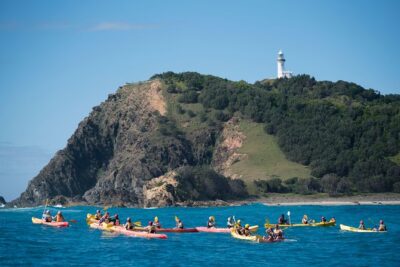
Kayaking with Dolphins in Byron Bay Guided Tour
Read our review →Browse the lists this tour appears in