
Reviewed · AUSTRALIA
Anna Bay: Irukandji Entry Pass with Shallows Encounter
Irukandji Shark & Ray Encounters lets you leave the aquarium glass behind and meet sharks and rays at water level. You can feed them, touch them, and watch rays glide over your feet in two natural-style lagoons. The close contact makes this far more memorable than ordinary fish viewing.
I like the mix of hands-on fun and solid marine education, especially the keeper talks about sharks, rays, and conservation. I also like the choice between staying mostly dry and paying for a wetsuit to reach farther into the pools. The main catch is that the basic pass may limit how far you can go, so families seeking more action should consider the wetsuit option from the start.
In This Review
- Key things to know before you go
- Why this Anna Bay encounter feels different
- Getting started at Irukandji
- Fingill Lagoon and the friendly rays
- Tropical Lagoon and the sharks
- Choosing between bare feet and a wetsuit
- How the two hours usually work
- Family suitability and accessibility
- What to bring and what to wear
- Price, booking flexibility, and overall value
- Is Irukandji worth booking?
- FAQ
- How much does the Irukandji Entry Pass cost?
- How long does the experience last?
- Can I feed and touch the sharks and rays?
- Do I have to wear a wetsuit?
- Can I swim in the lagoons?
- What should I wear?
- Can children take part?
- Is the activity wheelchair accessible?
- What happens after the lagoon encounter?
Key things to know before you go
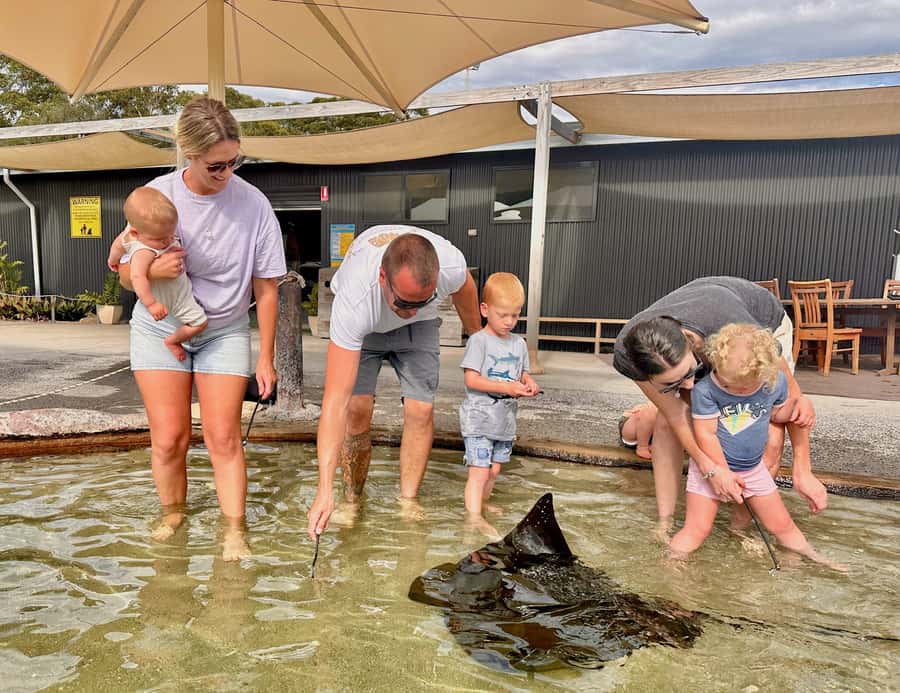
- Rays come right to your feet: In the Fingill Lagoon, friendly rays glide around your ankles and take food from a stick.
- Two lagoons mean two different visits: Fingill focuses on rays, while Tropical Lagoon adds zebra sharks, brown-banded bamboo sharks, and other species.
- Your $29 pass is a shallow-water ticket: You may wear clothes over swimwear and get your feet wet, but a wetsuit is needed for deeper access.
- Keepers stay with you: Staff explain safe handling, provide food, and lead talks beside the animals.
- It works for a wide age range: Children, parents, and older family members can take part, though children under 12 need an adult in the water.
- Arrive early enough to use the full two hours: The center runs activities from 9 AM to 5 PM, but you should arrive by 3:30 PM for the complete visit.
Why this Anna Bay encounter feels different
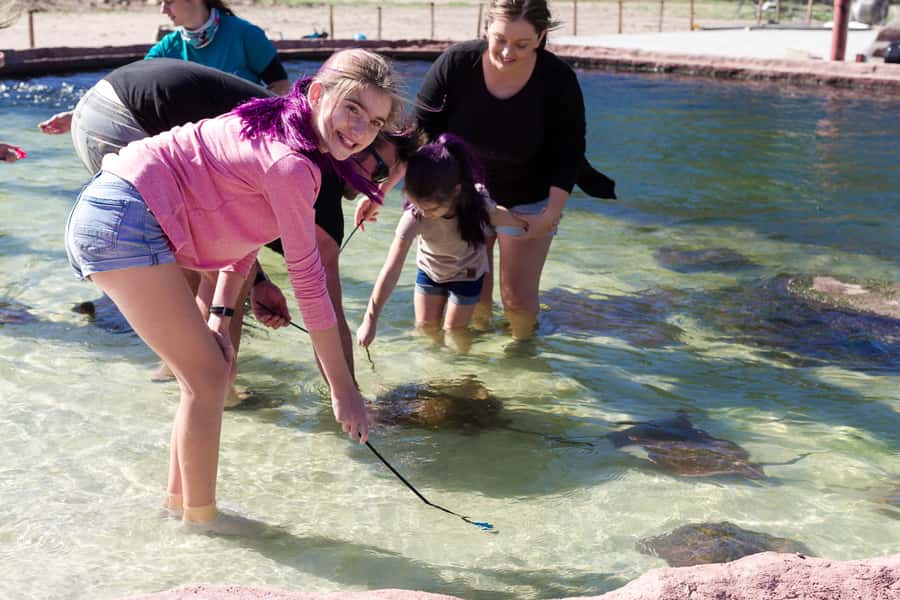
Irukandji is not built around looking through a pane of glass. You stand at the edge of shallow lagoons, barefoot, with rays and sharks moving close enough for you to feed and gently pat them. That changes the mood at once. You are not simply watching marine life. You are learning how to behave around it.
The animals are presented as living creatures rather than scary movie props. A keeper explains how to interact safely, then supplies a feeding stick and food at several points around the pools. You can reach into the water as the animals move through their homes, with staff nearby to answer questions and guide your hands.
I like this approach for families because it gives children a clear job. They are not only waiting for a shark to appear. They are listening, holding food, watching animal behavior, and learning why sharks and rays matter. It also gives adults a better reason to take part instead of standing back with a phone.
The experience lasts two hours, which is enough time to visit both lagoons and hear the talks without turning the day into a full-day commitment. The overall rating is 4.4 from 211 submitted ratings, and the strongest praise centers on the friendly staff, close animal contact, and educational value.
Other Australia days worth booking alongside this:
- Sydney: Opera House Guided Tour with Entrance Ticket
★ 4.8 · 8,312 reviews - All Inclusive Blue Mountain,Scenic World,Lunch,Koalas,ferry
★ 5.0 · 7,832 reviews - Great Ocean Road Small-Group Eco Tour from Melbourne
★ 5.0 · 6,607 reviews
Getting started at Irukandji
On arrival, staff explain the process from beginning to end. You learn the basic safety rules, receive the equipment needed for the shallows, and find out how the different areas work. Keepers remain with the animals, so this is not an unsupervised petting pool.
Your basic Entry Pass includes admission as a spectator, entry into the shallow water, animal food, interaction with the sharks and rays, educational talks, and access to hot showers. You can go barefoot, or cover your toes with souvenir socks that you can keep.
The clothing rules matter. You must wear clothes over your swimwear, and the lagoon can only be entered without shoes. Reef-friendly sunscreen is required. You are wading, not swimming, so bring the right expectations. This is a controlled animal encounter, not a swimming session.
The pass costs $29 per person. That is a fair price if you mainly want to feed the rays, touch some sharks, and listen to the talks. Compared with a large aquarium where you only observe animals from behind glass, the hands-on element gives the ticket more value.
Still, the basic pass has limits. You stay in the shallow area, and your feet or ankles may be the only parts of you in the water. One family found that the access was shallower than expected, with feet wet but not even the ankles fully covered. If your main goal is close contact with larger animals, ask about the wetsuit upgrade before you begin.
Fingill Lagoon and the friendly rays
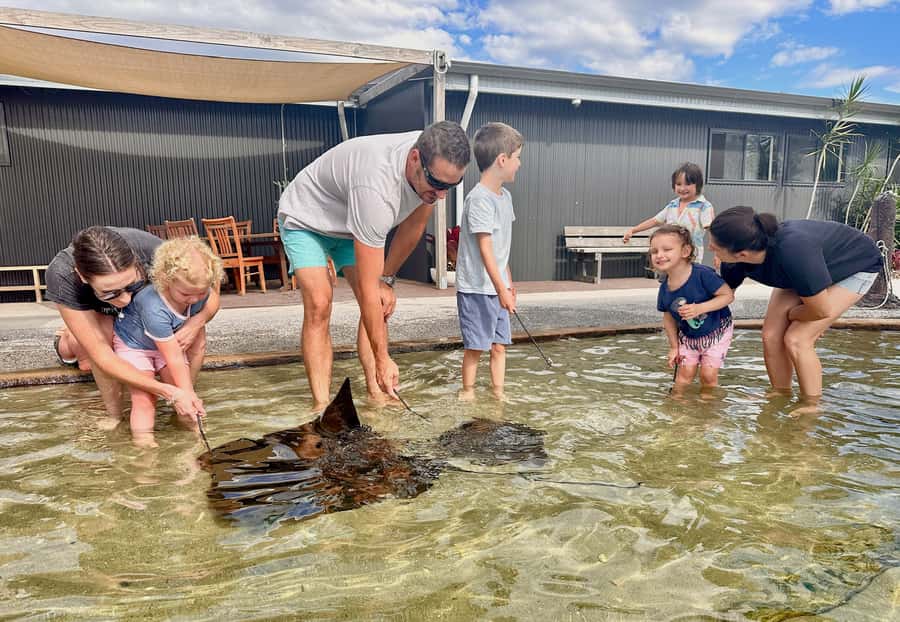
Fingill Lagoon is the gentle introduction. This pool is home to many curious rays, and they tend to glide over your feet as they look for food. You receive a feeding stick and small portions of food, then follow the keeper’s directions as the rays approach.
The feeding is simple but effective. You hold the food out and let the ray take it, rather than chasing or grabbing the animal. This teaches you to slow down and watch. The rays feel different from what you might expect, and you can gently pet them as they pass.
For young children, this is likely to be the most exciting part. A child who begins the visit unsure about touching marine life can watch an adult try first, then offer food from the stick. The shallow water also makes the encounter less intimidating than a full-water activity.
The rays are not performing on command, so patience helps. You may have a busy moment when several animals gather, followed by a quieter stretch. The keeper helps direct attention to the animals and explains their behavior.
This area also works well for anyone who wants contact without wearing a wetsuit. Your feet get wet, but you can keep most of your clothing dry. In cool weather, that choice matters. A winter visit can feel chilly, especially if you remain in damp clothes, although warm showers are available afterward.
Tropical Lagoon and the sharks
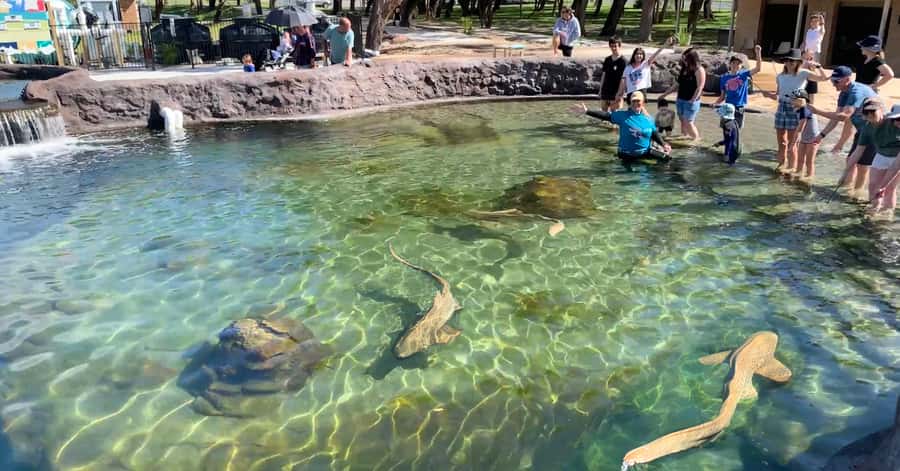
The Tropical Lagoon adds more variety. Here you find additional rays as well as zebra sharks and brown-banded bamboo sharks. These are not the fast, open-ocean predators many people picture. Their slower movement makes them suitable for a calm, supervised encounter.
You can feed and touch some of the animals while listening to the keeper explain the differences between species. This is where the experience becomes especially useful for children who know sharks mainly from frightening television scenes. Seeing a shark move quietly through shallow water can replace fear with curiosity.
The sandy bottom may feel rough in places. That is a small but useful thing to know before you step in. Bare feet are required, and some people may prefer souvenir socks for comfort.
The large animal presentation is the Big Shark Talk. Keepers invite you into the shallows as they bring up the larger tawny nurse sharks and whitetip reef sharks. This offers a stronger sense of scale than the smaller animals in the pools, although the exact amount of access depends on the pass and the keeper’s instructions.
Talks cover sharks, rays, and marine protection. The information gives the touching and feeding a purpose. You learn how to act around the animals and why protecting boneless marine life matters. One child-friendly lesson from the visit is a reminder to be more mindful about avoiding boneless fish products in the future.
Same coast, a completely different day out:
- From Melbourne: Great Ocean Road, 12 Apostles, Wildlife Tour
★ 4.7 · 6,020 reviews - Ocean Rafting: Whitehaven Beach, Snorkelling & Hill Inlet Lookout
★ 5.0 · 4,777 reviews - Laid back, Yarra Valley Wine Tour: Wine, Cider, Gin, Beer + Choc
★ 5.0 · 4,552 reviews - From Sydney: Blue Mountains Full-Day Trip
★ 4.5 · 4,471 reviews
Choosing between bare feet and a wetsuit
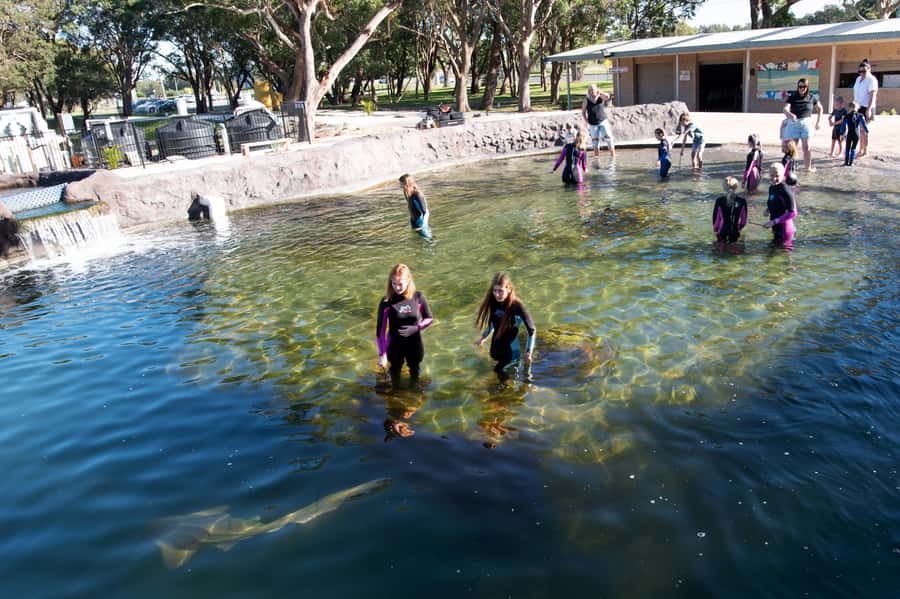
The basic Entry Pass is designed for shallow wading. You wear your own clothes over swimwear and get your feet and lower legs wet. This is convenient, but it can restrict how close you get to the animals.
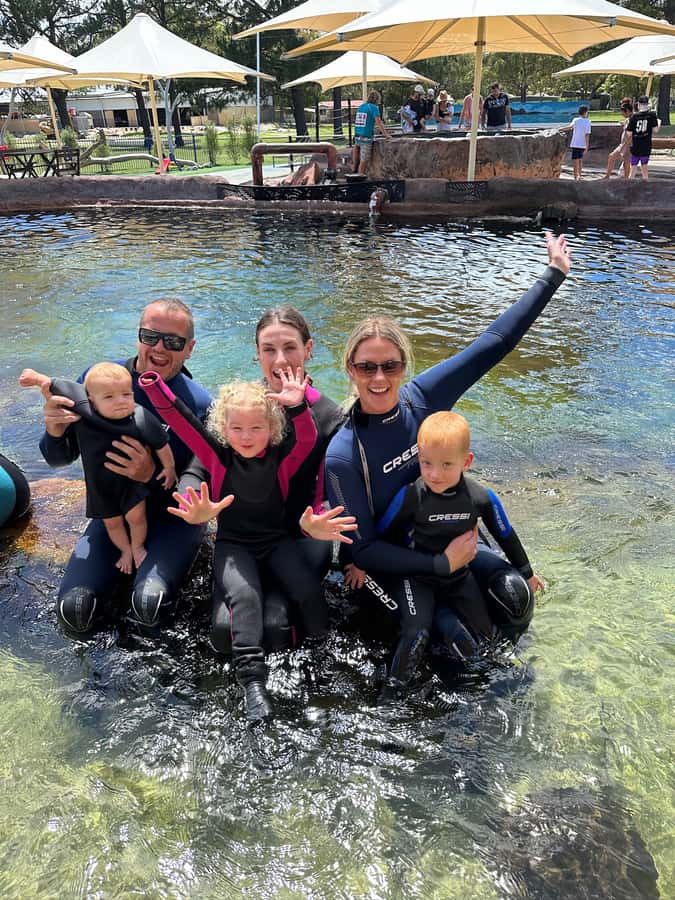
The Discovery Pass wetsuit upgrade allows you to go farther into the water. It is the better choice if you want a fuller contact session, especially at the larger lagoon. Several families found that the wetsuit made the visit more worthwhile, including a family with a toddler who enjoyed a tiny wetsuit.
My practical advice is simple: decide before you enter the water. If you start in ordinary clothes and later change your mind, you may lose time waiting for the wetsuit or reorganizing your session. One family found the process unclear at first and wished they had chosen wetsuits from the beginning.
You can also hire a wetsuit in cooler weather. This is worth considering outside the warmest months, since the water and air may feel cool even when the activity remains open. Staff continue the talks in poor weather, but comfort will affect how long you want to stay at the lagoon edge.
How the two hours usually work
The visit is not a single, fixed ride or performance. It is a guided animal encounter with different feeding locations and talks. Your arrival briefing sets out the safety rules, then a fish keeper leads you around the pools.
A typical flow includes:
- An introduction to safe contact and feeding
- Time at the Fingill Lagoon with rays
- A move to the Tropical Lagoon
- Feeding and touch opportunities with rays and smaller sharks
- Keeper talks about marine life and conservation
- The Big Shark Talk with larger tawny nurse sharks and whitetip reef sharks
- A rinse under a hot shower before you leave
The order and timing may vary, especially if the center is busy. Some people found the time-slot system less clear than expected, with a little waiting and uncertainty about where to go next. A short explanation at the start would help, so listen carefully during the opening briefing and ask staff where your next session begins.
The talks are useful, but younger children may want more hands-on action and less standing still. One parent felt the talks went on too long for kids who were eager to feed the animals. If your children have short attention spans, treat the talks as part of the visit rather than the whole visit, and be ready for the keeper to pause the action while explaining animal behavior.
Family suitability and accessibility
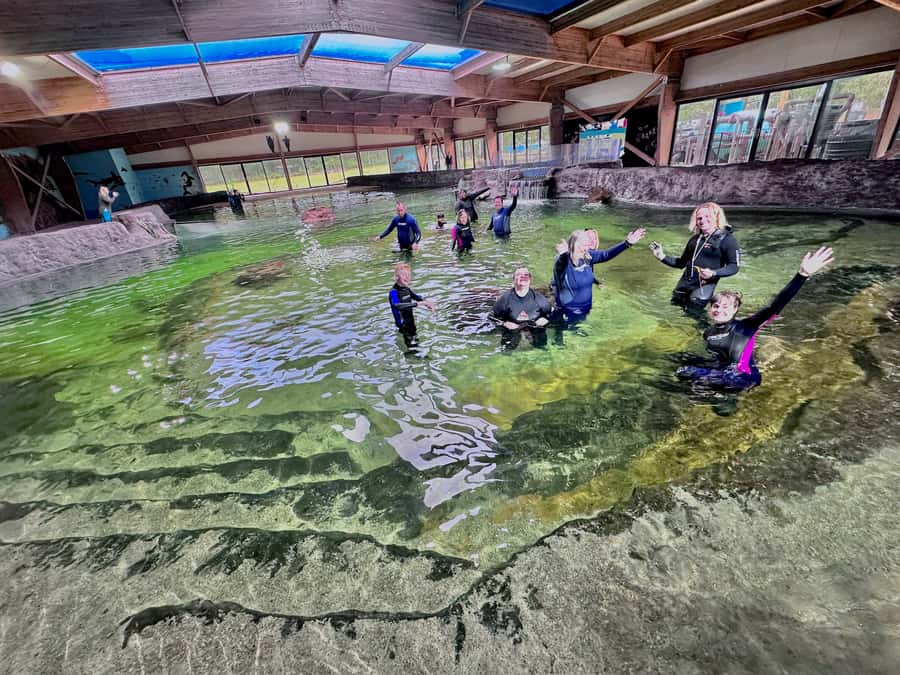
This is one of the stronger family activities around Anna Bay because several generations can take part. Families have enjoyed it with children as young as toddlers and adults up to their seventies. The experience is active without requiring swimming ability.
Children under 12 must have an adult with them in the water at all times. Unaccompanied minors are not permitted. That means an adult needs to plan on getting wet too, especially if the child has a wetsuit and wants to move into the lagoon.
Wheelchair access is available, but the activity itself involves entering shallow water barefoot. Ask staff for help with the practical details if you need assistance. The supplied information confirms wheelchair accessibility, though it does not describe every surface or transfer point.
This suits children who are curious about animals and adults who want a shared activity. It may be less suitable if you dislike wet feet, cannot stand comfortably in shallow water, or expect to swim with the animals. The rules clearly limit the activity to wading.
What to bring and what to wear
Wear swimwear underneath clothes, since clothes must be worn on top of swimwear. Choose clothing that you do not mind getting wet around the feet and ankles if you use the basic pass.
Use only reef-friendly sunscreen. Shoes cannot be worn in the lagoon, so consider the souvenir socks if bare feet are uncomfortable. You can buy or keep a pair as a small memento, but the main point is foot protection without taking shoes into the water.
Plan to use the hot shower afterward. Bring anything you need for changing, although the included facilities cover rinsing and drying off. Snacks and cold drinks are available in the gift shop, along with sustainable gifts and soft toys.
For timing, the center operates from 9 AM to 5 PM. Arrive by 3:30 PM if you want the full experience. A late arrival could leave too little time for both lagoons, the talks, and the Big Shark Talk.
Price, booking flexibility, and overall value
At $29, the Entry Pass is reasonably priced for a two-hour activity that includes animal food, keeper talks, lagoon access, and hot showers. The strongest value comes from the contact itself. Feeding and touching the animals creates a memory that ordinary aquarium viewing rarely matches.
The price can feel less complete if you expect a full-water encounter. The basic ticket does not automatically mean you will be swimming or standing deep in the lagoon. Wetsuits and stronger encounter options may cost extra, so check exactly what your chosen pass includes before paying.
You can cancel up to 24 hours in advance for a full refund, and the reserve-now, pay-later option keeps your plans flexible. Starting times are available throughout the day, subject to availability.
The activity is conducted in English. That is important for families who need to follow safety instructions and animal-handling guidance. Staff are present throughout, but you should still pay attention to the briefing, especially when children are involved.
Is Irukandji worth booking?
Book this if you want a hands-on marine activity near Anna Bay and your family is happy to wade in shallow water. The rays at Fingill Lagoon are the star for many people, while the Tropical Lagoon and Big Shark Talk add variety and a better sense of shark behavior.
For the best experience, choose the wetsuit upgrade from the beginning if closer access matters to you. Stick with the $29 pass if you mainly want wet feet, feeding, gentle contact, and the educational talks.
I would recommend it most strongly to families, first-time shark visitors, and anyone looking for something different from a beach day. Skip it if you want to swim freely, dislike animal contact, or prefer a quiet aquarium with no water entry. For everyone else, Irukandji offers a rare chance to replace shark fear with a more informed kind of respect.
FAQ
How much does the Irukandji Entry Pass cost?
The Entry Pass costs $29 per person.
How long does the experience last?
The activity lasts two hours.
Can I feed and touch the sharks and rays?
Yes. The pass includes animal food, feeding sticks, and interaction with the sharks and rays under the guidance of fish keepers.
Do I have to wear a wetsuit?
No. You can wear your own clothes over swimwear and get your feet and ankles wet. A wetsuit upgrade is available if you want to go farther into the water.
Can I swim in the lagoons?
No. Swimming is not permitted. You may only wade in the water.
What should I wear?
Wear swimwear with clothes on top. Shoes cannot be worn in the lagoon, and only reef-friendly sunscreen is allowed.
Can children take part?
Yes, children can take part, but children under 12 must be accompanied by an adult in the water. Unaccompanied minors are not permitted.
Is the activity wheelchair accessible?
Yes, Irukandji Shark & Ray Encounters is wheelchair accessible.
What happens after the lagoon encounter?
You can rinse off under a hot shower and dry off before visiting the gift shop, which sells sustainable gifts, soft toys, snacks, and cold drinks.
Just added around Australia
- Batman Bridge 4 Hour Luncheon Cruise including sailing into the Cataract Gorge★ 4.5 · 108 reviews
- Ord River Cruise Experience with Riverside Lunch★ 5.0 · 177 reviews
- Cataract Gorge Cruise 1:30 pm★ 4.5 · 23 reviews
- Katherine Outback Experience Show Ticket★ 5.0 · 307 reviews
- Ord River Explorer Cruise with Sunset★ 5.0 · 246 reviews
- Ord River Discoverer Cruise with Sunset★ 5.0 · 250 reviews
- Bungle Bungle Flight & Domes To Cathedral Gorge Walking Tour★ 5.0 · 64 reviews
- Bungle Bungle Scenic Flights, Domes & Cathedral Gorge Walk★ 5.0 · 312 reviews