
Reviewed · WALKING TOURS
Around the Square Adelaide Walking Tour
Adelaide’s central square is more than an open patch of lawn. Around Victoria Square, also called Tarntanyangga, you’ll find churches, courts, old government offices, statues, fountains, and buildings that helped shape South Australia. Guide Graeme turns those façades into stories about explorers, politicians, judges, business people, and Aboriginal connections to the city.
I like the compact two-hour route, which gives you a useful first look without taking over your day. I also like the focus on details you could easily miss alone, including old marble, surviving interiors, tunnels, and the people behind Adelaide’s public buildings. The main consideration is simple: you’ll be on your feet in all weather, with a moderate amount of walking and little time for long stops.
In This Review
- Key points to know before you book
- Why Victoria Square makes a smart first walk
- St Francis Xavier Cathedral and the story of Mary MacKillop
- Adelaide Town Hall sets the civic scene
- Tarntanyangga, Queen Victoria, and Charles Cameron Kingston
- The Torrens Building and South Australia’s land system
- Treasury buildings, tunnels, and the machinery of government
- John McDouall Stuart and the State Admin Centre
- Water, law, and the city’s working buildings
- A former department store and the Three Rivers Fountain
- Former insurance and harbour buildings
- The bonus of seeing historic interiors
- What the guide adds to the experience
- Pace, weather, and practical comfort
- Is $36.93 good value?
- Who should book the Around the Square Adelaide Walking Tour?
- Should you book it?
- FAQ
- Where does the tour start?
- What time does the tour begin?
- Where does the tour finish?
- How long does the experience last?
- What is included in the price?
- Are food and drinks included?
- Is hotel pickup provided?
- How much walking is involved?
- Does the tour operate in bad weather?
- What is the cancellation policy?
Key points to know before you book
- Victoria Square is the tour’s history book: You move around Tarntanyangga while learning how Adelaide developed.
- Graeme leads with stories, not just dates: His local knowledge and amusing anecdotes are central to the experience.
- The route covers more than the square itself: Expect nearby civic, legal, religious, and former government buildings.
- Some interiors may add real texture: Previous tours have included entry to historic buildings and the Mortlock Library when possible.
- The pace is relaxed but active: Wear comfortable shoes and prepare for outdoor conditions.
- At $36.93 per person, the value is strongest early in your stay: You gain a useful map of central Adelaide and ideas for later exploring.
Why Victoria Square makes a smart first walk
I think this tour works because it gives Adelaide a clear center. You are not simply walking from one attraction to another. You are learning how the city’s institutions grew around a public square, and how buildings from different periods sit close together.
The square has the dual name Victoria Square and Tarntanyangga, reflecting both its colonial past and its Aboriginal connection. That makes it a useful place to begin thinking about Adelaide as more than a planned European city. The guide also connects the square to South Australia’s political, legal, religious, and social development.
The tour starts at Adelaide Town Hall at 10:00 am and finishes near the Queen Victoria statue. That is a practical arrangement. You begin at a clear landmark on King William Street, then end in the square itself, where you can continue sightseeing on your own.
The group limit is small, with no more than 15 people per booking and a maximum of 20 people on the activity. That matters on a walking tour. You should be able to hear the guide more easily than in a large coach group, and questions can shape the discussion. A particularly small group may also allow more flexibility when entering buildings, if access is available.
A few more Adelaide trips to weigh up
- Ultimate Adelaide Walking Tour
★ 5.0 · 222 reviews - Cultural Caper Adelaide Walking Tour
★ 5.0 · 122 reviews - Welcome to Adelaide Walking Tour
★ 5.0 · 119 reviews
St Francis Xavier Cathedral and the story of Mary MacKillop
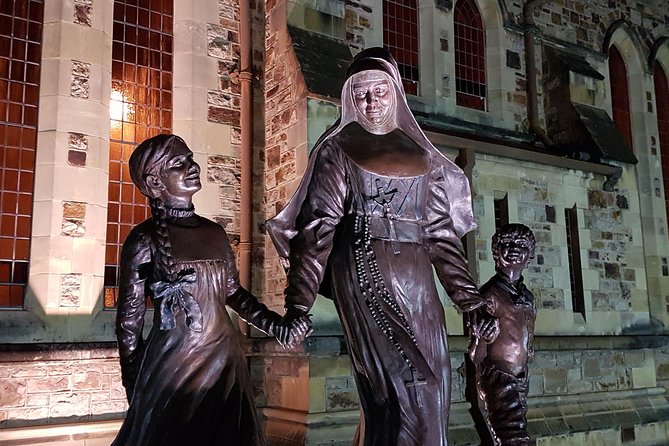
The first stop is St Francis Xavier Cathedral, where the focus moves quickly from architecture to Adelaide’s religious life. You’ll hear about the cathedral’s significance, its history, its design, and its role today. The stop lasts about 10 minutes, so expect an introduction rather than a long church tour.
Nearby, the statue of Mother Mary MacKillop adds a more personal story. The guide explains MacKillop’s path to sainthood, the order of nuns she helped establish, and the charity work connected with that order. This is a good early example of the tour’s method: a building or statue becomes a doorway into the people and causes that shaped the city.
Admission is included at no extra charge, though the tour does not promise interior access to every site. If you value religious art or church architecture, you may want to return after the walk for a slower look.
Adelaide Town Hall sets the civic scene
At Adelaide Town Hall, you get the tour’s basic orientation. Graeme introduces Adelaide’s early development, explains the route, and discusses local government in the early years of South Australia.
This stop helps put the rest of the walk in order. Instead of seeing the square as a collection of unrelated structures, you begin to understand how local government, land administration, courts, and public services grew together.
The town hall is also a useful meeting point because it is easy to identify at 128 King William Street. Plan to arrive a little early. The tour begins at 10:00 am, and late arrivals may have trouble finding the group once it has moved away from the starting point.
Tarntanyangga, Queen Victoria, and Charles Cameron Kingston

Victoria Square receives the longest early stop, about 23 minutes. The guide discusses the square’s development, its past, and its Indigenous connections before moving to the statues that occupy this central space.
The Queen Victoria statue provides a chance to consider how public monuments reflect the values of the period in which they were installed. The Charles Cameron Kingston statue shifts the subject toward South Australian political life. You’ll hear an overview of Kingston and his place in the state’s story.
This section is likely to suit you if you enjoy history told through people rather than a list of construction dates. The guide’s anecdotes are an important part of the appeal. Several detailed comments about the tour point to humorous stories, colourful characters, and less-than-perfect founders, including early figures who drank heavily. That frankness keeps the past from sounding polished or official.
Same coast, a completely different day out:
- Barossa Premium Wine Tasting Tour & lunch Departs 7 days a week
★ 5.0 · 1,475 reviews - Adelaide: Barossa Premium Wine Tasting tour & Winery Lunch
★ 4.8 · 1,452 reviews - Discover Barossa: 4 Wine Tastings, Gourmet Lunch, and Hidden Gems
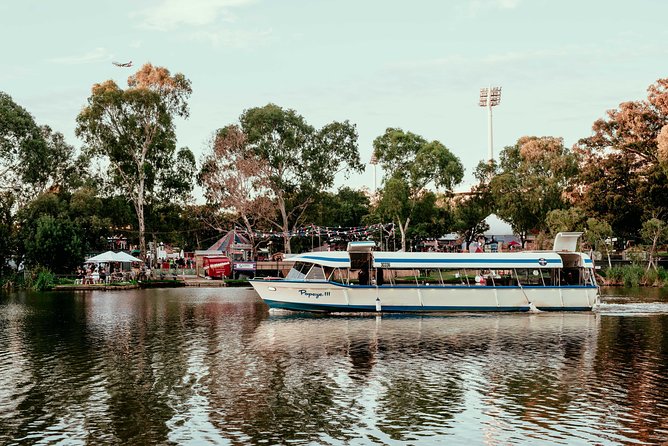
★ 5.0 · 1,027 reviews - Adelaide: River Torrens Popeye Sightseeing Cruise
★ 4.6 · 949 reviews
The Torrens Building and South Australia’s land system
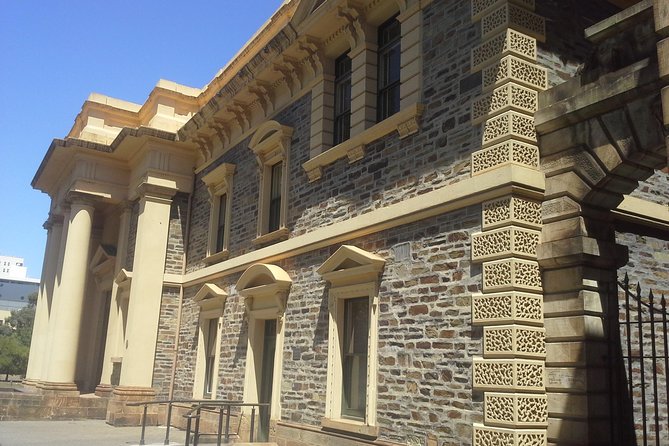
The Torrens Building is a short stop of about four minutes, but the subject is important. Its story includes Sir Richard Torrens and the land title system associated with his name.
This is one of those moments when an ordinary-looking office building gains wider importance. Land ownership affects settlement, investment, farming, and government. Hearing the story on location gives you a practical link between Adelaide’s architecture and the systems that helped South Australia grow.
Do not expect a lengthy examination of legal documents here. The stop is brief, but it adds useful context before the walk moves on to former government spaces.
Treasury buildings, tunnels, and the machinery of government
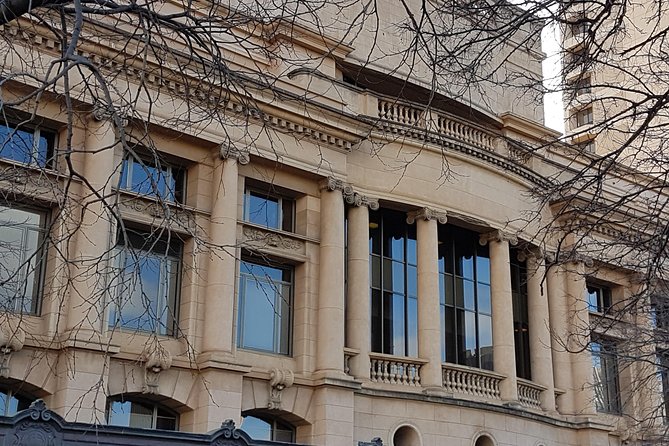
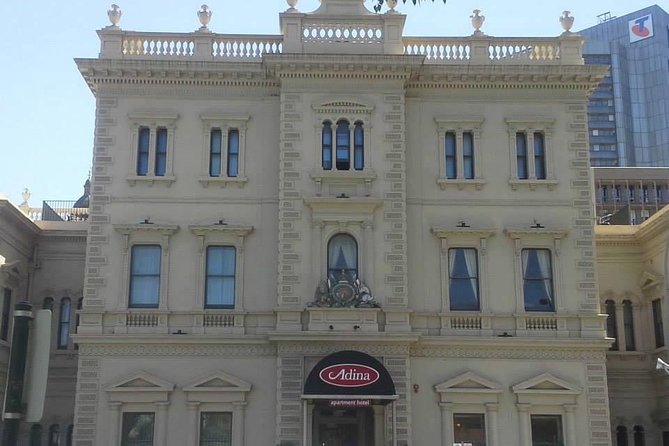
At the Adina Apartments, formerly the Treasury Building, the tour spends about 10 minutes on the building’s former role. The discussion includes its tunnels, courtyard, notable visitors, and the way Cabinet operated there before 1968.
This is one of the more intriguing stops because it deals with the hidden side of public administration. Tunnels and back-of-house spaces often tell you more about how a building functioned than its grand front entrance. The reference to Cabinet also connects the building to the practical work of state government before offices moved elsewhere.
The building now has a different use, so you should not assume that every historic area is open to the public. Still, the story gives you a useful sense of what Adelaide’s government quarter once felt like.
John McDouall Stuart and the State Admin Centre
The John McDouall Stuart statue introduces one of South Australia’s notable explorers. Graeme covers Stuart’s expeditions, his role in exploration, and the legacy attached to his name.
The stop lasts about five minutes, enough for a focused account without turning the tour into a long biography. I like this contrast with the earlier civic and religious stories. Adelaide’s development was tied not only to administrators and institutions, but also to exploration and the mapping of inland Australia.
The nearby State Admin Centre receives a shorter introduction. You’ll learn about the buildings and their present use by state government ministers and staff. It is a quick reminder that this part of Adelaide remains a working government district, not just a historic display.
Water, law, and the city’s working buildings
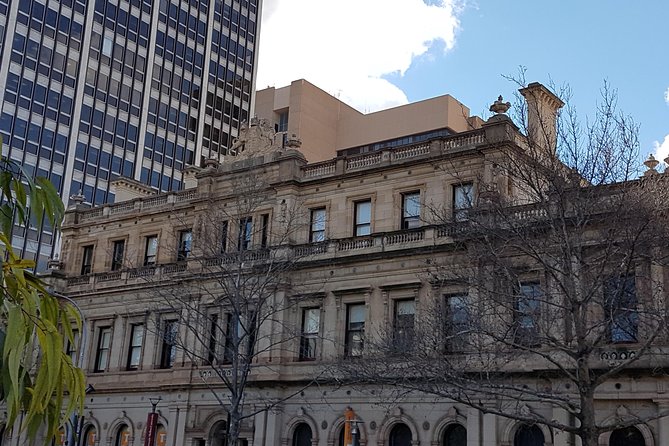
The SA Water Building and the Dame Roma Mitchell Commonwealth Law Courts bring the tour into the world of public services and justice. The SA Water stop focuses on the building’s use and educational purpose, while the law courts discussion covers the building’s occupants and the kinds of courts inside.
These are not the most decorative stops on the route, but they help explain how a capital city operates. A good city walk should include more than handsome old façades. You’ll get a look at the institutions that still serve the public.
The stop lasts about 15 minutes in total. That gives the guide time to explain the buildings without asking you to stand in one place for too long.
A former department store and the Three Rivers Fountain
The Sir Samuel Way Court Building has an especially unusual past. Before becoming a court building, it was a department store. The guide also explains its marble staircase and current use.
This kind of change in function is exactly what makes an urban walking tour worthwhile. Buildings are rarely as fixed as they appear. A store can become a legal institution, while its surviving interior details preserve earlier layers of city life.
The Three Rivers Fountain follows, with a story about why it was erected and what it represents. The combined stop lasts about 19 minutes. Expect the guide to connect architecture, civic symbolism, and public memory rather than simply point out the fountain and move on.
Former insurance and harbour buildings
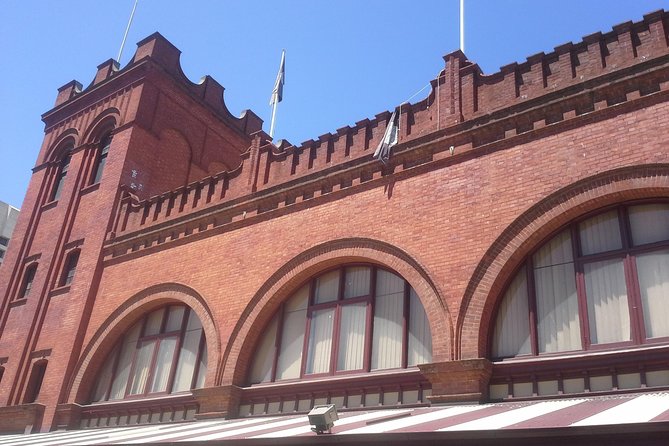
The final group of stops covers the former SGIC Building, the former Harbour Board Building, and the former MLC Building. Their stories touch on architecture, insurance, engineering, business, and the role these institutions played in Adelaide.
The Harbour Board Building is especially useful for showing how engineering supported the city’s connection to trade and transport. The former SGIC and MLC buildings add a commercial side to the route, balancing the churches, courts, and government offices seen earlier.
This closing section is fairly dense, with about 17 minutes shared among several sites. If you enjoy architecture, keep your eyes up and take note of details the guide points out. If you prefer long interior visits, you may find these quick exterior explanations less satisfying.
The bonus of seeing historic interiors
The planned route is mainly an outdoor walk, but access inside buildings can add a welcome surprise. One detailed account describes a visit inside the State Library to see the Mortlock Library, while other comments praise being taken into historic buildings when possible.
That access is not listed as a guaranteed feature, so treat it as an advantage rather than a promise. Building hours, permissions, events, and the day’s conditions may affect what you see.
The Mortlock Library mention is particularly useful for readers who care about interiors. Adelaide’s story is not only on its streets. Surviving staircases, courtyards, libraries, and old public rooms can make the past easier to picture.
What the guide adds to the experience
Graeme is repeatedly described as personable, prepared, articulate, and easy to understand. His strengths are local knowledge, storytelling, and the ability to answer questions. One especially useful detail is that he adjusts to the group’s questions and energy rather than delivering a rigid speech.
That matters because two hours can feel long if a guide simply recites facts. Here, the emphasis is on memorable tales about Adelaide’s founders, explorers, public figures, and buildings. The history includes awkward and amusing details, not only official achievements.
The guide has also continued with a tour when only one person booked. That suggests the experience can remain personal in a very small group. It also means the walk may suit solo visitors who want company and orientation without joining a large crowd.
Pace, weather, and practical comfort
The walk is described as easy-paced, but you still need moderate physical fitness. Wear comfortable shoes. You will spend about two hours walking and standing, with stops spread across the square and nearby streets.
The tour operates in all weather conditions. Bring clothing suited to the forecast, and remember that the meeting and discussion points may not all offer shelter. Food, drinks, hotel pickup, and transport to or from the attractions are not included.
Children must be accompanied by an adult. The group size remains limited, which is helpful for hearing the guide and staying together at crossings and busy public places.
Is $36.93 good value?
At $36.93 per person, I consider this a fair price for a focused introduction to central Adelaide. You are paying for a local guide, interpretation of many sites, and two hours of organized sightseeing. There are no extra attraction fees listed, though interior access is not guaranteed.
The value is highest if you are new to Adelaide or have only a short stay. The route helps you decide which buildings, statues, and civic areas deserve a return visit. It can also save you from walking past important places without understanding what you are seeing.
The value is lower if you want a long museum visit, a food component, or transport between distant sights. This is a history-and-architecture walk, not a general city tour with multiple included attractions.
The tour is booked an average of 32 days ahead, so planning early is sensible, especially if your Adelaide dates are fixed. Free cancellation is available up to 24 hours before the start time. Changes or cancellations inside that window are not accepted for a refund.
Who should book the Around the Square Adelaide Walking Tour?
I would choose this walk for a first morning in Adelaide, particularly if you like civic history, architecture, public statues, and stories about the people who shaped a place. It also suits locals who want a clearer account of buildings they pass every day.
The tour is a good match for solo visitors, couples, older children with an interest in history, and anyone who prefers a relaxed walk to a bus tour. It is less suited to people who cannot comfortably walk or stand for two hours, or who need a fully indoor activity.
Should you book it?
Book it if you want to get your bearings through stories, not just directions. Graeme’s route links Victoria Square and nearby buildings to religion, politics, exploration, law, government, business, and Indigenous connections.
Skip it if you want a deep visit inside each attraction or a broad tour covering all of Adelaide. For most first-time visitors with comfortable shoes and two spare hours, the price is reasonable, the route is manageable, and the local detail should make the rest of your city visit more rewarding.
FAQ
Where does the tour start?
The tour starts at Adelaide Town Hall, 128 King William Street, Adelaide, South Australia.
What time does the tour begin?
The start time is 10:00 am.
Where does the tour finish?
The walk finishes in front of the Queen Victoria statue in Victoria Square, Adelaide.
How long does the experience last?
The tour lasts approximately two hours.
What is included in the price?
A local guide is included.
Are food and drinks included?
No. Food and drinks are not included.
Is hotel pickup provided?
No. Hotel pickup and drop-off are not included.
How much walking is involved?
A moderate amount of walking is involved, and participants should have a moderate level of physical fitness.
Does the tour operate in bad weather?
Yes. The tour operates in all weather conditions, so dress appropriately.
What is the cancellation policy?
You can cancel up to 24 hours before the experience for a full refund. Cancellations or changes made less than 24 hours before the start time are not accepted for a refund.
Just added around Adelaide
- Welcome to Adelaide Walking Tour★ 5.0 · 119 reviews
- d’Arenberg Cube / McLaren Vale Regional Tour★ 4.5 · 26 reviews
- Wild Dolphin Swim Cruise★ 5.0 · 55 reviews
- Ultimate Adelaide City and Hahndorf Tour★ 4.5 · 45 reviews
- Victor Harbor and Fleurieu Peninsula Tour★ 4.5 · 145 reviews
- Victor Harbor and Southern Highlights from Adelaide★ 4.0 · 47 reviews
- Ultimate Adelaide Walking Tour★ 5.0 · 222 reviews
- Adelaide Twilight Cruise from Glenelg★ 4.5 · 94 reviews
Walking Tours, compared.
Sydney Opera House Official Guided Walking Tour
Read our review →
Blue Mountains Tour with Waterfall Walk & Lunch
Read our review →
Ultimate Melbourne Walking Tour: History, Laneways & Culture
Read our review →

Great Ocean Road Tour Plus Koalas, Forest Walk and Morning Tea
Read our review →
Blue Mountains Small Group Tour with Waterfall Walk & Fresh Lunch
Read our review →
Maria Island Cruise and Guided Walk Day Tour with Lunch and Drinks
Read our review →
Sydney Cricket Ground (SCG) and Museum Walking Tour
Read our review →Browse the lists this tour appears in