
Reviewed · HOBART TOURS
Bruny Island: Cape Bruny Lighthouse Tour
Cape Bruny Lighthouse puts you inside one of Tasmania’s most dramatic working landmarks. Built by convicts in 1835 and first lit in 1836, it sits above pounding water at the southern end of Bruny Island. You climb the original cast-iron stairs, inspect the light mechanism, then step onto a balcony high above the sea.
I like the spectacular coastal views and the way the guide turns an old tower into a human story about weather, ships, and lighthouse keepers. I also like the small groups, which make it easier to hear guides such as Matt or Chris and to ask questions.
The main catch is the effort required to reach it. You must arrange your own road trip and ferry crossing from Hobart, allow about 2.5 hours to reach the lighthouse, and walk uphill on a mix of concrete and gravel before the short tour begins.
In This Review
- Key points before you book
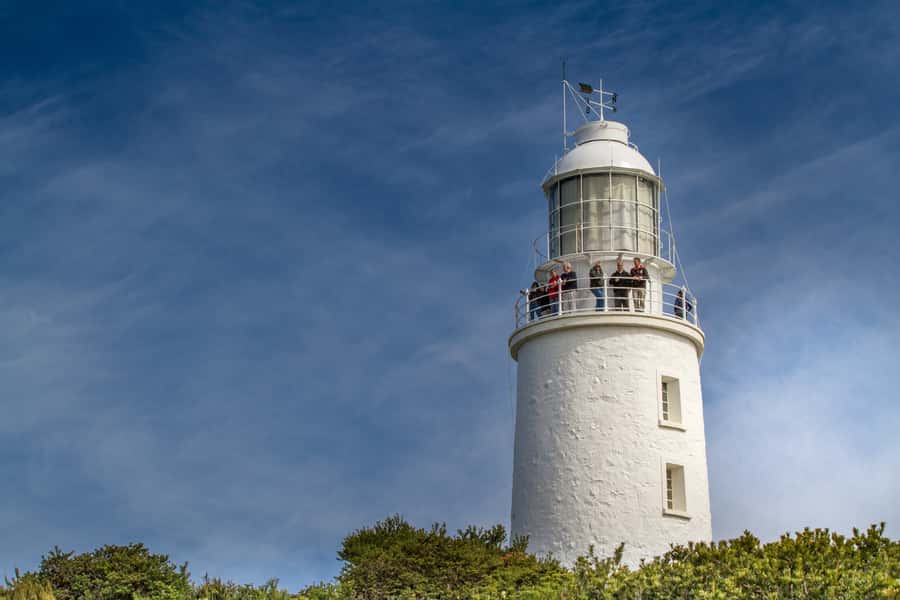
- Cape Bruny Lighthouse, built above rough southern seas
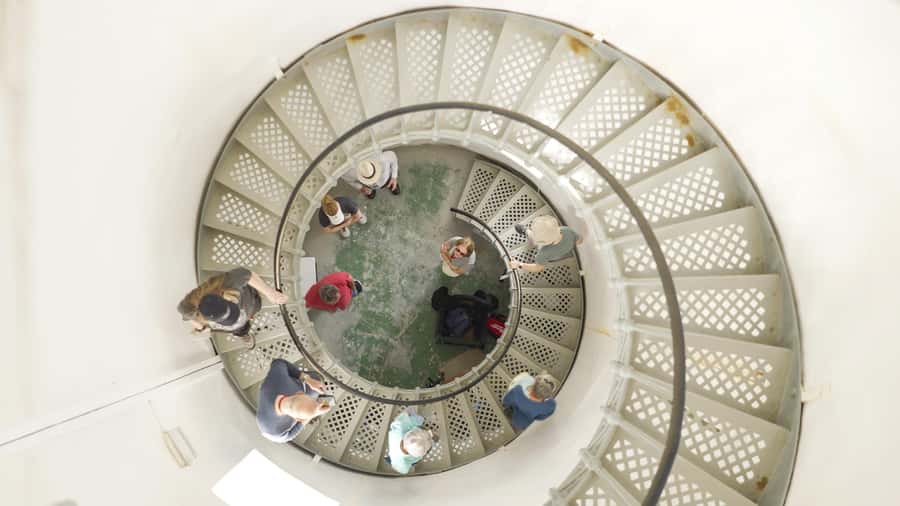
- The climb begins on the original cast-iron stairs
- The prism room explains how the light worked
- The balcony delivers the main Bruny Island view
- What the 30-minute format really means
- The real cost is more than the $17 ticket
- Getting there requires a proper Bruny Island plan
- What the guide adds to the visit
- Who will enjoy the lighthouse most
- Should you book Cape Bruny Lighthouse?
- FAQ
- How long is the Cape Bruny Lighthouse tour?
- How much does the tour cost?
- What does the ticket include?
- Is transport from Hobart included?
- How long should I allow to reach the lighthouse from Hobart?
- Where does the tour meet?
- What are the tour operating hours?
- Is the tour suitable for young children?
- What should I wear for the visit?
Key points before you book
- Climb an original 1835 lighthouse staircase: The cast-iron spiral stairs lead first to the former observation level, then up to the prism room.
- Stand 114 metres above the sea: The balcony gives you open views toward the Southern Tasmanian coast and the water below.
- Hear local lighthouse stories: Your English-speaking guide explains the tower’s construction, purpose, machinery, and keeper life.
- Plan a full outing around a 30-minute tour: The lighthouse visit is brief, but the trip from Hobart includes driving and a ferry crossing.
- Pay $17 for a focused historical experience: The price covers the guided tour and binocular use, but not transport or the national park entry fee.
- Expect a small group: Tours are limited to 10 people, and children under five cannot join.
Cape Bruny Lighthouse, built above rough southern seas
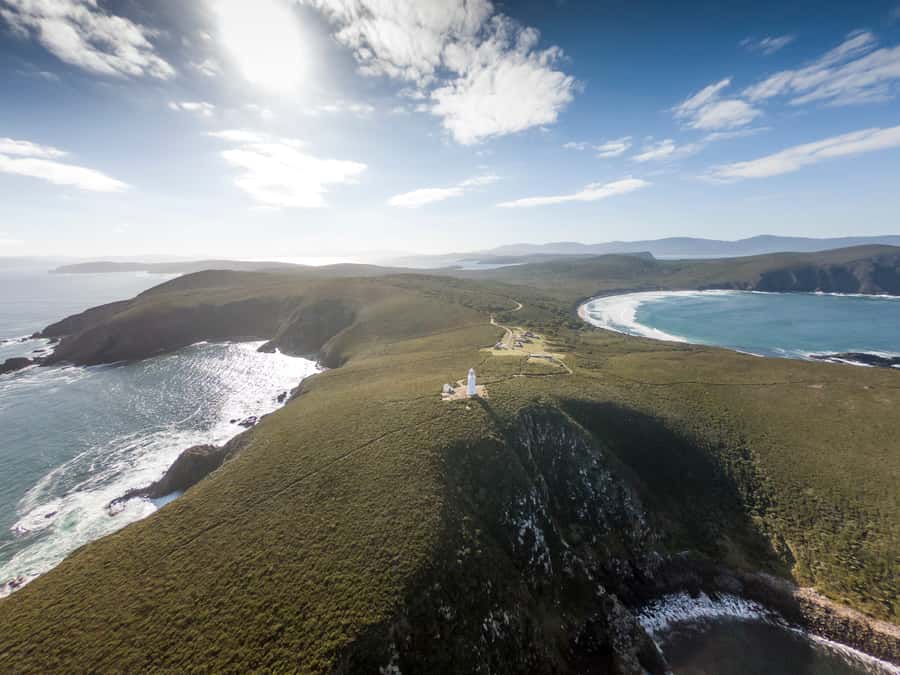
Cape Bruny Lighthouse is not a polished museum piece set behind glass. It is a working piece of coastal history, placed where ships needed a warning and where the sea could make that warning matter.
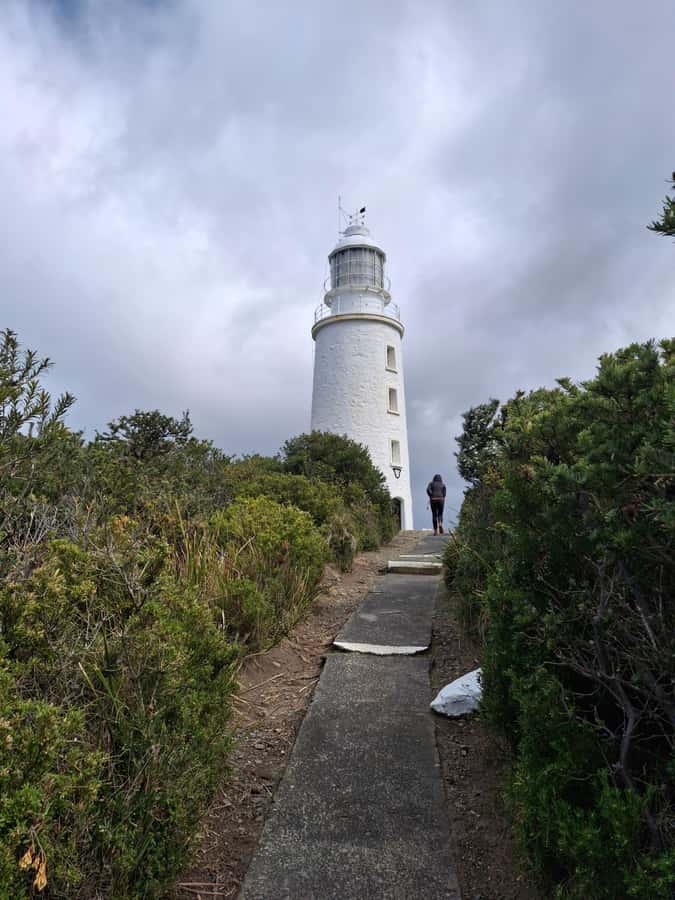
Convict labour built the lighthouse in 1835, and the light began operating in 1836. That date gives the tower real weight. You are not simply looking at an old building from the outside. You are climbing through a structure that has guided shipping movements and helped keep watch over the coast for generations.
Your guide meets you at the lighthouse entrance. From there, the tour follows the tower’s internal route rather than offering a broad walk around the site. That focused format works well because every part of the climb has a purpose.
The guide explains why the lighthouse was built in this location and how its position relates to the sea lanes around southern Tasmania. The setting does much of the teaching. With the cliffs, open ocean, and exposed position in front of you, the need for a warning light is easy to understand.
Other Hobart days worth booking alongside this:
- Bruny Island Food, Sightseeing, Guided Lighthouse Tour & Lunch
★ 5.0 · 2,989 reviews - Full-Day Guided Bruny Island Tour from Hobart
★ 5.0 · 1,331 reviews - kunanyi/Mt Wellington Explorer Bus- Return Tour (2.5 hours)
★ 5.0 · 1,249 reviews
The climb begins on the original cast-iron stairs
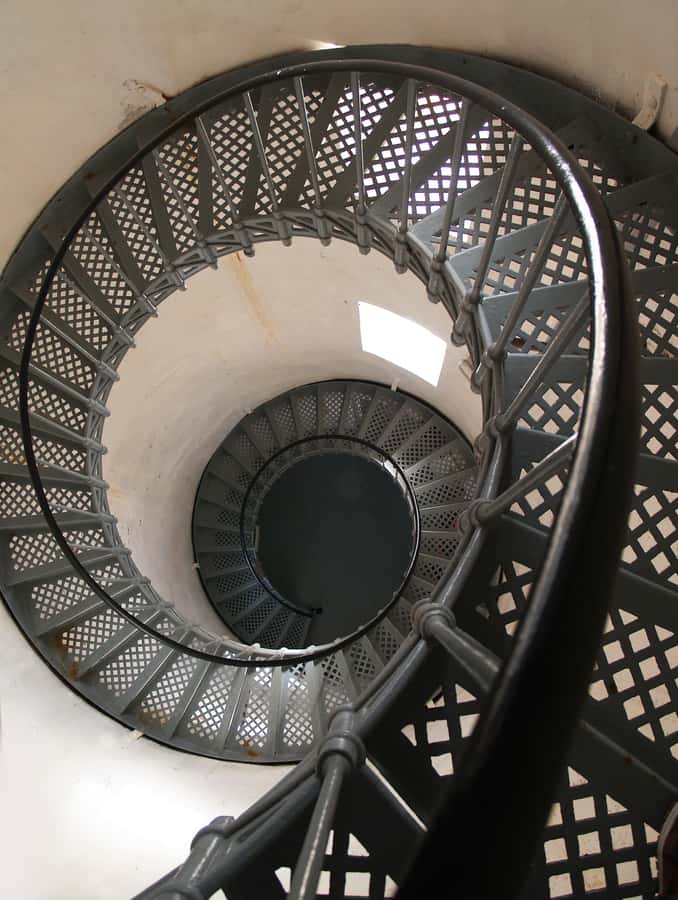
The first memorable part of the visit is the staircase. You climb the original cast-iron spiral stairs toward the level where light keepers once made daily observations.
This first landing was used for recording weather and shipping movements. That detail changes the way you see the room. It was not merely a place to pause during a climb. It was a workplace, where people watched the sea and kept written track of conditions that could affect ships.
The staircase is part of the experience, but it also sets the limits. You need suitable shoes because the wider approach includes concrete and gravel, and the climb itself is not a flat museum walk. One past participant described the walk to the starting point as long and steep, so give yourself time and do not arrive expecting to step straight from a car into the tower.
The tour is not suitable for children under five. Anyone who is uneasy with narrow spiral stairs, steep approaches, or exposed heights should think carefully before booking.
The prism room explains how the light worked
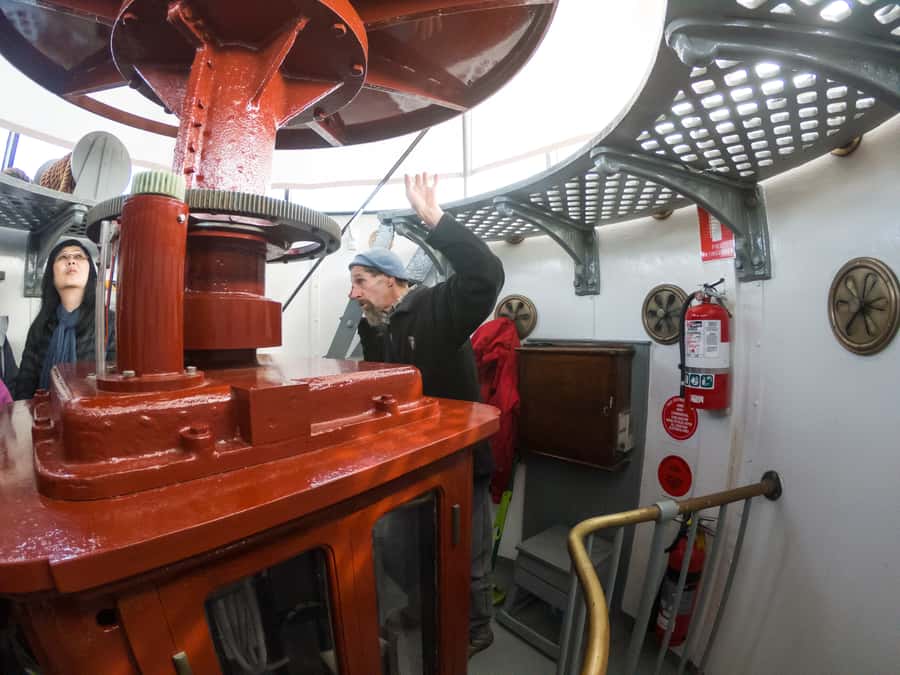
After the first level, you take a slightly steeper set of stairs to the prism or light room. Here, the guide explains how the light mechanism operated.
This is where the visit moves from architecture to practical technology. The prism assembly was designed to project the lighthouse beam across the water, and the guide connects the machinery with the tower’s purpose. You get a better sense of the skill required to keep the light operating before modern automation.
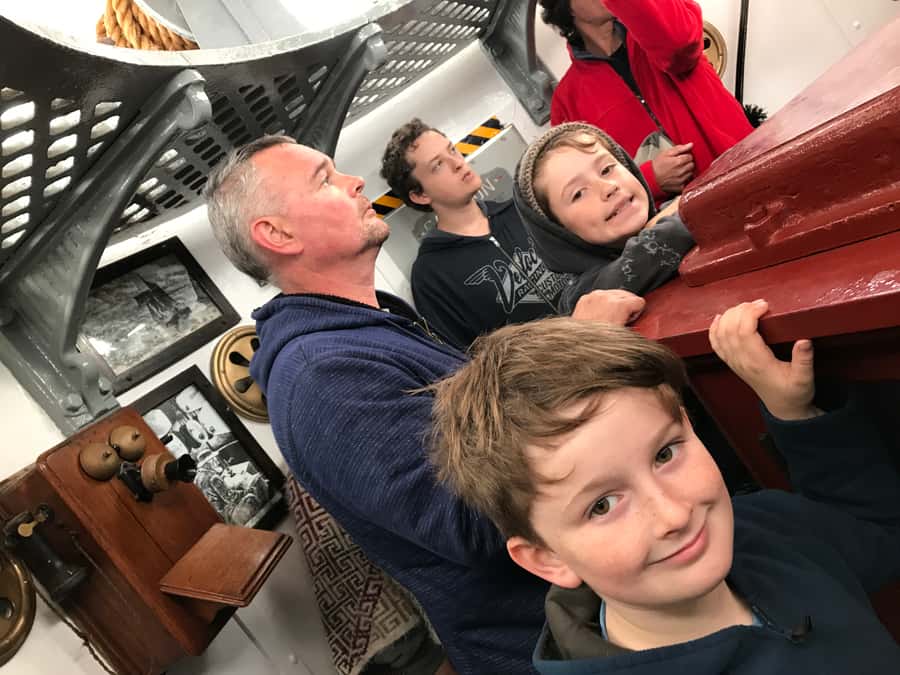
The prism room is also a strong reason to take the guided version rather than simply viewing the lighthouse from the outside. Without an explanation, the machinery can look like an attractive collection of old metal and glass. With the guide’s account, it becomes part of a system involving weather records, ship movements, maintenance, and long hours of watchkeeping.
The named guides praised in past tours include Matt and Chris. The important point is not to expect a scripted audio presentation. This is a live English-language tour, and the quality of the visit depends in part on the guide leading your group. The strongest guide accounts have made the history personal, especially the daily routine of the keepers.
The balcony delivers the main Bruny Island view
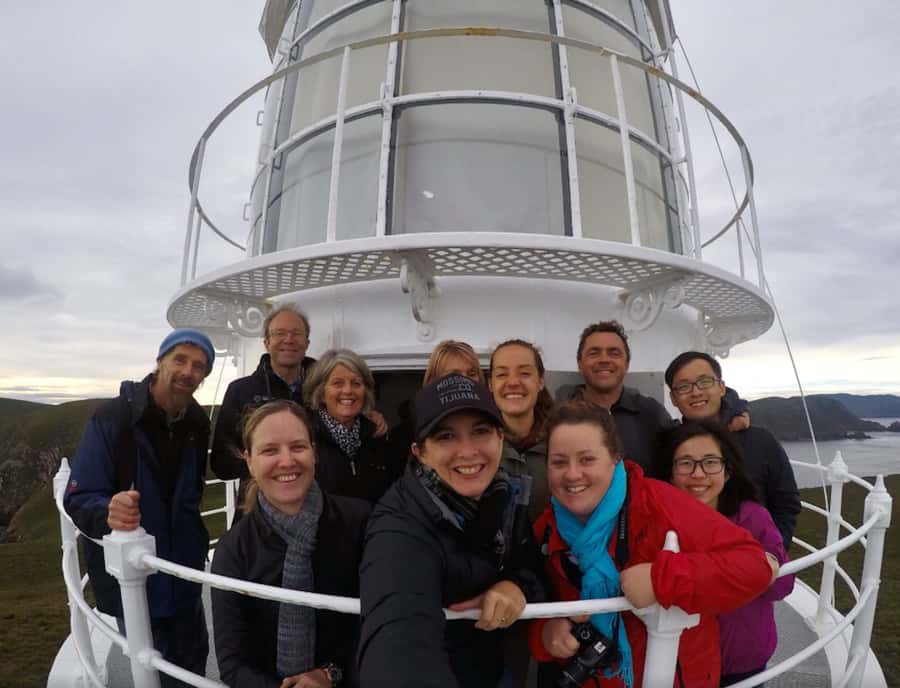
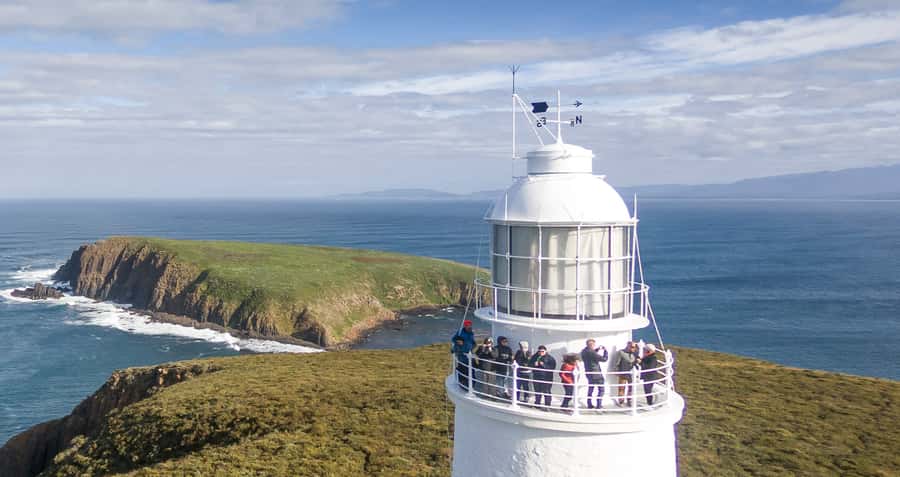
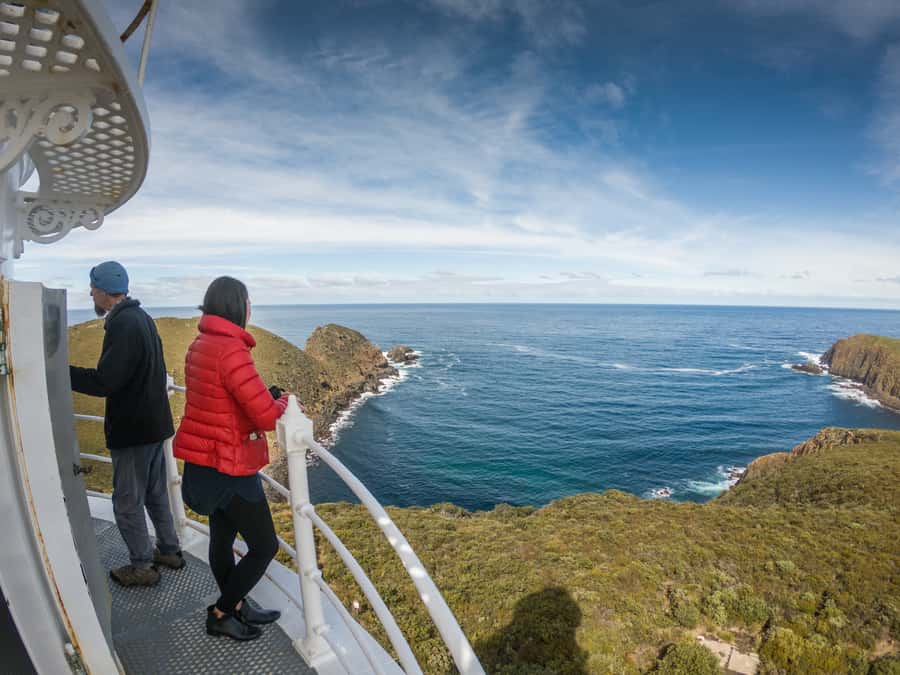
The final reward is the balcony, 114 metres above the sea. From here, you look across the ocean and sea cliffs toward the southern tip of Tasmania.
This is the part to save for photographs, but do not rush through the explanation first. The balcony makes more sense after you have seen the stairs, the observation level, and the prism room. You can then picture the tower as both a workplace and a warning point, rather than just a scenic lookout.
The views are wide and exposed. You may see seals or albatross in the waters below, and binoculars are provided for the tour. They are a useful inclusion because wildlife will not always be close enough for the naked eye, and the sea below can be a long way down.
Wind matters here. The guide checks conditions before taking the group onto the landing, and the balcony may feel very exposed in rough weather. One useful point from earlier visits is that the group was still able to go outside despite strong wind, but safety came first. Bring a layer even if the weather feels mild elsewhere on Bruny Island.
For photography, the balcony gives you the best angle, but the spiral stairs and prism room also make strong subjects. The original ironwork, the old light mechanism, and the open sea beyond provide more interest than a standard lookout photograph.
Same coast, a completely different day out:
- Hobart: Bruny Island Food, Sightseeing & Lighthouse Day Tour
★ 4.8 · 960 reviews - Hobart: kunanyi/Mt Wellington Explorer Bus Pass
★ 4.8 · 848 reviews - Bruny Island Traveller – Gourmet Tasting and Sightseeing Day Trip from Hobart
★ 5.0 · 786 reviews - Hobart: 24-Hour Hop-on Hop-off Sightseeing Bus Ticket
★ 4.5 · 770 reviews
What the 30-minute format really means
The guided portion lasts about 30 minutes. That is enough time for the main history, the staircase climb, the prism room, and the balcony, but it is not a long heritage tour.
I see the short length as both a benefit and a limitation. It is easy to fit into a day that includes other Bruny Island stops, and it will not consume an entire afternoon. On the other hand, anyone hoping for a detailed hour-long examination of lighthouse technology may find the visit brief.
The tour operates between 10:00 am and 4:00 pm, with hours subject to seasonal change. Check the available starting time before you build your day around it. The small-group limit of 10 people is a plus. A group this size should make it easier to hear the guide in the tower and ask about the light, the keepers, or the coast.
You should plan more time around the tour than the advertised 30 minutes. From Hobart, allow about 2.5 hours to reach Cape Bruny Lighthouse by road and ferry. The ferry is the only way to access Bruny Island, and you must make your own arrangements for transport from Hobart and around the island.
The real cost is more than the $17 ticket
At $17 per person, the lighthouse tour offers good value if you already plan to visit South Bruny. The ticket includes the 30-minute guided visit, a local guide, and binocular use. For that price, you are paying for access to the tower and an explanation that gives meaning to the structure and machinery.
The ticket does not include transport from Hobart or the national park entry fee. Those extra costs matter because the lighthouse is not a quick side trip from central Hobart. You need a car or another way to reach the island, a ferry crossing, and enough time for the drive to South Bruny.
I would not book this as a standalone activity if you are looking for a short outing from Hobart. The travel time is much longer than the tour itself. I would book it as one part of a Bruny Island day, especially if you value historic buildings, sea views, and a guided experience rather than only food stops or scenic driving.
The price also compares well with the quality of the setting. You are not paying just to see a lighthouse from a fence. You climb into the tower and reach the prism room and balcony. That access is the main value.
Getting there requires a proper Bruny Island plan
The meeting point is the entrance to Cape Bruny Lighthouse on Lighthouse Road, South Bruny, Tasmania. Since no transport from Hobart is provided, you need to plan the ferry, the island drive, and your arrival at the lighthouse yourself.
Allowing 2.5 hours from Hobart gives you a sensible planning figure, but you should still check the tour time and ferry arrangements before setting out. A late arrival would be especially frustrating here because the tour has a fixed duration and the next available departure may not fit your day.
The last approach includes concrete and gravel, with a steep walk to the starting point. Wear shoes with a secure grip. This is not the place for flimsy sandals if the track is damp or windy.
The practical upside of self-driving is control. You can build the lighthouse into a wider South Bruny outing and choose how much time to spend at other places. The downside is that every part of the connection is yours to manage. The tour operator does not collect you from Hobart.
What the guide adds to the visit
A good guide is central to this experience. The tower is visually impressive on its own, but the guide explains why the rooms exist and how people used them.
The strongest details concern the keepers’ routine: recording weather, tracking shipping movements, and operating the light system. These facts give the climb a human scale. You begin to picture long periods of observation in a remote, exposed place rather than simply admiring an old staircase.
Guides such as Matt and Chris have led earlier tours, and their style has been described as both informative and caring. That matters on the balcony, where the guide must balance the wish for photographs with safe movement in windy conditions.
The tour is conducted in English. If you enjoy asking questions, the group size of up to 10 gives you a better chance than a large coach tour. If you prefer to explore completely alone, the guided format may feel more structured, but independent access to the tower is not what this activity offers.
One area I would like to see given more attention is First Nations history. The convict construction and lighthouse-keeping stories are important, but they are only part of the human history of Bruny Island and southern Tasmania. If that subject matters to you, ask your guide what context is included.
Who will enjoy the lighthouse most
I would recommend this to you if you like historic buildings, working technology, dramatic coastal views, and short guided tours with a clear focus. It is especially suitable for anyone already spending a day on Bruny Island and wanting one memorable landmark rather than another long activity.
Photographers should bring a camera, but the best image may depend on conditions. Clear weather gives you broad views, while wind and rough seas add drama. The supplied binoculars also make it worth pausing to scan for seals and albatross.
You should reconsider if you dislike steep climbs, gravel approaches, tight spiral stairs, or exposed balconies. The activity is not suitable for children under five, and it is not a simple flat walk to a viewpoint.
The tour can also work well for mixed-age adult groups. Previous small groups have included couples who did not know one another and still found the shared climb and stories enjoyable. The limited group size helps keep the visit personal.
Should you book Cape Bruny Lighthouse?
Book it if the idea of climbing an original lighthouse staircase appeals to you. The $17 price is fair for the access, guide, binoculars, and views, provided you are already prepared to pay for the ferry, transport, and national park entry.
Skip it if your Bruny Island schedule is already tight or if you want a long, detailed museum visit. The tour itself is only 30 minutes, and the journey from Hobart takes far longer.
For most people who have enough time on South Bruny, I would make the lighthouse a priority. The combination of convict-built history, the prism room, keeper stories, and a balcony high above the sea gives you something more substantial than a quick photo stop.
FAQ
How long is the Cape Bruny Lighthouse tour?
The guided lighthouse tour lasts approximately 30 minutes.
How much does the tour cost?
The tour costs $17 per person.
What does the ticket include?
The ticket includes the 30-minute guided lighthouse tour, a local English-speaking guide, and use of binoculars.
Is transport from Hobart included?
No. You must arrange your own transport from Hobart and make your own way to the lighthouse.
How long should I allow to reach the lighthouse from Hobart?
Allow around 2.5 hours to self-drive from Hobart, including the road journey and ferry access to Bruny Island.
Where does the tour meet?
The meeting point is the entrance to Cape Bruny Lighthouse on Lighthouse Road, South Bruny, Tasmania.
What are the tour operating hours?
Tours operate between 10:00 am and 4:00 pm, although times may change seasonally. Check the available starting times when booking.
Is the tour suitable for young children?
The activity is not suitable for children under five.
What should I wear for the visit?
Wear suitable shoes because the approach includes concrete and gravel, and the route may involve a long, steep walk before the lighthouse tour begins.
Just added around Hobart
- kunanyi/Mt Wellington Explorer Bus – One Way Tour★ 5.0 · 63 reviews
- nipaluna (Hobart) Highlights Day Tour★ 5.0 · 33 reviews
- Full-Day Tour to Wineglass Bay from Hobart★ 5.0 · 122 reviews
- kunanyi/Mt Wellington Tour & Hobart Hop-On Hop-Off Bus★ 5.0 · 275 reviews
- Private Wine and Beverage Tours in Tasmania★ 5.0 · 66 reviews
- Hobart: Waterfalls, Wilderness & Wildlife – Active Day Tour★ 5.0 · 22 reviews
- Hobart: Wineglass Bay & Freycinet National Park – Active Day Tour★ 4.5 · 142 reviews
- 10 Days Ultimate Guided Tour of Tasmania – Comfort Tour★ 5.0 · 29 reviews
Hobart Tours, compared.

Bruny Island Food, Sightseeing, Guided Lighthouse Tour & Lunch
Read our review →
Full-Day Guided Bruny Island Tour from Hobart
Read our review →
Bruny Island Food, Sightseeing & Lighthouse Day Tour
Read our review →
Bruny Island Traveller – Gourmet Tasting and Sightseeing Day Trip from Hobart
Read our review →
Day Tour in Mt. Field, Mt. Wellington, Bonorong Wildlife Sanctuary and Richmond
Read our review →Browse the lists this tour appears in