
Reviewed · AQUARIUMS
Cairns Aquarium Admission Ticket
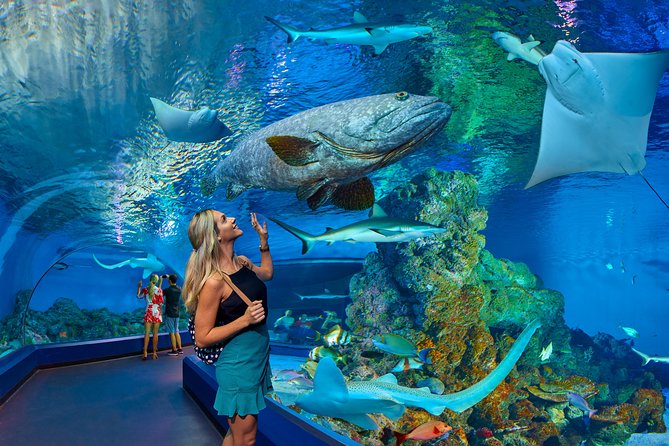
Cairns Aquarium takes you on a rain drop’s journey from mountain creeks through ancient rainforest, mangroves, the Great Barrier Reef, and into the Coral Sea. It is a smart way to meet North Queensland wildlife without a boat, wet suit, or weather gamble. I especially like the shark and ray tunnel and the clear link between freshwater, rainforest, and reef life.
I also like the touch tanks and daily talks, which give children something to do beyond looking through glass. The main drawback is size: some people will see everything in about 90 minutes, so the $41.60 admission feels better value when you stay for presentations and take your time.
In This Review
- Key points at a glance
- A rainforest-to-reef story in central Cairns
- The main exhibits and what you will see
- The Oceanarium tunnel and predator displays
- The Deep Reef Tank and live coral
- Touch tanks, reptiles, and rainforest life
- Daily talks and the shark feeding show
- The sea turtle hospital
- How long to spend inside
- Is $41.60 good value?
- Families, older visitors, and access
- Booking, queues, and cancellation
- Who should book the Cairns Aquarium ticket?
- Should you book it?
- FAQ
- How much does Cairns Aquarium admission cost?
- How long does a visit to Cairns Aquarium take?
- What does the general admission ticket include?
- Is transportation included?
- What are Cairns Aquarium’s opening hours?
- Can children visit the aquarium?
- Can I cancel the ticket for a refund?
Key points at a glance
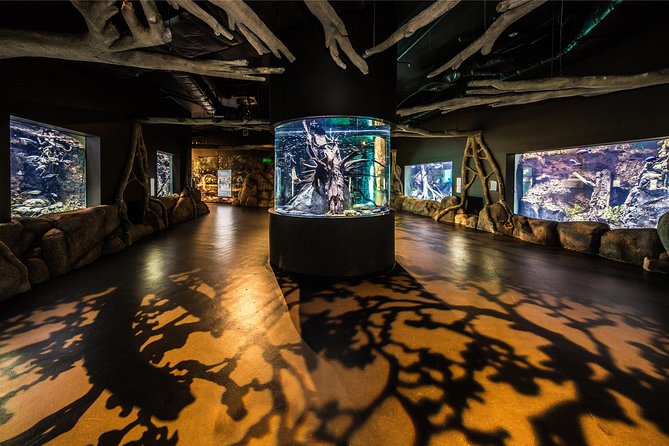
- Rainforest-to-reef route: Follow North Queensland’s water cycle through more than 70 habitats.
- Shark and ray tunnel: Walk below large marine animals in the Oceanarium.
- Deep reef display: See coral and reef species in Australia’s only Deep Reef Tank, according to the aquarium.
- Hands-on exhibits: Touch tanks let you get close to marine creatures such as starfish.
- Live presentations: Daily conservation talks include shark, ray, and reef topics.
- Useful wet-weather plan: The aquarium is open every day of the year, including public holidays.
A rainforest-to-reef story in central Cairns

The aquarium’s best idea is its route. Instead of presenting unrelated tanks in a random order, it follows a drop of rain as it moves through Tropical North Queensland.
You begin with freshwater environments, where creeks and streams collect water from the tropical mountains. From there, the story moves through rivers and rainforest before reaching mangroves, the coast, the Great Barrier Reef, and the Coral Sea.
That sequence gives the animals context. A freshwater fish is not simply another fish in a tank. It is part of a larger system connected to rainfall, rivers, forest, mudflats, mangroves, coral, and open ocean.
I find this especially useful if you are planning a reef trip. Snorkeling and boat excursions show you the living reef from one angle, but the aquarium lets you slow down and look closely at creatures you might miss in open water. It also helps you understand how the rainforest and reef depend on the same water cycle.
The attraction focuses on wildlife from Tropical North Queensland rather than trying to represent every ocean on Earth. That local focus makes the visit more relevant while you are in Cairns.
A few more Cairns trips to weigh up
- Cairns Aquarium General Admission Ticket
★ 4.6 · 422 reviews - Cairns: Night at the Aquarium Guided Tour & 2 Course Dinner
★ 4.6 · 106 reviews - Cairns: Aquarium Guided Twilight Tour with 3-Course Dinner
★ 4.7 · 106 reviews
The main exhibits and what you will see
Cairns Aquarium contains more than 70 exhibits and habitats, with more than 15,000 animals. The aquarium also describes its collection as holding over 16,000 marine and land animals, so the exact figure depends on how the collection is counted.
Expect a mix of freshwater species, rainforest animals, reptiles, coral reef creatures, sharks, rays, and animals from the deeper Coral Sea. Some species are rarely seen in the wild, which gives the indoor setting real value. You can study them without poor visibility, strong currents, crowded boats, or motion sickness.
The displays are built around local ecosystems. Plaques add useful background, and the layout is generally easy to follow. You can walk at your own pace, pause at benches, and return to a favorite tank rather than being pushed along by a fixed tour group.
The attraction covers two levels. That does not make it enormous, but it does give the visit a clear rhythm. You move from smaller habitats and detailed displays toward larger tanks and signature marine exhibits.
If you enjoy reading every sign, attending talks, and watching animal behavior, allow close to three hours. If you move quickly and focus on the biggest displays, about 90 minutes to two hours may be enough.
The Oceanarium tunnel and predator displays
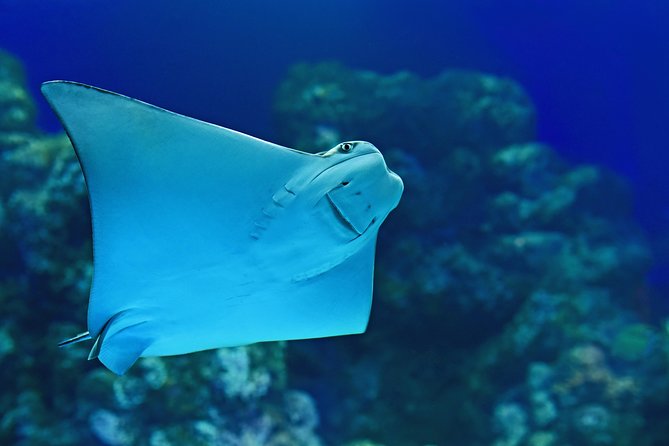
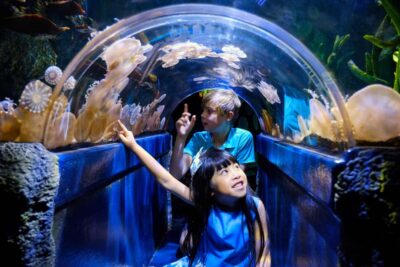
The Oceanarium is the visual centerpiece. Its underwater tunnel puts you below sharks and stingrays as they pass overhead and alongside you.
This is where the aquarium feels more than a collection of glass boxes. The tunnel gives you a changing view of the animals, and you can watch how different species move through the same water. It is also a strong stop for children, who can see marine life from a position that is impossible during a normal walk along a beach.
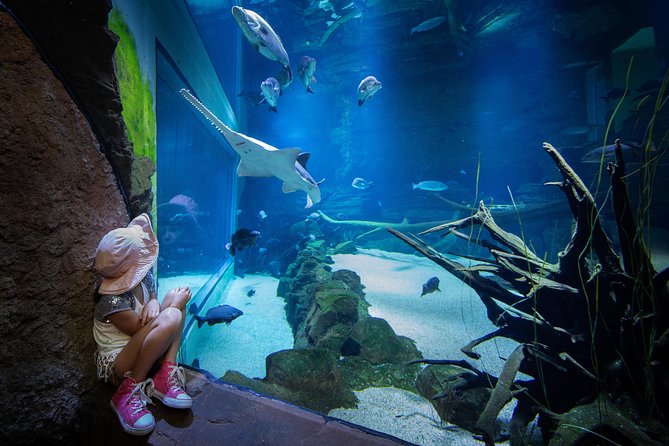
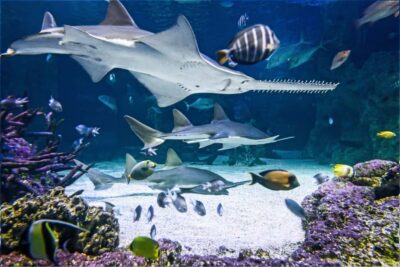
The shark and predator area is another highlight. The large tanks and clean viewing panels make it easier to study shape, movement, and behavior. You do not need to be an expert to appreciate the scale of the animals.
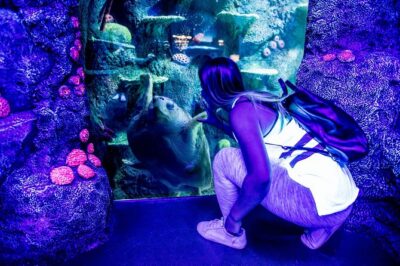
Look for a quiet moment at the glass. Children often rush toward the tunnel, but you will get more from it if you pause and watch rather than simply taking a photograph. The aquarium is at its best when you give the animals time to come into view.
The Deep Reef Tank and live coral
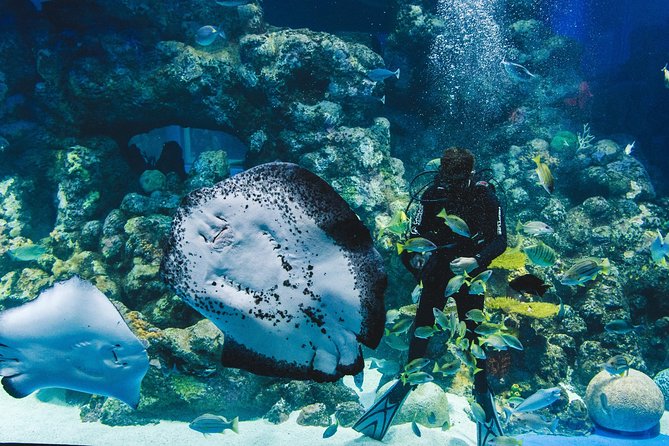
The Deep Reef Tank is one of the aquarium’s signature features. It presents reef life at a depth and scale that can be hard to appreciate while snorkeling.
The aquarium describes it as Australia’s only Deep Reef Tank and also identifies it as the tallest deep reef tank in the Southern Hemisphere. Those claims make it a worthwhile stop for anyone interested in the Great Barrier Reef, particularly if weather has canceled a boat trip.
Live coral displays bring movement and color to the reef section. You will see more than decorative fish. The point is to show a living system in which coral, fish, and other marine animals share space.
This section is also useful after a reef excursion. In open water, you may see only brief flashes of a fish or miss animals hidden among coral. Behind glass, you can compare species and take a closer look without worrying about sun, wind, waves, or a guide’s schedule.
The aquarium cannot reproduce every part of a natural reef. It is a preview and a teaching tool, not a replacement for snorkeling. Still, it fills in many gaps and gives you a better sense of the reef’s variety.
Same coast, a completely different day out:
- Great Barrier Reef Snorkeling and Diving Cruise from Cairns
★ 4.5 · 3,714 reviews - From Cairns: Great Barrier Reef Cruise by Premium Catamaran
★ 4.9 · 3,567 reviews - From Cairns: Self-Guided Kuranda Trip with Train and Skyrail
★ 4.6 · 3,392 reviews - Passions of Paradise Great Barrier Reef Cruise by Catamaran
★ 5.0 · 2,564 reviews
Touch tanks, reptiles, and rainforest life
The marine touch tank adds a hands-on break from the larger displays. You may be able to touch marine animals such as starfish under the guidance of aquarium staff.
This is particularly helpful for children who learn through movement and contact. It also makes the difference between a freshwater habitat and a saltwater habitat more memorable. Follow staff instructions and treat the animals gently, since the point is close observation rather than handling for entertainment.
The freshwater and rainforest areas help broaden the visit beyond fish. Tropical North Queensland’s wildlife is not limited to the reef, and the route shows how rivers, rainforest, mangroves, and the sea connect.
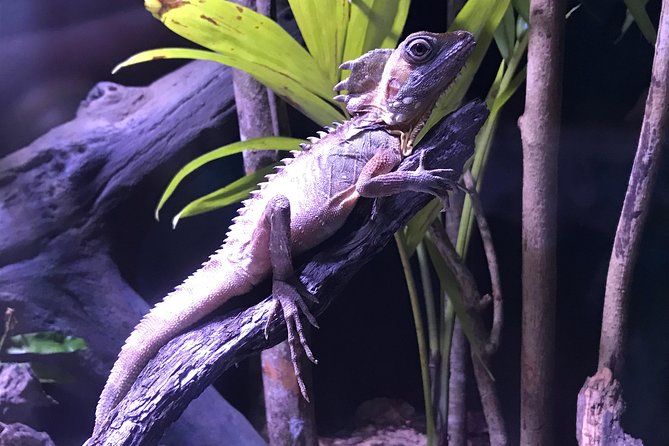
You will also encounter reptiles and land animals associated with the region. Some are difficult to spot in the wild, even on a dedicated nature outing. Here, you have a better chance to see them at close range and learn where they fit in the local environment.
Daily talks and the shark feeding show
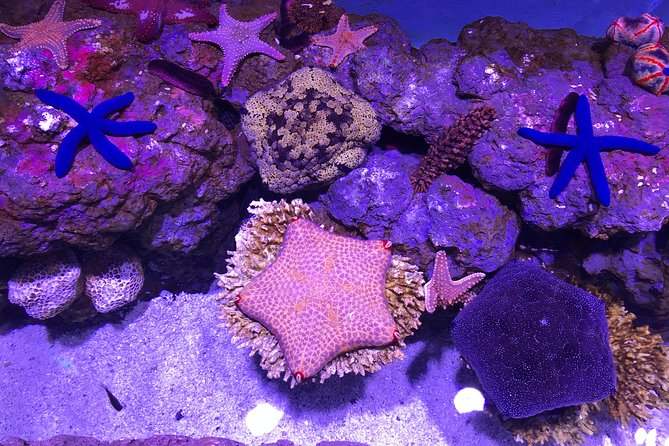
The ticket includes daily conservation talks and presentations. These are worth building into your visit because they turn a self-guided walk into a more active experience.
Topics include sharks, rays, reef life, and the relationship between rainforest and marine ecosystems. Some presentations focus on feeding, including a live ray and shark feeding show.
Presentation quality can vary by speaker and subject. Some talks are lively and memorable, while others may feel more like informal showmanship than a detailed lesson. I would still attend at least one. A good talk can explain behavior that is hard to understand from a label alone.
Plan your route around the published daily schedule when you arrive. The available times are not supplied with this ticket information, so check at the aquarium rather than assuming a presentation will happen whenever you pass a tank.
If you are traveling with children, a talk gives the visit a useful pause. You can also use it as a reason to slow down at the large tanks instead of trying to see the whole building in one hurried circuit.
The sea turtle hospital
The sea turtle rehabilitation center is an optional highlight if it is operating during your visit. It focuses on turtle care and conservation in Australia, with information about rehabilitation and preservation.
The center adds a practical conservation angle. You are not only looking at wildlife in display tanks. You also get a clearer sense of the work required to protect injured or threatened animals.
A turtle hospital tour is a separate experience from standard admission, so do not assume it is included in the $41.60 ticket. If this matters to you, check availability and pricing before you arrive.
For many families, the hospital may be the most meaningful part of the day. It connects the aquarium’s exhibits with real conservation work and gives children a reason to think about what happens to marine animals outside a controlled display.
How long to spend inside
The advertised visit length is two to three hours, but you can reasonably see the main route in about 1.5 hours if you move briskly.
I would allow at least two hours. That gives you time for the Oceanarium, the reef tanks, touch pools, signs, and one or two presentations without making the visit feel rushed.
Three hours makes sense if you have children, enjoy photography, or want to sit and watch the larger animals. Benches are available, which helps if you are traveling with older relatives or simply need a break after a morning outdoors.
The aquarium is open from 9:30 a.m. to 3:30 p.m., with last entry at 2:30 p.m. That early closing time matters. Do not plan to arrive late in the afternoon after a full day elsewhere and expect a leisurely visit.
A morning arrival gives you the most flexibility. You can attend talks, take your time, and still have lunch afterward. The aquarium is also a useful activity before hotel check-in or when rain disrupts outdoor plans.
Is $41.60 good value?
At $41.60 per person, this is not a quick, low-cost stop. The value depends on how you use it.
If you spend only an hour walking past the displays, the price may feel high, especially because the aquarium is compact. If you stay for two or three hours, attend presentations, use the touch tanks, and spend time in the Oceanarium, the admission makes more sense.
The ticket covers general entry, the live ray and shark feeding show, the Oceanarium, the Deep Reef Tank, marine touch tanks, and conservation talks. Food, drinks, transport, and any separate turtle hospital experience are not included.
I see the aquarium as good insurance against bad weather and a strong companion to a reef trip. A monsoon or canceled boat outing can turn a planned day into a headache. This gives you a reliable indoor option where you can still see many of the creatures associated with the reef and rainforest.
It also has value for people who do not snorkel, dislike boats, or get motion sick. You can examine marine life in comfort and at your own pace.
Families, older visitors, and access
This is a family-friendly attraction, but it is not only for children. The clear route, informative signs, benches, clean facilities, and short overall duration make it manageable for a wide range of visitors.
Children must be accompanied by an adult. Most people can take part in the standard aquarium experience, and service animals are allowed. The aquarium is near public transportation, but transport to and from the attraction is not included in this ticket.
For families, I would set aside enough time to stop at the touch tank and attend a talk. Those interactive elements help prevent the visit from becoming a simple walk past fish tanks.
For adults, the local focus is the main draw. You get a useful introduction to the ecosystems you may encounter around Cairns, with enough detail to make a reef or rainforest excursion more rewarding.
The aquarium is compact, which can be an advantage. You are unlikely to spend all day walking from one distant hall to another. On the other hand, people expecting a huge city aquarium may feel they have seen everything quickly.
Booking, queues, and cancellation
The ticket is mobile, so you can keep it on your phone rather than printing it. Booking ahead guarantees entry, but it does not promise a faster admission line.
That distinction matters during school holidays and other busy periods. Some visitors have found prepaid admission convenient, while others have waited in a line despite booking online. If you book, think of it mainly as securing entry, not as a priority access pass.
The aquarium operates 365 days a year, including public holidays. You can cancel for a full refund if you do so at least 24 hours before the experience start time. Cancellations or changes made within 24 hours are not accepted for a refund.
Because opening hours are 9:30 a.m. to 3:30 p.m., check the date and arrival time carefully. Last entry is at 2:30 p.m.
Who should book the Cairns Aquarium ticket?
I would book this if you want a dependable indoor activity, are traveling with children, or want to learn more about North Queensland before visiting the reef.
It is also a good choice after snorkeling. The aquarium shows animals you may not have seen in open water, and it lets you enjoy marine life without sun exposure, waves, or a wet shirt.
I would be more cautious if you expect a giant aquarium that fills an entire day. You may finish the main route in 90 minutes, and the ticket price will feel less attractive if you skip the talks and move quickly.
Should you book it?
Book the Cairns Aquarium if you value local wildlife, clear displays, and a flexible two to three hour activity. The rainforest-to-reef route, Oceanarium tunnel, live coral, touch tanks, and conservation talks give the visit more purpose than a simple collection of tanks.
For the best value, arrive early, check the presentation schedule, and allow at least two hours. If your plans depend on outdoor weather, this is one of Cairns’ more useful backup activities. Just keep your expectations realistic: it is compact, not a full-day attraction, and prepaid entry does not necessarily mean skipping the queue.
FAQ
How much does Cairns Aquarium admission cost?
The admission ticket costs $41.60 per person.
How long does a visit to Cairns Aquarium take?
The expected visit lasts about two to three hours. If you move quickly, you may see the main exhibits in around 1.5 hours.
What does the general admission ticket include?
It includes entry to the aquarium, more than 70 habitats, the Oceanarium with underwater tunnel, the Deep Reef Tank, marine touch tank, live ray and shark feeding show, and daily conservation talks and presentations.
Is transportation included?
No. Transportation to and from Cairns Aquarium is not included. The aquarium is near public transportation.
What are Cairns Aquarium’s opening hours?
The aquarium is open from 9:30 a.m. to 3:30 p.m. The last entry is at 2:30 p.m. It operates every day of the year, including public holidays.
Can children visit the aquarium?
Yes. The aquarium is family-friendly, but children must be accompanied by an adult.
Can I cancel the ticket for a refund?
Yes. You can receive a full refund if you cancel at least 24 hours before the experience start time. Cancellations or changes made less than 24 hours before the start time are not accepted for a refund.
Just added around Cairns
- Night Walk in Cairns Botanic Gardens – Let’s Go Buggin★ 5.0 · 153 reviews
- Paronella Park and Millaa Millaa Falls Full-day Tour from Cairns★ 5.0 · 47 reviews
- Ultimate Great Barrier Reef and Rainforest 45-minute Helicopter Tour★ 5.0 · 59 reviews
- Port Douglas Sunday Markets Day Tour★ 4.0 · 25 reviews
- Cairns City Sights and Surrounds Tour★ 5.0 · 227 reviews
- Small-Group Afternoon Cairns City Tour with Harbour Dinner Cruise★ 4.5 · 32 reviews
- Full-day Tour at the Atherton Tablelands with Food Tasting★ 5.0 · 30 reviews
- Skyrail Rainforest Cableway Day Trip from Port Douglas★ 4.5 · 27 reviews
Aquariums, compared.
Aquarium Guided Twilight Tour with 3-Course Dinner
Read our review →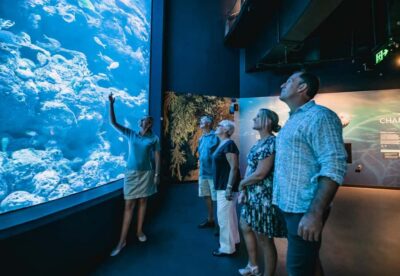
Night at the Aquarium Guided Tour & 2 Course Dinner
Read our review →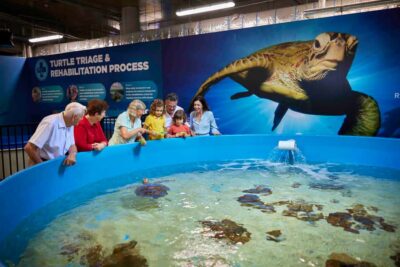
Aquarium Entry Ticket and Turtle Rehabilitation Tour
Read our review →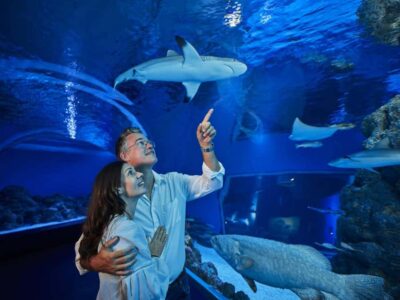
Browse the lists this tour appears in