
Reviewed · HISTORICAL TOURS
Cairns History Walking Tour
Cairns was not built only for reef trips and rainforest drives. This 90-minute history walk shows how Aboriginal culture, colonial ambition, Chinese migration, war, trade, and government shaped the city you see today. The route begins and ends at Cairns Museum, with eight stops through the compact center.
I like the 12-person maximum, which gives a guide room to answer questions and point out details you could easily miss. I also like the broad subject range, from traditional owners and outdoor Aboriginal art to pirates, opium, Chinatown, and World War II. The main drawback is the short format: ten minutes at most stops means the tour introduces many stories rather than examining any one of them at length.
In This Review
- Key points to know before you book
- Why Cairns makes sense as a history walk
- Starting at Cairns Museum on Lake Street
- Cairns Art Gallery and the story in Shields Street
- The Esplanade Lagoon, reef, rainforest, and pirates
- Government at the Mulgrave Shire building
- The Reef Hotel Casino and Cairns at war
- The Chambers, Bolands Centre, and early commerce
- Crystal Ball Bookstore and Cairns Chinatown
- Hides Hotel and the return to the museum
- What the small group and guide add
- Is $37.98 a fair price?
- Who should book this Cairns walk?
- Final verdict: a smart first look at Cairns
- FAQ
- Where does the Cairns History Walking Tour start?
- Where does the tour finish?
- How long does the tour take?
- How large is the tour group?
- What places does the tour visit?
- Does the tour include admission tickets?
- Who provides the tour?
- Is the tour available by mobile ticket?
- Can I cancel for a full refund?
Key points to know before you book
- A compact route through central Cairns: The walk begins at Cairns Museum and returns there after visiting major civic, cultural, and historic sites.
- History reaches back at least 40,000 years: Aboriginal culture is part of the story from the start, rather than an afterthought.
- A small group capped at 12: This is a more personal setup than a large city walk, with a better chance to hear and ask questions.
- Stories go beyond colonial buildings: Expect discussion of pirates, the opium trade, Chinese migration, gold, war, reef and rainforest protection, and local government.
- Guides can add practical local advice: Peter and Georgia are named guides associated with the tour, and Georgia has helped guests find coffee and dining spots.
- Plan for weather and an easy walking pace: The tour needs good weather and takes about an hour and a half on foot.
Why Cairns makes sense as a history walk
Cairns is often treated as a launch point. You arrive, board a reef cruise or head inland toward the rainforest, then move on. That can leave the city itself feeling like a service stop. This walk corrects that impression by explaining why Cairns developed where it did and how many different forces shaped it.
The route covers a relatively small part of central Cairns, but the subjects stretch well beyond the streets under your feet. You hear about the traditional meeting place of Aboriginal owners and colonial settlers, the arrival of government, the gold rush, Chinese communities, early hotels, maritime business, wartime Cairns, and the city’s connection to the Great Barrier Reef and rainforest.
I especially like that the experience includes architecture, art, and public memorials, not just dates and names. A building can tell you how a city governed itself. A hotel can reveal how early settlers socialized and did business. A street artwork can bring Aboriginal history into the present rather than leaving it locked in a museum display.
The tour is also short enough to fit around other plans. You can take it early in your stay and use the information to make better sense of Cairns for the rest of your visit. It is not designed to replace a full museum visit or a long specialist lecture. Think of it as a guided introduction that puts the city into focus.
A few more Cairns trips to weigh up
- Snorkel & Dive the Reef: Sustainable, Scientific & Cultural Tour
★ 4.5 · 841 reviews - Entry Ticket at Historic Village Herberton
★ 5.0 · 114 reviews - Authentic Indigenous Cultural Tour Including Scenic River Cruise
★ 5.0 · 88 reviews
Starting at Cairns Museum on Lake Street
Meet outside Cairns Museum at 93/105 Lake Street. This is both the starting point and the finishing point, which keeps the logistics simple. You do not need to arrange a second pickup or figure out how to return to a distant neighborhood.
The first stop looks at Cairns as a historic meeting place for traditional owners and colonial settlers. That opening matters because it sets the tone for the whole walk. The city’s past did not begin with European settlement, and the guide places Aboriginal history at the beginning of the story.
You spend about ten minutes here. That is enough for an introduction and some context, but not enough for a detailed treatment of 40,000 years of culture. If that subject is central to your interests, treat this stop as a starting point and allow separate time for Cairns Museum or other cultural experiences.
The museum meeting point is also practical for first-time visitors. It puts you in the center of town and gives you a clear landmark to find. The activity uses a mobile ticket, and confirmation is provided when you book.
Cairns Art Gallery and the story in Shields Street
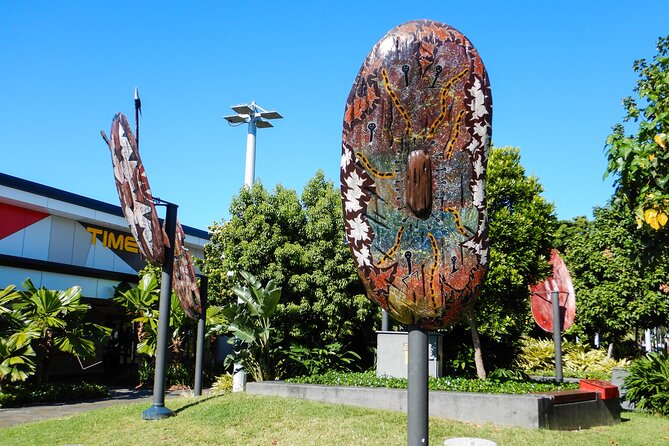
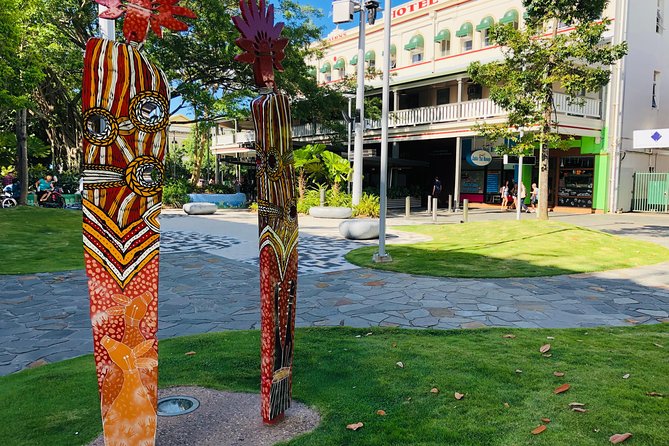
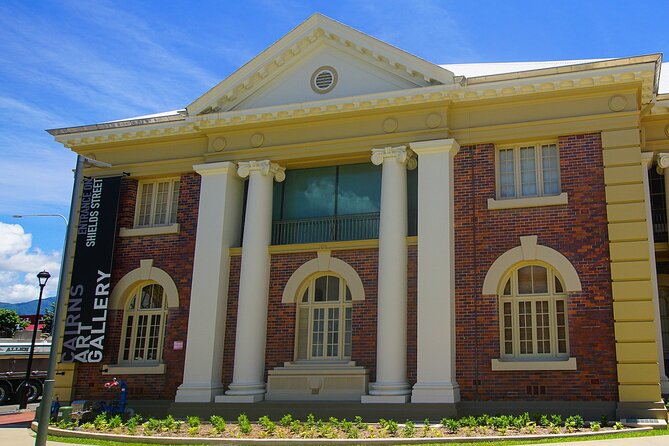
The second stop moves toward Cairns Art Gallery and the nearby Aboriginal shields street art by Paul Bong. This is one of the more distinctive parts of the route because it connects public art with the city’s past. You are not simply looking at an old facade. You are being asked to notice how history is presented in the streetscape today.
The guide also discusses the gold rush and the establishment of the colony, along with the former Public Curators building, now associated with Cairns Regional Gallery. These details help explain how Cairns moved from a frontier settlement toward a more organized town.
Again, the stop lasts around ten minutes. The advantage is variety. You move from Aboriginal art to colonial development and civic architecture without spending the whole morning in one location. The tradeoff is that you may want to pause afterward and inspect the art or gallery at your own speed.
This is where a guide can add real value. A building is easy to walk past without noticing its former purpose. A short explanation of who used it and why it mattered can turn an ordinary block into part of the city’s story.
The Esplanade Lagoon, reef, rainforest, and pirates
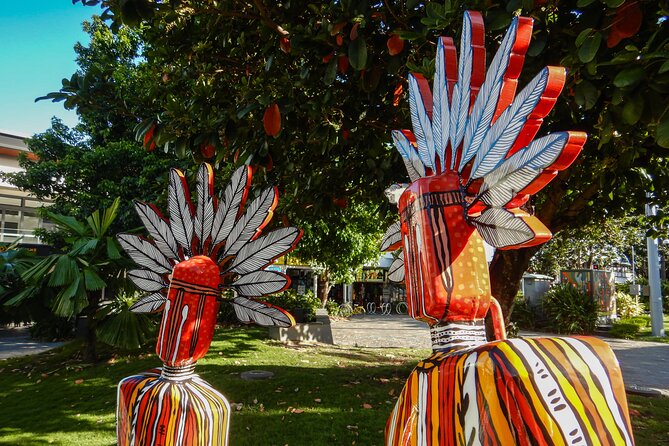
At Cairns Esplanade Lagoon, the discussion shifts from city buildings to the natural setting that made Cairns important. The guide covers the reef and rainforest as World Heritage Sites, then connects those natural areas with early settlement and tales of pirates.
That combination is useful because it links the modern tourist economy with older stories of place, trade, and survival. Cairns is now closely associated with access to the Great Barrier Reef and tropical North Queensland, but the city’s relationship with the coast has always been more complicated than a postcard view suggests.
The lagoon itself is a recognizable central landmark, so this stop helps you orient yourself in the city. It also gives the guide a chance to explain how Cairns relates to its surrounding natural areas without taking you out to the reef or rainforest. You get context, not a substitute for those separate excursions.
The walk is outdoors, and the weather policy matters here. If poor weather causes the activity to be canceled, you are offered another date or a full refund. One tour review refers to cold and windy conditions, a useful reminder that tropical Cairns is not guaranteed to feel hot every hour of the day. Bring sensible walking clothes rather than assuming the forecast will behave.
Same coast, a completely different day out:
- Great Barrier Reef Snorkeling and Diving Cruise from Cairns
★ 4.5 · 3,714 reviews - From Cairns: Great Barrier Reef Cruise by Premium Catamaran
★ 4.9 · 3,567 reviews - From Cairns: Self-Guided Kuranda Trip with Train and Skyrail
★ 4.6 · 3,392 reviews - Passions of Paradise Great Barrier Reef Cruise by Catamaran
★ 5.0 · 2,564 reviews
Government at the Mulgrave Shire building
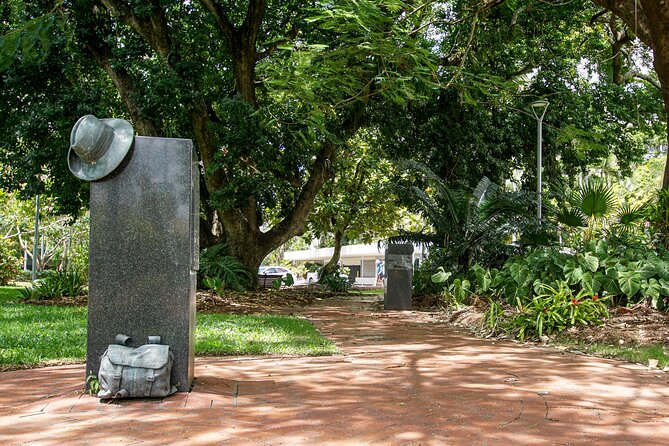
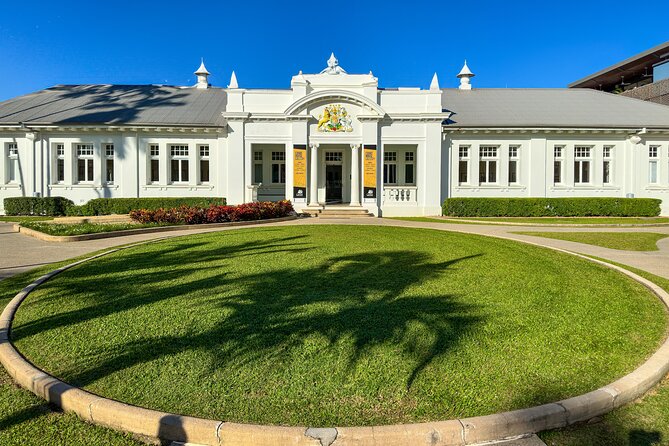
The Cairns Tourist Information Centre is the next stop, where the guide discusses early government in front of the Mulgrave Shire building. This structure served as the original local government headquarters for the colony.
It is easy to skip political history on a holiday, but this stop gives the town’s growth some shape. Government buildings show when a settlement began needing formal administration, public services, and local decision-making. They also help explain why certain parts of the center look more civic than commercial.
You spend about ten minutes here. The stop is best for anyone interested in how a settlement became a functioning town, rather than just a collection of businesses and wharves. If you prefer only dramatic stories, this may feel quieter than the pirate or war sections. Still, it adds necessary structure to the walk.
The central location keeps the route easy to follow. You are not being driven between scattered sites, and there is no complicated transport to arrange. Most people can take part, and the tour runs near public transportation.
The Reef Hotel Casino and Cairns at war
The stop at The Reef Hotel Casino includes the war memorial beside the casino. Here the guide explores the role of war in Cairns life, with special attention to World War II.
This is a good example of the tour’s range. The casino is a modern entertainment venue, while the memorial nearby points to a much more serious chapter. Placing them side by side encourages you to see the city as more than a holiday playground.
The guide spends around ten minutes on this section. Expect an explanation of how wartime events affected Cairns, rather than a visit to a military museum. The brief timing keeps the walk moving, but anyone with a strong interest in World War II may want more time elsewhere.
I appreciate the inclusion of the memorial because it adds emotional weight to the route without turning the entire experience into a military history lesson. You get another piece of the city’s identity, then continue through the commercial center.
The Chambers, Bolands Centre, and early commerce
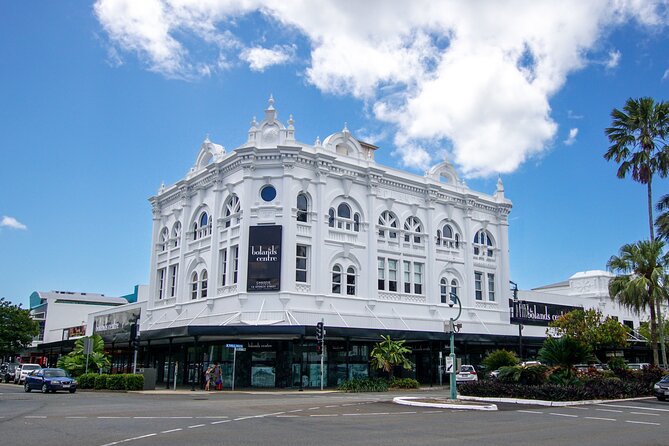
From The Chambers, the guide points out the historic Bolands Centre, described as Cairns’ first department store. You also hear about the Adelaide Steamship Company and the Central Hotel from this vantage point.
This is one of the clearest stops for understanding business in early Cairns. Department stores, shipping companies, and hotels tell you how goods, workers, visitors, and money moved through the town. The story becomes less about isolated buildings and more about the network that allowed the settlement to grow.
The stop lasts ten minutes. You may not enter each building, so the value comes from the explanation and the view of the surrounding streets. Look up as you walk. Historic details often sit above shopfront level, where you might otherwise miss them.
The Central Hotel also leads naturally into the role of hotels in early colonial life. They were not just places to sleep. They formed part of the social and commercial infrastructure of a young town. That context makes later stops, including Hides Hotel, easier to understand.
Crystal Ball Bookstore and Cairns Chinatown
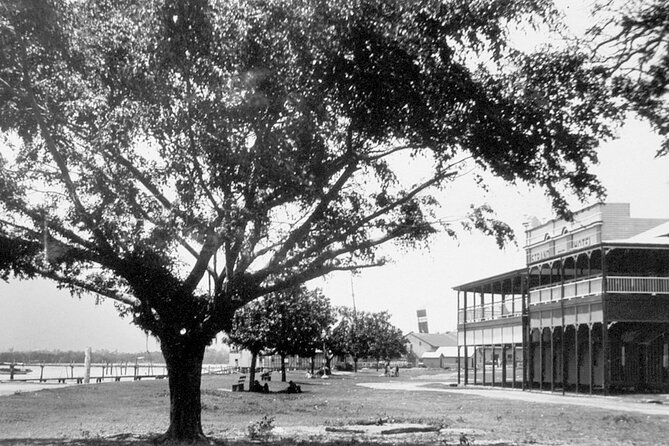
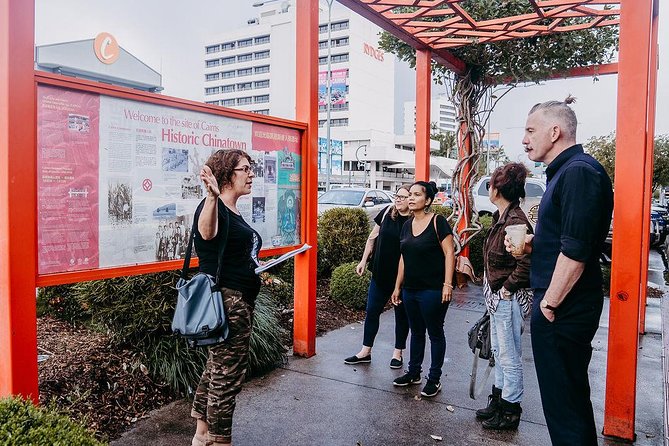
At Crystal Ball Bookstore, the route visits the Chinatown exhibit in front of the shop. The guide discusses the important role of Chinese communities in Cairns history and explains why Grafton Street became the heart of Chinatown.
This is one of the most useful stops for anyone who wants a fuller picture of the city’s past. A colonial story can easily become too narrow if it focuses only on European officials and businesses. The Chinatown section adds migration, commerce, and community life to the account.
The stop is shorter, about five minutes, so it works as a concise introduction. You will not get an extended tour of every Chinese site in Cairns. Instead, you learn why Grafton Street mattered and how Chinese residents contributed to the city’s development.
The bookstore location also makes the stop feel connected to present-day Cairns rather than sealed off in the past. That is a strength of the walking format. You see history in the same places where people shop, eat, work, and pass through today.
Hides Hotel and the return to the museum
The final stop brings you back toward the museum and Hides Hotel. The guide discusses the School of Arts and its role in the founding colony, then explains Hides Hotel and the importance of historic hotels in early town life.
Ending with the hotel ties together several threads from the walk: commerce, accommodation, social life, and the practical needs of a growing settlement. The School of Arts adds another angle by showing how education and community institutions fit into the colony’s development.
This final section takes about five minutes before the activity ends back at the museum meeting point. The return is convenient, especially if you plan to continue exploring Cairns on foot. You finish where you began, with no need to search for a new endpoint.
The short final stop may feel abrupt if you are enjoying the stories. Still, it keeps the total time near an hour and a half, which is a useful length before lunch, a museum visit, or another scheduled activity.
What the small group and guide add
The group maximum is 12 people, and that is one of the strongest practical features. A small group makes it easier to hear on city streets and easier for a guide to respond to questions. It also avoids the slow shuffle that can make a large walking tour feel impersonal.
Peter is named as one of the guides, and Georgia is another. Peter has been praised for making the time pass quickly while covering many places and facts, including information connected with the Great Barrier Reef. Georgia has helped point out coffee and dining spots alongside her discussion of Cairns past and present.
Those local suggestions are a useful bonus, especially if you schedule the walk near the beginning of your stay. You can ask about places to eat or find coffee while you are already in the center. The tour is not a food tour, so do not book it expecting tastings or restaurant visits. The value is practical orientation alongside history.
The guiding style appears to favor stories, architecture, culture, and small facts rather than a long academic presentation. That should suit you if you want a clear introduction and an easy walk. If you prefer one subject examined in great depth, the broad route may feel too quick.
Is $37.98 a fair price?
At $37.98 per person, this is not the cheapest way to spend 90 minutes in Cairns. You can walk the center for free, and the stops themselves have no admission charge.
The price pays for the guide’s interpretation, route planning, and small-group setting. That matters because the value is not in entering attractions or receiving transport. It is in understanding what you are looking at and how separate sites connect.
I see the strongest value if you are new to Cairns, enjoy city history, or want more context before visiting the reef and rainforest. The cost is easier to justify when you use the tour as an orientation at the start of your stay. It is less compelling if you only want major paid attractions or already know the city well.
Because the group is limited to 12 and the activity is often booked about 34 days ahead, you should not assume you can leave it until the last minute. That advance booking pattern also suggests that choosing your preferred date early is sensible, especially during a busy visit.
Who should book this Cairns walk?
I would recommend it to you if you want a manageable introduction to Cairns that goes beyond beaches, reef trips, and resort life. It suits history fans, first-time visitors, curious walkers, and anyone who likes to understand a city before exploring its wider region.
It also works well for people with limited time. The walk is about 1.5 hours, starts and ends at the same central point, and includes free stops rather than lengthy attraction visits. Most people can participate, and service animals are allowed.
You should think twice if you dislike outdoor walking, want a detailed museum experience, or expect a tour focused only on Aboriginal culture. Aboriginal history is included at the beginning and through the public art discussion, but the route also covers colonialism, government, commerce, Chinese communities, hotels, pirates, and war.
Free cancellation is available up to 24 hours before the start time. Changes made inside that window are not accepted, and the amount paid is not refunded for a late cancellation. The activity requires good weather and a minimum number of participants, so a cancellation by the operator can result in another date or a full refund.
Final verdict: a smart first look at Cairns
Book this tour if you want the city to make more sense before you head offshore or inland. Its best features are the small group, the central loop, and the wide range of subjects packed into a short walk.
The tour will not give you a full course in 40,000 years of Aboriginal history, colonial settlement, or wartime Cairns. It does something more practical for a short visit: it shows you where to look, explains why the buildings and memorials matter, and gives you a usable framework for the rest of your time in town.
At $37.98, I consider it worthwhile for a first visit, particularly when guided context and local food suggestions would improve your stay. If Cairns is only a brief stop before a reef cruise, this is a simple way to see that the city itself deserves an hour and a half.
FAQ
Where does the Cairns History Walking Tour start?
The tour starts at Cairns Museum, located at 93/105 Lake Street, Cairns City, Queensland 4870.
Where does the tour finish?
The activity ends back at the starting point in front of Cairns Museum.
How long does the tour take?
Plan for approximately 1 hour and 30 minutes.
How large is the tour group?
The tour has a maximum of 12 participants.
What places does the tour visit?
The route includes Cairns Museum, Cairns Art Gallery, Cairns Esplanade Lagoon, the Cairns Tourist Information Centre, The Reef Hotel Casino, The Chambers, Crystal Ball Bookstore, and Hides Hotel.
Does the tour include admission tickets?
Each listed stop has free admission. The experience is primarily an outdoor walking tour.
Who provides the tour?
The experience provider is Cairns Urban Walking Tours.
Is the tour available by mobile ticket?
Yes. The tour includes a mobile ticket, and confirmation is provided at the time of booking.
Can I cancel for a full refund?
Yes, if you cancel at least 24 hours before the experience start time. Cancellations made less than 24 hours in advance are not refunded. If poor weather or an insufficient number of participants causes the operator to cancel, you are offered another date or a full refund.
Just added around Cairns
- Night Walk in Cairns Botanic Gardens – Let’s Go Buggin★ 5.0 · 153 reviews
- Paronella Park and Millaa Millaa Falls Full-day Tour from Cairns★ 5.0 · 47 reviews
- Ultimate Great Barrier Reef and Rainforest 45-minute Helicopter Tour★ 5.0 · 59 reviews
- Port Douglas Sunday Markets Day Tour★ 4.0 · 25 reviews
- Cairns City Sights and Surrounds Tour★ 5.0 · 227 reviews
- Small-Group Afternoon Cairns City Tour with Harbour Dinner Cruise★ 4.5 · 32 reviews
- Full-day Tour at the Atherton Tablelands with Food Tasting★ 5.0 · 30 reviews
- Skyrail Rainforest Cableway Day Trip from Port Douglas★ 4.5 · 27 reviews
Historical Tours, compared.

Ultimate Melbourne Walking Tour: History, Laneways & Culture
Read our review →
Puffing Billy Railway: Heritage Steam Train Journey
Read our review →
Morning World Heritage Cruise on the Gordon River from Strahan
Read our review →
Strahan: World Heritage Cruise on Gordon River with Lunch
Read our review →

Experience History onboard The Mary Valley Rattler
Read our review →
Snorkel & Dive the Reef: Sustainable, Scientific & Cultural Tour
Read our review →
Derwent River Historic Harbour Cruise From Hobart
Read our review →Browse the lists this tour appears in