
Reviewed · CAIRNS TOURS
Cairns: Tandem Skydive Experience over Reef & Rainforest
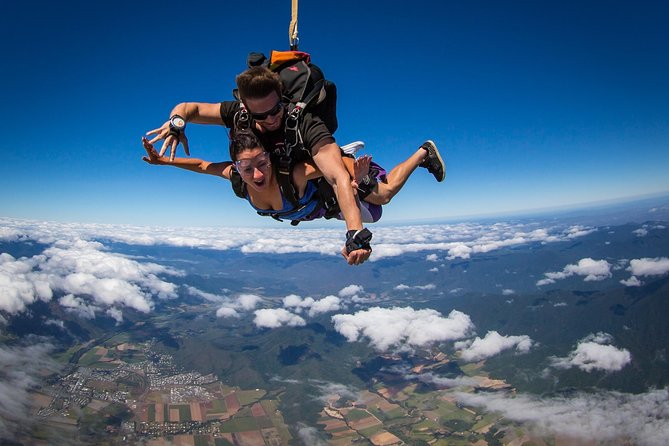
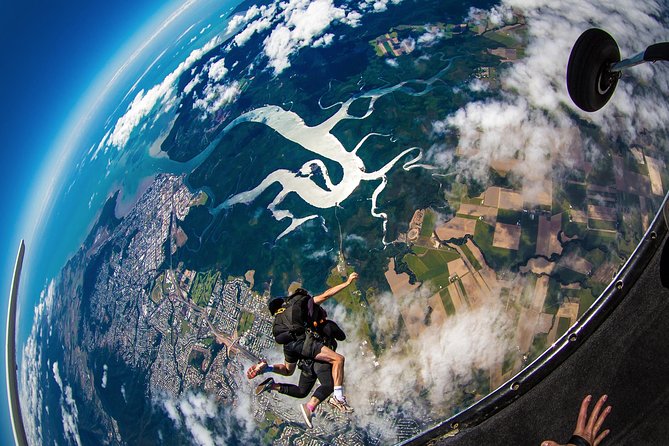
The unforgettable part is the freefall from up to 15,000 feet, with Cairns, the Coral Sea, rainforest, and islands spread far below. You do not need experience: your instructor handles the technical work while you focus on your body position and the astonishing rush of leaving the plane.
I like the calm, professional approach of instructors such as Sam, Brant, Victor, and Phil, and I like that the short briefing makes this possible for a first jump. The included certificate is a nice keepsake. One important catch: the reef and rainforest are not guaranteed to sit directly beneath you. You may see them best from the aircraft and parachute, with the landing zone in a sugar field.
In This Review
- Key points before you book
- Leaving Cairns for a 15,000-foot view
- The short briefing that gets you ready
- The aircraft ride and the moment at the door
- When the parachute opens, the mood changes
- Landing is gentler than the jump
- Photos and video cost nearly as much as the jump
- Timing, transport, and group size
- Age, weight, and fitness rules
- Who will enjoy this Cairns skydive
- Should you book the jump?
- FAQ
- Do I need previous skydiving experience?
- How high is the jump?
- Where does the experience start and end?
- How long does the experience take?
- Are photos and videos included?
- What are the age and weight requirements?
- What happens if bad weather cancels the jump?
Key points before you book
- 15,000-foot maximum altitude: You get a long freefall, followed by a quieter parachute descent.
- No experience required: A qualified instructor is attached to you throughout the jump and gives the essential instructions.
- Reef views are often distant: The Great Barrier Reef, Fitzroy Island, and Green Island may be visible from above, but this is not a reef landing.
- A$179 media package: Photos and video are not included, and you cannot use your own camera.
- Allow about three hours: Weather, aircraft timing, and group operations can shift the schedule.
- Practical limits apply: Moderate fitness is required, with approval for anyone over 110 kilograms and a surcharge from 94 kilograms.
Leaving Cairns for a 15,000-foot view
This is a straightforward city-based adventure with a spectacular payoff. You meet at 11 Spence Street in Cairns City, receive your instructions, and travel to the drop zone before returning to the same meeting point. The total experience takes about three hours, though you should keep the rest of your day flexible.
From the aircraft, the view opens in layers. Cairns sits between the Coral Sea, the Atherton Tablelands, rainforest country, and the offshore islands of Fitzroy and Green Island. The Daintree Rainforest is also part of the wider regional view, although you should not think of this as a sightseeing flight with a guided commentary at every landmark.
The strongest visual moment may come before the jump. From 15,000 feet, the reef can appear far offshore rather than directly below your body. On a clear day, the water, islands, forest, and farmland create a memorable pattern. On a less clear day, cloud can limit what you see. One participant even described passing through a cloud, which can make the fall feel more dramatic, but it also shows why scenery cannot be promised.
Other Cairns days worth booking alongside this:
- Great Barrier Reef Snorkeling and Diving Cruise from Cairns
★ 4.5 · 3,714 reviews - From Cairns: Great Barrier Reef Cruise by Premium Catamaran
★ 4.9 · 3,567 reviews - From Cairns: Self-Guided Kuranda Trip with Train and Skyrail
★ 4.6 · 3,392 reviews
The short briefing that gets you ready
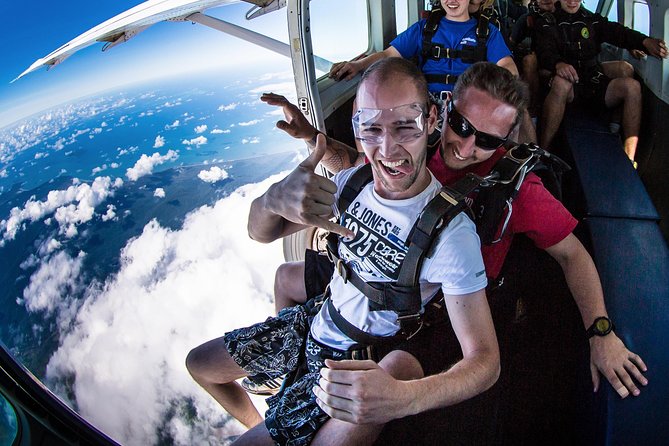
You begin with about 15 minutes of instruction and safety information. This is not a full parachuting course. It is a focused lesson covering the position you need in the aircraft, how to hold your body during freefall, and what to do as the parachute opens and you prepare to land.
That format suits a first-timer who wants the thrill without weeks of training. Your instructor is attached to you and manages the equipment, the exit, the parachute, and the landing. You still need to listen carefully, especially when you are told how to position your legs and neck.
You may be asked to arch your back, tilt your head back, and keep your knees in the correct position. Flexibility matters more than athletic skill. One 54-year-old participant with a troublesome knee managed the physical demands, but you should judge your own condition honestly and follow the stated moderate-fitness requirement.
The staff’s reassuring manner matters here. Instructors joke with some customers to ease the nerves, while also checking buckles and keeping control of the process. The names Sam, Brant, Victor, and Phil appear in accounts of calm, clear instruction. Your own instructor may be different, but the role is the same: keep you safe, explain what is happening, and help you enjoy it rather than freeze with fear.
The aircraft ride and the moment at the door
The aircraft ride gives you time to look down and take in the region before the main event. It also gives the instructor a chance to check your harness and prepare you for the exit. The approach to the door is often when nerves peak. You are securely attached to your instructor, but the sight of open air beneath the aircraft is still a powerful moment.
There is no need to pretend this feels ordinary. The jump is physically safe only within the strict procedures and equipment used by the operator, but parachuting remains an inherently risky activity. The supplied risk warning points to possible problems involving weather, health, aircraft flight, parachute deployment, descent, and landing. You participate at your own risk.
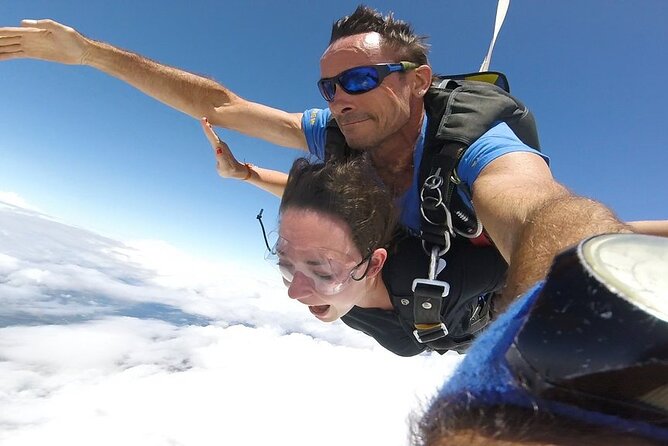
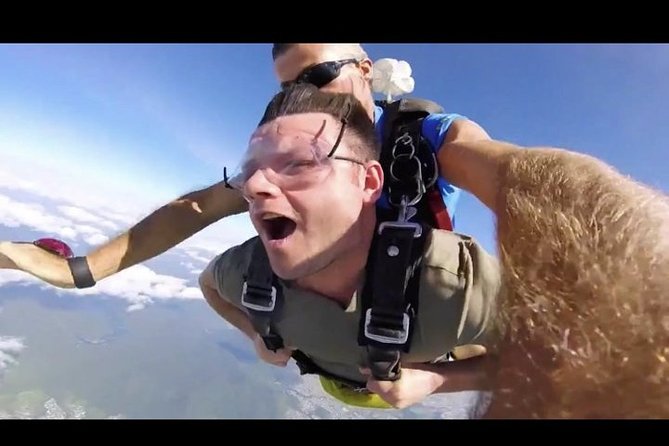
Once you leave the aircraft, the freefall is fast and loud. Your ears may pop, and the first seconds can pass before you have fully taken in what is happening. This is the part most likely to define the experience. If the views are partly blocked by cloud or appear smaller than expected, the freefall still supplies the main thrill.
When the parachute opens, the mood changes
After the freefall, the parachute opens and the experience changes from sudden noise and speed to a slower, quieter descent. This is when you have more time to look around. The reef, Coral Sea, islands, rainforest, Atherton Tablelands, and farmland may be easier to appreciate from this calmer position.
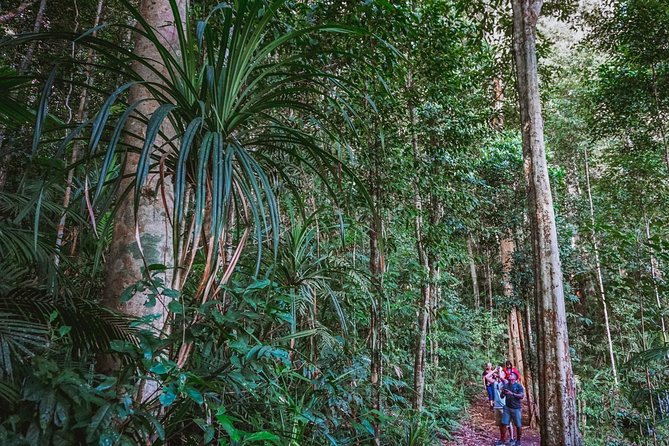
This is also where expectations need adjusting. The title highlights reef and rainforest, but the activity is not a close-up visit to either one. You do not land on Fitzroy Island, Green Island, or in the Daintree. Those places form part of the broad regional view, and the reef may be a distant strip of color on the horizon.
The drop zone is described as sitting between the rainforest and reef, but the landing itself can be in a sugar field. If you are booking primarily for a direct overhead view of coral, choose with care. If your priority is the sensation of falling from a plane above one of Australia’s most scenic regions, the setting works well.
Your instructor may guide the parachute through gentle turns, though the provided details do not promise a specific flight pattern. The important point is that the parachute phase gives you a chance to settle, look outward, and enjoy the view after the intensity of the freefall.
Same coast, a completely different day out:
- Passions of Paradise Great Barrier Reef Cruise by Catamaran
★ 5.0 · 2,564 reviews - Cairns: Daintree Rainforest and Mossman Gorge Tour
★ 4.6 · 2,485 reviews - Cairns: Outer Edges of The Great Barrier Reef Scenic Flight
★ 4.9 · 2,376 reviews - Daintree Rainforest, Mossman Gorge Small-Group from Port Douglas
★ 5.0 · 2,326 reviews
Landing is gentler than the jump
The landing requires you to lift your legs while your instructor touches down. You then walk forward once your feet reach the ground. Some people may slide briefly over the grass, but the landing is intended to be controlled and simple.
Wear comfortable clothes and secure footwear. Trainers are a sensible choice, and shorts and a T-shirt are suitable according to the practical guidance provided. Protective gear is available, and face protection is used during the initial part of the jump before it can be removed under the parachute.
Empty your pockets before boarding. Remove necklaces and anything else that could come loose. Your own camera is not allowed because it could fall away and create a hazard. This is one reason the media package is the only way to take home images from the jump.
Photos and video cost nearly as much as the jump
The listed price is $250.32 per person. That includes the qualified instructor, safety equipment, commemorative certificate, and the Australian Parachuting Levy and Administration Fee. For a specialist thrill with an instructor and aircraft operation included, that is a reasonable starting price.
The major extra is the photo and video package, listed at A$179 per person and payable at the drop zone. That is a substantial addition, so you should decide before arrival if you want to preserve the moment. Several people felt the package was worth buying, especially because the instructor carries a wrist-mounted GoPro and the package can include roughly 80 photographs plus a professionally edited four to five minute video with music.
You cannot bring your own GoPro, so skipping the package means accepting that you may have no visual record beyond your certificate and memory. I would budget for the media before booking if this is your first jump. The added cost can feel steep, but the camera captures the aircraft, exit, freefall, parachute descent, and landing in a way a friend on the ground cannot.
Food and drinks are not included. The activity returns to the meeting point, but do not treat the three-hour estimate as a guarantee of a precise finish time. Aircraft schedules and weather can change the day.
Timing, transport, and group size
The stated meeting point is 11 Spence Street in Cairns City, an area near public transport. The activity ends back there. One account describes a missed pickup, so if you have been given a separate pickup arrangement, confirm it clearly and do not assume transport will solve itself. The formal meeting point is the detail to keep in hand.
The maximum group size is 20 people. That does not mean 20 people share one tandem harness, but it does mean you may be part of a group operation with waiting, registration, aircraft sequencing, and changing jump times.
The timing can move during the day. One person was told the jump time might change, and another described a weather delay handled with communication. For that reason, avoid scheduling a reef cruise, long transfer, or flight immediately afterward. A morning or afternoon booking should be treated as an appointment with some flexibility, not a clockwork three-hour city tour.
The activity requires suitable weather. If poor weather cancels it, you can choose another date or receive a full refund. If the minimum number of participants is not reached, the same options apply.
Age, weight, and fitness rules
The minimum age is 16, subject to approval. Anyone under 18 must be accompanied by a parent or guardian. Approval is also required for anyone over 110 kilograms, or 242 pounds, and a surcharge applies at 94 kilograms, or 207 pounds, and above.
These are not minor footnotes. Weight affects the harness, aircraft operation, and landing, so contact the operator if you are close to a limit rather than relying on a booking form alone. The activity asks for moderate physical fitness, along with enough flexibility to hold the required position and lift your legs for landing.
You should also consider your own health and comfort with heights, sudden motion, and pressure changes. The formal warning makes clear that health conditions can add risk. Ask the operator before booking if you have a medical concern.
Who will enjoy this Cairns skydive
This suits you if you want a major adrenaline experience without learning solo parachuting. It works especially well for first-timers, couples, repeat jumpers, and anyone marking a birthday or major trip. The instructor does the technical work, but you still get the full sensation of leaving the plane and falling through open air.
It can also suit older adults who meet the requirements and feel comfortable with the physical movements. People in their 60s have completed the experience, but age alone is not the deciding factor. Your fitness, flexibility, and medical situation matter more.
I would hesitate if your main goal is a close, detailed view of the Great Barrier Reef. A reef cruise or scenic flight would serve that purpose more directly. I would also think twice if you need a strict finish time, dislike group scheduling, or do not want to pay extra for photos and video.
The operation receives a 4.6 rating from 52 ratings, with 92 percent recommending it. The strongest pattern is clear: people value the instructors, the sense of safety, and the powerful freefall. The weaker points concern the touristy feel, uneven front-desk service, missed transport in one case, and scenery that can be less direct than the name suggests.
Should you book the jump?
Book it if the freefall is your main goal. The Cairns setting gives you a broad view of reef country, rainforest, islands, and the Coral Sea, while the tandem format removes the need for previous experience. The instructors are the heart of the experience, and calm guidance can make the difference between panic and enjoyment.
Book with realistic expectations about the scenery. You may see the Great Barrier Reef and World Heritage-listed rainforest from the aircraft or beneath the parachute, but you may also see them at a distance and land among sugar fields. Add A$179 for media if you want a lasting record, keep your schedule open, and choose this for the thrill rather than as a substitute for a reef excursion.
FAQ
Do I need previous skydiving experience?
No. The activity is designed for first-timers, and you jump in tandem with a qualified professional instructor.
How high is the jump?
The aircraft can reach up to 15,000 feet, or 4,572 meters, before the tandem jump.
Where does the experience start and end?
You meet at 11 Spence Street, Cairns City, Queensland 4870. The activity ends back at the meeting point.
How long does the experience take?
It lasts approximately three hours. The timing can change because of weather and the operation’s schedule.
Are photos and videos included?
No. Photo and video packages are payable at the drop zone and are listed at A$179 per person. You cannot use your own camera during the jump.
What are the age and weight requirements?
The minimum age is 16, subject to approval. Anyone under 18 must have a parent or guardian with them. Anyone over 110 kilograms requires approval, and a surcharge applies from 94 kilograms.
What happens if bad weather cancels the jump?
You can choose a different date or receive a full refund if the experience is canceled because of poor weather.
Just added around Cairns
- Night Walk in Cairns Botanic Gardens – Let’s Go Buggin★ 5.0 · 153 reviews
- Paronella Park and Millaa Millaa Falls Full-day Tour from Cairns★ 5.0 · 47 reviews
- Ultimate Great Barrier Reef and Rainforest 45-minute Helicopter Tour★ 5.0 · 59 reviews
- Port Douglas Sunday Markets Day Tour★ 4.0 · 25 reviews
- Cairns City Sights and Surrounds Tour★ 5.0 · 227 reviews
- Small-Group Afternoon Cairns City Tour with Harbour Dinner Cruise★ 4.5 · 32 reviews
- Full-day Tour at the Atherton Tablelands with Food Tasting★ 5.0 · 30 reviews
- Skyrail Rainforest Cableway Day Trip from Port Douglas★ 4.5 · 27 reviews
Cairns Tours, compared.
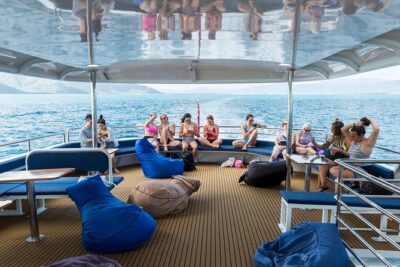
Great Barrier Reef Snorkeling and Diving Cruise from Cairns
Read our review →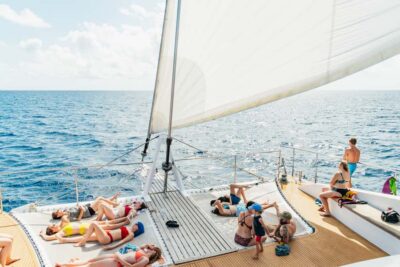
Great Barrier Reef Cruise by Premium Catamaran
Read our review →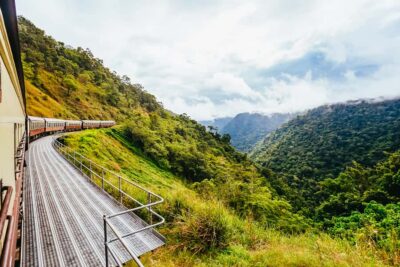
Self-Guided Kuranda Trip with Train and Skyrail
Read our review →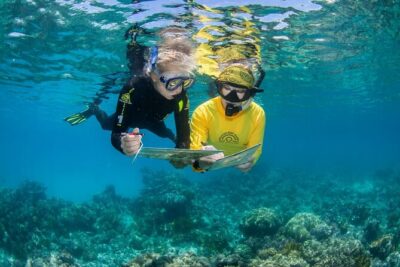
Passions of Paradise Great Barrier Reef Cruise by Catamaran
Read our review →
Outer Edges of The Great Barrier Reef Scenic Flight
Read our review →
Daintree Rainforest, Mossman Gorge Small-Group from Port Douglas
Read our review →
Cape Tribulation, Mossman Gorge, and Daintree Rainforest Day Trip
Read our review →Browse the lists this tour appears in