
Reviewed · NATIONAL PARKS
From Darwin: Kakadu Wilderness Escape Day Tour
Kakadu’s ancient rock art and wild floodplains are the heart of this long day from Darwin. You’ll reach Ubirr, walk past Aboriginal art galleries dating back about 20,000 years, and climb to views across the floodplains. At Cahills Crossing, saltwater crocodiles may wait below as vehicles pass through the water.
I like the way the tour combines culture, wildlife, and big Top End scenery rather than treating Kakadu as just a photo stop. I also like the choice between the optional jumping crocodile cruise and Fogg Dam, plus the steady supply of bus water. The catch is simple: this is a 12-hour, nearly 600-kilometre day, with heat, long road stretches, and a fairly tight schedule.
In This Review
- Key points at a glance
- Why this Kakadu day trip works
- Leaving Darwin through the Adelaide River wetlands
- Fogg Dam or the jumping crocodile cruise
- Corroboree Park Tavern and the food plan
- Bowali Visitor Centre puts Kakadu in context
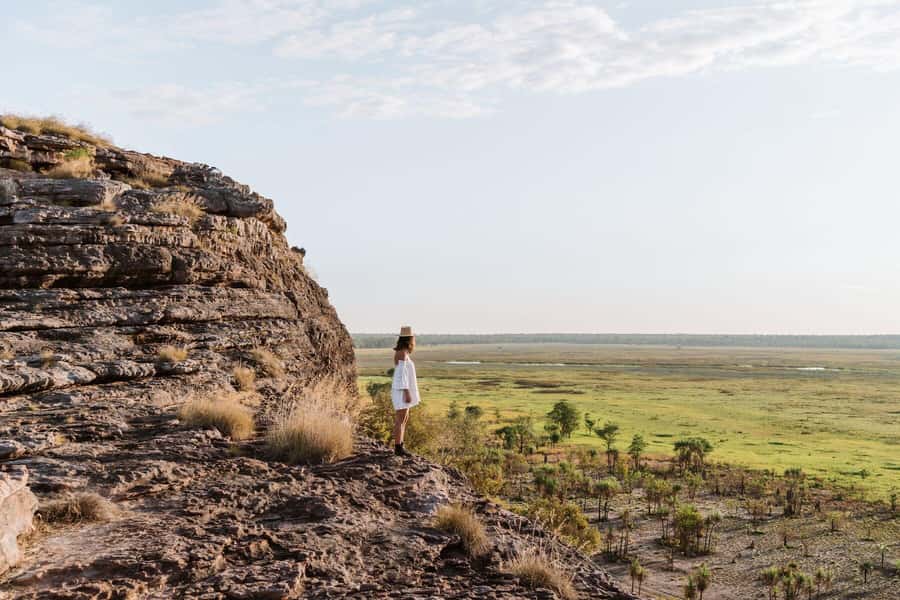
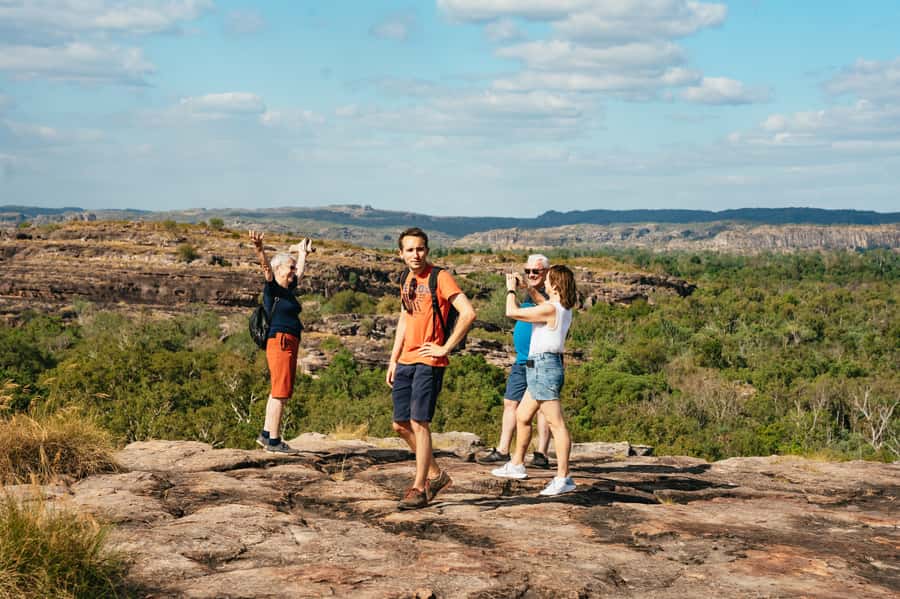
- Ubirr rock art and the floodplain lookout
- Cahills Crossing and the saltwater crocodiles
- Transport, group size, and comfort
- Weather changes the day
- Who should book this Kakadu tour?
- Should you book it?
- FAQ
- How long is the Kakadu Wilderness Escape tour?
- Where does the tour depart from?
- Is hotel pickup included?
- Is lunch included?
- Is the Kakadu National Park pass included?
- Can I choose between the crocodile cruise and Fogg Dam?
- Is the tour suitable for children?
- What should I bring?
Key points at a glance
- Ubirr is the main event: Walk among some of Kakadu’s oldest and best-preserved rock art, then reach a memorable floodplain lookout.
- Cahills Crossing is safely observed from land: Look for saltwater crocodiles at the only road link between Kakadu and Arnhem Land.
- You choose an extra stop: Add the Adelaide River jumping crocodile cruise, or visit Fogg Dam Conservation Centre and its wetlands.
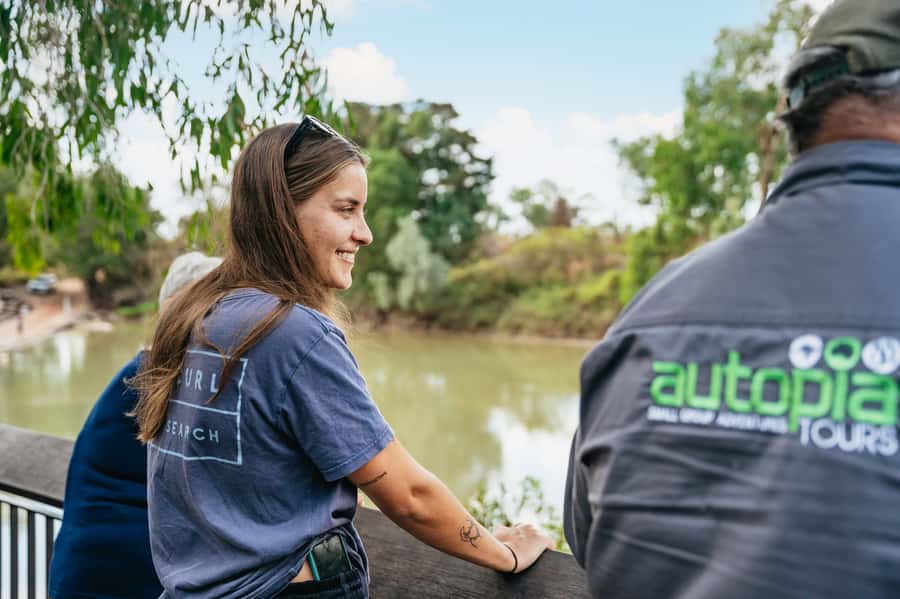
- Guides shape the day: Guides including Dani, Tim, Leigh, Rick, Becs, Carlos, and others are praised for clear commentary, humour, care, and local insight.
- Pack your own food and water: Lunch is not included, though local stops, an onboard eski, and a refill station help.
- Expect a demanding day: The tour suits active adults who want a first taste of Kakadu and do not have time for an overnight stay.
Why this Kakadu day trip works
Kakadu covers about 20,000 square kilometres. That scale matters. You cannot see the park properly in a few quick hours, and even a full day from Darwin involves a lot of driving. This tour makes the trade-off clear: you cover a broad slice of the Top End, but you spend much of the day in a mini-coach.
At $168 per person, the price is sensible for a full-day outing that includes the Kakadu National Park pass, transport, a driver-guide, and live commentary. You are not paying simply for a ride to a national park. The guide interprets the plants, animals, Aboriginal culture, geology, and changing wetland scenery along the way.
The value is strongest if you are staying in Darwin for only a few days. Hiring a car and planning the same route requires more preparation, careful driving, and a better grasp of seasonal road conditions. The tour gives you a practical introduction without asking you to manage the logistics yourself.
Still, I would not pretend this is an easy sightseeing day. The early meeting time is 7:30 AM outside THE LEEA at 64 Cavenagh Street, and the return is around the evening. You need to accept long road sections before booking.
A few more Darwin trips to weigh up
- Litchfield National Park and Jumping Crocodile Cruise
★ 5.0 · 2,119 reviews - Litchfield National Park Day Tour from Darwin
★ 4.0 · 264 reviews - Litchfield National Park: Full-Day & Lunch from Darwin
★ 4.6 · 205 reviews
Leaving Darwin through the Adelaide River wetlands
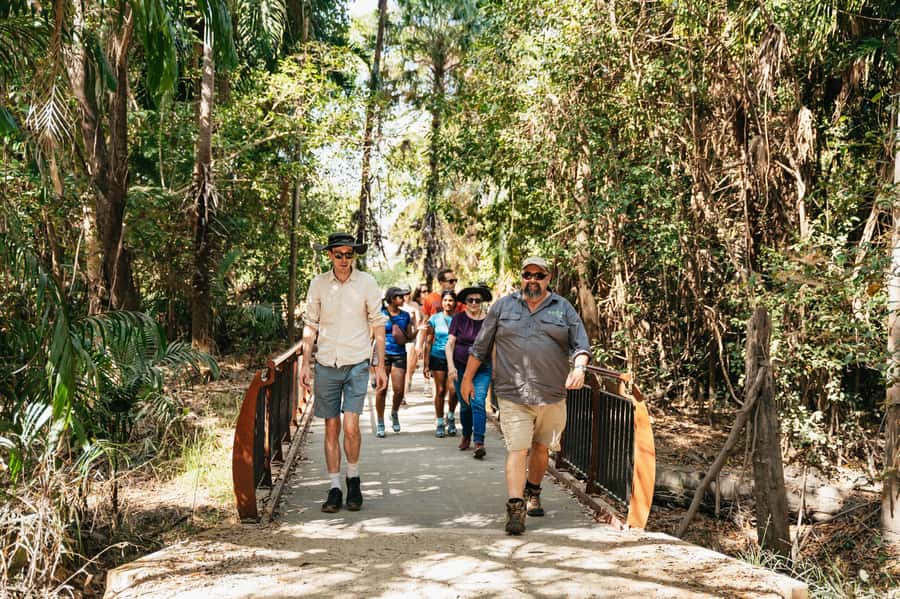
The day begins in tropical Darwin, then heads east through floodplain country toward Kakadu. The changing scenery is part of the experience. You may see open wetlands, savannah, wildlife, and the broad, low-lying country that takes on a very different look during the wet season.
The route includes the lands of the Limilngan-Wulna people. The tour’s commentary connects the places you pass with traditional landowners and their ongoing role in caring for the reserve. That context gives the scenery more meaning than a string of roadside stops.
The wetlands are home to birds, turtles, water pythons, wallabies, buffalo, dingoes, and crocodiles. Sightings are never guaranteed, but this is one of the useful features of a guided day. Your guide can point out movement, tracks, or habitat that you might miss from a car window.
Roadside commentary also helps break up the drive. Guides such as Dani, Becs, Tim, Leigh, Rick, and Carlos have been praised for combining facts with stories and humour. The exact guide varies, but the experience depends heavily on who is behind the wheel and microphone.
Fogg Dam or the jumping crocodile cruise
One of the day’s useful choices comes near the Adelaide River. You can pay extra for the optional jumping crocodile cruise, or choose the Fogg Dam Conservation Centre and wetland area instead.
The crocodile cruise offers a close view of saltwater crocodiles from a boat. The supplied details describe it as an optional one-hour activity, with staff sharing information about the animals. It adds another wildlife focus to a day that already includes crocodile viewing at Cahills Crossing.
Fogg Dam provides a different kind of outing. Its observation areas look across Adelaide River wetlands, where birdlife and other animals may be easier to appreciate in a quieter setting. You may spot crocodiles, wallabies, and many birds, depending on conditions and timing.
There is an extra point to watch here. The Northern Territory park pass included with the tour covers Kakadu, but a separate NT park pass is required for Fogg Dam Conservation Reserve under the KD fare type. Ask at booking if you plan to choose Fogg Dam, so the cost does not catch you by surprise.
I like having the choice because it lets you match the day to your interests. Pick the cruise if crocodiles are your main goal. Choose Fogg Dam if wetlands, birds, and a more natural observation setting appeal more.
Corroboree Park Tavern and the food plan
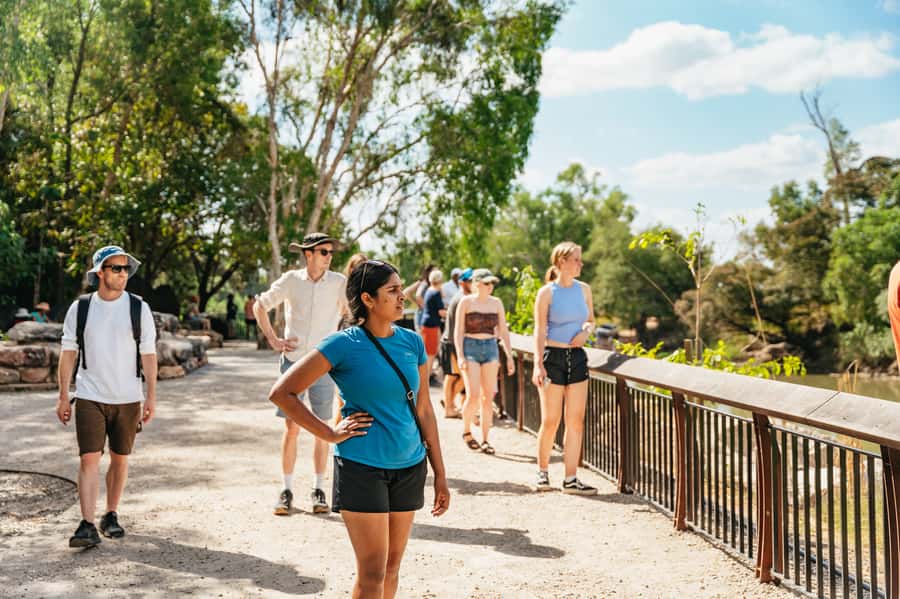
The tour stops at Corroboree Park Tavern, where you can buy lunch, snacks, and drinks at your own cost. Food is not included, so you should plan ahead rather than assume a meal will appear on the bus.
You can also bring your own lunch. An eski is available onboard to keep food fresh, and there is a water refill station. Several useful details make a real difference here: bring a refillable bottle, aim for about 1.5 litres of water, and pack more than you think you need if the day is hot.
The stop supports a local business and gives you a chance to rest before the afternoon sightseeing. It is not a picnic in a remote wilderness setting, but it is a practical pause in a demanding itinerary.
I would pack simple food that survives heat and movement, along with snacks for the long stretches. Frozen drinks can help in the hotter months. You need a hat, sunscreen, sunglasses, insect repellent, and comfortable shoes. Swimmers and a towel are also listed as useful items.
Same coast, a completely different day out:
- Adelaide River Cruises – Jumping Crocodile Experience
★ 5.0 · 997 reviews - Sunset 3-Hour Cruise from Darwin with Dinner and Sparkling Wine
★ 5.0 · 980 reviews - From Darwin: Litchfield Park Tour & Jumping Crocodile Cruise
★ 4.9 · 829 reviews - Charles Darwin Dinner Cruise
★ 4.5 · 820 reviews
Bowali Visitor Centre puts Kakadu in context
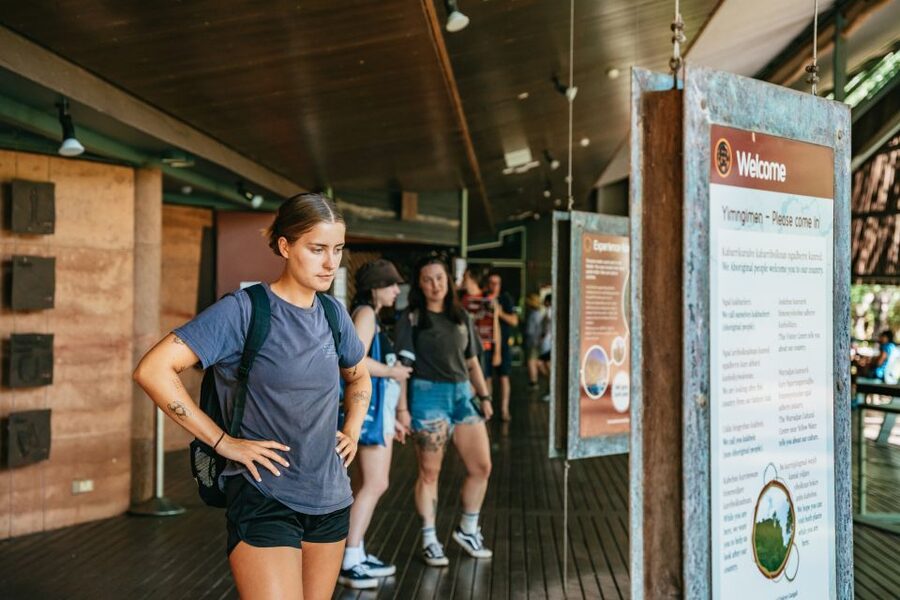
Bowali Visitor Centre is more than an indoor break. It introduces Kakadu’s Aboriginal culture, natural features, and history, helping you understand the places you are about to see.
This stop is especially useful before Ubirr. Without context, ancient paintings can become another quick photo opportunity. With an explanation of traditional landowners and the meaning attached to Country, you are better prepared to treat the site with the respect it deserves.
The tour presents Kakadu as a living cultural place, not an empty wilderness. Traditional owners remain active in managing the reserve. That is an important part of the visit, and the guide’s tone matters. The strongest guides are described as respectful, personal, and able to explain significance without turning the subject into a dry lecture.
Bowali also gives you a chance to cool down and reset before the main walk. That matters because the Ubirr section can be hot, and the day still has several hours to run.
Ubirr rock art and the floodplain lookout
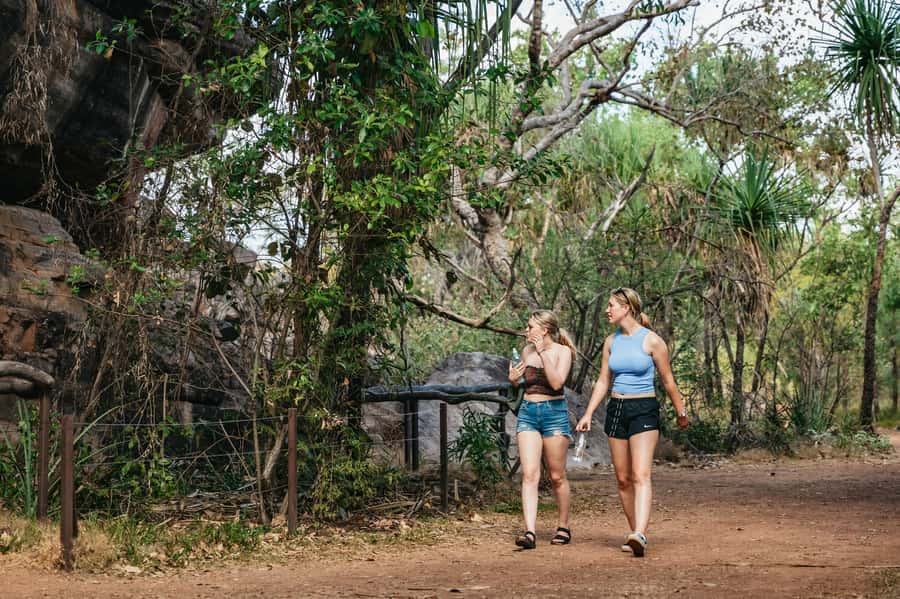
Ubirr is the reason many people book this trip. The guided walk leads past Aboriginal rock art galleries, some dating back about 20,000 years. The paintings are among the oldest and best-preserved in the world, but the setting is as important as the age.
You move through rock shelters and open stone country, with the guide explaining the stories and cultural meaning connected to the art. The walk is not just about spotting painted figures. It is about seeing how people recorded animals, beliefs, and relationships with the land across a vast span of time.
The climb to the lookout is a high point of the day. The view across Kakadu’s floodplains shows why water controls so much of life in the Top End. In the dry season, the open plains can look broad and sun-baked. In the wet season, water changes the whole character of the area.
The walk can last around an hour and a half, with breaks as needed. It is manageable for many active adults, but heat makes it harder than the distance suggests. Wear supportive shoes, carry water, and take the climb at your own pace.
People with mobility issues should speak with the operator at least 48 hours before departure. The tour is not suitable for people with mobility impairments, wheelchair users, babies under one year, or children under six. One useful strength of the guides is that they try to help older participants see the key areas, but this does not turn the walk into an accessible route.
Cahills Crossing and the saltwater crocodiles
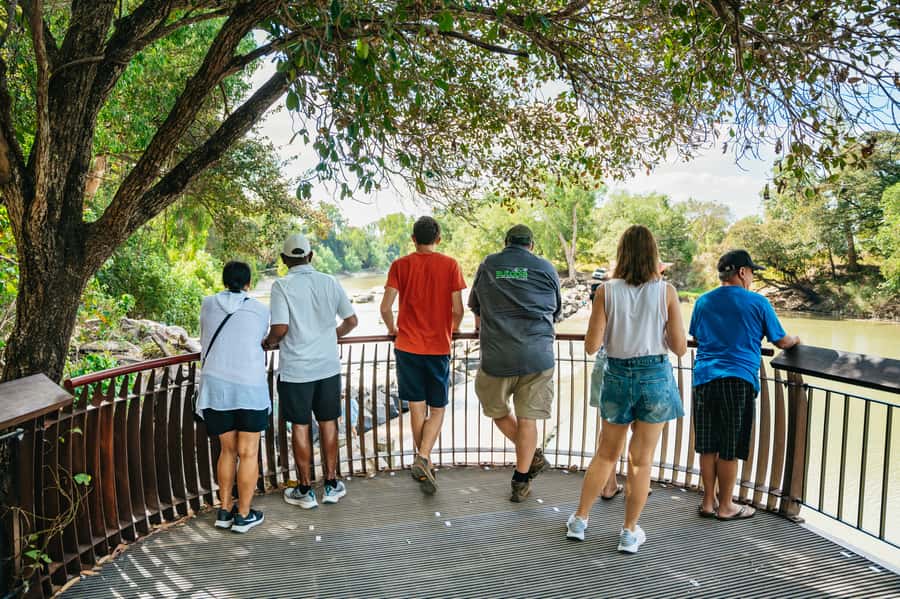
Cahills Crossing is a memorable stop because it puts you beside a real working road crossing in crocodile country. It is the only road access point between Kakadu National Park and Arnhem Land, and saltwater crocodiles gather in the water below.
You observe from a safe position. Do not treat this like a place for personal exploration or a close approach. The appeal is seeing crocodiles in their natural setting, sometimes alongside vehicles using the crossing.
The scene can be surprisingly dramatic. You might watch four-wheel-drive vehicles or a road train make the crossing while crocodiles sit nearby. Sightings vary, but the possibility of seeing several animals in one stretch of water gives the stop its tension.
This is also where a guide adds real value. You need someone to explain where to stand, how to read the crossing, and why the animals gather there. The experience is not a staged wildlife show, even though the optional river cruise offers a separate, managed crocodile encounter.
Transport, group size, and comfort
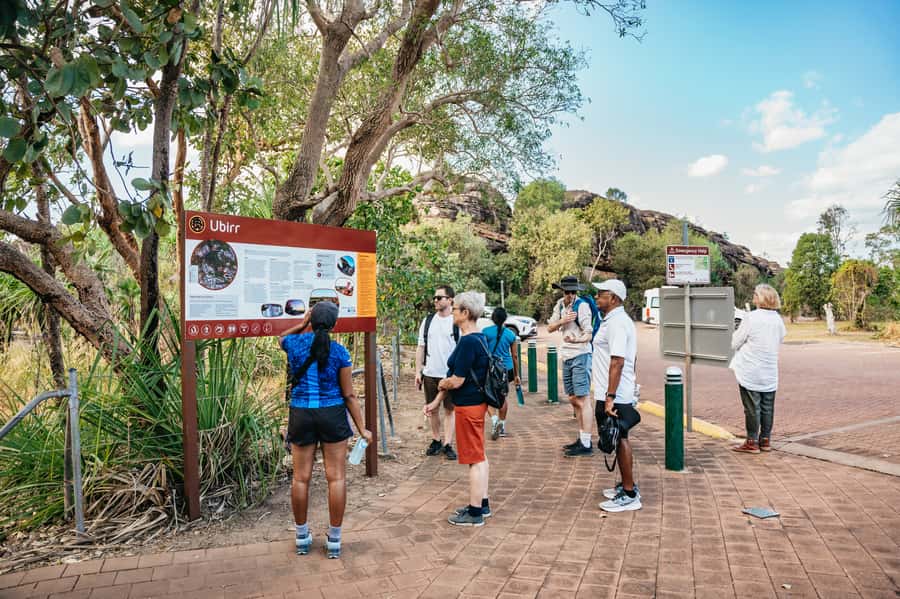
The tour uses an air-conditioned mini-coach rather than a large bus. That usually suits a remote day trip because a smaller group can hear the commentary and get moving at stops without a long loading process.
Group numbers can vary. One reported outing had 17 people, while other departures are described as smaller, around 9 to 15. The exact vehicle and group size may affect how much room you have.
Legroom is worth considering if you are tall. A six-foot passenger found the vehicle manageable but could not sit with knees fully straight. That is not a deal breaker for most people, but it is a fair warning for a 12-hour day.
The air conditioning, onboard water, and regular stops help. The bus is not a substitute for stretching your legs, though. The itinerary breaks up the road time with wetlands, visitor centres, the tavern, crocodile viewing, and the Ubirr walk.
Smoking is not allowed in the vehicle. Oversize luggage, large bags, backpacks, mobility scooters, and electric wheelchairs are not permitted. Bring only a small day bag of about 5 to 7 kilograms.
Weather changes the day
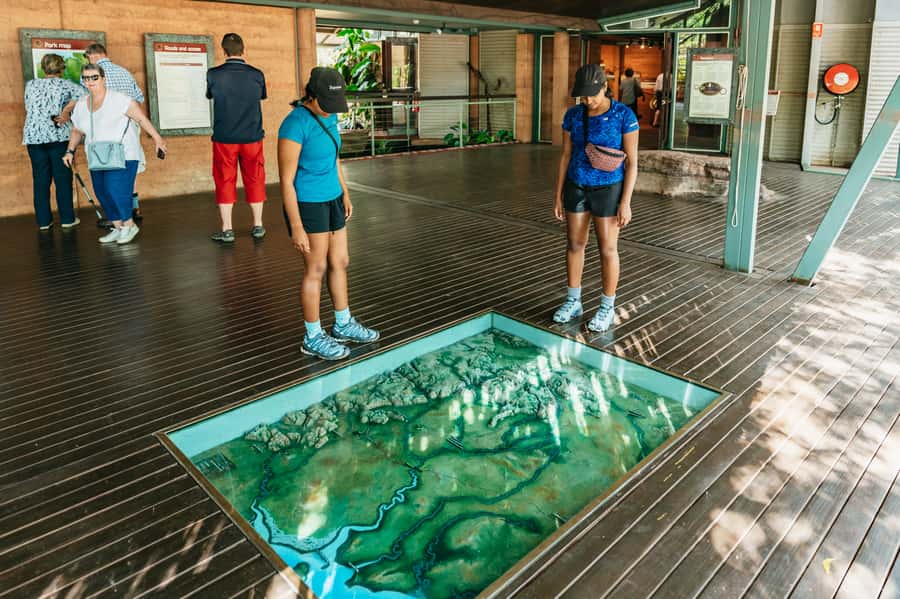
The dry season, generally from May through September, is the easiest time for this outing. Conditions can still be hot, but roads and walking areas are more likely to follow the planned route.
From October through April, expect high heat, humidity, and possible monsoonal rain. Flooding or road conditions can cause last-minute closures and route changes. Kakadu is a huge tropical park, and the wet season can reshape access.
That uncertainty is not a flaw in the operator’s planning. It is part of visiting the Top End. You should book with flexible expectations and understand that the exact combination of Fogg Dam, Ubirr, or other stops can change.
Heat is the bigger day-to-day issue. One person became unwell during a hot-weather outing and was looked after by the guide. That points to a sensible rule: drink before you feel thirsty, use sunscreen often, wear light clothing, and tell the guide about medical conditions or medication needs in advance.
Who should book this Kakadu tour?
I would recommend it to you if you have limited time in Darwin and want a strong first look at Kakadu. It is also a good fit if you prefer a guide to handle the driving, park access, safety information, and cultural interpretation.
It suits adults and older children, provided they can manage a long day and a warm walk. Wildlife fans will appreciate the crocodile stops and wetland viewing. Anyone interested in Aboriginal art will find Ubirr the most valuable part of the day.
I would hesitate if you dislike long drives, need generous legroom, or want to explore Kakadu at a slow pace. One day cannot show the whole park. An overnight or multi-day visit makes more sense if Kakadu is a central reason for your Northern Territory trip.
The tour is in English only. Hotel pickup and drop-off are not included, so you need to reach the Darwin meeting point yourself. Free cancellation is available up to 24 hours before departure, which gives you some flexibility if weather forecasts look poor.
Should you book it?
Book this tour if you want the best practical introduction to Kakadu in one day, especially Ubirr, the floodplains, Bowali, and Cahills Crossing. At $168, it offers good value for transport, the Kakadu pass, and a full day of guiding, though you should budget separately for food and possibly the crocodile cruise or Fogg Dam pass.
Do not book it expecting a relaxed outing. You will spend many hours on the road, walk in heat, and return tired. But if you accept that trade-off, this is a well-rounded way to see ancient art, living Aboriginal culture, wetlands, and crocodiles without arranging a major self-drive adventure.
FAQ
How long is the Kakadu Wilderness Escape tour?
The tour lasts about 12 hours. The listed meeting time is 7:30 AM, and the day usually returns to Darwin in the evening.
Where does the tour depart from?
Meet outside THE LEEA at 64 Cavenagh Street, Darwin City, Northern Territory 0800. You should arrive about 10 minutes before departure.
Is hotel pickup included?
No. Hotel pickup and drop-off are not included, so you need to make your own way to the Darwin meeting point.
Is lunch included?
No. You can buy lunch and snacks at Corroboree Park Tavern or bring your own food. An onboard eski is available, and the bus has a water refill station.
Is the Kakadu National Park pass included?
Yes. The Kakadu National Park pass is included in the tour price. Fogg Dam requires an additional NT park pass under the KD fare type.
Can I choose between the crocodile cruise and Fogg Dam?
Yes. The optional Adelaide River jumping crocodile cruise is available, or you can visit Fogg Dam Conservation Centre and the wetlands instead.
Is the tour suitable for children?
Children under six are not permitted. Babies under one year are also not suitable for this activity.
What should I bring?
Bring a 1.5-litre water bottle, sun hat, sunglasses, sunscreen, insect repellent, comfortable clothes, suitable walking shoes, required medication, a camera, and a small day bag. Swimmers and a towel are also recommended.
Just added around Darwin
- Kakadu National Park Wildlife & Ubirr Rock Art Tour from Darwin★ 4.5 · 101 reviews
- Arnhem Land Yingana Injalak Hill Full Day Tour from Jabiru★ 5.0 · 132 reviews
- Jabiru 30 minute Scenic Flight★ 5.0 · 68 reviews
- Kakadu Adventure Tour★ 4.0 · 26 reviews
- Bombing of Darwin World War II Tour with Harbour Cruise★ 4.5 · 219 reviews
- Tiwi Islands Cultural Experience from Darwin Including Ferry★ 4.0 · 97 reviews
- 1-Hour Thunderball WWII Adventure Jet Skiing in Darwin★ 5.0 · 70 reviews
- Darwin Combo: The Bombing of Darwin Experience & Darwin Harbour Cruise★ 4.5 · 123 reviews
National Parks, compared.
Litchfield National Park and Jumping Crocodile Cruise
Read our review →
Grampians National Park Small-Group Eco Tour from Melbourne
Read our review →
From Port Arthur: Tasman Island Wilderness Cruise
Read our review →
Blue Mountains National Park Tour with River Cruise
Read our review →
From Hobart/Adventure Bay: Bruny Island Wilderness Cruise
Read our review →
Port Arthur Full-day Guided Tour with Harbour Cruise and Tasman National Park
Read our review →
Bruny Island Wilderness Coast Eco Cruise with Lunch
Read our review →Browse the lists this tour appears in