
Reviewed · WHALE WATCHING CRUISES
Hervey Bay: Ultimate Whale Watching Experience
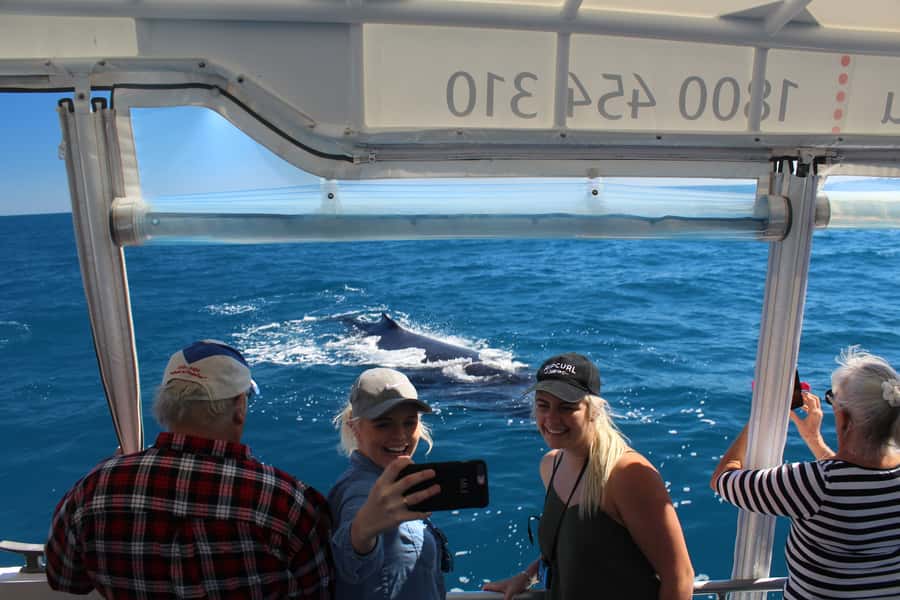
Hervey Bay’s best surprise is how close a humpback whale can come to a small boat. On this three-hour trip, you cruise into protected Platypus Bay aboard the 12-meter Ocean Defender, where mothers, calves, and curious adults may circle the vessel at water level. The setting is beautiful, but the real appeal is the science-led guiding and the chance to hear live whale songs through underwater hydrophones.
I like the small-group setup, which gives you a good view from your assigned forward-facing seat rather than a crowded-deck scramble. I also like that your $84 fare helps fund whale research, marine education, and ocean conservation. The trade-off is simple: this is an open-water ride, and July mornings can feel far colder and rougher than the marina suggests.
In This Review
- Key points to know
- Leaving Urangan for Platypus Bay
- Why Platypus Bay matters to the whales
- Three hours of searching, watching, and listening
- Hearing a whale sing underwater
- Mothers, calves, and the chance of a spectacular show
- Comfort on a small boat
- Snacks, soft drinks, and the children’s activity book
- A conservation-minded way to see whales
- Who should book this Hervey Bay whale watch
- Should you book the Ocean Defender?
- FAQ
- Where does the whale-watching tour depart from?
- How long does the whale-watching experience last?
- Is whale sighting guaranteed?
- What kind of boat is used?
- Can I hear whales underwater?
- What is included in the ticket?
- What should I bring?
- Is the tour suitable for young children or wheelchair users?
Key points to know
- Whales at water level: The 12-meter Ocean Defender offers broad views and a close-to-the-sea perspective.
- Live whale songs: Underwater hydrophones let you hear humpbacks communicating beneath the boat.
- Science-led guiding: Marine scientists explain migration, behavior, age, sex, and the meaning of what you see.
- Best sighting guarantee: Whale sightings are guaranteed from July 15 through October 9.
- Good family touch: Children receive a Junior Naturalist Whale Watching Guide activity booklet.
- Conservation with your ticket: The experience supports whale research and ocean protection work in Australia.
Leaving Urangan for Platypus Bay
Your trip begins at Shop 1 in the Tourist Terminal at Great Sandy Straits Marina in Urangan, Hervey Bay. Look for the Pacific Whale Foundation Ocean Store. The location is straightforward, but give yourself enough time to find the terminal and settle in before departure.
The boat is the Ocean Defender, a 12-meter rigid inflatable vessel built for small-group whale watching. It is not a giant sightseeing ship with several decks and a distant view of the water. Instead, you sit low, close to the surface, with panoramic views around the boat. That design is a big part of the experience.
Seats are pre-assigned, and you must remain in your assigned section while the boat is moving quickly. At first, fixed seating may feel less flexible than choosing your own spot. In practice, it helps keep boarding orderly and gives everyone a defined place with forward-facing views, shade, and room to watch safely.
The ride out offers views toward K’gari, formerly known as Fraser Island. That scenic run is not just transport between two points. It gives you a sense of the broad waters around Hervey Bay and the protected area where humpback whales pause during their migration.
The boat can move quickly, but you should not mistake speed for a smooth ride. Wind and tide can make the return trip choppy. If you are prone to seasickness, bring suitable medication according to your normal travel routine, and pack more warm clothing than you think you need.
More Whale Watching Cruises in Hervey Bay
- Freedom 3/4 Day Hervey Bay Premium Whale Watching Cruise
★ 5.0 · 919 reviews - Hervey Bay 4-Hour Whale Watch Encounter
★ 4.9 · 562 reviews - Hervey Bay Whale Watching Experience
★ 5.0 · 557 reviews
Why Platypus Bay matters to the whales
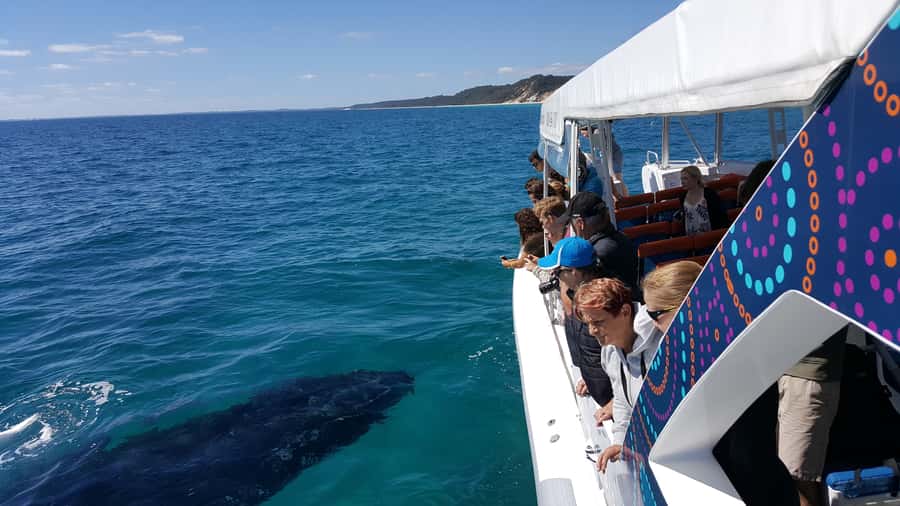
Platypus Bay is a protected resting area and play area for East Australian humpback whales during migration. It forms part of the Great Sandy Biosphere and Great Sandy Marine Park, and it is recognized as the world’s first Whale Heritage Site.
That context adds meaning to what you are seeing. These are not simply whales passing through open water. The bay gives migrating humpbacks a place to slow down, rest, socialize, and care for calves. The protected setting also explains why Hervey Bay is such a strong location for whale watching.
From July into October, humpbacks are commonly present in the bay as they move along the east coast migration route. The official sighting guarantee runs from July 15 to October 9. That is useful when you are planning a short Queensland visit and want a stronger chance of seeing whales, but it is still wise to remember what the guarantee does and does not mean. It guarantees a sighting during that period, not a particular behavior such as breaching, tail slapping, or approaching the boat.
Some trips may produce spectacular scenes. You might see a mother and calf, several pods, a breach, or whales circling the vessel. You might also have a quieter wildlife encounter. The crew cannot control the animals, and whale behavior is never scheduled for your convenience.
Three hours of searching, watching, and listening
The core activity lasts three hours, from the marina and back again. Your guide combines boat travel, marine-life viewing, and interpretation throughout the trip rather than saving all the information for one formal talk.
The crew watches for whale blows, movement, and changes in the water. The captain adjusts the boat as sightings develop, while the guide explains what you are seeing. On some outings, whales have appeared within the first 15 minutes of leaving the harbor. On others, the search itself becomes part of the day.
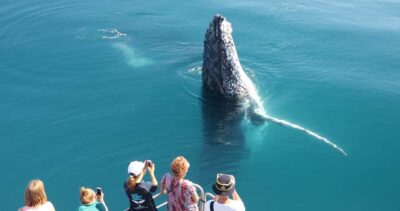
A smaller boat helps here. People have described whales approaching from different sides, swimming under the boat, or staying nearby for long periods. You are not guaranteed that kind of encounter, but the vessel’s low profile gives you a more direct view when whales do come close.
The captain also has to balance excitement with responsible wildlife viewing. The boat cannot simply rush at an animal or force it to remain nearby. A good encounter depends on patient positioning, safe distances, weather, tide, and the whale’s own choices.
The guide’s role is what turns a sighting into something more than a quick photograph. You learn to watch body movement, surfacing patterns, and the relationship between adults and calves. The commentary covers whale behavior as well as findings from ongoing research.
Guides named in the operating team and praised for their work include John, Ellie, Isabelle, Allen, and Leanne. Their roles vary by departure, but the pattern is clear: the naturalist explains the animals, while the captain handles the boat and responds when someone spots movement.
Hearing a whale sing underwater
The hydrophones are one of the most memorable features. Instead of only watching the sea, you listen to what is happening beneath it. Live whale songs come through underwater microphones, giving you an audible connection to animals that may be hidden below the surface.
This matters because a whale watch can otherwise become a visual waiting game. You scan for a blow, then hope a fin, tail, or back appears. The hydrophones give you another way to understand that whales are present even when they are not immediately visible.
The songs also make the commentary more useful. You are not just told that humpbacks communicate underwater. You get to hear the sounds for yourself. It is a simple feature, but it brings the marine science to life without turning the trip into a classroom lecture.
The guiding also covers details that are easy to miss. You may learn how the crew identifies the sex or age of an animal, why calves stay close to their mothers, and what particular movements suggest about behavior. The best part of this approach is that it respects your intelligence. You are given information that helps you interpret the encounter rather than a string of random whale facts.
Same coast, a completely different day out:
- K’gari (Fraser Island) All Inclusive Day Tour
★ 5.0 · 3,477 reviews - From Hervey Bay: K’gari, Fraser Island Full-Day Coach Tour
★ 4.6 · 2,328 reviews - From Hervey Bay: Remote K’gari Tour by Boat with Lunch
★ 4.9 · 1,229 reviews - K’gari (Fraser Island) Explorer 2-Day Tour
★ 5.0 · 1,027 reviews
Mothers, calves, and the chance of a spectacular show
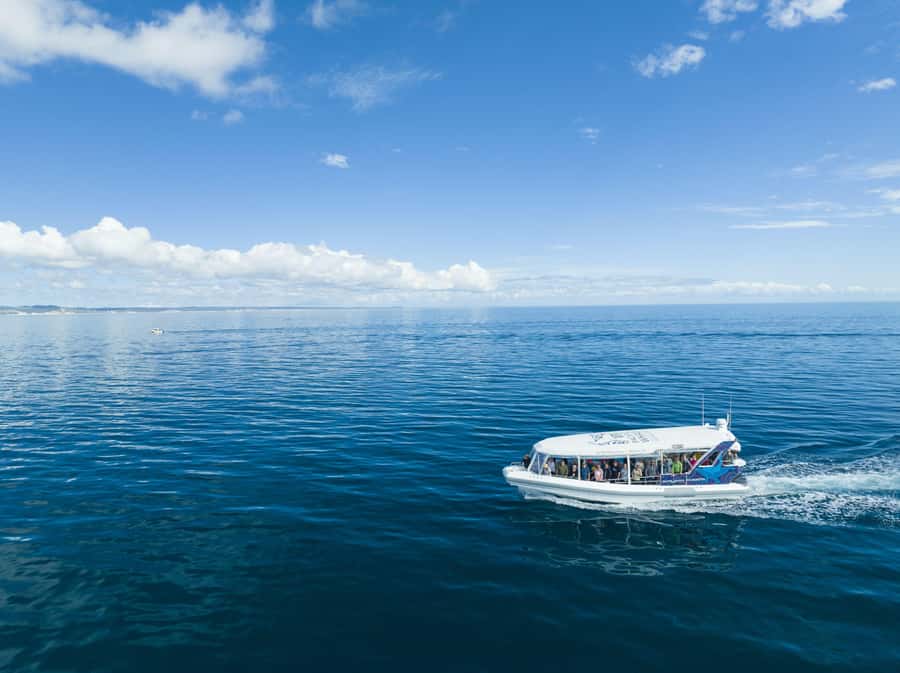
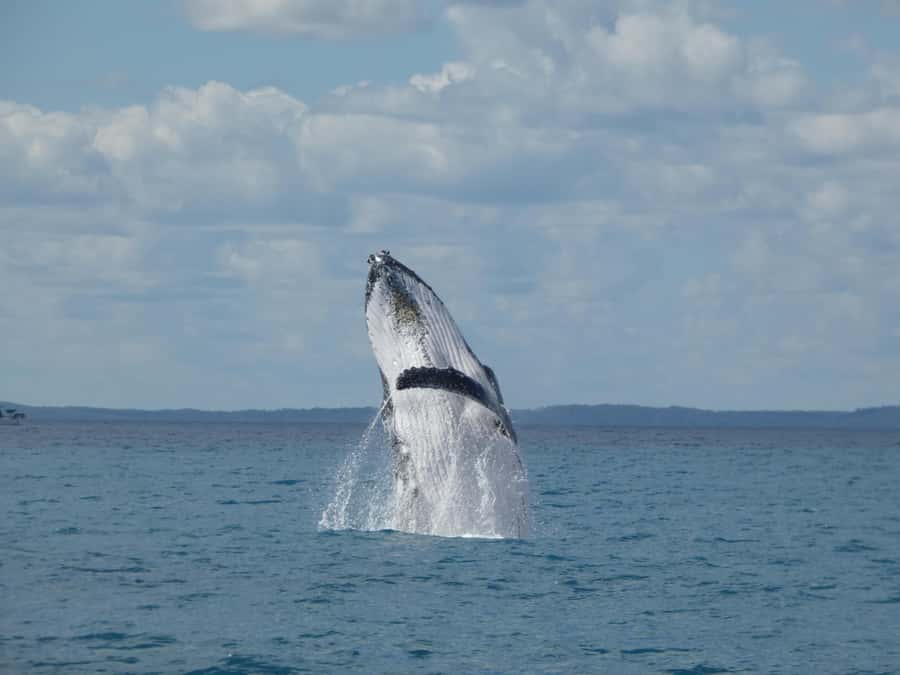
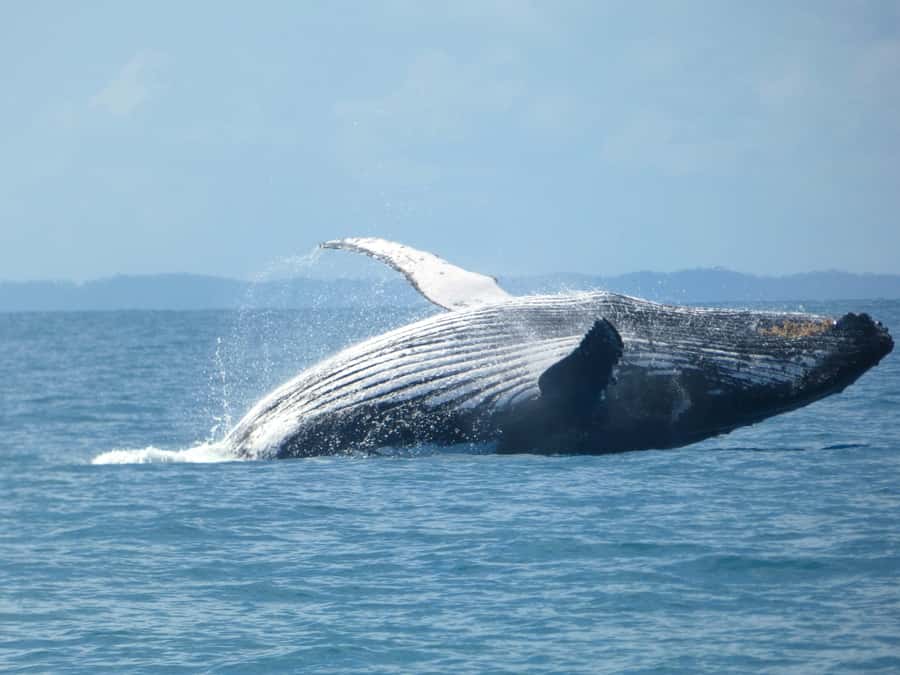
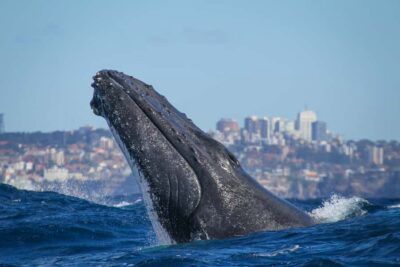
Mothers with calves are a major highlight of the Hervey Bay season. Calves can be playful, and an adult may surface near the boat while the young whale moves around it. You might see breaching, fin slapping, or a whale rolling at the surface.
The supplied experiences include sightings of multiple pods, triple breaches, dolphins, and whales staying near the boat for extended periods. One particularly striking type of encounter is mugging, when whales linger around or beneath a boat. It can feel as if the animals are inspecting you, although you should never assume that a close approach will happen on your particular departure.
This is where expectations matter. A whale watch is wildlife viewing, not a performance. One outing may bring several active groups and another may offer only a smaller number of sightings. The guarantee during the main season makes the booking less of a gamble, but it cannot promise a dramatic breach or a whale within a certain distance.
I would book this trip for the chance to observe natural behavior, not for a checklist of stunts. If the whales breach, you have a wonderful bonus. If they surface calmly beside the boat, that can be just as meaningful.
Comfort on a small boat
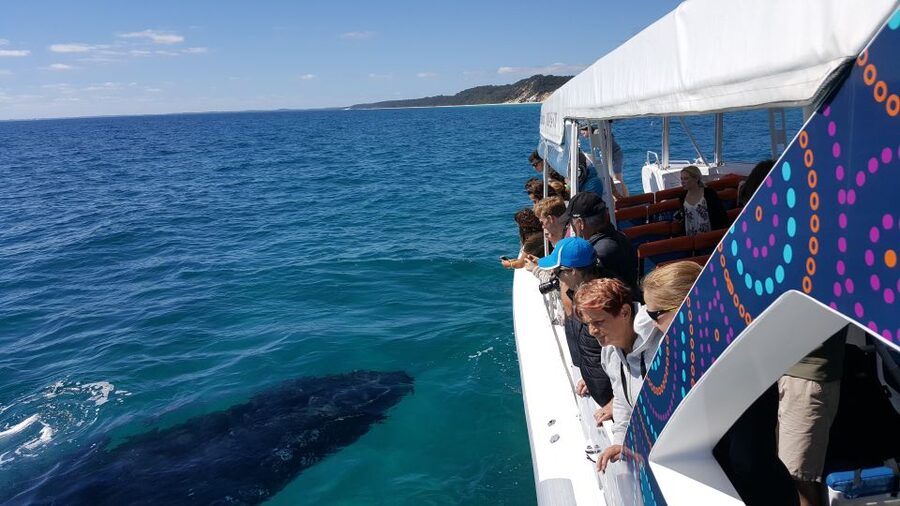
The Ocean Defender has forward-facing seats, shade, plenty of room, and toilet facilities. That is a useful combination on a three-hour trip. You are not stuck standing in one place, and you do not need to wait until the boat returns to use a restroom.
The small vessel is a strength for sightlines. You can look around the boat without being several rows back from the rail. It also creates a more personal setting for questions and conversation with the guide.
The same design has limits. A rigid inflatable boat is more exposed to wind and spray than a large enclosed cruise vessel. Several departures have had choppy conditions, especially when weather shifted on the return journey. The fast boat can handle the ride well, but it cannot remove the motion of the sea.
Pack warm clothing, sunglasses, a sun hat, and a jacket. The key tip is the jacket. Even on a sunny day, the wind during the cruise can make the water feel cold. Wear practical clothing that can cope with spray and changing weather.
The operator may delay or reschedule a trip when weather and tide conditions are poor. That can disrupt your plans, but it is the sensible choice for safety and comfort. A delayed departure is preferable to forcing a rough trip into a fixed schedule.
Snacks, soft drinks, and the children’s activity book
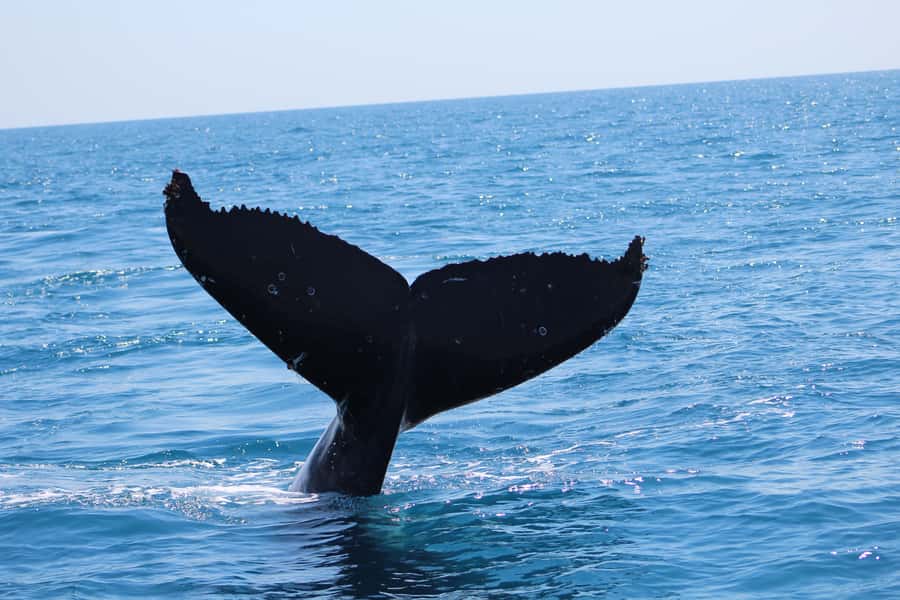
Snacks and soft drinks are included. The onboard food service has been adjusted to reduce contact, so you should expect a simple setup rather than a full meal. Morning tea has been a pleasant surprise on some departures, with cookies mentioned as a welcome extra.
The refreshments are useful because three hours on the water can feel longer than three hours on land. Still, do not treat the included snacks as lunch. If you need a substantial meal, eat before or after the cruise.
Children receive a Junior Naturalist Whale Watching Guide activity booklet. This gives younger passengers something to do between sightings and encourages them to watch for specific behaviors and marine life.
The age limit is important: children under six cannot join this activity. The trip is also not suitable for wheelchair users or people with mobility impairments. If you have another disability or need assistance, contact the operator before booking. One departure included extra help for a passenger with a disability, but the published suitability limits still apply.
A conservation-minded way to see whales
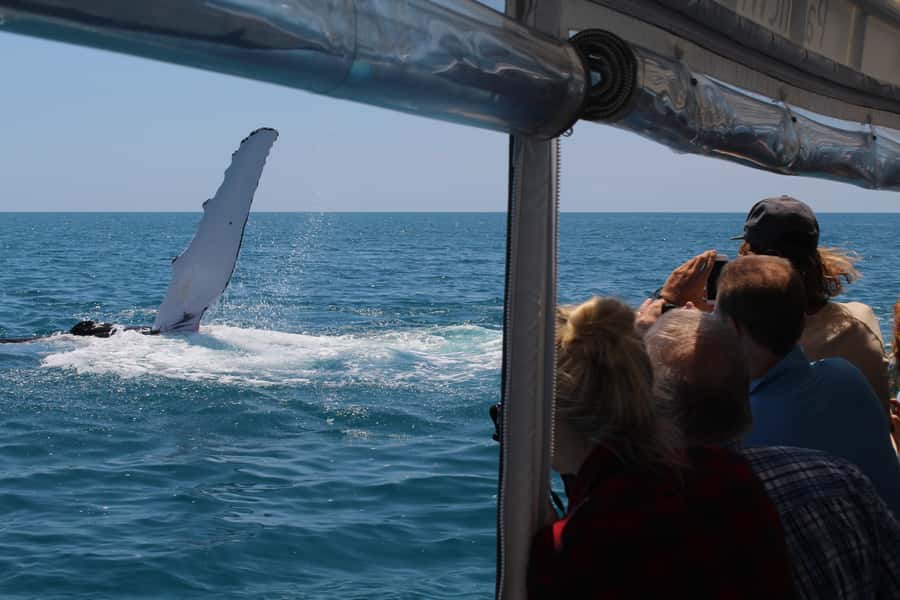
Pacific Whale Foundation Eco Adventures presents the trip as more than a sightseeing cruise. Your ticket helps support whale research, marine education, and ocean conservation in Australia.
That funding angle adds value, especially if you want wildlife encounters to support protection rather than treat animals as a commodity. The guides also encourage you to become an ocean advocate, connecting the local whale watch with wider concerns about healthy seas.
You should still judge the experience by the quality of the outing itself. Conservation support does not guarantee calm water, a sunny day, or dramatic whale behavior. Here, the combination is what makes the price more convincing: a three-hour cruise, a small vessel, specialist interpretation, live hydrophone audio, snacks, and support for research at $84 per person.
For a short visit to Hervey Bay, that is a fair price if you value close viewing and a science-led approach. A larger vessel might offer more indoor shelter, but this boat gives you a closer water-level view and a more focused group experience.
Who should book this Hervey Bay whale watch
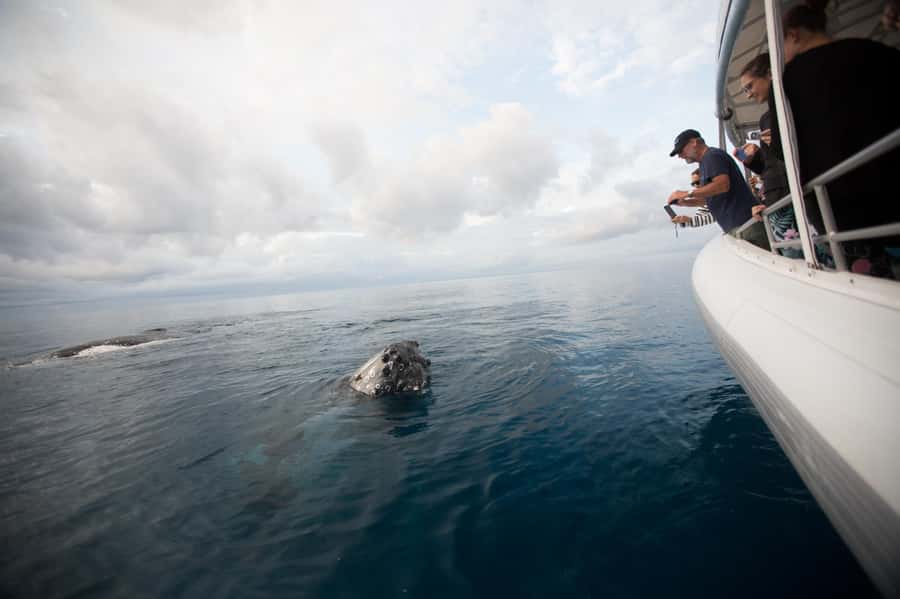
I would choose this tour if you want a small boat, direct views, and real explanation of whale behavior. It suits couples, families with children aged six and over, solo visitors, and anyone who would rather support conservation work than take a purely commercial cruise.
It is also a good fit if you enjoy photography. The water-level position gives you strong angles for backs, fins, tails, and surface activity. Keep your camera ready, but do not spend the whole trip staring through a screen. A whale can appear and disappear in seconds.
You should think twice if you dislike boat motion, need step-free access, or want a guaranteed breach. The open vessel can be cold, and rough conditions may make walking difficult. People with mobility impairments and wheelchair users should not book this activity based on the published restrictions.
Free cancellation is available up to two days before departure for a full refund. Check available starting times when you book, since the three-hour duration does not mean every departure runs at the same hour.
Should you book the Ocean Defender?
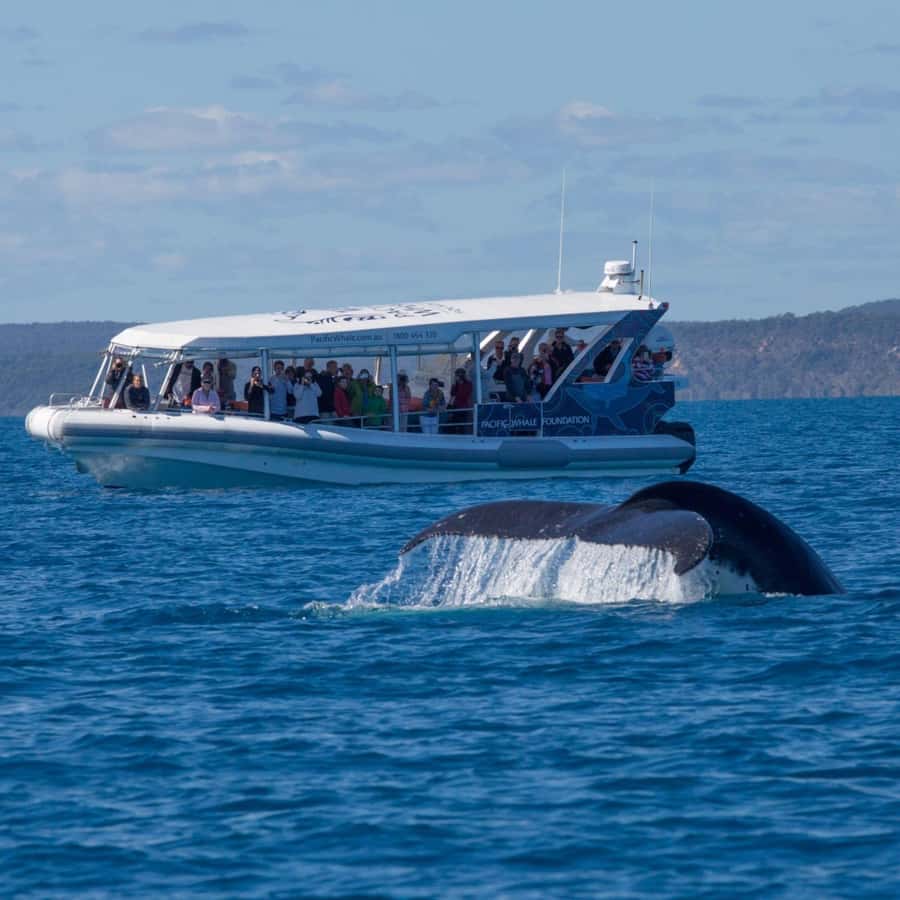
Yes, if your priority is a close, small-group whale watch with strong guiding and a conservation purpose. The greatest strengths are the low water-level views, the hydrophones, the enthusiastic crew, and the chance to see mothers and calves in a protected bay.
Book during the July 15 to October 9 sighting-guarantee period if whale watching is central to your Queensland plans. Even then, prepare for nature rather than a staged show. Bring a genuinely warm jacket, allow for possible weather changes, and take seasickness precautions if you need them.
I would skip it only if a larger, more sheltered boat is essential for you or if you cannot manage a moving open-water vessel. For most people who can handle those conditions, the mix of science, scenery, and wild whale behavior makes this one of Hervey Bay’s strongest three-hour outings.
FAQ
Where does the whale-watching tour depart from?
The tour departs from Shop 1, Tourist Terminal, at Great Sandy Straits Marina in Urangan, Hervey Bay. Look for the Pacific Whale Foundation Ocean Store front.
How long does the whale-watching experience last?
The activity lasts three hours, including the cruise from Great Sandy Straits Marina into Hervey Bay and the return journey.
Is whale sighting guaranteed?
Whale sightings are guaranteed from July 15 through October 9. The guarantee applies to seeing whales, not to specific behavior such as breaching or approaching the boat.
What kind of boat is used?
You cruise aboard the Ocean Defender, a 12-meter rigid inflatable boat designed for small-group tours and whale watching.
Can I hear whales underwater?
Yes. Underwater hydrophones are used so you can listen to live whale songs during the cruise.
What is included in the ticket?
The ticket includes expert commentary from marine scientists, hydrophone listening, snacks, soft drinks, forward-facing seating, shade, toilet facilities, and a Junior Naturalist Whale Watching Guide activity booklet for children.
What should I bring?
Bring warm clothing, a jacket, sunglasses, and a sun hat. The boat can feel much colder than expected while it is moving across the water.
Is the tour suitable for young children or wheelchair users?
Children under six cannot join the activity. It is also not suitable for wheelchair users or people with mobility impairments.
More Whale Watching in Hervey Bay
- Hervey Bay Whale Watching Cruise
★ 5.0 · 538 reviews - Fraser Island Whale Watch Encounter
★ 5.0 · 466 reviews - Spirit of Hervey Bay Whale Watching Cruise
★ 5.0 · 452 reviews - Fraser Island (K’gari): Remote Island and Whale Experience
★ 4.9 · 438 reviews
Just added around Hervey Bay
- Hervey Bay Whale Swim and Watch★ 5.0 · 201 reviews
- Enjoy a VIP Booth Shared Experience From Gympie★ 4.5 · 22 reviews
- Milbi Sunset Cruise with Champagne and Prawns★ 5.0 · 37 reviews
- Sunset Twilight Cruise in Hervey Bay★ 4.5 · 74 reviews
- World class Whale Watching from Hervey Bay★ 5.0 · 183 reviews
- SUMMER K’gari (Fraser Island) Boom-net & Sightseeing Cruise★ 4.5 · 23 reviews
- Hervey Bay Sunset Cruise★ 5.0 · 48 reviews
- K’gari (Fraser Island) West Coast Half Day Cruise from Hervey Bay★ 5.0 · 155 reviews
Whale Watching Cruises, compared.
Brisbane Whale Watching Cruise from Redcliffe or Sunshine Coast
Read our review →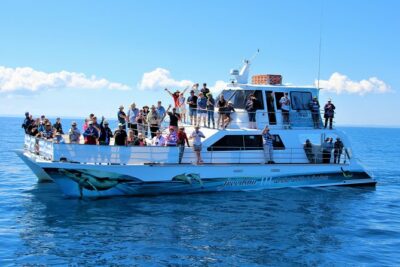
Freedom 3/4 Day Hervey Bay Premium Whale Watching Cruise
Read our review →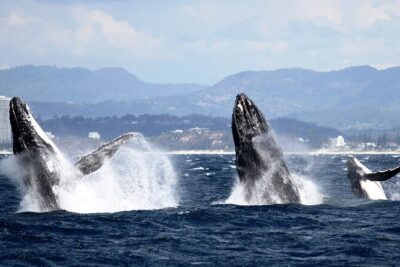
Spirit of Gold Coast 2.5-Hour Whale Watching Tour
Read our review →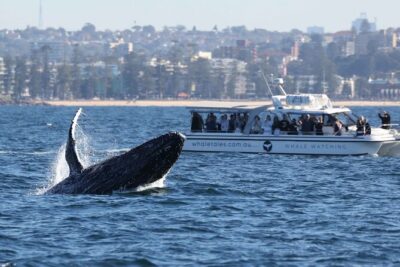
Browse the lists this tour appears in