

Reviewed · HISTORICAL TOURS
Historic Battery Point
Battery Point is where Hobart’s grand social history meets quiet residential streets. This two-hour walking tour takes you past colonial estates, workers’ cottages, Arthur Circus, and homes tied to the people who shaped Tasmania. The stories reach from dubious property dealings to rum, wool, timber, and the British Royal Navy.
I like the small group of no more than eight people, which should make it easy to hear the guide and ask questions. I also like the relaxed pace and the finish at Salamanca Place, close to cafés and the famous Saturday market. The main drawback is simple: it is an outdoor walk in all weather, and there is no hotel pickup, food, or drink included.
In This Review
- Key points at a glance
- Why Battery Point works best on foot
- Parliament House and the waterfront starting point
- Cottage Green becomes Battery Point
- Arthur Circus and the district’s unusual plan
- Houses that reveal class and trade
- Reverend Knopwood and the people behind the façades
- Salamanca Place and the port connection
- What two hours and $27.26 get you
- Pace, weather, and practical comfort
- Who will get the most from this walk
- Should you book Historic Battery Point?
- FAQ
- Where does the Historic Battery Point tour start?
- Where does the walking tour finish?
- How long does the tour last?
- How much does the tour cost?
- What is included in the experience?
- Are food and drinks included?
- Is the tour suitable for people with limited fitness?
- What happens if bad weather is forecast?
- How many people can join the tour?
- Can I cancel for a refund?
Key points at a glance

- Arthur Circus and Cottage Green: See the circular village green and learn how Battery Point changed from farmland into one of Hobart’s most sought-after districts.
- Stories with local color: Hear about Governor Arthur, Reverend Knopwood, and shipbuilder Alexander MacGregor rather than just receiving a list of building dates.
- A tiny group: The tour is limited to eight people, giving you a better chance to ask about homes, residents, and local customs.
- An easy city walk: The route follows city pavements at a leisurely pace, with places to sit or perch along the way.
- A useful finish: You end at Salamanca Place, near cafés and the Saturday market site.
- Strong guide-led experience: Lisa and Bec are especially praised for clear local knowledge, humor, energy, and answers to questions.
Why Battery Point works best on foot
Battery Point is not a district you need to rush through. Its appeal comes from small details: the mix of grand Georgian houses and modest cottages, the shape of the streets, and the way old homes reflect different levels of wealth.
A guide helps you read those details. Without one, you can admire the façades but miss why certain houses are large, why others are tightly packed, or how trade along the waterfront helped money move uphill into Battery Point.
The tour begins outside Parliament House near Salamanca Place. From there, you walk into a neighborhood once known as Cottage Green, when the area was farmland rather than an elegant residential quarter. That change gives the walk a useful backbone. You are not simply looking at pretty houses. You are following the growth of Hobart and the people who benefited from it.
I especially like this kind of city tour because the walking itself remains simple. You are on city pavements, not hiking trails, and the pace is described as easy. There are also places to sit or perch along the route. You should still wear comfortable shoes, but you do not need a high level of fitness.
A few more Hobart trips to weigh up
- Derwent River Historic Harbour Cruise From Hobart
★ 4.5 · 570 reviews - Port Arthur Historic Site Admission and Tour Options
★ 4.8 · 509 reviews - Tasman Island Cruises and Port Arthur Historic Site Day Tour from Hobart
★ 5.0 · 477 reviews
Parliament House and the waterfront starting point
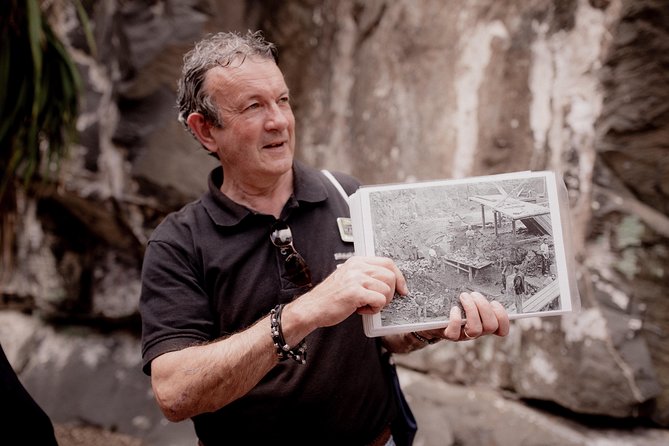
Meeting at Parliament House gives the tour a clear and convenient start. The building is near the waterfront and Salamanca Place, so you can reach it from central Hobart or combine the walk with time around the docks.
The starting point also sets up the story. Salamanca’s warehouses and docks were linked to the trade that helped Battery Point prosper. Timber, wool, and rum moved through the port, along with British Royal Navy shipping. As trade increased, wealth flowed into nearby streets and homes.
Your guide uses that waterfront setting to explain why Battery Point developed as it did. This is one of the tour’s best features: the district is presented as part of a working port town, not as an isolated collection of old houses.
The location is also useful if you are visiting on a cruise stop or have only a short stay in Hobart. You should allow enough time to reach Parliament House before the start, since missing the walk because of a late or non-arriving cruise ship does not qualify for a refund.
Cottage Green becomes Battery Point
The first section introduces the area’s earlier identity as Cottage Green. That name points to a less polished past, before Battery Point became associated with elegant homes and high property values.
You get a sense of how a once-rural district changed as Hobart grew. The tour connects the houses to the trade economy, social rank, and working life that shaped the neighborhood. Colonial estates tell one part of the story. Small workers’ cottages tell another.
I find that contrast more interesting than a street filled only with mansions. A large house can show the success of a merchant or shipbuilder, but a modest cottage helps you think about the people who worked in the port, served wealthy households, or supported the growing town.
The guide’s role matters here. Lisa has been praised for making the history fun as well as clear, while Bec is noted for her local knowledge, good humor, and energy. The tour depends on live commentary, so the quality of the guide shapes the experience. The available guide names are Lisa and Bec, though you should not assume which one will lead your departure.
Arthur Circus and the district’s unusual plan
Arthur Circus is one of the main sights on the route. Its circular arrangement gives Battery Point a different feel from a standard grid of streets, and it makes a natural stop for the guide’s stories.
The name leads to Governor Arthur, whose property dealings are presented with a doubtful edge. This is the sort of detail that brings a local walk to life. Instead of receiving a polished tale about respectable founders, you hear that power, land, and money did not always mix neatly.
Arthur Circus also gives you a good place to pause and take in the relationship between the open central space and the surrounding homes. The tour allows time to look, listen, and ask questions rather than pushing you quickly from one address to the next.
For photographers, this section should offer some of the walk’s most appealing views of historic homes. The tour does not promise interior access, so your focus remains on street-level architecture, façades, gardens, and the overall character of the area.
Same coast, a completely different day out:
- Bruny Island Food, Sightseeing, Guided Lighthouse Tour & Lunch
★ 5.0 · 2,989 reviews - Full-Day Guided Bruny Island Tour from Hobart
★ 5.0 · 1,331 reviews - kunanyi/Mt Wellington Explorer Bus- Return Tour (2.5 hours)
★ 5.0 · 1,249 reviews - Hobart: Bruny Island Food, Sightseeing & Lighthouse Day Tour
★ 4.8 · 960 reviews
Houses that reveal class and trade

Battery Point’s buildings are the visual heart of the walk. You see a range of styles, from colonial estates to quaint cottages built for workers. That variety makes the neighborhood useful for anyone interested in architecture, but the buildings also work as evidence of Hobart’s social structure.
The grand Georgian home connected with Alexander MacGregor is a key example. MacGregor was a shipbuilding tycoon, and his finest home still survives. Its scale and style help show how maritime business could translate into status and comfort.
The point is not just that a notable house remains. The guide places it in the story of the port, where shipping and trade created fortunes. You can then compare that house with smaller homes nearby and see how one district held several levels of society.
I like having a guide for this part because architectural details can be easy to overlook. A travel book may tell you the date or style of a building, but a local guide can add the human reason it matters. Lisa is particularly praised for pointing out things that are not easy to find through a quick online search or standard guidebook.
The walk should suit you if you enjoy architecture but do not want a technical lecture. The information is tied to residents and events, which keeps the buildings from feeling like museum displays without labels.
Reverend Knopwood and the people behind the façades

The tour also turns to Reverend Knopwood, whose fall from favor followed a life of carousing. That story adds a more personal and entertaining note to the walk.
Battery Point can look very proper at first glance. Stories about behavior, scandal, ambition, and decline remind you that historic neighborhoods were lived-in places full of complicated people. The past was not made only by governors, merchants, and respectable families.
This is where the guides’ humor becomes important. The walk is meant to inform, but it is not presented as a dry recital. Lisa is praised for answering questions with both accuracy and humor, and Bec for bringing good energy to the route.
You should expect stories rather than a formal academic talk. If you want dates, architectural terms, and a full account of every building, this may feel light. If you want a clear sense of how people lived and how reputations changed, the approach is a strong fit.
Salamanca Place and the port connection
The tour ends at Salamanca Place, the same waterfront area near the starting point. This makes the route practical. You finish close to cafés, public transport, and the site of the Saturday market, rather than in an unfamiliar outer part of Hobart.
Salamanca Place also makes sense as the final chapter. Earlier, you hear how docks, warehouses, shipping, wool, timber, and rum helped bring money into Battery Point. At the end, you return to the port setting that helped drive the district’s growth.
If your tour is on a Saturday, you can continue into the market after the walk. The market is described as the oldest in Australia, so it is a natural add-on, though food and drinks are not part of the tour itself. On another day, your guide can point you toward favorite cafés for coffee after the walk.
That finish gives the experience more value than a simple neighborhood loop. You can pair it with lunch, a market visit, or more time by the waterfront without arranging extra transport.
What two hours and $27.26 get you

The price is $27.26 per person for about two hours. That is fair value if you want local interpretation rather than a self-guided stroll.
You are paying for a professional local guide and a small group, not entry to houses or a meal. The value rests in the stories, route planning, and ability to ask questions. If you were already planning to walk through Battery Point on your own, the extra cost buys context that you may not find by looking at façades or reading a short guidebook description.
The group limit of eight is important. A large walking group can make a narrow street stop feel like a queue, and it can be hard to hear a guide near traffic or other visitors. A maximum of eight should create a more personal setting, though the actual group may be smaller.
The tour is booked an average of 61 days ahead, so I would not leave it until the last moment if your dates are fixed. Confirmation arrives at booking. The experience requires a minimum number of people, and if that minimum is not reached, you are offered another date or experience or a full refund.
Pace, weather, and practical comfort
This is a two-hour walk along city pavements. Most people can take part, and the route is not described as strenuous. There are places to sit or perch, which helps if you need a short break.
The tour operates in all weather. Hobart can change quickly, so bring suitable clothing rather than counting on perfect skies. Comfortable footwear is the sensible choice, and a rain layer can make the walk far more pleasant if conditions turn wet.
There is no hotel pickup or drop-off. You meet at Parliament House and finish at Salamanca Place, so you need to make your own way to the start. The route is near public transport, and the start and end points are both in a central waterfront area.
Service animals are allowed. Children must be accompanied by an adult. Food and drinks are not included, but the end point makes it easy to find a café afterward.
Who will get the most from this walk
I would choose this tour if you are visiting Hobart for the first time and want a quick sense of how the city’s wealth, port, and residents connected. It is also a good match for repeat visitors who have seen Salamanca Place but have not looked closely at Battery Point.
Architecture fans will appreciate the range of homes. History lovers will get stories about Governor Arthur, Reverend Knopwood, and Alexander MacGregor. Cruise passengers can use the central start and finish, but should allow a safety margin around ship timing.
It should also suit couples, families with older children, and anyone who prefers a small group. Since children must be accompanied by an adult and the walk is described as easy, it is a flexible option for many groups.
I would think twice if you dislike outdoor activities, need full indoor shelter, or want a tour with food and transportation included. This is a street-level history walk, not a house tour, museum visit, or bus excursion.
Should you book Historic Battery Point?
Book it if you want local stories tied to real streets and houses, especially if you value a guide who can answer questions and point out details you might otherwise miss. Lisa and Bec are both praised for bringing knowledge, humor, and energy to the walk, which is exactly what a neighborhood tour needs.
The tour is particularly worthwhile on a first Hobart visit, when the port, Parliament House, Salamanca Place, and Battery Point can otherwise feel like separate sights. The easy pace, eight-person limit, and useful Salamanca finish add practical value.
Skip it if you want interior access, a meal, hotel pickup, or a fully sheltered activity. For everyone else, this is a well-focused way to spend two hours, with enough history to inform you and enough human drama to keep the old houses from becoming scenery.
FAQ
Where does the Historic Battery Point tour start?
It starts outside Parliament House at 1 Salamanca Place, Hobart, near the waterfront.
Where does the walking tour finish?
The tour finishes at Salamanca Place in Hobart.
How long does the tour last?
The walk lasts approximately two hours.
How much does the tour cost?
The listed price is $27.26 per person.
What is included in the experience?
A professional local guide is included.
Are food and drinks included?
No. Food and drinks are not included, though the guide can direct you to favorite cafés after the walk.
Is the tour suitable for people with limited fitness?
The walk follows city pavements at a leisurely pace and is described as not too strenuous. There are places to sit or perch along the route, and most people can participate.
What happens if bad weather is forecast?
The tour operates in all weather conditions, so you should dress appropriately.
How many people can join the tour?
The maximum group size is eight people.
Can I cancel for a refund?
You can cancel up to 24 hours before the experience start time for a full refund. Cancellations or changes made less than 24 hours before the start time are not refunded or accepted.
Just added around Hobart
- kunanyi/Mt Wellington Explorer Bus – One Way Tour★ 5.0 · 63 reviews
- nipaluna (Hobart) Highlights Day Tour★ 5.0 · 33 reviews
- Full-Day Tour to Wineglass Bay from Hobart★ 5.0 · 122 reviews
- kunanyi/Mt Wellington Tour & Hobart Hop-On Hop-Off Bus★ 5.0 · 275 reviews
- Private Wine and Beverage Tours in Tasmania★ 5.0 · 66 reviews
- Hobart: Waterfalls, Wilderness & Wildlife – Active Day Tour★ 5.0 · 22 reviews
- Hobart: Wineglass Bay & Freycinet National Park – Active Day Tour★ 4.5 · 142 reviews
- 10 Days Ultimate Guided Tour of Tasmania – Comfort Tour★ 5.0 · 29 reviews
Historical Tours, compared.

Ultimate Melbourne Walking Tour: History, Laneways & Culture
Read our review →
Puffing Billy Railway: Heritage Steam Train Journey
Read our review →
Morning World Heritage Cruise on the Gordon River from Strahan
Read our review →
Strahan: World Heritage Cruise on Gordon River with Lunch
Read our review →

Experience History onboard The Mary Valley Rattler
Read our review →
Snorkel & Dive the Reef: Sustainable, Scientific & Cultural Tour
Read our review →
Derwent River Historic Harbour Cruise From Hobart
Read our review →Browse the lists this tour appears in