
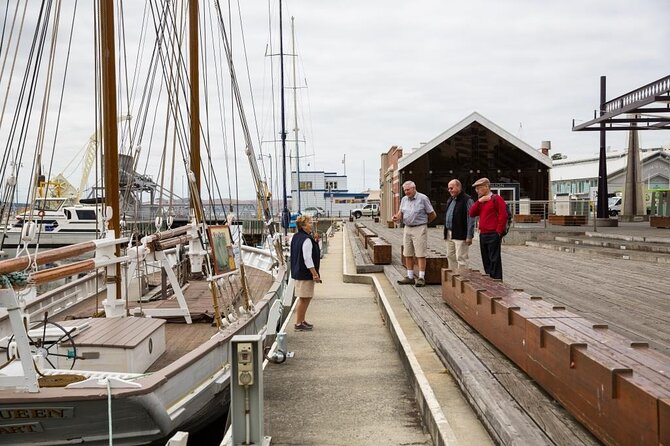
Reviewed · HISTORICAL TOURS
Hobart Historic Walking Tour
Hobart’s story comes alive in a compact 90-minute walk through the city centre, where sandstone buildings, old government sites, monuments, and convict tales sit close together. Guides such as Sara, Christine, Diane, Brendon, Bill, Maggie, and Dave bring their own style, with maps, photographs, humour, and plenty of local detail.
I like the small maximum group of 12, which makes it easier to ask questions and hear the guide. I also like the sensible route from the city information centre to Salamanca Place, a useful introduction if you have just arrived. The main drawback is that the walk covers a shorter distance than some people expect, and one guide has been hard to hear when facing a building instead of the group.
In This Review
- Key points about the Hobart Historic Walking Tour
- Why this short Hobart walk works so well
- Starting at Davey Street and entering old Hobart
- Sandstone buildings and the stories behind their walls
- St David’s Park and the city’s memorials
- Convict history without losing the wider picture
- Two historic buildings and small discoveries
- Finishing at Salamanca Place
- Is $27.26 good value?
- Who should book this walking tour?
- Should you book the Hobart Historic Walking Tour?
- FAQ
- How long is the Hobart Historic Walking Tour?
- Where does the tour start?
- Where does the tour finish?
- What time does the tour begin?
- How large is the tour group?
- Are food and drinks included?
- Can I cancel for a full refund?
Key points about the Hobart Historic Walking Tour
- Convict-era Hobart: Learn how colonial government, early settlement, and convict stories shaped the city.
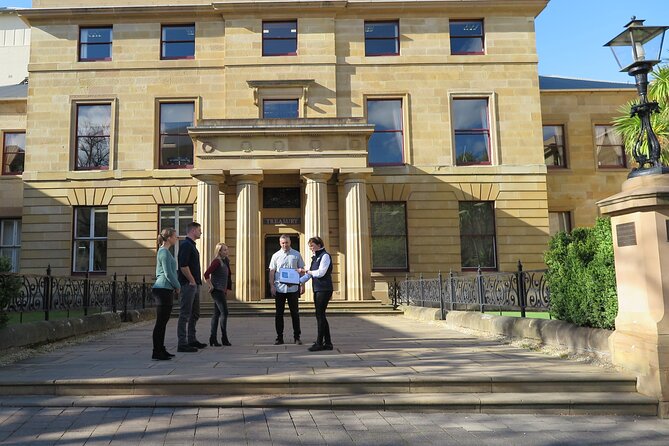
- Sandstone architecture: See heritage-listed buildings and hear how they were used in Hobart’s early years.
- Small-group format: The maximum group size is 12, with a local guide leading the walk.
- St David’s Park: Hear the story behind its monuments and memorial wall, built with old headstones.
- Useful city orientation: Begin at the Tasmanian Travel & Information Centre and finish at Salamanca Place.
- Good value at $27.26: The price is modest for a guided history lesson and an easy introduction to central Hobart.
Why this short Hobart walk works so well
Hobart can feel easy to understand on a map, but its early story is less tidy. Colonial administration, maritime trade, convict transportation, military power, and old civic buildings all overlap in a small central area. This tour gives you a framework for reading the city instead of simply passing attractive sandstone walls.
The 90-minute length is a practical strength. You get a focused history lesson without giving up an entire afternoon, and the 2 pm start leaves the morning open for Salamanca Market, the waterfront, or a trip farther afield. After the walk, you finish at Salamanca Place, so you can continue exploring on foot.
I would use this as one of my first activities in Hobart. The route helps you get your bearings, while the stories give later sightseeing more meaning. A building that looks like another old stone façade can become a former government office, a place linked to early settlement, or a reminder of the systems that governed convict-era Tasmania.
The tour has earned a 4.8 rating from 64 reviews, with 97 percent recommending it. The strongest praise goes to the guides’ command of local history, clear explanations, good pace, and ability to answer questions. That matters here because the appeal is not simply seeing buildings. It is understanding what happened inside and around them.
A few more Hobart trips to weigh up
- Derwent River Historic Harbour Cruise From Hobart
★ 4.5 · 570 reviews - Port Arthur Historic Site Admission and Tour Options
★ 4.8 · 509 reviews - Tasman Island Cruises and Port Arthur Historic Site Day Tour from Hobart
★ 5.0 · 477 reviews
Starting at Davey Street and entering old Hobart
Meet at the Tasmanian Travel & Information Centre, 20 Davey Street, at 2 pm. The start is near public transportation, and the tour ends at Salamanca Place rather than returning to the meeting point. That one-way design is handy if you want to carry on with your afternoon instead of retracing the route.
The opening section provides an orientation to Hobart as it is today and an introduction to its earliest settlement. Your guide points out heritage-listed buildings and explains the people, decisions, and conflicts that influenced the city’s first years.
This is where the small group helps. With no more than 12 people, you should have a reasonable chance of staying close to the guide and asking about details that catch your eye. The tour has also been run for groups as small as five, creating a quieter, more personal feel.
Expect a story-led walk rather than a long-distance city hike. One person who enjoyed the tour still felt it covered less ground than expected. If you want to see a wide spread of Hobart, this is not that kind of outing. Its value comes from concentrating on a small historic core.
Sandstone buildings and the stories behind their walls
Architecture is one of the tour’s clearest pleasures. Hobart’s older sandstone buildings give the centre a strong visual character, but the guide adds the useful layer: what each building was used for, who controlled it, and how it fitted into early civic life.
You may hear about the government of the day and the way authority operated in a relatively small settlement. The tour focuses on early characters and events, turning façades into evidence of Hobart’s development.
Maggie has been praised for her command of Hobart’s history and its preserved buildings. Sara has been described as combining a large store of historical detail with humour. Diane has used maps and pictures to make the early settlement easier to follow. These details suggest that the exact flavour depends partly on your guide, but the subject matter remains consistent.
There is one practical point to keep in mind: listening outdoors is not always perfect. One person missed parts of the explanation because the guide was speaking toward a building rather than facing the group. If you are hard of hearing, stay near the front and politely ask the guide to face the group when speaking. The tour operator has acknowledged this concern, so it is worth raising at the start.
St David’s Park and the city’s memorials
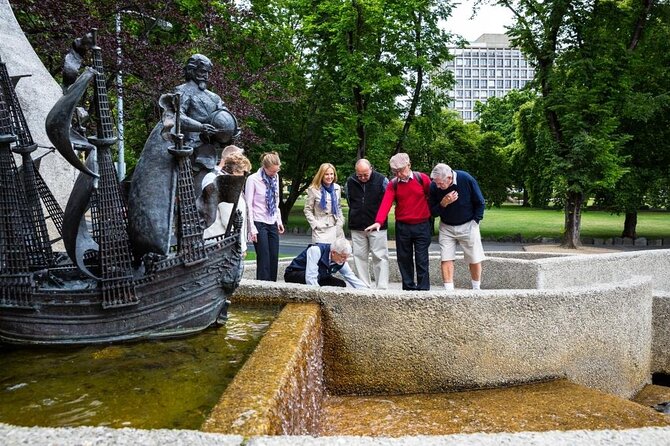
St David’s Park adds a more reflective stop to the route. Here, you can learn about the monuments and a memorial wall constructed using old headstones. It is a small detail with a strong effect, since it connects the modern park with earlier generations and changing attitudes toward remembrance.
This stop also shows why a guided walk can offer more than a map. You might notice the stones and monuments on your own, but you would not necessarily know what they represent or how they fit into Hobart’s story. A guide can point out the details before you move on.
Christine has been praised for keeping the walk at a comfortable pace for people of different ages. That is useful in a place like St David’s Park, where you want enough time to look around without turning the tour into a long stop at every monument.
The pace seems designed for conversation and observation rather than speed. A partially sighted member of one group was accommodated thoughtfully, which suggests that the guide can adjust attention to individual needs. Still, the tour states that children must be accompanied by an adult, and most people can participate.
Same coast, a completely different day out:
- Bruny Island Food, Sightseeing, Guided Lighthouse Tour & Lunch
★ 5.0 · 2,989 reviews - Full-Day Guided Bruny Island Tour from Hobart
★ 5.0 · 1,331 reviews - kunanyi/Mt Wellington Explorer Bus- Return Tour (2.5 hours)
★ 5.0 · 1,249 reviews - Hobart: Bruny Island Food, Sightseeing & Lighthouse Day Tour
★ 4.8 · 960 reviews
Convict history without losing the wider picture
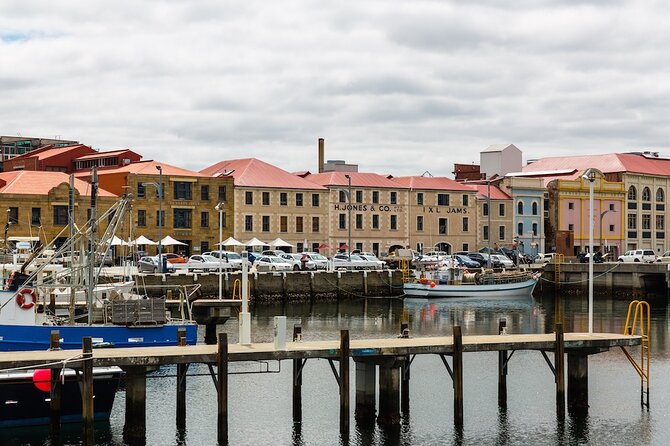
Convict history is a central part of the tour. You learn how convict stories fit into the early development of Hobart, alongside colonial government and settlement. The guide connects people and events with the buildings around you, which makes the subject less abstract.
For history fans, this is likely the main reason to book. The tour does not treat convict history as an isolated theme. Instead, it places it within the civic life of early Hobart, where official decisions, social structures, and daily settlement all affected one another.
The tour is also useful if you know little about Tasmania. Several guides have been praised for making the city’s early years understandable in a short time. Bill, for example, has been described as able to answer questions across the full story of Hobart while keeping the walk at an easy pace. Brendon has been praised for offering a clear overview on a sunny afternoon in the area of the first settlement.
One important gap deserves a direct mention. A participant was disappointed that the tour did not acknowledge the original inhabitants of Hobart, even briefly, and pointed out that settlers did not arrive to an empty island. That is a fair consideration for anyone looking for a fuller account of Tasmania’s past. The advertised emphasis is colonial and convict history, but you should not assume the walk will provide a substantial account of Indigenous history.
Two historic buildings and small discoveries
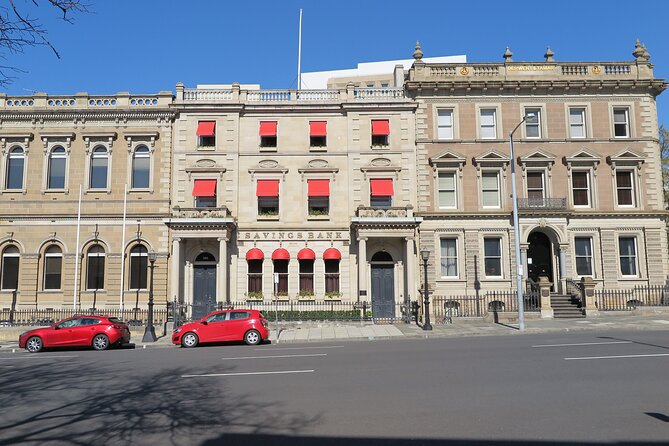
The route can include the chance to enter two older buildings, each for a different reason. The available details do not identify the buildings or guarantee entry on every departure, so I would treat this as a possible bonus rather than the core promise of the tour.
That uncertainty is not a major problem. The walk’s main appeal is the guide’s explanation of the streets and buildings, not a long list of interior visits. Still, stepping inside an old structure can help you picture how the city worked in earlier times.
The tour also leaves you with practical ideas for independent sightseeing. One of its strengths is showing you where to return later, what architectural details to notice, and which stories deserve more reading. It gives you a starting point rather than trying to cover every chapter of Hobart’s past.
Do not expect food, drinks, or hotel pickup. You are paying for the small-group walk and local guide, not a package outing. That keeps the price low and the schedule simple.
Finishing at Salamanca Place

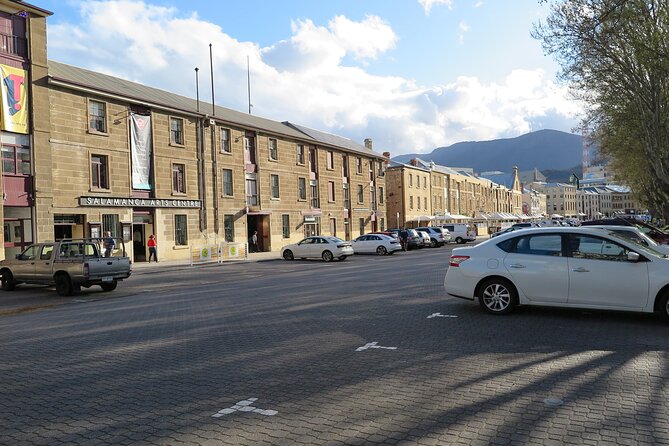
The walk ends at Salamanca Place, one of Hobart’s best-known historic areas. This is a strong finish because you can continue the afternoon without needing transport back to the start.
You might stop for a drink, browse the surrounding area, or use the location as a base for further exploring. One group enjoyed the walk enough to continue on for a drink together afterward, though that social moment is not part of the tour itself.
Ending here also gives the route a useful shape. You begin with orientation around the central city and finish in a district closely associated with Hobart’s historic waterfront setting. The tour therefore works well as a bridge between formal sightseeing and an unplanned afternoon on foot.
Is $27.26 good value?
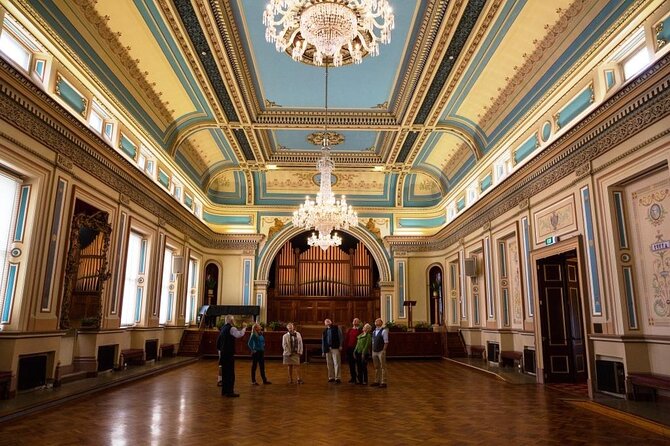
At $27.26 per person, this is a reasonably priced way to get a guided introduction to Hobart. You receive 90 minutes with a local guide in a group capped at 12, which compares well with the cost of many paid attractions that offer less personal explanation.
The value is strongest for first-time visitors. If you spend the first day in Hobart wondering which buildings matter, this tour can save time and help you make better choices afterward. It is also good value for history fans who want context rather than a quick photo stop.
The price feels less compelling if you already know central Hobart well or prefer to explore silently with a guidebook. The route is fairly compact, and the tour does not include refreshments, transport, or hotel service. You are buying interpretation, not a full-day activity.
I would also book with the weather in mind. The experience requires good weather, and a cancellation caused by poor conditions can lead to a new date or a full refund. Free cancellation is available if you cancel at least 24 hours before the start time. Changes or cancellations inside that window are not accepted for a refund.
Who should book this walking tour?
I would recommend it to:
- First-time visitors who want a clear introduction to Hobart.
- History fans interested in colonial government, early settlement, and convict stories.
- People who enjoy architecture and want the stories behind sandstone buildings.
- Cruise or short-stay visitors who need a compact activity.
- Families with children who can manage a 90-minute guided walk.
- Visitors who prefer a small group and the chance to ask questions.
You may want something else if you want a long-distance walk, a full treatment of Indigenous history, or a broad tour across several parts of Hobart. This experience stays focused on the historic centre and its early colonial story.
Wear comfortable shoes and arrive ready to listen outdoors. Stay close to the guide, especially when the group stops beside a busy street or large building. If you have hearing or mobility concerns, mention them early so the guide can respond.
Should you book the Hobart Historic Walking Tour?
Yes, if you want a short, affordable way to understand central Hobart before exploring on your own. The strongest reasons are the small group, the local guides, the accessible pace, and the close look at sandstone buildings, St David’s Park, colonial government, and convict-era stories.
I would not choose it as your only history activity if acknowledging Tasmania’s original inhabitants is important to you, since that subject may not receive meaningful attention. I would also avoid it if you want to cover a large part of Hobart on foot.
For most first-time visitors, though, the tour earns its place early in a Hobart itinerary. Book the 2 pm walk, listen for the building stories, and finish at Salamanca Place with a better sense of where you are and what you are seeing.
FAQ
How long is the Hobart Historic Walking Tour?
The tour lasts approximately 90 minutes.
Where does the tour start?
It starts at the Tasmanian Travel & Information Centre, 20 Davey Street, Hobart.
Where does the tour finish?
The walk ends at Salamanca Place.
What time does the tour begin?
The scheduled start time is 2 pm.
How large is the tour group?
The experience has a maximum of 12 travelers.
Are food and drinks included?
No. Food and drinks are not included in the tour price.
Can I cancel for a full refund?
Yes, if you cancel at least 24 hours before the experience start time. Cancellations made less than 24 hours before the start time are not refunded. If poor weather or an insufficient minimum number of participants causes the tour to be canceled, you will be offered another date or experience, or a full refund.
Just added around Hobart
- kunanyi/Mt Wellington Explorer Bus – One Way Tour★ 5.0 · 63 reviews
- nipaluna (Hobart) Highlights Day Tour★ 5.0 · 33 reviews
- Full-Day Tour to Wineglass Bay from Hobart★ 5.0 · 122 reviews
- kunanyi/Mt Wellington Tour & Hobart Hop-On Hop-Off Bus★ 5.0 · 275 reviews
- Private Wine and Beverage Tours in Tasmania★ 5.0 · 66 reviews
- Hobart: Waterfalls, Wilderness & Wildlife – Active Day Tour★ 5.0 · 22 reviews
- Hobart: Wineglass Bay & Freycinet National Park – Active Day Tour★ 4.5 · 142 reviews
- 10 Days Ultimate Guided Tour of Tasmania – Comfort Tour★ 5.0 · 29 reviews
Historical Tours, compared.

Ultimate Melbourne Walking Tour: History, Laneways & Culture
Read our review →
Puffing Billy Railway: Heritage Steam Train Journey
Read our review →
Morning World Heritage Cruise on the Gordon River from Strahan
Read our review →
Strahan: World Heritage Cruise on Gordon River with Lunch
Read our review →

Experience History onboard The Mary Valley Rattler
Read our review →
Snorkel & Dive the Reef: Sustainable, Scientific & Cultural Tour
Read our review →
Derwent River Historic Harbour Cruise From Hobart
Read our review →Browse the lists this tour appears in