
Reviewed · HISTORICAL TOURS
Hobart History, People & Places – 2 hour city walk
Hobart’s past is written into its sandstone walls, waterfront lanes, parks, and statues, but you need someone to point out what you are seeing. This two-hour city walk connects those pieces, from Hunter Street and the old waterfront to Salamanca Place, while explaining how Hobart grew from a British settlement into Tasmania’s capital.
I like the small-group format, which keeps the walk personal and leaves room for questions. I also like the mix of grand civic buildings and odd, lesser-known stories, including a park with a dark secret and statues whose meaning is easy to miss when you walk past alone.
The main thing to consider is that this is a pavement walk in all weather, not a museum visit with shelter and seats throughout. The route is described as wheelchair accessible, with places to sit or perch, but you should still dress for Hobart’s changeable conditions and allow two hours on foot.
In This Review
- Key points for your Hobart visit
- Starting at Hunter Street and the Henry Jones Art Hotel
- Hunter Street and Hobart’s waterfront
- Colonial Hobart, convicts, and Indigenous stories
- The seat of power, churches, courts, and prisons
- City parks and statues with surprising stories
- Finishing at Salamanca Place
- What the guides add to the experience
- Price, pace, and practical value
- Who should book this two-hour walk?
- Booking and cancellation details
- Should you book Hobart History, People & Places?
- FAQ
- How long is the Hobart History, People & Places tour?
- Where does the walking tour begin?
- Where does the tour finish?
- What places does the tour visit?
- What is included in the price?
- Are food and drinks included?
- Is the tour wheelchair accessible?
- How large is the tour group?
- Does the tour operate in bad weather?
- What happens if I need to cancel?
Key points for your Hobart visit

- Follow a clear route through central Hobart: Begin at 25 Hunter Street, walk along the waterfront, and finish at Salamanca Place.
- Hear stories, not just dates: The guides cover colonial settlement, convicts, Indigenous responses to British invasion, local power, and unusual city tales.
- See Georgian and Victorian architecture up close: Your guide points out details in heritage-listed buildings that are easy to overlook.
- Keep the group small: The experience is designed for an intimate group, with the maximum listed as eight in the tour description and ten in the additional information.
- Get your bearings in two hours: It is a useful first-day activity before exploring Hobart on your own.
- Pay a modest price for a personal introduction: At $27.26 per person, the walk offers guided context without taking half a day.
Starting at Hunter Street and the Henry Jones Art Hotel
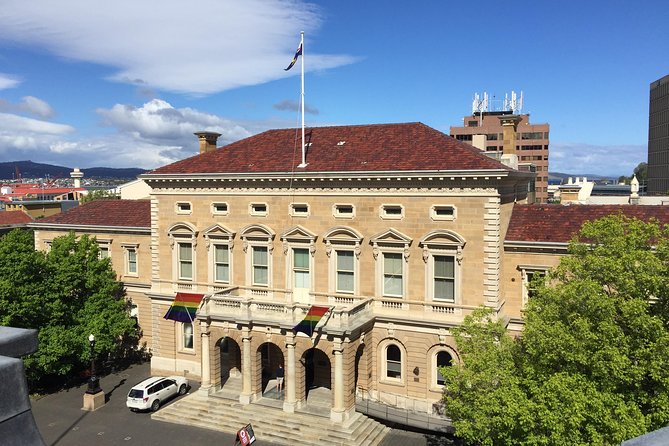
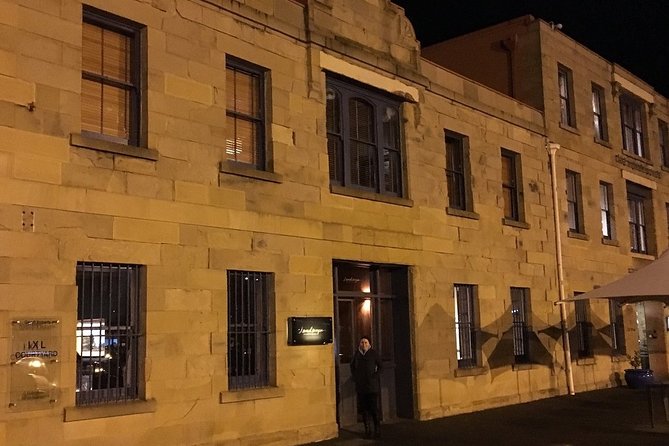
The walk begins outside the Henry Jones Art Hotel at 25 Hunter Street. This is a practical starting point because you are already close to Hobart’s waterfront and some of the city’s best-preserved older buildings.
You meet your local guide there and set off on foot. Guides named in the tour information include Lisa, Deb, and Jan, though your departure may be led by another member of the team. Lisa receives especially strong praise for her storytelling, clear explanations, friendly manner, and ability to answer questions without making the walk feel like a lecture.
The opening section gives you a useful frame for the rest of the tour. Instead of looking at each building as an isolated photo stop, you begin to see how streets, government buildings, churches, courts, prisons, and the harbor fit into Hobart’s early development.
That context matters. Hobart can look compact and easy to understand at street level, but the city’s appearance reflects several competing stories: British settlement, Indigenous dispossession, convict labor, trade, government, and later efforts to preserve old buildings. A guide helps you connect those threads as you move through the city.
A few more Hobart trips to weigh up
- Derwent River Historic Harbour Cruise From Hobart
★ 4.5 · 570 reviews - Port Arthur Historic Site Admission and Tour Options
★ 4.8 · 509 reviews - Tasman Island Cruises and Port Arthur Historic Site Day Tour from Hobart
★ 5.0 · 477 reviews
Hunter Street and Hobart’s waterfront
Hunter Street and the waterfront provide an immediate sense of Hobart’s working beginnings. This is not simply a scenic harbor stroll. The area is used to explain how the settlement functioned, how people and goods arrived, and how the city grew around the water.
Your guide also points out heritage buildings and architectural details along the route. Georgian and Victorian styles are prominent, and the value of seeing them with a guide is that you learn what to look for: proportions, stonework, facades, and changes made over time.
I like this part of the walk because it combines scenery with practical city orientation. You are not locked inside a historic building or moving from one formal attraction to another. You are walking through the same streets you will likely use later for cafes, shops, museums, and the waterfront.
There is also time for photographs. The pace is described as leisurely, and the route is intended to let you stop, listen, and ask questions rather than hurry from place to place. That makes the tour suitable if you prefer a gentle walk, although you should still expect to be on your feet for much of the two hours.
Colonial Hobart, convicts, and Indigenous stories
A major strength of the walk is its treatment of Hobart’s colonial beginnings. The guide explains the hardships and successes faced by British settlers, along with the role of convicts in the city’s early growth.
That subject can easily be reduced to a list of dates and famous names. Here, the emphasis is on people and events, with stories used to show how settlement affected daily life and shaped the city. You hear about the founding and growth of Hobart, as well as the convict past that remains central to Tasmania’s story.
The tour also addresses the Indigenous people of the area and their responses to British invasion. This is important because it keeps the story from becoming only a celebration of colonial buildings and government. The walk gives you a broader view of what Hobart’s development meant for different communities.
You should not expect a long specialist lecture on every part of Tasmanian history. The tour lasts two hours and covers many places. Its strength is giving you a solid introduction, with enough detail to make later visits to historic sites more meaningful.
The guides also use maps and historical photographs to support their explanations. That can be particularly helpful when a modern street or building has changed from its earlier form. You can compare what you see now with the city your guide is describing.
The seat of power, churches, courts, and prisons
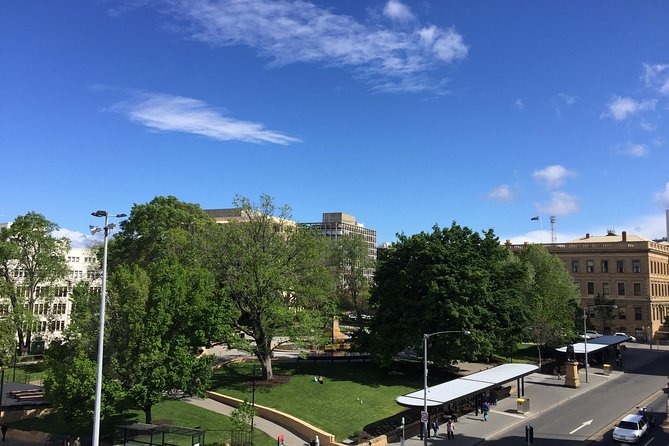
As the walk continues into town, the route moves toward Hobart’s civic center and the institutions that once controlled daily life. Churches, courts, prisons, and seats of government help explain how authority operated in the young settlement.
This section is useful for anyone interested in the practical side of history. Rather than treating government as an abstract subject, the walk links power to physical buildings and public spaces. You see where decisions were made, where laws were enforced, and where religious and civic life met.
The architecture becomes part of the lesson. Hobart’s Georgian and Victorian buildings are attractive, but they also reveal the ambitions of a growing colonial capital. Your guide draws attention to the details that show the city’s age and changing fortunes.
I would pay close attention here, even if you are not normally an architecture enthusiast. A building can look like an attractive old facade until someone explains why its design, materials, or position mattered. After the tour, you are more likely to notice those clues when exploring on your own.
Some parts of this section may feel more factual than the waterfront stories. That is a fair trade for the chance to understand how Hobart was run. The walk moves at a manageable pace, and you can ask questions as you go.
Same coast, a completely different day out:
- Bruny Island Food, Sightseeing, Guided Lighthouse Tour & Lunch
★ 5.0 · 2,989 reviews - Full-Day Guided Bruny Island Tour from Hobart
★ 5.0 · 1,331 reviews - kunanyi/Mt Wellington Explorer Bus- Return Tour (2.5 hours)
★ 5.0 · 1,249 reviews - Hobart: Bruny Island Food, Sightseeing & Lighthouse Day Tour
★ 4.8 · 960 reviews
City parks and statues with surprising stories

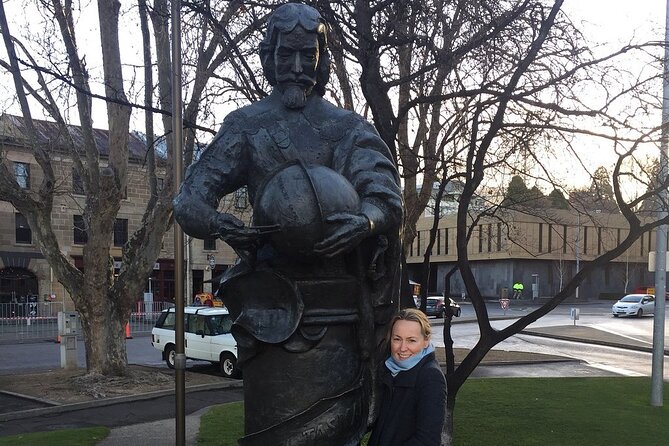
The route includes a city-center park where statues become the focus. This is one of the more distinctive parts of the experience because public sculpture often carries local stories that are not obvious from a quick glance.
Your guide explains who the statues represent and why they matter. Some stories are amusing, some are unexpected, and some reveal how Hobart has chosen to remember its past. You may pass these figures later and see more than a name on a plaque.
The park also gives you a short change from streets and buildings. There are places to sit or perch along the route, which is helpful if you need a brief rest. Still, this is not described as a seated tour, so comfortable shoes and a realistic view of your walking ability are sensible.
The next park has a darker story, one that many local people may not know. That contrast keeps the tour from becoming a simple parade of pretty buildings. Hobart’s public spaces hold both pleasant and uncomfortable memories, and the guide brings those out without losing the easy pace of the walk.
This mix of light and dark material is one reason the experience feels more personal than a standard sightseeing circuit. You get the formal history of courts and government, then the stranger human details that help a city feel real.
Finishing at Salamanca Place
The walk ends at Salamanca Place, one of Hobart’s best-known historic areas. Its sandstone buildings and waterfront setting make it a natural finish, and the location is convenient for continuing your day.
Salamanca Place is especially famous for its Saturday market, described as the oldest market in Australia. The tour does not include food, drinks, or shopping, so plan to visit the market separately if your schedule lines up with it.
Ending here gives you a useful choice. You can stop for a coffee, browse the area, or continue exploring without having to return to the starting point. Your guide can also suggest favorite cafes for a drink after the walk.
The finish is particularly handy for a first visit because you have moved from Hunter Street through the central city and down toward Salamanca. You leave with a basic mental map rather than a collection of unrelated stops.
One limitation is timing. A Saturday market can be crowded, and this tour does not appear to include special market access or time to browse as part of the guided walk. Think of Salamanca Place as the final historic stop and a launch point for your own plans.
What the guides add to the experience

The strongest feature is the guide. Lisa is frequently identified as warm, clear, engaging, and deeply familiar with Hobart and Tasmanian history. She uses stories, maps, photographs, and conversation to make buildings and streets easier to understand.
Deb and Jan are also named as guides, with Jan noted for taking time to explain the city’s past and Deb praised for her information and sense of humor. Since guides can vary by departure, you should book this for the format and subject matter rather than expecting one particular person unless the operator confirms your guide.
A good guide matters on a city walk because the sights are mostly viewed from public streets. You are not paying for entry to a major attraction. You are paying for interpretation, local detail, and the chance to ask questions in real time.
The small group helps. The tour description gives a maximum of eight, while the additional information allows up to ten, so the exact group size may vary. Either way, this is intended to be far smaller than a large coach group, and the format should make it easier to hear the guide and pause for questions.
The walk also seems to suit different ages. Children must be accompanied by an adult, and several comments describe an easy, comfortable pace. The subject matter may appeal most to older children and adults who enjoy stories about places, but the guide’s use of unusual tales can help keep the material lively.
Price, pace, and practical value
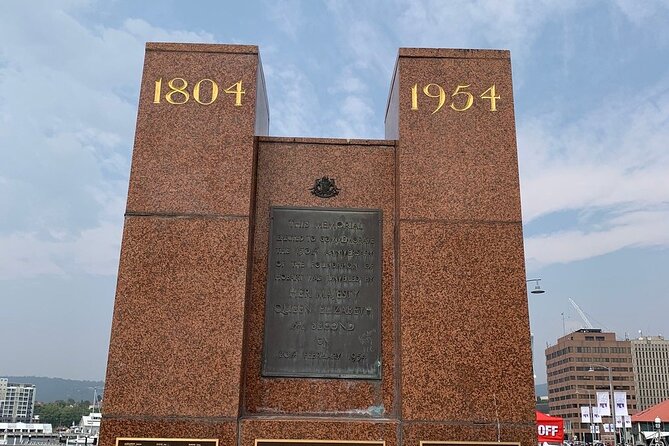
At $27.26 per person, this is a reasonably priced way to get a structured introduction to Hobart. The price includes a professional local guide, but not food, drinks, hotel pickup, or drop-off.
I see the value in the context rather than the number of attractions. You are not buying admission to several sites. You are buying two hours of local explanation that can improve the rest of your stay, helping you understand why certain streets, buildings, parks, and waterfront areas matter.
The walk is also efficient. If you have only a short time in Hobart, it covers several central areas without requiring transport between them. It can work well on your first day, before you return to places that deserve more time.
The meeting point is at 25 Hunter Street, and the finish is Salamanca Place. Since you arrange your own way to the start and continue independently at the end, you need to plan around those locations. The tour operates in all weather, so bring suitable clothing for rain, wind, or cooler conditions.
The walk is described as wheelchair accessible and takes place along city pavements. There are places to sit or perch, and most people can participate, but anyone with mobility concerns should confirm the exact route and current conditions before booking. Pavement walks can still include uneven surfaces, crossings, and periods without a proper seat.
The experience allows service animals and is near public transportation. Confirmation is provided at booking. If you are arriving by cruise ship, take the ship schedule seriously: a late or non-arriving ship does not qualify for a refund under the stated conditions.
Who should book this two-hour walk?
I would choose this tour if you want a quick orientation with real local detail. It suits first-time visitors, history fans, architecture lovers, cruise passengers with enough time in port, and anyone who prefers walking to sitting on a bus.
It is also a good match if you enjoy asking questions. The small-group setup gives you more opportunity to speak with the guide than a large city tour usually allows.
Families can consider it, especially if children enjoy unusual stories, statues, or the convict past. Keep in mind that children need an accompanying adult, and the tour still requires two hours on city pavements.
You may want something else if you dislike historical explanation or want plenty of time inside attractions. This is an outdoor overview, not a ticketed museum program. You will see buildings and public places from the streets, with the guide supplying the background.
The tour also may not suit you if you want a completely flexible schedule. It follows a planned route and runs in all weather. The pace is gentle, but you should still allow enough time to walk from the meeting point and continue from Salamanca Place afterward.
Booking and cancellation details
You can cancel up to 24 hours before the local start time for a full refund. Changes or cancellations made less than 24 hours before the start are not accepted for a refund.
The tour requires good weather and a minimum number of participants. If the operator cancels for poor weather or because the minimum is not met, you are offered another date or experience, or a full refund.
Dress for the forecast even though the tour operates in all weather. Comfortable walking shoes are the practical choice, and a light rain layer is sensible in Hobart.
Should you book Hobart History, People & Places?
Book it if you want to understand Hobart before exploring it on your own. The route is compact, the price is modest, and the combination of waterfront views, heritage architecture, convict stories, Indigenous history, public statues, and local secrets gives you more than a simple photo walk.
I would especially choose it early in a Hobart stay. The guide’s explanations can change how you see streets you might otherwise pass without a thought.
Skip it only if you want a fast list of sights with little talking, or if your schedule leaves no room for a two-hour pavement walk. For most visitors who value stories and a friendly local guide, this is a practical and worthwhile introduction to central Hobart.
FAQ
How long is the Hobart History, People & Places tour?
The tour lasts approximately two hours.
Where does the walking tour begin?
The tour begins outside the Henry Jones Art Hotel at 25 Hunter Street, Hobart TAS 7000.
Where does the tour finish?
The walk finishes at Salamanca Place, Hobart TAS 7000.
What places does the tour visit?
The route includes Hunter Street, the Hobart waterfront, city parks, the central city area, heritage buildings, and Salamanca Place.
What is included in the price?
The price includes a professional local guide.
Are food and drinks included?
No. Food and drinks are not included, although the guide can direct you to favorite cafes after the walk.
Is the tour wheelchair accessible?
The tour is described as wheelchair accessible and takes place along city pavements. There are places to sit or perch along the route.
How large is the tour group?
The tour is designed as a small-group experience. The description gives a maximum of eight people, while the additional information states a maximum of ten travelers.
Does the tour operate in bad weather?
The tour operates in all weather conditions, and you are expected to dress appropriately. If the experience is canceled because of poor weather, you are offered another date or a full refund.
What happens if I need to cancel?
You can cancel at least 24 hours before the experience starts for a full refund. Cancellations or changes made less than 24 hours before the start are not accepted for a refund.
More 2-Hour Experiences in Hobart
- From Hobart: Mt Wellington Pinnacle 2 Hour Small Group Tour
★ 4.6 · 20 reviews - Melbourne: 2-Hour City Highlights River Cruise
★ 4.1 · 1,804 reviews - Surfers Paradise: 2 Hour Surf Experience on the Gold Coast
★ 4.9 · 1,132 reviews - Bondi Beach: 2-Hour Surf Lesson Experience for Any Level
★ 4.9 · 935 reviews
Just added around Hobart
- kunanyi/Mt Wellington Explorer Bus – One Way Tour★ 5.0 · 63 reviews
- nipaluna (Hobart) Highlights Day Tour★ 5.0 · 33 reviews
- Full-Day Tour to Wineglass Bay from Hobart★ 5.0 · 122 reviews
- kunanyi/Mt Wellington Tour & Hobart Hop-On Hop-Off Bus★ 5.0 · 275 reviews
- Private Wine and Beverage Tours in Tasmania★ 5.0 · 66 reviews
- Hobart: Waterfalls, Wilderness & Wildlife – Active Day Tour★ 5.0 · 22 reviews
- Hobart: Wineglass Bay & Freycinet National Park – Active Day Tour★ 4.5 · 142 reviews
- 10 Days Ultimate Guided Tour of Tasmania – Comfort Tour★ 5.0 · 29 reviews
Historical Tours, compared.

Ultimate Melbourne Walking Tour: History, Laneways & Culture
Read our review →
Puffing Billy Railway: Heritage Steam Train Journey
Read our review →
Morning World Heritage Cruise on the Gordon River from Strahan
Read our review →
Strahan: World Heritage Cruise on Gordon River with Lunch
Read our review →

Experience History onboard The Mary Valley Rattler
Read our review →
Snorkel & Dive the Reef: Sustainable, Scientific & Cultural Tour
Read our review →
Derwent River Historic Harbour Cruise From Hobart
Read our review →Browse the lists this tour appears in