
Reviewed · AUSTRALIA
Marine Discovery Centre
The best thing about Bunbury’s Marine Discovery Centre is that it lets you understand wild bottlenose dolphins without putting them in tanks or ocean pens. Instead, you move through aquariums, films, feeding sessions, and displays that explain Koombana Bay from river to reef.
I like the 14 aquariums, which show temperate-zone marine life such as sharks, octopus, coral, fish, and marine plants. I also like the flexible ticket: you can spend about 90 minutes here or return to displays during the centre’s 9am to 3pm opening hours. The main consideration is that this is a self-guided centre, not a live dolphin encounter, so dolphin sightings outside are never guaranteed.
In This Review
- Key points to know before you go
- Start at the Dolphin Discovery Centre in Bunbury
- Follow Koombana Bay from river to reef
- Meet the sharks, octopus, coral, and smaller marine life
- Catch the 360-degree Digital Dolphinarium
- Make time for feeding programs and activity centres
- Learn the story behind the dolphins
- What the conservation message means in practice
- A practical choice for families and mixed-age groups
- How the $16 price measures up
- Build the visit around your day in Bunbury
- Who should book the Marine Discovery Centre?
- FAQ
- Where is the Marine Discovery Centre located?
- How much does admission cost?
- How long should I allow for the visit?
- What are the opening hours?
- Are dolphins kept in aquariums or ocean pens?
- Can I see wild dolphins during my visit?
- Is the centre wheelchair accessible?
- Can I touch or feed the animals?
Key points to know before you go
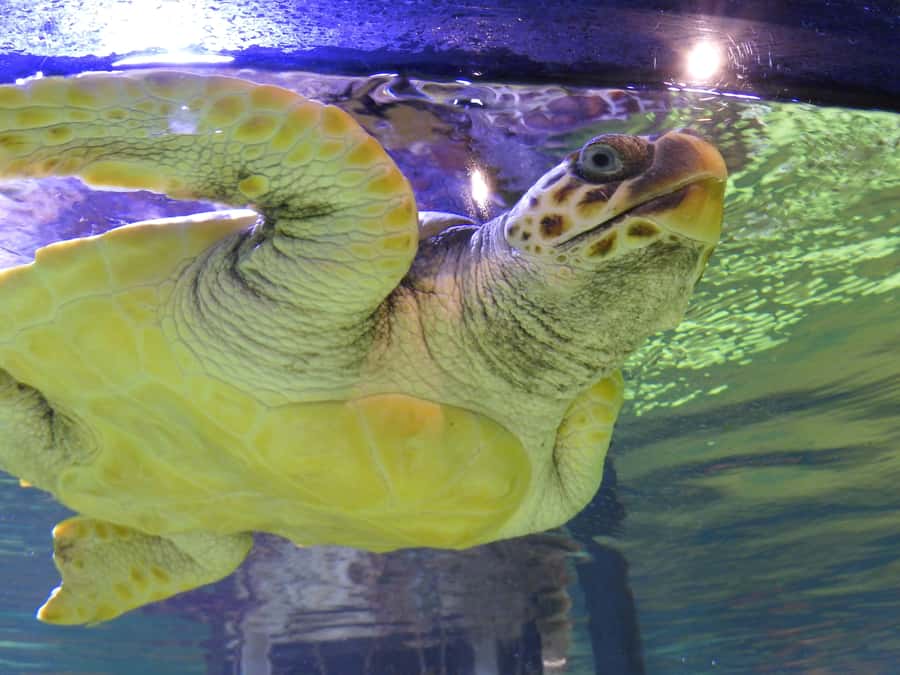
- Wild dolphins stay wild: There are no dolphins in aquariums or ocean pens.
- Four feeding programs daily: Plan your visit around these sessions if you want to see more activity.
- Fourteen themed aquariums: Follow the region’s marine story from freshwater river to offshore reef.
- A 360-degree dolphin cinema: Digital film technology adds a strong visual layer to the displays.
- One ticket lasts all day: The $16 admission gives you time to explore at your own pace.
- Good for mixed-age groups: Interactive areas and wheelchair access make this practical for families and visitors with different abilities.
Start at the Dolphin Discovery Centre in Bunbury
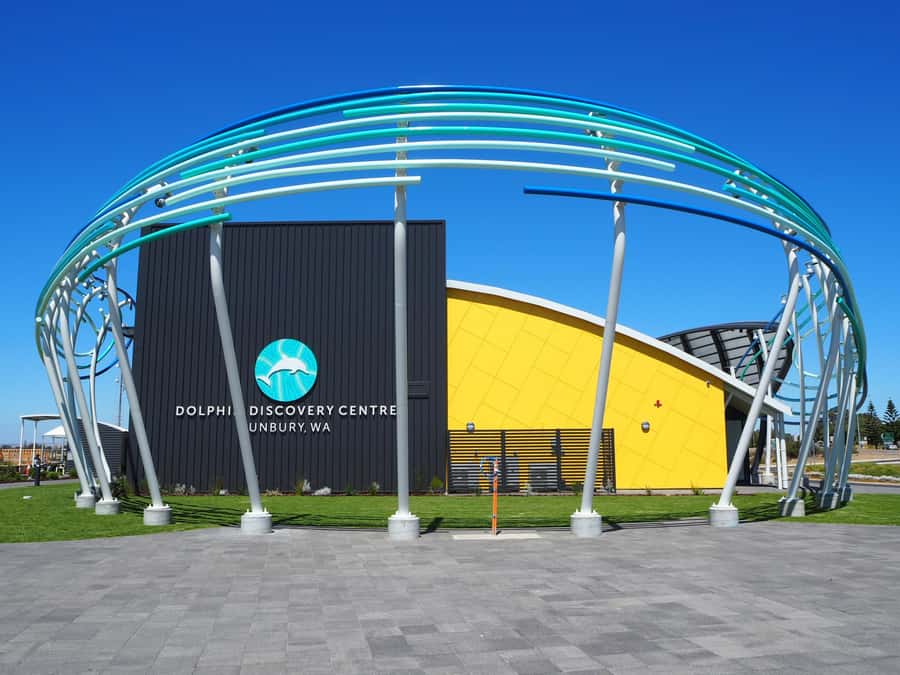
Your visit begins at the front tour desk of the Dolphin Discovery Centre in Bunbury. Present your ticket there, then explore the Marine Discovery and Interpretive Centre on your own.
The centre is open every day from 9am to 3pm. That daytime schedule matters because it gives you room to fit the visit around other Bunbury plans, including the centre’s separate dolphin tours or a return visit to the beach Interaction Zone.
Your ticket is valid for the whole calendar day. The recommended visit is about 90 minutes, but you do not have to rush through it. I would allow longer if you are travelling with young children, enjoy reading interpretive panels, or want to catch one of the four daily feeding programs.
The layout combines natural displays with embedded technology. That mix keeps the visit from becoming a simple row of tanks. You can watch marine animals, then use a screen or activity station to connect what you are seeing with Koombana Bay and its wider setting.
Other Australia days worth booking alongside this:
- Sydney: Opera House Guided Tour with Entrance Ticket
★ 4.8 · 8,312 reviews - All Inclusive Blue Mountain,Scenic World,Lunch,Koalas,ferry
★ 5.0 · 7,832 reviews - Great Ocean Road Small-Group Eco Tour from Melbourne
★ 5.0 · 6,607 reviews
Follow Koombana Bay from river to reef
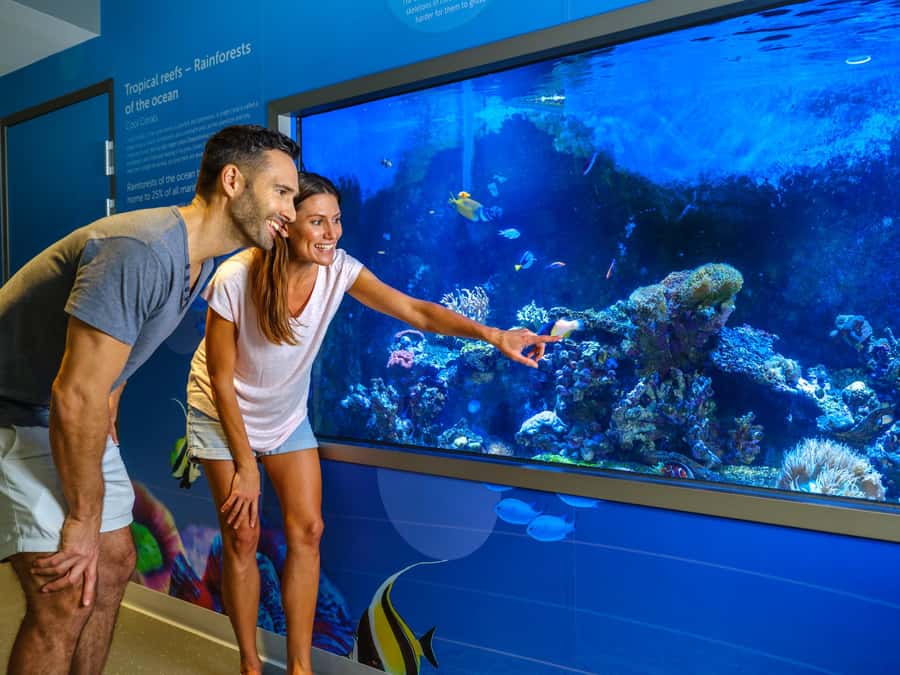
The aquariums are arranged around the marine life of the region’s temperate zone. Rather than presenting animals as isolated attractions, the displays tell a local story that moves from freshwater river habitats toward offshore reef.
That approach is useful if you are new to Western Australia’s marine environment. You get a sense of how habitats connect, and why a bay is more than just a place where dolphins appear. Fish, marine plants, coral, sharks, and octopus each help show a different part of the system.
The themed aquariums also make this a good stop when weather or water conditions do not suit outdoor activities. You can see marine wildlife without getting wet, joining a boat, or waiting on the beach.
I would give yourself time at the tanks rather than walking quickly from one to the next. Children often focus on the animals, while adults may get more from the regional explanations. The centre works best when you let both parts share your attention.
Meet the sharks, octopus, coral, and smaller marine life
The centre features aquariums with sharks, octopus, coral, fish, and marine plants. That range gives you more than a single dolphin story, which is important because dolphins are only one part of Koombana Bay’s marine world.
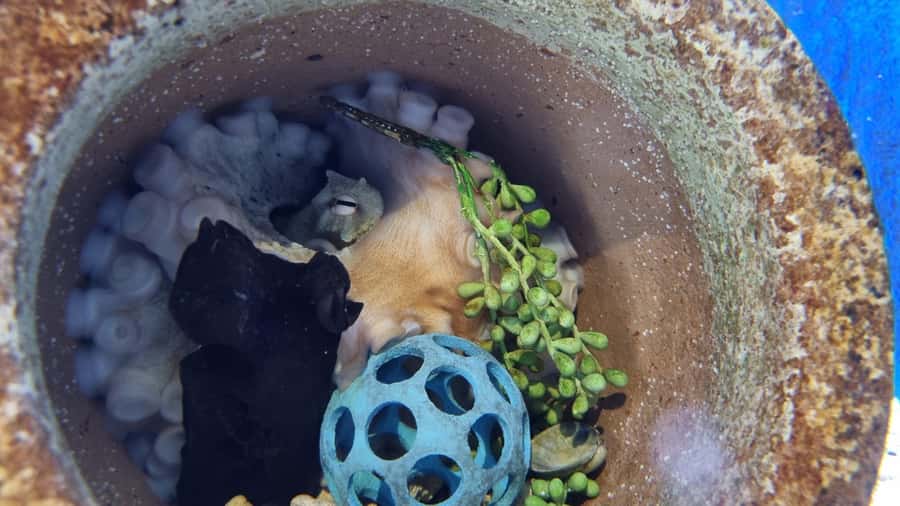
The octopus and shark displays should appeal to children who want something immediately eye-catching. The coral and plant areas offer a slower look at the living parts of the marine environment. Together, the aquariums help explain how different animals fit into the same local waters.
The material does not promise a huge public aquarium complex, and you should not expect a full-day attraction on the scale of a major city aquarium. At $16 per person, though, the centre offers a reasonable amount of content for a short Bunbury stop, especially when you use the all-day ticket and return to a feeding session.
Catch the 360-degree Digital Dolphinarium
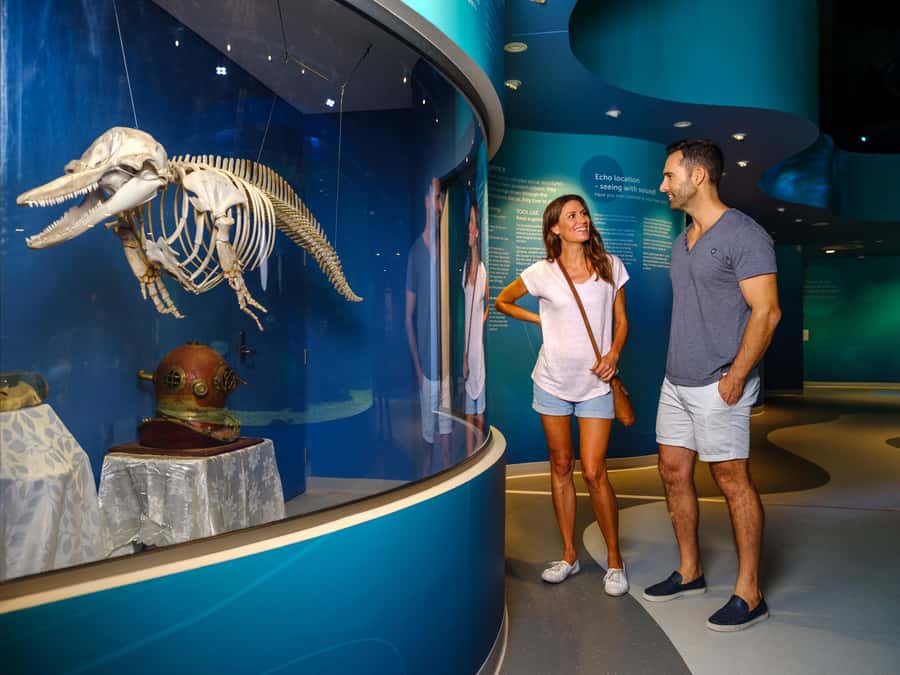
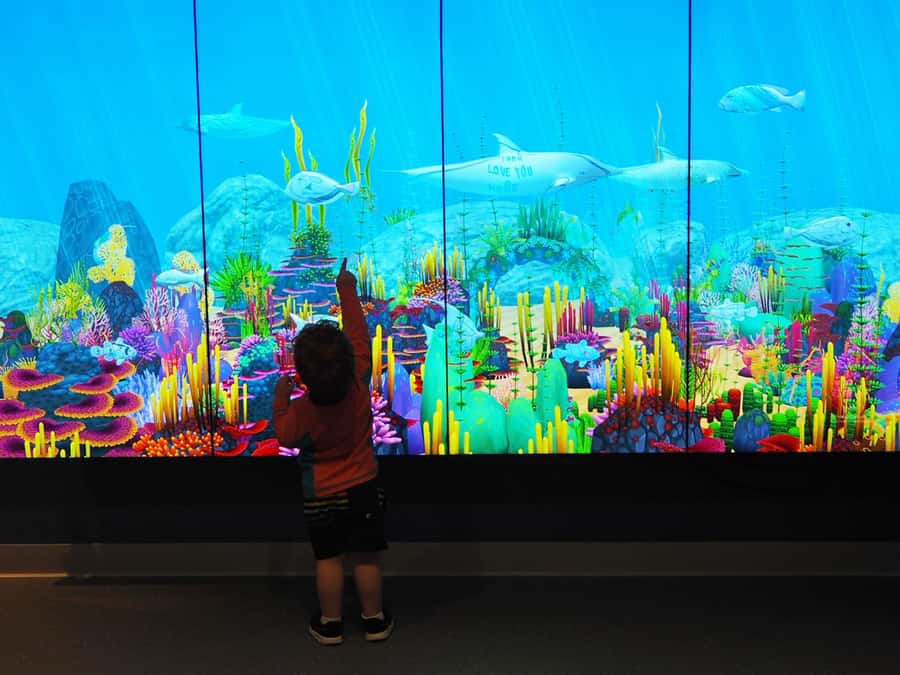
The 360-degree Digital Dolphinarium is the centre’s most distinctive technology feature. It gives you a visual way to experience the world of dolphins and their surroundings without placing live dolphins in captivity.
This matters because the centre works with wild bottlenose dolphins in Koombana Bay. The digital presentation supports that conservation approach. You can learn about dolphins while keeping the animals in their natural environment.
The cinema is also helpful for children who may not spend long reading panels. Moving images can make the connection between dolphin behaviour, the bay, and the surrounding marine life easier to grasp.
I would treat the film as part of the centre’s interpretation rather than as a replacement for a dolphin cruise. The two experiences serve different purposes. The Marine Discovery Centre gives you context and shelter, while a separate boat or beach experience offers the possibility of seeing wild dolphins in the bay.
Same coast, a completely different day out:
- From Melbourne: Great Ocean Road, 12 Apostles, Wildlife Tour
★ 4.7 · 6,020 reviews - Ocean Rafting: Whitehaven Beach, Snorkelling & Hill Inlet Lookout
★ 5.0 · 4,777 reviews - Laid back, Yarra Valley Wine Tour: Wine, Cider, Gin, Beer + Choc
★ 5.0 · 4,552 reviews - From Sydney: Blue Mountains Full-Day Trip
★ 4.5 · 4,471 reviews
Make time for feeding programs and activity centres
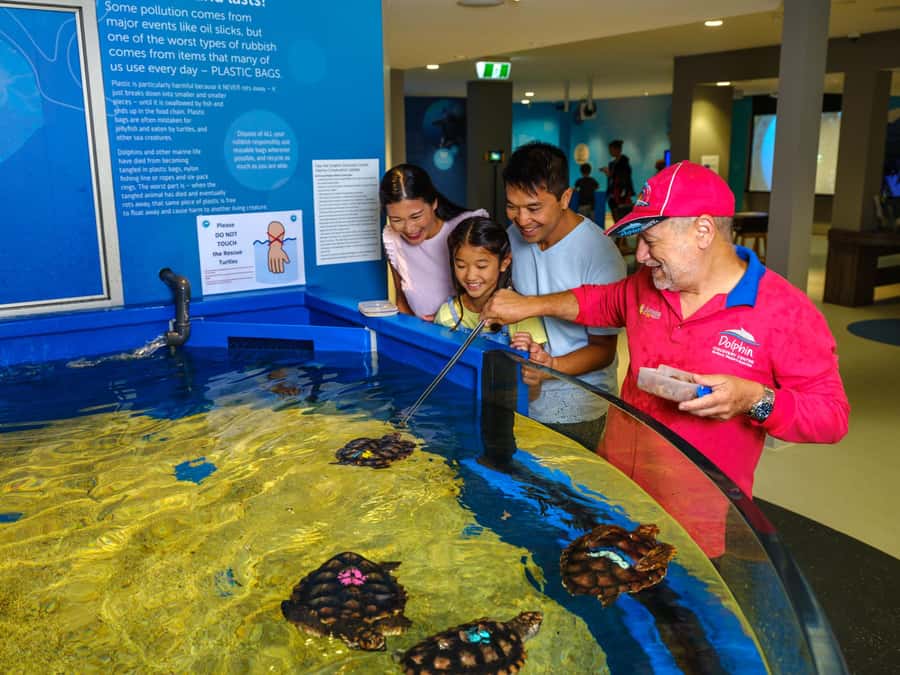
Feeding programs run four times daily. The supplied information does not give exact times, so check the schedule when you arrive and plan your route around it.
A feeding session can make the aquariums feel more active and gives you a fixed point in an otherwise flexible visit. If you arrive without checking, you may miss one and need to wait for the next. Since the ticket lasts all day, you can use the pause to have lunch or coffee nearby and return later.
The centre also includes interactive displays and activity centres. These are especially useful for families with children, since they break up the time spent looking at aquariums and reading information.
A family with three grandchildren aged six, four, and four spent about 90 minutes absorbed in the interactive activities and presentations. That gives you a practical guide to the visit’s pace. Younger children can stay engaged, but you should still expect a compact educational attraction rather than a full-day amusement park.
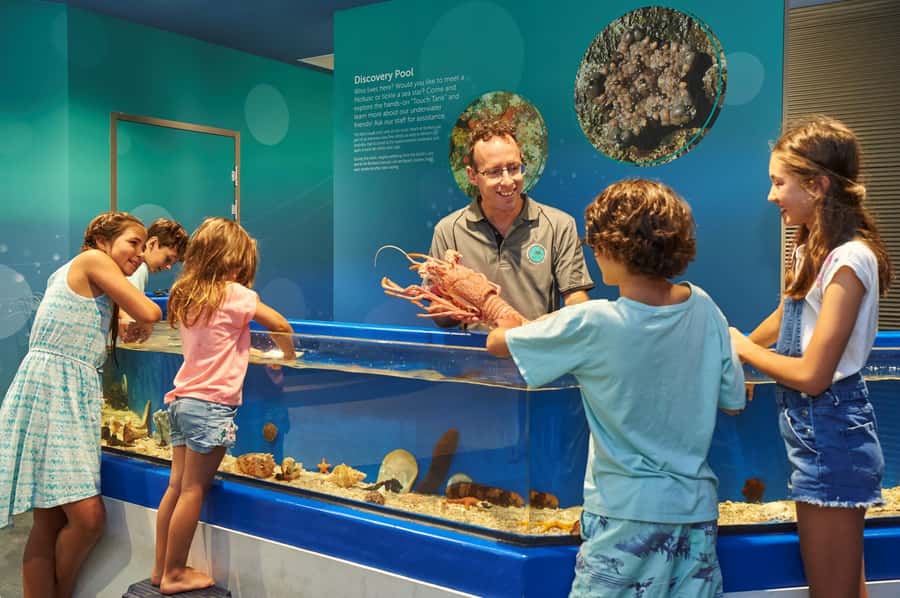
The Discovery Pool adds another hands-on element. The available information does not specify exactly what creatures or activities are present there, so follow the centre’s instructions and do not touch animals unless staff clearly allow it. Feeding animals, touching animals, and flash photography are not permitted.
Learn the story behind the dolphins
The centre interprets Koombana Bay through several layers: geological, Indigenous, marine, and contemporary history. That broader context gives the visit more weight than a simple animal display.
The Indigenous and local history material helps place the bay within the story of the region. The geological information explains the physical setting, while the marine displays show the animals and plants living there now. Contemporary interpretation brings the story into the present.
I value this connection because dolphin attractions can easily become focused only on a charismatic animal. Here, the dolphin is a doorway into a wider discussion about the bay and the environment that supports it.
The displays are also designed to complement the centre’s wild dolphin activities. If dolphins visit the Interaction Zone outside the centre, staff will let you know. That can create an unexpected chance to see wild animals in their natural setting, but it should be treated as a possibility, not part of the guaranteed admission.
What the conservation message means in practice
The Bunbury Dolphin Discovery Centre is a not-for-profit organisation dedicated to conservation, research, and education. It works with the wild bottlenose dolphins of Koombana Bay and relies heavily on about 100 volunteers.
That structure gives your admission a clear purpose beyond entertainment. Your $16 helps support a centre built around public education and the protection of a local marine environment.
The most important conservation point is simple: there are no dolphins in aquariums or ocean pens. You are not paying to watch trained dolphins perform or to touch them. The centre instead provides information, digital interpretation, aquariums with other marine life, and the chance to hear about wild dolphins in the bay.
That makes the centre a good fit if you want a dolphin-focused experience but prefer responsible wildlife viewing. It also sets the right expectations. You may learn a great deal about dolphins without seeing one in person.
A practical choice for families and mixed-age groups
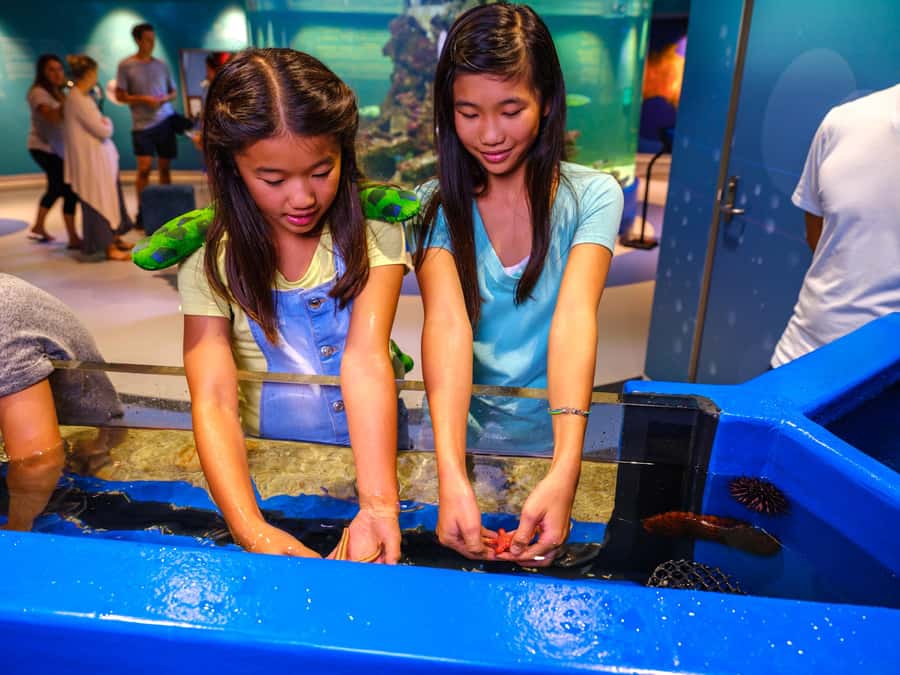
The centre is suitable for all age groups and capabilities, and it is wheelchair accessible. That does not mean every display will interest every person for the same length of time, but the variety helps mixed groups stay together.
Young children can move between aquariums, interactive stations, the Discovery Pool, and films. Older children and adults can spend more time with the environmental and local history material.
Grandparents travelling with children may find the 90-minute visit especially manageable. One family group with three young grandchildren stayed engaged for roughly an hour and a half, which suggests the centre can fill a useful part of a day without asking children to concentrate for too long.
The self-guided format is another advantage. You set your own pace, stop when something catches your eye, and do not have to keep up with a group. The trade-off is that you do not have a named guide leading you from display to display, so you should be comfortable reading signs and following the centre’s program schedule.
How the $16 price measures up
At $16 per person, admission is modest for a full-calendar-day ticket. If you spend only 60 to 90 minutes inside, the value is still fair because the centre combines aquariums, films, interactive displays, local interpretation, and feeding programs.
The value improves if you plan the day around a feeding session or return after another activity. You can also use the centre as a weather-proof alternative to outdoor dolphin watching. That flexibility is useful in Bunbury, where you may want both a marine experience and time for lunch, coffee, or a separate dolphin cruise.
The ticket does not include a dolphin cruise, and it does not guarantee a live dolphin sighting. If your main goal is to see dolphins in the water, you may need to add one of the centre’s other activities. If your goal is to understand the animals and their environment, the admission works well on its own.
Free cancellation up to 24 hours before the visit and a reserve-now, pay-later option provide useful planning flexibility. Accessibility is also listed as wheelchair friendly.
Build the visit around your day in Bunbury
You can enter any time during the 9am to 3pm opening window, subject to availability and the centre’s daily schedule. Since no fixed starting time is required for the self-guided admission, this is easier to fit into a wider Bunbury itinerary than a tightly timed excursion.
For the best use of your time, I would:
- Arrive early enough to check the four feeding times.
- Start with the main aquariums while you have the most attention.
- Watch the 360-degree Digital Dolphinarium.
- Allow time for the interactive displays and Discovery Pool.
- Ask staff to notify you if dolphins appear at the outdoor Interaction Zone.
- Return to a feeding session if the schedule works.
- Combine the centre with a separate dolphin cruise only if you want time on the water.
Bring patience rather than a camera flash. Flash photography is not allowed, and you must not feed or touch the animals.
The centre serves as a useful base for understanding the local marine environment before you head outdoors. It can also work as a follow-up stop after a wild dolphin experience, helping you make better sense of what you saw.
Who should book the Marine Discovery Centre?
I would book this for families, grandparents with young children, couples wanting a short educational stop, and anyone interested in marine life but not keen on getting into the water. It is also a sensible choice for visitors who value conservation and want a dolphin experience that leaves the animals in the bay.
The centre is less suitable if you want guaranteed live dolphins, a guided tour with a named marine expert, or a large-scale aquarium attraction that fills an entire day. You should also remember that the admission is self-guided.
For $16, the centre gives you a solid 90-minute experience with the option to stay longer or return during the same day. Its strongest feature is the combination of local marine displays and a clear wildlife message: learn about dolphins, but let wild dolphins remain wild.
FAQ
Where is the Marine Discovery Centre located?
It is located at the Dolphin Discovery Centre in Bunbury, Western Australia. Enter through the front tour desk and present your ticket or voucher.
How much does admission cost?
Admission costs $16 per person.
How long should I allow for the visit?
The recommended visit is about 90 minutes, but your ticket is valid for the whole calendar day during opening hours. You may stay longer or return later that day.
What are the opening hours?
The centre is open seven days a week from 9am to 3pm.
Are dolphins kept in aquariums or ocean pens?
No. The centre does not keep dolphins in aquariums or ocean pens. It works with wild bottlenose dolphins in Koombana Bay.
Can I see wild dolphins during my visit?
You may be notified if dolphins visit the outdoor Interaction Zone, but a live dolphin sighting is not guaranteed by the Marine Discovery Centre admission.
Is the centre wheelchair accessible?
Yes. The activity is listed as wheelchair accessible.
Can I touch or feed the animals?
No. Feeding animals and touching animals are not allowed. Flash photography is also prohibited.
Just added around Australia
- Batman Bridge 4 Hour Luncheon Cruise including sailing into the Cataract Gorge★ 4.5 · 108 reviews
- Ord River Cruise Experience with Riverside Lunch★ 5.0 · 177 reviews
- Cataract Gorge Cruise 1:30 pm★ 4.5 · 23 reviews
- Katherine Outback Experience Show Ticket★ 5.0 · 307 reviews
- Ord River Explorer Cruise with Sunset★ 5.0 · 246 reviews
- Ord River Discoverer Cruise with Sunset★ 5.0 · 250 reviews
- Bungle Bungle Flight & Domes To Cathedral Gorge Walking Tour★ 5.0 · 64 reviews
- Bungle Bungle Scenic Flights, Domes & Cathedral Gorge Walk★ 5.0 · 312 reviews