
Reviewed · NOOSA TOURS
Noosa Heads: 2 Hour Surf Experience on the Sunshine Coast
At Noosa Heads, your first surf lesson gets to the good part quickly: you stand on a board, wobble through a small wave, and discover that surfing is less mysterious than it looks. The warm water and beginner-friendly beach make this a sensible place to try.
I like the patient, upbeat instruction, with coaches such as George, Reece, Cici, Valentino, and Philippe often singled out for clear tips and steady encouragement. I also like the practical setup: a soft-top board, rash shirt or wetsuit, sunscreen, personal-item storage, and showers are included.
The main catch is that surfing still depends on the sea. A few reviewers advised checking the surf report, since choppy or difficult waves can make a first lesson harder. Parking and traffic can also be awkward around busy holiday periods, so arrive early.
In This Review
- Key points for your Noosa surf lesson
- Why Noosa Heads works for first-time surfers
- Arrive early and get ready on the beach
- The safety briefing gives you a clear start
- First waves in waist-deep water
- Learning to stand up is the real payoff
- What the two-hour format gives you
- Families and mixed groups
- The value of $59
- Conditions, timing, and practical limits
- Who should book this surf experience?
- Should you book the Noosa surf lesson?
- FAQ
- How long is the Noosa surf lesson?
- What equipment is included?
- What should I bring?
- Do I need previous surfing experience?
- Can children take part?
- Is the lesson taught in English?
- Can I cancel for a refund?
Key points for your Noosa surf lesson
- Two hours in the water: Enough time to learn the basics, practice several attempts, and improve your balance.
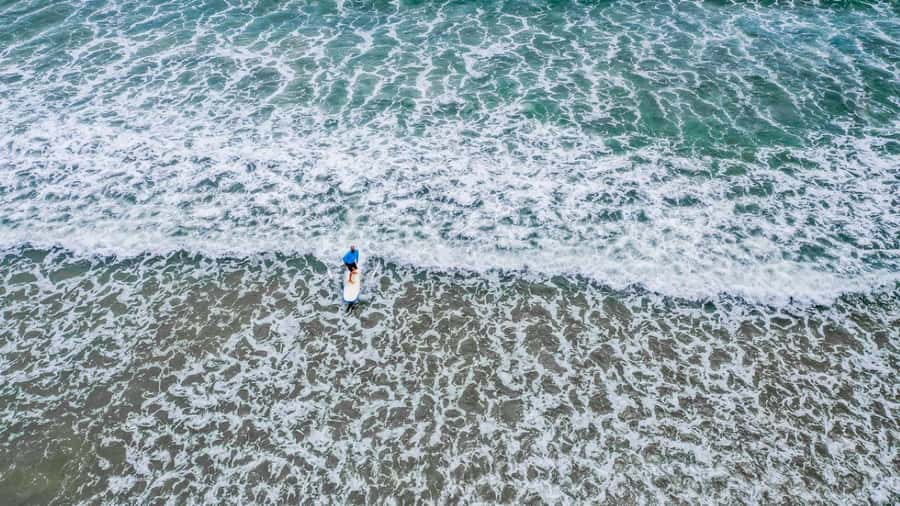
- Waist-deep beginner practice: You start close to shore before trying to paddle onto a wave.
- Qualified English-speaking instruction: A Level 1 surf instructor leads the session and stays involved in the water.
- Soft-top boards and rash protection included: You do not need to bring specialist surf gear.
- Strong family appeal: Children aged nine and older can take part, with special supervision rules for younger children.
- $59 for a full beginner session: The price includes equipment, instruction, sunscreen, storage, and showers, making it good value for a first try.
Why Noosa Heads works for first-time surfers
Noosa is one of Australia’s best-known surfing towns, but that does not mean you need prior experience. This class is built around the beginner end of the sport, with instruction on the sand followed by practice in relatively shallow water.
The warm Queensland water helps. You still need to work, paddle, balance, and fall, but you are not dealing with a cold-water shock while trying to remember your foot position. The supplied long-sleeved rash shirt or wetsuit also means you can focus on the lesson rather than worrying about sun exposure or what to wear in the water.
The beach setting matters, too. You are not being sent straight into a complicated lineup with experienced surfers. The lesson begins with basic safety and positioning, then moves into small, manageable steps. That structure is valuable if you are nervous about the ocean or have never handled a surfboard.
I would describe the experience as a proper introduction, not a sightseeing outing with a token surf stop. You spend the session learning how to control the board and catch waves. The goal is not polished technique in two hours. The goal is to give you a safe and encouraging first taste, ideally with a few rides you can remember.
A few more Noosa trips to weigh up
- Melbourne: 2-Hour City Highlights River Cruise
★ 4.1 · 1,804 reviews - Surfers Paradise: 2 Hour Surf Experience on the Gold Coast
★ 4.9 · 1,132 reviews - Bondi Beach: 2-Hour Surf Lesson Experience for Any Level
★ 4.9 · 935 reviews
Arrive early and get ready on the beach
Plan to arrive 15 minutes before class. The meeting point can vary with the option you book, so check your booking details rather than assuming every session begins at the same place.
Bring swimwear and a towel. Food and drinks are not included, and the supplied equipment does not remove the need for your own basic beach clothing. Sunscreen is provided, but I would still arrive ready for a sunny Queensland day.
Personal items can go into a lock-up trailer. That is a useful touch, especially if you are carrying a phone, wallet, or small day bag. It does not mean you should bring valuables you do not need. Keep your beach kit simple.
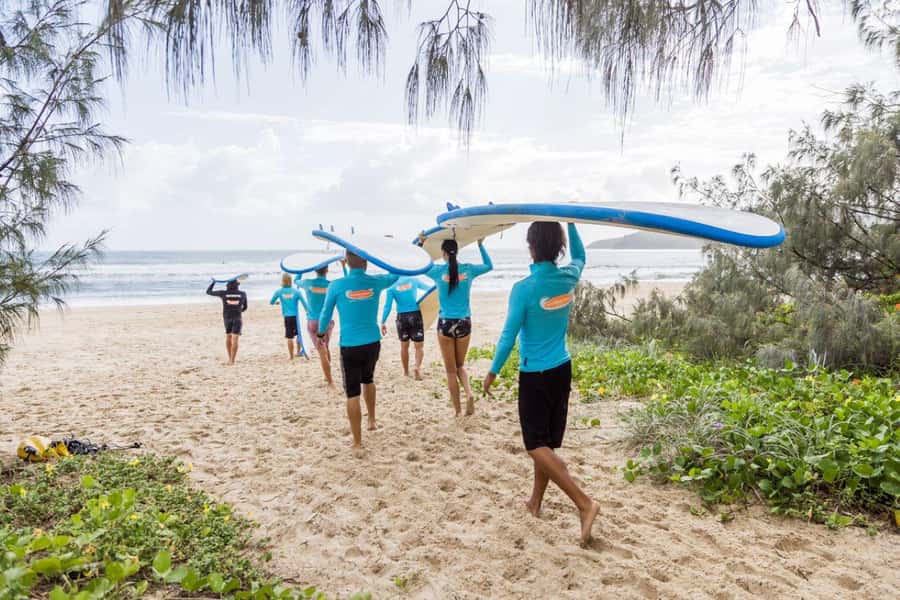
The operator provides the soft-top surfboard and either a long-sleeved rash shirt or wetsuit. Soft boards are a good beginner choice because they are more forgiving than hard fiberglass boards if you lose balance or bump into the board during a clumsy first attempt.
The safety briefing gives you a clear start
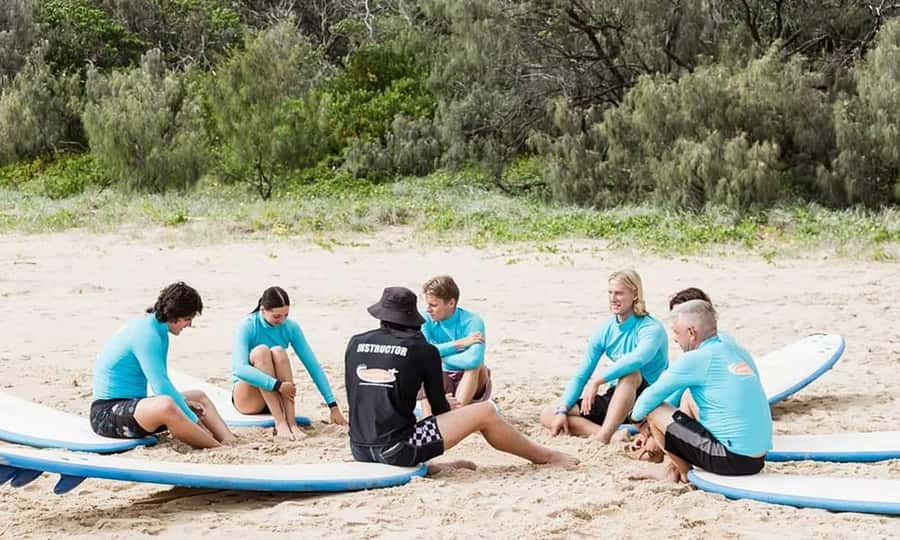
The lesson opens on the beach with safety information and basic instruction. You learn where to position yourself, how to handle the board, and what to do before entering the water.
This part can feel less exciting than catching a wave, but it is where the session earns its value. Surfing looks simple when you watch someone else do it. On your first attempt, you need to think about the board’s direction, your hands, your feet, the wave behind you, and the moment to stand. A short, clear explanation keeps all of that from becoming a muddle.
The instructors also explain board control and positioning. Those are the foundations you will use again if you book another class or practice later. Several instructors are praised for giving simple corrections that produce an improvement on the next try. That is exactly what you want in a beginner lesson: one useful tip at a time, not a lecture packed with surf jargon.
You should also expect the instructor to set the tone for the class. The strongest part of this experience is not just the equipment or the beach. It is the way the coaches encourage people who are unsure of themselves. George, Reece, Cici, Valentino, Philippe, Matt, Suzy, and Ellie are among the instructors named in the feedback, with George and Reece appearing especially often.
Instructor assignments can change, so do not book expecting a particular person. The useful point is that the teaching style appears consistent: friendly, direct, and focused on helping beginners make progress.
First waves in waist-deep water
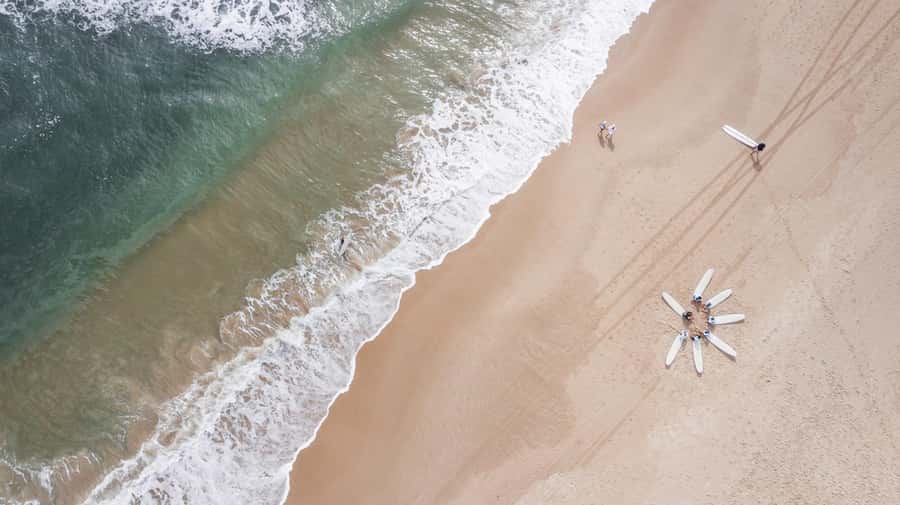
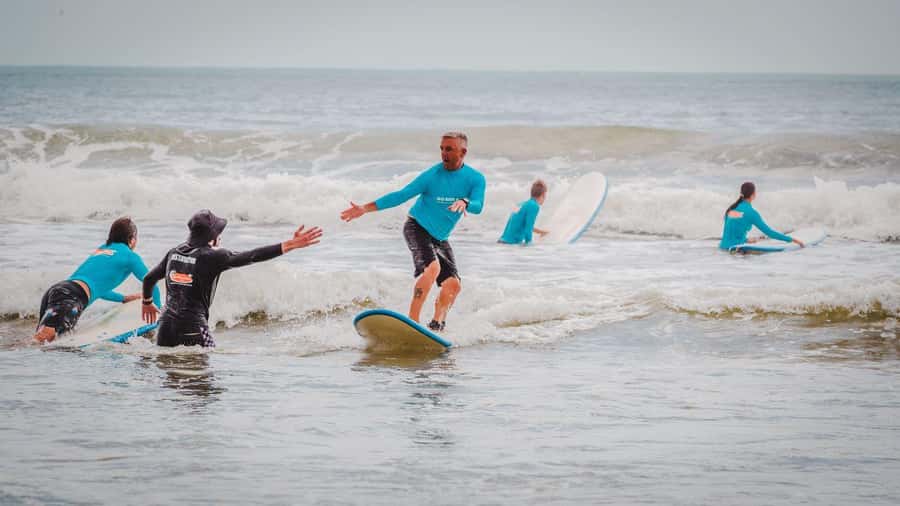
After the beach lesson, you head into the water for your first practice waves. The early work takes place around waist depth, which gives you a chance to understand the board and the push of the water without immediately committing to a full paddle.
The instructor helps you catch the wave and offers corrections. This is where the class becomes active. You are not simply listening to advice from shore. You are trying, falling, resetting, and trying again.
That repeated practice is important. One person may stand on a first wave after only a few attempts. Another may need most of the session to get comfortable. Both outcomes fit the purpose of the class. Surfing is physical, and success depends on the waves available as well as your timing, balance, and confidence.
Many people report catching several waves, and one couple counted roughly 20 to 25 waves each during a particularly good session. Treat that as a lucky upper-end result rather than a promise. Conditions vary, and your own number of rides will depend on the group, the surf, and how quickly you adapt.
The instructor may push you onto waves, especially at the start. That help lets you feel the board moving before you have mastered the paddle and timing yourself. As the lesson continues, you get advice on how to improve your own attempts.
Same coast, a completely different day out:
- Seafood Lunch Cruise
★ 5.0 · 914 reviews - Noosa: Afternoon Cruise through the Noosa Everglades
★ 4.5 · 906 reviews - Maleny Botanic Gardens Bird Aviary Experience Ticket
★ 4.5 · 579 reviews - Serenity Cruise to Australia’s Everglades
★ 4.5 · 408 reviews
Learning to stand up is the real payoff
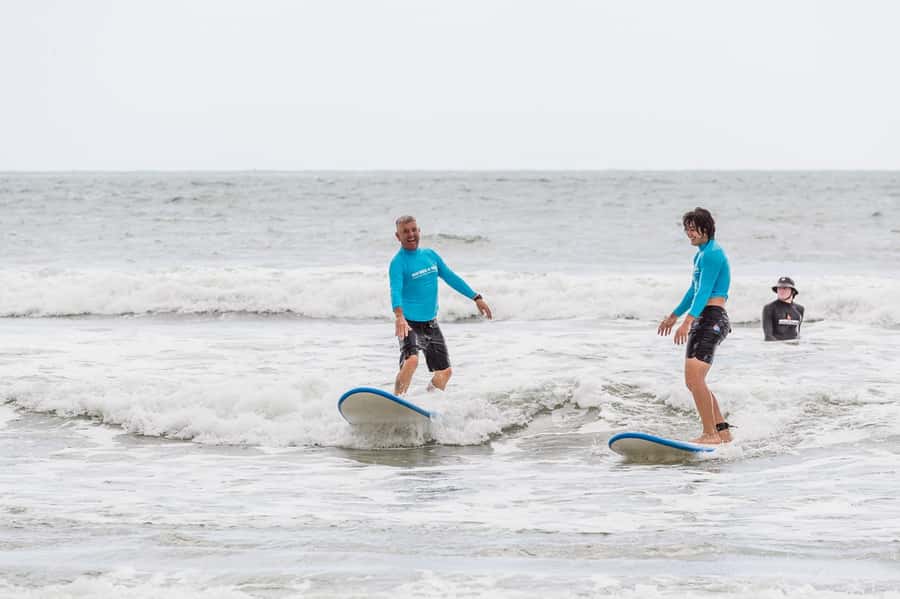
Back on the beach, you receive more detailed instruction on standing up. You practice the movement before trying it in the water, learning how to place your hands and bring your feet underneath you.
The stand-up motion is the moment most beginners are waiting for, but it is also where poor technique becomes obvious. If you move too slowly, place your feet badly, or look down, the board can lose speed and stability. The instructors break the action into manageable steps, then watch what you do and adjust the advice.
A useful lesson here is to listen for individual feedback. You may hear a general explanation on the sand, but the best correction comes after an attempt. Coaches are praised for giving tips to each person rather than treating the group as one block. That matters when a family or group has mixed ability.
The class also seems well suited to people who worry about looking foolish. The tone is playful, but the instruction remains focused. You can try at your own comfort level, and the coach can help you build confidence without turning the session into a test.
Do not be discouraged if standing up lasts only a second. That first brief ride teaches you more than another ten minutes of watching. Once you know what the board feels like under your feet, further lessons become easier to understand.
What the two-hour format gives you
Two hours is a useful length for a first session. You get time for the safety briefing, beach practice, water work, and repeated attempts. A shorter class might leave you just as you begin to understand the timing.
The tradeoff is physical effort. Paddling, pushing yourself up, and repeatedly carrying a board through the water can be tiring. You may feel that the time passes quickly, especially if you are catching waves. One teenager reportedly did not want the lesson to end, but that enthusiasm is not universal. If you are not used to exercise, expect a workout as well as a lesson.
The supplied equipment keeps the experience simple. You are not spending extra money on a board rental or protective top, and you do not need to know which board to choose. The instructor can match the basic setup to the class and keep the focus on learning.
The listed activity information gives a duration range of two to six hours depending on the option and availability, while the surf lesson itself is described as two hours. Check the selected option carefully if you are comparing session types. You can also continue with a 1.5-hour private lesson or a three-lesson progressive surf course if the first session leaves you wanting more.
Families and mixed groups
This is a strong choice for families with older children. Children under nine must be accompanied by a parent who is not taking part in the lesson, and that parent must be able to enter the water to assist. This is an important rule, not a minor detail. If you are visiting with a child under nine, make sure the adult supervision arrangement works before booking.
Older children appear to fit comfortably into the class. Families with children aged eight, 11, 12, and 15 have described enjoying the session, though the under-nine rule still applies. The instructors are expected to give support at different comfort levels, which helps when one family member is fearless and another is cautious.
Mixed-ability groups can also work. Some people may be stepping on a board for the first time while others have surfed before. The instructors can provide extra help to beginners and more detailed pointers to those with some experience, though a group lesson cannot provide the same attention as a private class.
If you want maximum personal coaching, consider the private option. One person upgraded to a one-on-one session and found the extra attention especially useful for catching more waves. That costs more, but it may suit you if you learn best through constant feedback or have a short stay in Noosa.
The value of $59
At $59 per person, this is priced reasonably for a two-hour introductory activity. The fee includes instruction from a Level 1 qualified surf instructor, a soft-top board, a rash shirt or wetsuit, sunscreen, storage for personal items, and access to showers afterward.
That package matters because separate rentals can quickly make a casual first attempt more expensive. You are paying for guidance as well as gear. A lesson also gives you a safer way to find out if surfing suits you before committing to a longer course or buying equipment.
The price is strongest if you are starting from zero. Someone who already surfs confidently may get more value from a private lesson or a progressive course. For a first experience, the combination of coaching and supplied equipment makes the cost easy to justify.
Food and drinks are not included, so plan those separately. Swimwear and a towel are also your responsibility. These are small costs, but they are exactly the sort of details that can spoil a beach activity if you forget them.
Conditions, timing, and practical limits
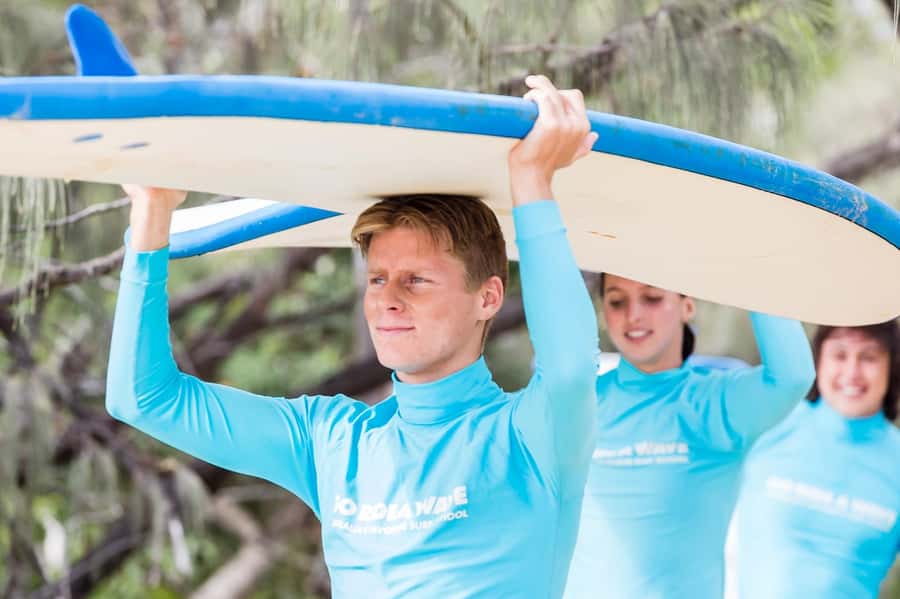
Surfing is never fully predictable. The beach may be beginner-friendly, but the waves can still be too weak, too choppy, or harder to catch than expected. One useful piece of advice is to check the surf report when choosing your day. You cannot control the sea, but you can avoid knowingly booking a session when conditions look poor for a first attempt.
The class takes place outdoors, so weather affects the feel of the experience. Warm water helps, but the lesson still requires energy and concentration. If you have a packed day, leave enough time to arrive early, change, take the lesson, and use the showers afterward.
Parking and traffic deserve attention during busy periods. Easter weekend traffic was reported as difficult, and Noosa can be busy at popular times. I would not cut arrival time close. Reaching the meeting point calm and prepared gives you a better start than rushing in with your swimwear still in a day bag.
Free cancellation is available up to 24 hours before the activity for a full refund, and you can reserve now and pay later. Those terms help if your Queensland plans are still shifting, but you should still check the selected booking option for the meeting point and start time.
Who should book this surf experience?
Book it if you want a friendly first surf lesson rather than a long technical course. It suits solo visitors, couples, families with eligible children, and friends who want an active Noosa morning or afternoon.
It is especially good for people who are nervous about the ocean. The safety briefing, shallow-water practice, soft board, and hands-on support make the first steps feel manageable. It also suits people who want a real attempt at surfing, not just a photo on a board.
Think twice if you dislike physical activity, are hoping for guaranteed perfect waves, or want private coaching throughout. The group format means attention is shared, and sea conditions can limit how many rides you get. For those needs, the private lesson or three-session course may be the better choice.
Should you book the Noosa surf lesson?
Yes, if standing on a surfboard is on your Queensland wish list. The $59 fee covers the main costs, the two-hour format gives you enough practice, and the instructors are repeatedly praised for patience, clear explanations, and encouragement.
Choose your day with the surf report in mind, arrive 15 minutes early, bring swimwear and a towel, and allow extra time for Noosa traffic. If you want a low-pressure introduction with a genuine chance of catching your first wave, this is a smart pick. If you already know you want to keep surfing, use the class as a first step toward the private lesson or three-part course.
FAQ
How long is the Noosa surf lesson?
The core surf lesson lasts two hours. The activity information lists durations from two to six hours depending on the option booked, so check the exact choice and availability before paying.
What equipment is included?
You receive a soft-top surfboard and either a long-sleeved rash shirt or wetsuit. Sunscreen, a lock-up trailer for personal items, and shower facilities are also included.
What should I bring?
Bring swimwear and a towel. Food and drinks are not included.
Do I need previous surfing experience?
No. The experience is designed for beginners and includes beach instruction, safety guidance, board-control practice, and help catching waves in waist-deep water.
Can children take part?
Children under nine must be accompanied by a parent who is not participating in the lesson. That parent must be able to enter the water to assist.
Is the lesson taught in English?
Yes. The instructor language is English.
Can I cancel for a refund?
You can cancel up to 24 hours in advance for a full refund. The experience also offers a reserve-now, pay-later option.
Just added around Noosa
- Sunshine Coast & Noosa Hinterland Scenic Culinary Experience★ 4.6 · 21 reviews
- Noosa Ocean adventure & Dolphin Safari.★ 4.6 · 28 reviews
- Noosa Heads: Hidden Waterways Wildlife Kayak (Self-Guided)★ 4.5 · 26 reviews
- Noosa: Humpback Whale Watching Tour★ 4.7 · 129 reviews
- Noosa: Everglades Explorer Cruise★ 4.6 · 249 reviews
- Noosa: Epic Ocean Kayak with Dolphins & 4WD Beach Adventure★ 4.6 · 247 reviews
- Noosa: Epic Learn to Surf Safari 4×4 – Double Island Point★ 4.8 · 41 reviews
- From Sunshine Coast: Australia Zoo Entry Ticket and Transfer★ 4.8 · 155 reviews
Noosa Tours, compared.


Maleny Botanic Gardens Bird Aviary Experience Ticket
Read our review →
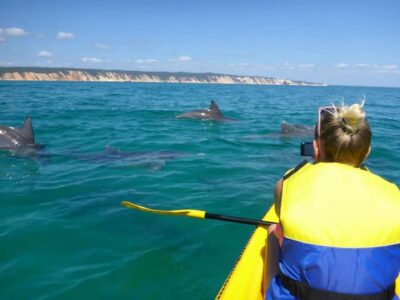
Epic Ocean Kayak with Dolphins & 4WD Beach Adventure
Read our review →
Browse the lists this tour appears in