

Reviewed · MORNINGTON PENINSULA TOURS
The Explorer – Cranbourne Gardens
The best thing about The Explorer is that it gives you a quick, comfortable tour of a huge Australian garden without asking you to walk every path. In 25 minutes, the open-air minibus passes the Red Sand Garden, Ian Potter Lake, the Arid Garden, and other carefully designed plant areas.
I like the live commentary, which ties the plants to Australian culture and garden design. I also like the practical access it gives families, older visitors, and anyone with limited mobility. The main drawback is the short running time: this is a smart introduction, not a full day of exploration.
In This Review
- Key points to know before you ride
- A fast way into Cranbourne’s big Australian Garden
- Red Sand Garden: a strong first impression
- Howson Hill and the changing views
- Ian Potter Lake and the garden’s water story
- Arid Garden and Dry River Bed
- Peppermint Garden and the return route
- Why the short ride can be good value
- Who should book The Explorer
- Practical details that affect your visit
- What the strongest praise gets right
- Should you book The Explorer?
- FAQ
- How long does The Explorer tour last?
- Where does The Explorer depart from?
- What areas does the tour visit?
- Is live commentary included?
- Can I get off the bus during the experience?
- Is the tour suitable for people with mobility issues?
- Are children free on The Explorer?
- What is included in the ticket?
- Can I cancel the booking for a full refund?
Key points to know before you ride
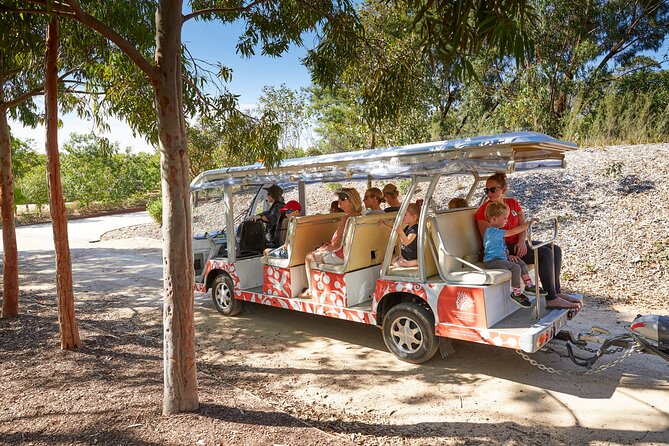
- A 25-minute overview: Use The Explorer to get your bearings before exploring Cranbourne Gardens on foot.
- Red Sand Garden and Ian Potter Lake: These are among the most memorable sights along the route.
- Live commentary from the driver-guide: The talk covers plants, garden history, cultural meaning, and the Australian setting.
- Useful for limited mobility: The bus lets you see far more of the 15-hectare Australian Garden with less walking.
- Hop-off flexibility: Your ticket includes the option to get off at various stops within the Australian Garden.
- Small-group feel: The vehicle carries a maximum of 25 people, keeping the ride fairly personal.
A fast way into Cranbourne’s big Australian Garden
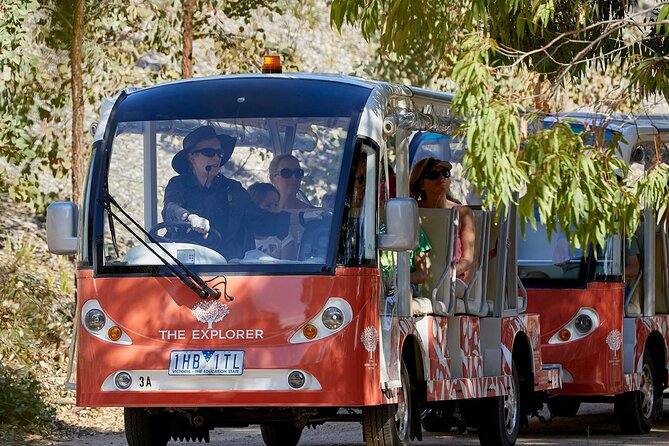
Royal Botanic Gardens Cranbourne is not a small patch of flowerbeds beside a greenhouse. The Australian Garden covers about 15 hectares, or 37 acres, with winding paths, native plant collections, water features, and themed garden areas.
That size is the reason The Explorer makes sense. If you have only a short visit, or if you are stopping on the way toward Phillip Island, walking from one end to the other can take time and energy. The bus gives you a broad look first, so you can decide where to return.
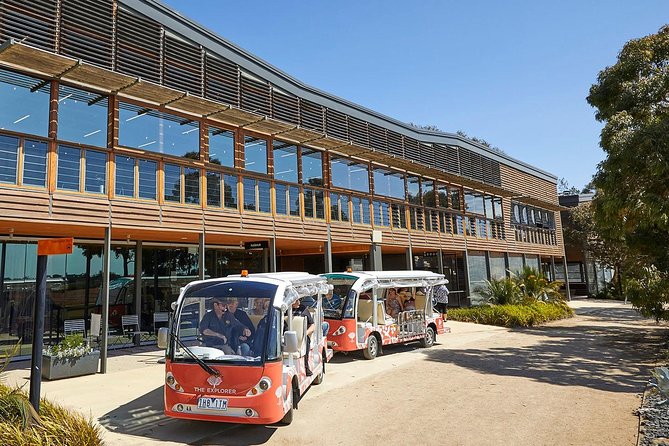
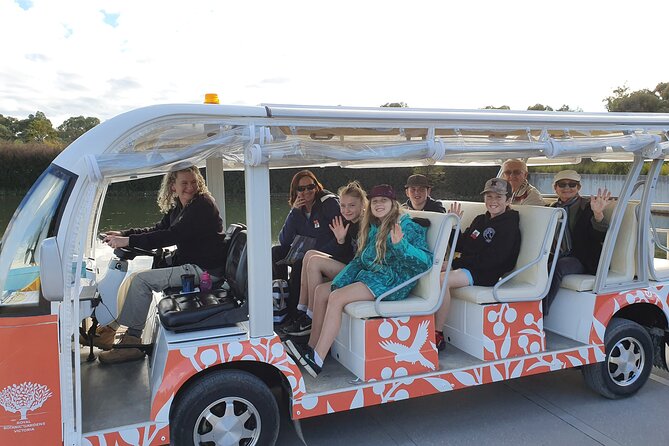
The ride begins at the Visitor Centre and uses an open-air minibus. You get the feel of being outdoors, but without the full effort of walking under the sun. On a warm day, that matters. The tour requires good weather, so a poor-weather cancellation is possible.
The route winds from the Red Sand Garden along the eastern side of the Australian Garden, then returns through the Peppermint Garden. The movement is part of the appeal. Instead of seeing each garden as an isolated display, you get a sense of how the plantings, paths, water, and open spaces fit together.
Other Australia days worth booking alongside this:
- Sydney: Opera House Guided Tour with Entrance Ticket
★ 4.8 · 8,312 reviews - All Inclusive Blue Mountain,Scenic World,Lunch,Koalas,ferry
★ 5.0 · 7,832 reviews - Great Ocean Road Small-Group Eco Tour from Melbourne
★ 5.0 · 6,607 reviews
Red Sand Garden: a strong first impression
The Red Sand Garden is one of the early highlights. Its color gives the ride an immediate Australian identity, and it helps explain how the garden presents native environments through design rather than simply planting specimens in rows.
The guide’s commentary adds useful context as the minibus moves along. You can expect information about plant life, the story of the gardens, cultural significance, and the ideas behind the different sections.
This first part is especially useful if you are new to Australian native plants. You may recognize a few forms, but the garden makes clear that Australian plant communities can look very different depending on climate, soil, and water.
The short stop or passing view also gives you a choice. You can stay on board for the full circuit, or use the hop-off option to spend more time in selected sections. If you want photographs, ask about the stops before setting out, since 25 minutes passes quickly.
Howson Hill and the changing views
Howson Hill gives the route a change in height and perspective. A garden this large can be hard to understand from ground level, where paths and plant beds may seem disconnected. From the minibus, you can see how the areas relate to one another.
This is not a lookout tour in the usual sense. The value lies in the gradual change of setting as the vehicle travels through the garden. The driver-guide points out features while you watch the plantings pass at a comfortable pace.
I would treat Howson Hill as part of the garden’s overall story rather than a separate attraction. The ride is most rewarding when you pay attention to the transitions between sections. You see the garden shift from dry, open planting to areas shaped by water and denser vegetation.
The minibus is also a sensible choice for parents. Children can lose interest on a long garden walk, but the changing views and moving vehicle add a little energy. During school holidays, children ride free on the Kids Explorer Bus, a family-focused version designed around the sights, sounds, and scents of the Australian Garden.
One caution: the supplied booking information includes a complaint from a parent who was charged for children despite the school-holiday offer. Check the child-fare details carefully at the time of booking rather than assuming the free fare will be applied automatically.
Ian Potter Lake and the garden’s water story
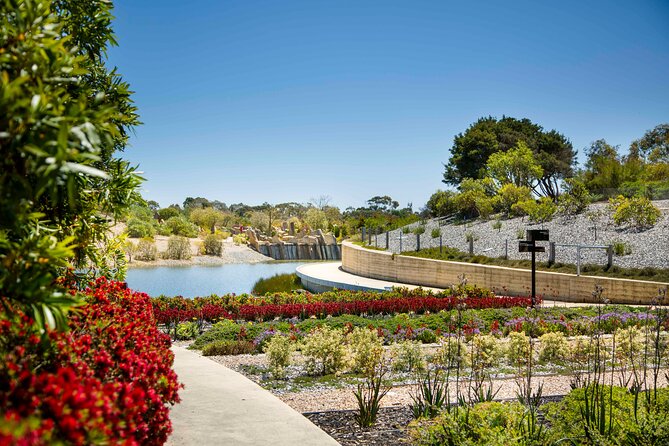
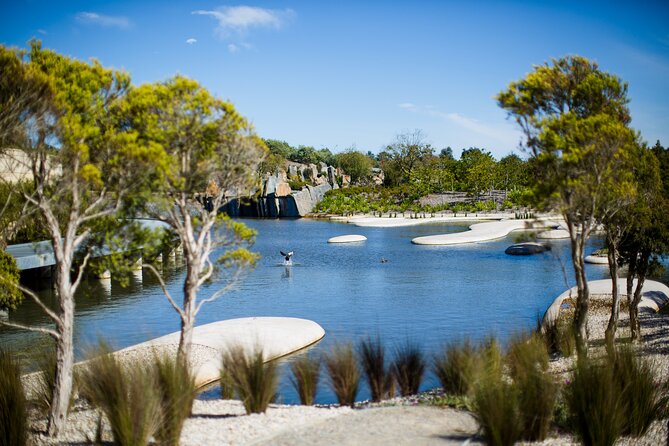
Ian Potter Lake brings water into the route and offers a different mood from the Red Sand Garden. Water features help break up the dry and textural character often associated with native Australian planting.
The tour does not ask you to study every plant label. Instead, the driver’s talk gives you a broad understanding of how the garden uses water, landform, and planting to create scenes that feel connected to Australia.
This is one place where the ride can be more useful than a map. You can see the relationship between the lake, paths, and surrounding garden areas without spending time working out which direction to take. If you later explore on foot, you already have a rough mental map.
The gardens also include level walking paths, which makes it easier to continue after the ride. One review described the combination of native plants, winding paths, water features, and small garden scenes as suitable for different ages, fitness levels, and abilities. That matches the main strength of Cranbourne: you can make the visit as active or as gentle as you like.
Same coast, a completely different day out:
- From Melbourne: Great Ocean Road, 12 Apostles, Wildlife Tour
★ 4.7 · 6,020 reviews - Ocean Rafting: Whitehaven Beach, Snorkelling & Hill Inlet Lookout
★ 5.0 · 4,777 reviews - Laid back, Yarra Valley Wine Tour: Wine, Cider, Gin, Beer + Choc
★ 5.0 · 4,552 reviews - From Sydney: Blue Mountains Full-Day Trip
★ 4.5 · 4,471 reviews
Arid Garden and Dry River Bed
The Arid Garden shows another side of Australian plant life. Here, the design focuses on dry conditions and plants suited to them. The setting helps you see that native gardening is not one single style. It can include strong color, sculptural plants, open soil, and careful use of space.
The Dry River Bed continues that idea. Even without flowing water, a dry river form can show how water shapes the country and how plants adapt around those channels. It is a useful reminder that the garden is presenting natural systems as well as pretty displays.
I like these sections because they give the commentary something real to explain. Rather than hearing a list of plant names, you can connect the plants with heat, dryness, water movement, and place.
The limitation is that the minibus gives you only a moving view unless you hop off. Keen gardeners will probably want time on foot here. The ride tells you where to look, but it cannot replace stopping beside a planting bed and examining its details.
Peppermint Garden and the return route
The return journey passes through the Peppermint Garden. This brings the ride back through a more shaded and aromatic part of the Australian Garden, according to the route description.
The return matters because the tour is not simply a straight shuttle. You see the garden from a second direction and hear the commentary as the scenery changes. That makes the experience feel like a guided circuit rather than a basic transfer between two points.
The driver is an important part of the tour. Peter is praised for his plant and garden knowledge, while another review singled out the driver’s friendly, funny manner and ability to keep children interested. Since the guide is also driving, the presentation is informal rather than a long, formal lecture.
That style suits this kind of visit. You get useful facts, local stories, and a bit of personality without being stuck in a classroom. The quality of the experience will depend partly on the driver assigned that day, but the included live commentary is a major reason to choose The Explorer instead of simply walking around with a map.
Why the short ride can be good value

At $10.76 per person, the ticket is reasonably priced for a 25-minute guided circuit through a very large garden. The value is not in the length alone. It comes from saving walking time, getting a structured introduction, and learning what to look for when you explore independently.
I would not buy this as a replacement for visiting Cranbourne Gardens. Admission to the gardens is listed separately as free, so the bus works best as an add-on. If you have plenty of time, strong walking ability, and a clear plan, you may prefer to explore on foot without paying for the ride.
For most people, though, the bus improves the first hour of a visit. You can see the main areas, hear the story behind them, and then choose whether to return to a favorite section. Families also gain a little variety, and older relatives do not have to miss large parts of the garden simply because the distances are long.
The maximum group size is 25 people. That keeps the vehicle smaller than a full coach, though space may still feel limited if everyone boards at once. The open-air design helps you see and photograph the garden, but it also means you are exposed to the weather.
Who should book The Explorer

I would recommend this tour most strongly to:
- Families who want a gentle introduction before committing to a long walk
- Older people or anyone with mobility concerns
- Keen gardeners who want an overview of the Australian Garden’s design
- Visitors making a quick stop before continuing toward Phillip Island
- First-time visitors who want a guide to point out the important areas
- Anyone visiting on a hot day who would rather conserve energy
The bus is not only for people who cannot walk. It is also useful for anyone trying to fit Cranbourne into a busy day. A short ride gives you a practical sense of scale, which can prevent you from wasting time wandering toward less relevant areas.
If your main goal is close plant study, allow time after the circuit. The commentary will help you choose where to go, but you will get the best botanical experience by leaving the bus at a suitable stop and walking the paths.
Practical details that affect your visit
The ticket redemption point is Royal Botanic Gardens Cranbourne at Ballarto Road and Botanic Drive, Cranbourne VIC 3977. Hotel pickup and drop-off are not included, and transportation to the gardens is also your responsibility.
Confirmation is provided at booking. Service animals are allowed, and the experience is near public transportation. Most people can participate, though the operator requires good weather for the ride.
The tour has free cancellation up to 24 hours before the start time. Cancel later than that and the fare is not refunded. Changes made inside that 24-hour window are not accepted. If bad weather forces the operator to cancel, you are offered another date or a full refund.
The most useful timing tip is simple: do not treat the ride as your entire visit unless you are truly pressed for time. Plan to stay longer if you want to see the garden’s smaller scenes, follow the winding paths, or spend time beside the lake and themed plantings.
What the strongest praise gets right
The most consistent strengths are the driver commentary, the broad view of the gardens, and the access for people who would struggle with a long walk.
The ride also works well for children because it breaks up the visit. One family found the driver both entertaining and well informed, which is exactly what you want on a short family activity. A child-focused Explorer service runs during school holidays, with children riding free under the stated offer.
The experience can also add a memorable wildlife moment. One visit included a wallaby sighting, though wildlife is never guaranteed. Keep your eyes open as the minibus moves between garden sections.
The cafe is another useful part of the wider visit, especially if you plan to stay after the ride. It is not included in the ticket, but it gives you an easy place to pause before or after exploring.
Should you book The Explorer?
Book it if you want a quick orientation, prefer not to walk the full 15 hectares, or are visiting with children or someone with limited mobility. The $10.76 price is fair for the guide, transport inside the garden, and time saved.
Skip it if you only want a quiet self-guided walk and have plenty of time. The 25-minute circuit cannot show every detail, and serious gardeners will still want to explore on foot.
For most first visits, I would take the ride early, listen to the commentary, and then use the hop-off option or walking paths to return to the sections that catch your eye. It is a simple way to make a very large garden feel manageable.
FAQ
How long does The Explorer tour last?
The ride lasts approximately 25 minutes.
Where does The Explorer depart from?
It departs from the Visitor Centre at Royal Botanic Gardens Cranbourne.
What areas does the tour visit?
The route includes the Red Sand Garden, Howson Hill, Ian Potter Lake, the Arid Garden, the Dry River Bed, and the Peppermint Garden.
Is live commentary included?
Yes. A driver-guide provides live commentary about the gardens, plants, history, cultural significance, and nature.
Can I get off the bus during the experience?
Yes. The ticket includes flexibility to hop off at various stops within the Australian Garden.
Is the tour suitable for people with mobility issues?
Yes. The bus is intended to help visitors with mobility issues see more of the large garden with less walking. The gardens also have level walking paths.
Are children free on The Explorer?
Children ride free on the Kids Explorer Bus during school holidays. Check the fare shown during booking, since one booking issue involved a child being charged despite the stated offer.
What is included in the ticket?
The ticket includes the driver-guide, live commentary, and a professional guide. Hotel pickup, drop-off, and transportation to the gardens are not included.
Can I cancel the booking for a full refund?
Yes, if you cancel at least 24 hours before the experience start time. Poor weather cancellations offer a different date or a full refund.
Just added around Australia
- Morning Cruise on the Murchison River in Kalbarri (April to Nov)★ 5.0 · 91 reviews
- Kalbarri Rock Lobster Tours★ 5.0 · 54 reviews
- Kalbarri Sunset & Coastal Cliff Cruise★ 5.0 · 59 reviews
- Kalbarri Whale Watching Tour Guided★ 5.0 · 35 reviews
- Kakadu National Park Wildlife & Ubirr Rock Art Tour from Darwin★ 4.5 · 101 reviews
- Jervis Bay Whale Watching Tour★ 4.5 · 353 reviews
- Arnhem Land Yingana Injalak Hill Full Day Tour from Jabiru★ 5.0 · 132 reviews
- Jabiru 30 minute Scenic Flight★ 5.0 · 68 reviews
Mornington Peninsula Tours, compared.

Full-Day Penguins and Wildlife Nature Experience from Melbourne
Read our review →
Peninsula Hot Springs Spa Experience and Express Transfer Shuttle
Read our review →

Browse the lists this tour appears in