
Reviewed · ULURU & OUTBACK TOURS
Uluru Kata Tjuta & Kings Canyon 3-Day 2-Night Camping Tour
Uluru at sunset, Kata Tjuta at sunrise, Kings Canyon on foot, and two nights beneath the Central Australian stars: this three-day Red Centre tour packs the region’s essential sights into one rugged trip. I love the cultural storytelling at Mutitjulu waterhole and the chance to walk through both Kata Tjuta and Kings Canyon, rather than simply stopping for photos.
I also like the practical route from Yulara to Alice Springs, which saves you from arranging separate transport. The trade-off is a busy schedule, long drives, early starts, simple camping, and shared cooking and cleaning. Your guide may be handling driving, meals, safety, logistics, and a group of about 20 people, so this is active touring, not a pampered escape.
In This Review
- What makes this Red Centre tour worth considering
- Why three days is the right length for the Red Centre
- Starting at Yulara and the Cultural Centre
- Mutitjulu waterhole and the stories of Uluru
- Kantju Gorge and the first campfire
- Sunrise at Uluru and the two faces of Kata Tjuta
- The long road to Kings Canyon
- Kings Canyon and the Watarrka walk
- Sleeping in a swag beneath the stars
- The Mereenie Loop to Alice Springs
- What the $598 price really includes
- The guide can make or break the trip
- Who should book this tour
- Should you book the Uluru, Kata Tjuta and Kings Canyon tour?
- FAQ
- Where does the tour start and finish?
- How long is the experience?
- What accommodation is available?
- Is a sleeping bag included?
- How difficult are the walks?
- What meals and transport are included?
What makes this Red Centre tour worth considering
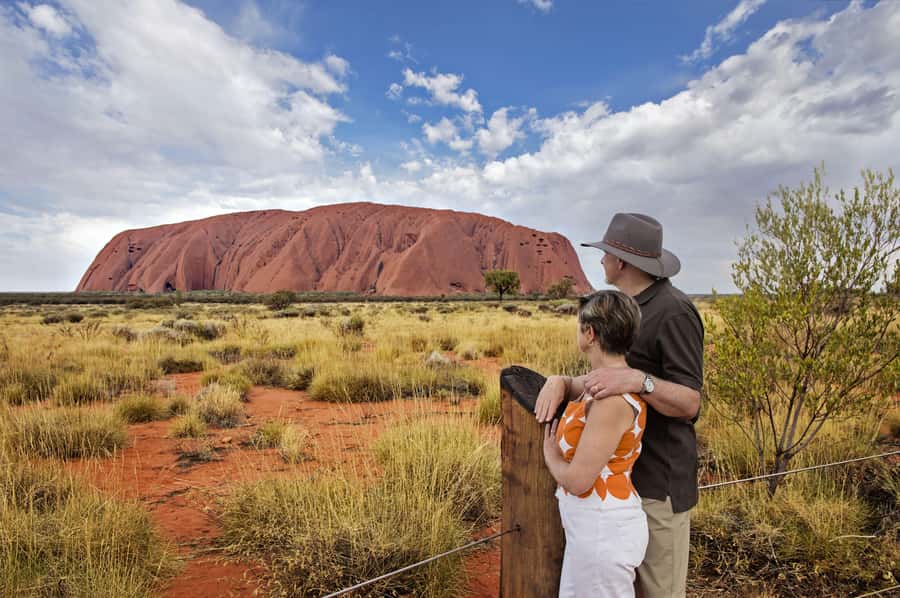
- Uluru beyond the postcard: Walk to Mutitjulu waterhole, see rock art sites, and hear the creation stories of Kuniya and Liru.
- Two major hikes after Uluru: Choose the Valley of the Winds or Walpa Gorge at Kata Tjuta, then tackle Kings Canyon in Watarrka National Park.
- Real swag camping: Sleep outdoors in a canvas-covered bush bed roll, with the night sky as your ceiling.
- A useful one-way route: Start in Yulara and finish in Alice Springs via the Mereenie Loop Tourist Drive.
- Guides shape the experience: Guides including Jim, Ewel, Jordan, Tristan, Adam, Rhett and others have been praised for safety, cultural respect, humor and strong group leadership.
- Good inclusions for the price: National Park entry, transport, six meals, accommodation, walks, water and an accredited guide are included for $598.
Why three days is the right length for the Red Centre
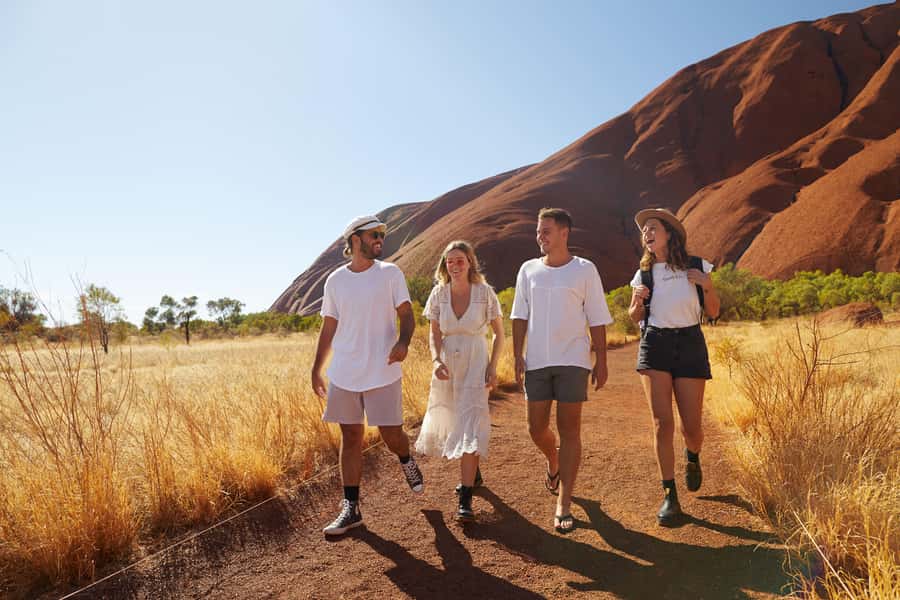
Uluru is often treated as a quick stop on an Australian itinerary. You arrive, take the classic photograph, watch the color change, and move on. This trip gives the rock and its surrounding country more time.
The 60-hour format also lets you connect three major places: Uluru, Kata Tjuta and Kings Canyon. These are not interchangeable viewpoints. Each has a different feel, geology and cultural setting, and the walks help you understand that difference.
You should expect early mornings, direct sun, rocky paths and a full day on the road. The walks are usually between 2 and 4 kilometres, but at least one trek can run from 9 to 11 kilometres. Some sections are steep and exposed, so you need a moderate to high level of fitness.
The tour is not suitable for children under seven, pregnant people, wheelchair users, people with mobility limits, or anyone with several listed medical conditions. Children aged 8 to 17 must stay with an adult or legal guardian. Anyone over 70 needs a doctor’s certificate issued within 30 days of the trip for the longer walk, and the guide decides if participation is safe.
More uluru & outback tours in Australia:
- Gold Coast: Australian Outback Spectacular Dinner & Show
★ 4.6 · 974 reviews - From Alice Springs: Day Trip to Uluru with BBQ Dinner
★ 4.6 · 761 reviews - Drover’s Sunset Cruise includes Smithy’s Outback Dinner and Show
★ 5.0 · 665 reviews
Starting at Yulara and the Cultural Centre
Pickup begins around Yulara, near Ayers Rock Airport, with the exact meeting point depending on your selected option. The first stop is the Uluṟu-Kata Tjuṯa Cultural Centre, a sensible place to begin because it gives the rock context before you walk around it.
Here you learn about the park’s cultural, ecological, historical and geological importance. That matters. Uluru is not simply a large red rock waiting for a camera. The cultural stories and continuing connection to the land shape how you should approach the site.
Your English-speaking guide is central to this part of the day. Past guide teams have included people such as Jim, Ewel, Jordan, Adam, Rhett, Tristan and Sophie. The strongest guides have explained plants, geology, Aboriginal culture and local history in a relaxed way, often adding humor without making the subject feel casual or careless.
Mutitjulu waterhole and the stories of Uluru
The walk to Mutitjulu waterhole is one of the tour’s most meaningful sections. You follow the base of Uluru to a water source surrounded by rock features, sacred sites and indigenous art.
Your guide explains the creation stories of Kuniya and Liru before the walk continues toward Kuniya Piti. Listen closely here. The value is not only the scenery, but the way the stories connect people, law, animals, water and rock.
The walk is not described as a technical climb, but you still need closed-toe shoes and proper hiking footwear. Take a hat, sunglasses, sunscreen, a daypack and a reusable bottle. The tour carries drinking water, but you need to bring your own container.
Kantju Gorge and the first campfire
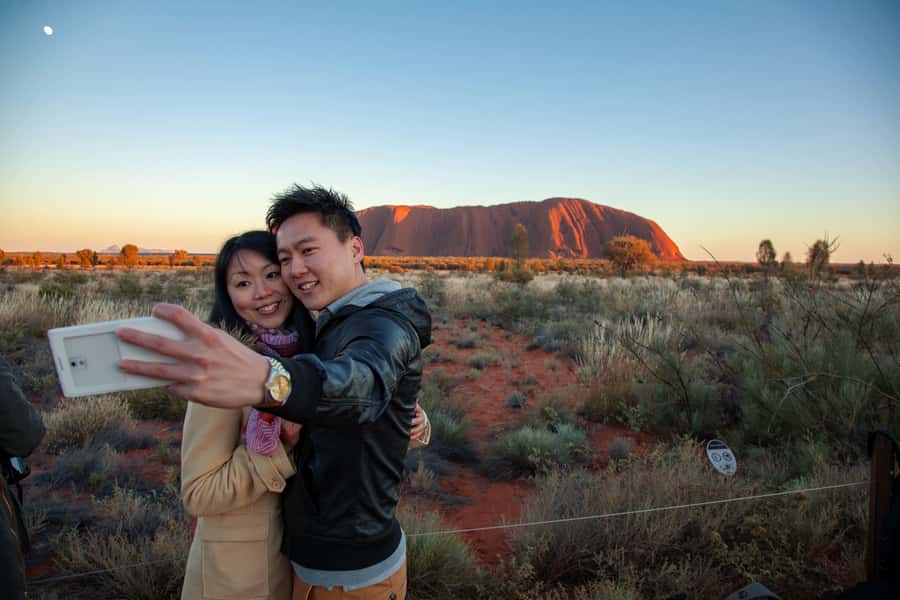
The route continues to Kantju Gorge, where you see what is described as Central Australia’s highest waterfall. Water flow depends on recent weather, so the important point is the gorge itself and the rock setting, not a guarantee of a roaring cascade every day.
You also see an elders’ cave and what the tour calls the world’s oldest pantry, a useful reminder that the desert is not empty. Indigenous knowledge identifies food, water and practical resources in places that can look bare to an untrained eye.
Dinner is served at camp, with wide views toward the sunset. The combination of simple food, open sky and a day spent walking gives this first evening a strong sense of place. Meals are included, but you should expect to help with preparation and cleanup. That shared work is part of the camping style and helps the group function, though it may feel like an extra task after a hot day.
A few more Australia trips to weigh up
- Pinnacles Desert: Sunset BBQ & Stargazing Tour +Sandboarding
★ 4.8 · 1,555 reviews - Sydney Harbour Sunset Dinner Cruise from Darling Harbour
★ 4.0 · 1,122 reviews - Great Ocean Road Full-Day Sunset Eco Tour from Melbourne
★ 5.0 · 1,085 reviews - Pinnacles Desert Sunset Dinner and Stargazing Tour
★ 5.0 · 1,034 reviews
Sunrise at Uluru and the two faces of Kata Tjuta
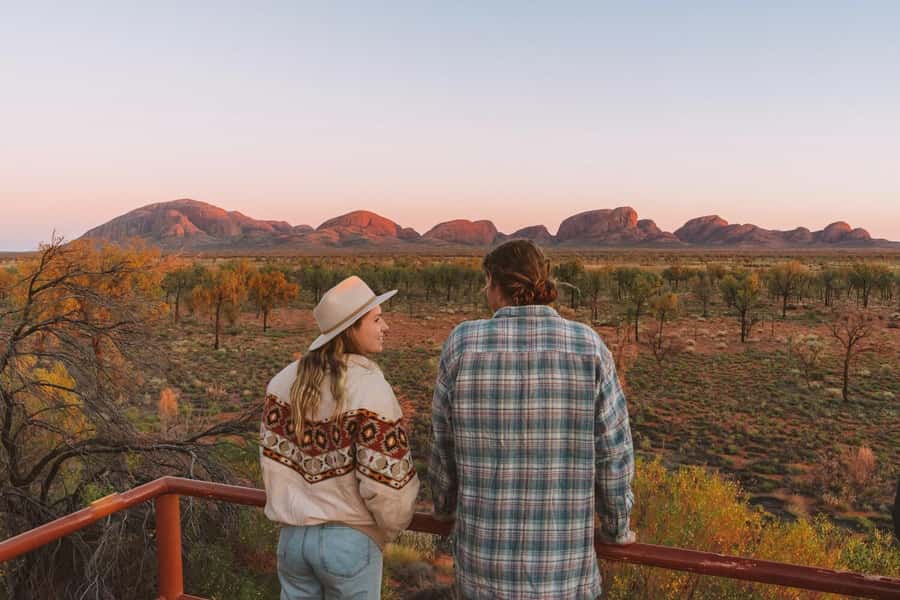
Day two begins early with a light breakfast and a sunrise drive through Uluru-Kata Tjuta National Park. Early starts are not a minor detail here. They help you avoid the harshest part of the day, but you will need to be ready to leave when you might normally still be asleep.
Kata Tjuta appears as a huge cluster of rounded conglomerate domes. It has a different shape and mood from Uluru, and the approach by road gives you time to take in its scale.
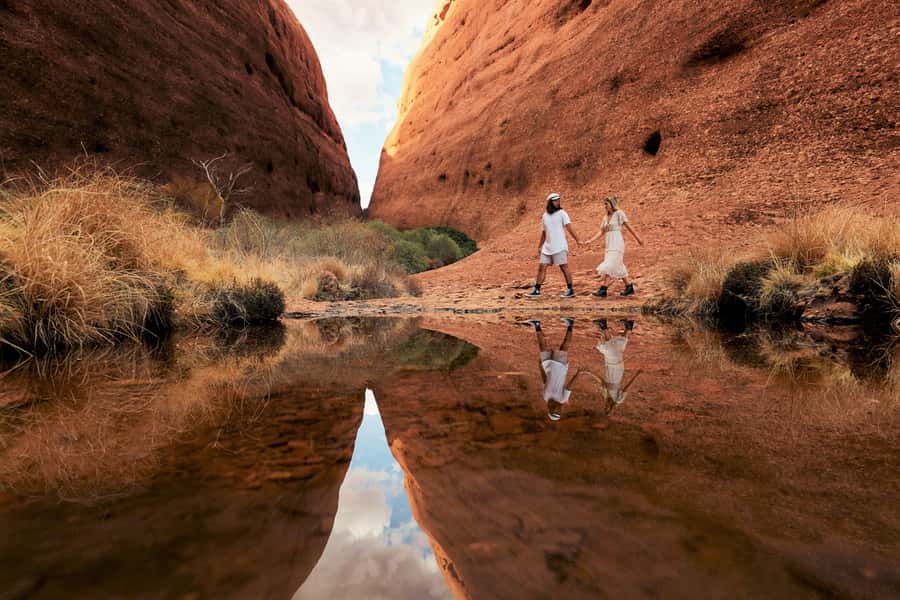
The walking choice is usually the Valley of the Winds or Walpa Gorge. The final selection can depend on conditions, timing and safety. Walpa Gorge offers a shorter route through towering formations, while the Valley of the Winds is the more demanding option and can provide broader views.
You should not assume that every walk is leisurely. Rocky ground, heat and changes in elevation make good footwear and breathable clothing important. Bring rain gear too, since weather can change quickly in the Outback, even though much of the day may be bright and dry.
The long road to Kings Canyon
After Kata Tjuta, the bus heads toward Kings Canyon. This is where the trip’s pace becomes clear. You are covering a large amount of Central Australia in three days, so there are long stretches in the air-conditioned vehicle.
The road time is part of the experience, but it can also be tiring. Bring a small day bag with essentials, personal medication, water, sunscreen, snacks if you have special dietary needs, and a power bank. Large bags are not allowed, although the information allows one small day bag and one larger bag per person.
Arrival near Kings Canyon is timed for the outback sunset. That creates another memorable light show, but it also means the day has been full from the first breakfast. If you prefer slow travel with long café stops and late mornings, this itinerary will feel rushed. If you want to see the major Red Centre sights in limited time, the packed schedule is the point.
Dinner follows at camp, usually around the fire. Food is included, with two breakfasts, three lunches and two dinners across the trip. Dietary requirements are not fully covered, so bring your own snacks for meals that do not meet your needs.
Kings Canyon and the Watarrka walk
The Kings Canyon walk is the physical centerpiece of the tour. Watarrka is the ancient home and sacred ground of the Ulpanyali and Lilla people, and the route brings you among 100-metre cliff faces and sandstone chasms.
This is where the fitness warning matters most. At least one walk can cover 9 to 11 kilometres, and participation is left to the guide’s judgment for safety. You need to be comfortable walking over uneven, steep rock in direct sunlight and high humidity.
Start with sturdy hiking shoes, hiking pants or other comfortable outdoor clothing, a hat and a daypack. Carry water and use biodegradable sunscreen. A towel and swimwear are also on the suggested packing list, which may be useful if the schedule or conditions provide an opportunity for water-based relaxation.
The reward is scale. Kings Canyon gives you views down into deep sandstone formations and across the surrounding country. It is not just another red-rock stop after Uluru. The cliffs and chasms make the walk feel more dramatic and physical.
Sleeping in a swag beneath the stars
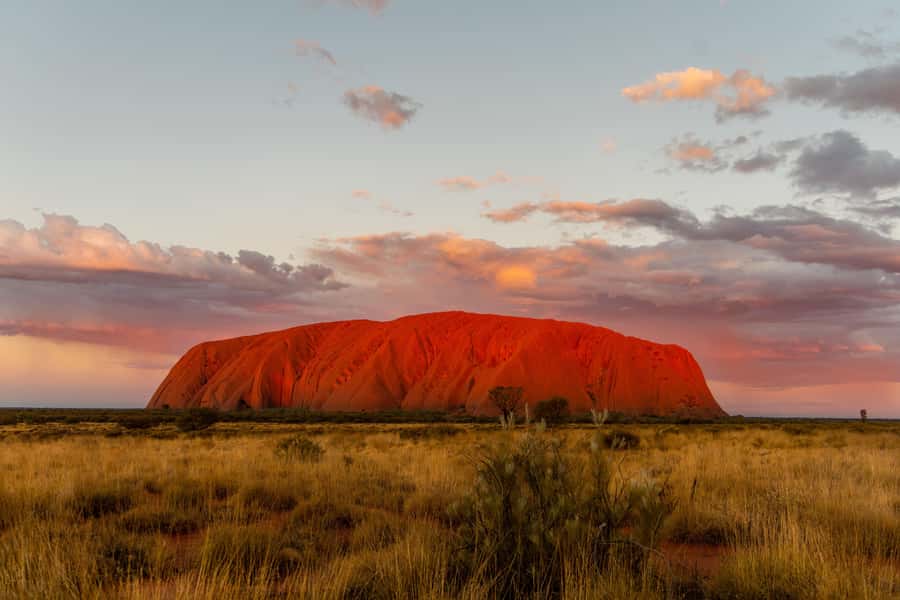
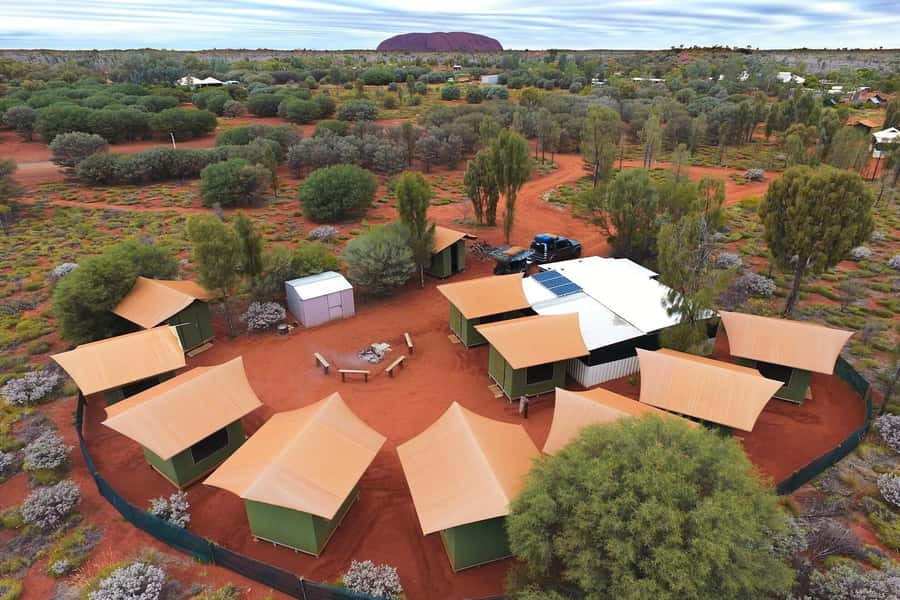
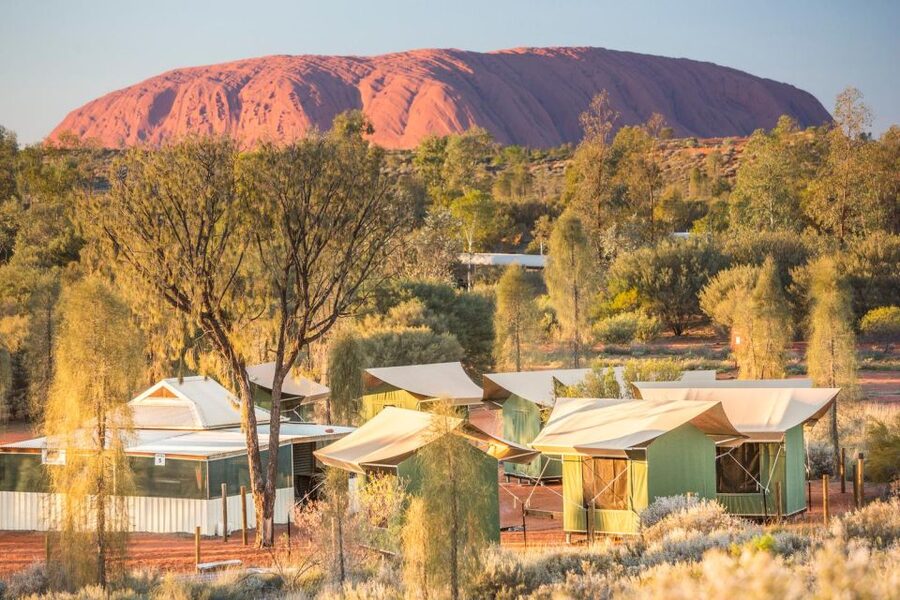
The Bush Swag option is the more memorable choice for many people. A swag is a canvas-covered bush bed roll, generally laid out under the open sky. You receive a mattress, pillow and case with the Safari Tent option, while a sleeping bag is available to rent onsite for $40.
A swag is not a sealed hotel room. One participant pointed out that small creatures can potentially crawl into an open sleeping setup, so you need to be comfortable with ordinary outdoor camping. Bring a flashlight, toiletries, insect repellent, weather-appropriate layers and a sleeping bag if you do not plan to rent one.
Night temperatures can vary, so thermal clothing is worth packing even if the daytime forecast is hot. The attraction is simple: you lie back and see the stars without a roof between you and the sky. Several guides and participants have made this one of the trip’s defining moments.
If you prefer more structure, choose the Safari Tent option. The provided fitted sheet, top sheet, mattress, pillow and case make it less exposed, though the overall experience remains basic rather than luxurious.
The Mereenie Loop to Alice Springs
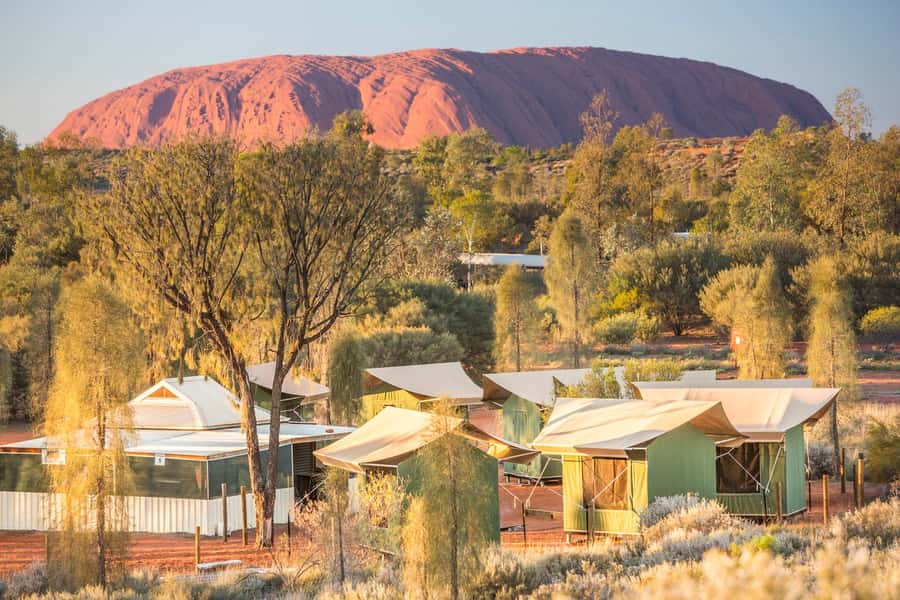
The final day is not only a transfer. After the Kings Canyon walk and some downtime, the bus takes the Mereenie Loop Tourist Drive toward Alice Springs through the West MacDonnell Ranges.
This route is useful if you are continuing through the Northern Territory because you finish in Alice Springs rather than returning to Yulara. It also gives you another view of the Outback, away from the best-known icons.
The drive is long, and one past participant described roughly 1,500 kilometres of total driving and guide duties across the full trip. That figure reflects how much territory the route covers and why your guide may look stretched by the final day. You should view the transfer as part of the touring day, not as a short shuttle between attractions.
What the $598 price really includes
At $598 per person, this tour offers reasonable value if you would otherwise need to arrange transport, park entry, accommodation, meals and guided walks separately.
Included are air-conditioned transport from Yulara to Alice Springs, two nights in permanent safari-style camps, two breakfasts, three lunches, two dinners, guided bush walks, drinking water, National Park fees and an accredited driver, guide and host. The camping equipment depends on your chosen accommodation option, and sleeping bags cost an extra $40 to rent.
The value improves if you are short on time or do not want to drive long distances in a remote region. You also receive cultural interpretation and route planning, which can be difficult to organize on your own.
The price feels less generous if you expect a small private group, a fully serviced camp or a guide who does every task while you relax. The group may contain about 20 people, and everyone is expected to help with cooking, packing and cleanup. One guide may also manage the bus, meals, walks and group welfare. That can create a friendly team spirit, but it is a real workload.
The guide can make or break the trip
Guide quality is one of the strongest features of this experience. Jim has been praised for keeping people safe and united, while Ewel has been described as handling driving, cooking, planning and hiking with calm efficiency. Jordan, Adam, Tristan, Rhett, Sophie, Sanne, Lea, CJ and others have also been singled out for humor, cultural care, route knowledge and good organization.
You should still understand the structure. The provider assigns the guide, so you cannot book a particular person unless that option is explicitly offered. A strong guide can turn long drives and group chores into part of the fun, while a busy guide may have less time for individual attention.
The best approach is to help when asked, listen during cultural talks, follow safety instructions and keep your own gear organized. That makes the trip easier for everyone, including the person driving you across the desert.
Who should book this tour
I would choose this trip if you want the main Red Centre sights but do not want to rent a vehicle or plan a complicated one-way route. It suits active solo visitors, couples, friends and people who enjoy meeting an international group around a campfire.
It is also a good fit if sleeping outdoors, hiking and early starts sound like part of the adventure. The route gives you much more than an Uluru sunset, especially with both Kata Tjuta and Kings Canyon included.
I would hesitate if you have a low fitness level, medical restrictions, mobility concerns or a strong dislike of heat and basic camping. The trip is demanding, and there is little room to turn a three-day schedule into a relaxed holiday.
Cancellation is free up to 14 days before departure, provided you follow the booking conditions. Check the meeting point for your selected option, since it can vary.
Should you book the Uluru, Kata Tjuta and Kings Canyon tour?
Book it if you want an active, well-filled introduction to the Red Centre, especially if you need transport from Yulara to Alice Springs. The strongest reasons are the three major national park areas, the cultural walks, the included park fees and meals, and the chance to sleep under the stars.
Skip it if you need comfort, privacy or slow mornings. At $598, the tour is best judged as a practical Outback expedition with simple camps and shared duties, not a resort stay. Pack lightly, bring serious walking shoes, prepare for long days, and choose the swag option only if open-air camping genuinely appeals to you.
FAQ
Where does the tour start and finish?
The tour starts with pickup in Yulara, including the Ayers Rock Airport area, and finishes in Alice Springs after traveling via the Mereenie Loop Tourist Drive and the West MacDonnell Ranges.
How long is the experience?
The tour lasts 60 hours, or three days and two nights.
What accommodation is available?
You can select Bush Swag accommodation, which uses a canvas-covered bush bed roll, or a Safari Tent option. The Safari Tent option includes a fitted sheet, top sheet, mattress, pillow and pillowcase.
Is a sleeping bag included?
No. Sleeping bags are available to rent onsite for $40. You can also bring your own sleeping bag.
How difficult are the walks?
The walks require a moderate to advanced level of fitness. Daily walks range from about 2 to 4 kilometres, and at least one trek may be about 9 to 11 kilometres over steep, rocky ground in direct sunlight and high humidity.
What meals and transport are included?
The price includes air-conditioned transport from Yulara to Alice Springs, two breakfasts, three lunches, two dinners, onboard drinking water and National Park entry fees. Bring a reusable bottle and extra snacks if you have special dietary needs.
More 3-Day Experiences in Australia
- Dingos 3 Day K’Gari (Fraser Island) 4WD Tag-Along Tour
★ 5.0 · 939 reviews - Rainbow Beach: 3-Day K’gari (Fraser Island) 4WD Adventure
★ 4.8 · 635 reviews - Margaret River 3 Day Escape
★ 5.0 · 182 reviews - Adelaide: 3-Day Kangaroo Island Adventure Tour with Camping
★ 4.6 · 86 reviews
Just added around Australia
- Morning Cruise on the Murchison River in Kalbarri (April to Nov)★ 5.0 · 91 reviews
- Kalbarri Rock Lobster Tours★ 5.0 · 54 reviews
- Kalbarri Sunset & Coastal Cliff Cruise★ 5.0 · 59 reviews
- Kalbarri Whale Watching Tour Guided★ 5.0 · 35 reviews
- Kakadu National Park Wildlife & Ubirr Rock Art Tour from Darwin★ 4.5 · 101 reviews
- Jervis Bay Whale Watching Tour★ 4.5 · 353 reviews
- Arnhem Land Yingana Injalak Hill Full Day Tour from Jabiru★ 5.0 · 132 reviews
- Jabiru 30 minute Scenic Flight★ 5.0 · 68 reviews
Uluru & Outback Tours, compared.

Drover’s Sunset Cruise includes Smithy’s Outback Dinner and Show
Read our review →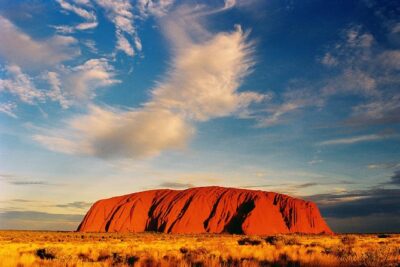
Ayers Rock Day Trip from Alice Springs Including BBQ Dinner
Read our review →
Uluru & Kata Tjuta 25-Minute Helicopter Experience
Read our review →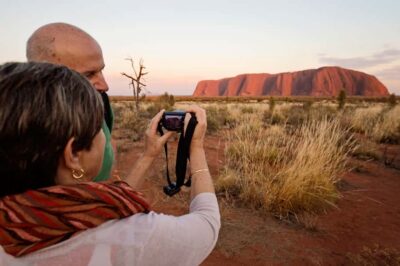
Browse the lists this tour appears in