
Reviewed · DARWIN TOURS
WWII Bombing of Darwin & Royal Flying Doctor Service
The most striking part of this Darwin attraction is the way it puts you inside two very different stories: the birth of the Royal Flying Doctor Service and the shock of the 1942 bombing of Darwin Harbour. Holograms, virtual reality, and a timed viewing platform turn a museum visit into something much more active.
I like the range of ways to learn. You can watch a holographic presentation, step into two VR experiences, listen with an audio translator, and inspect a real RFDS Pilatus PC-12. I also like that you set your own pace instead of being tied to a guide or a fixed group. The drawback is that this is a self-guided visit, so readers wanting a live storytelling tour may find it less personal.
In This Review
- Key points to know before you go
- Two Darwin stories meet at Stokes Hill Wharf
- Start with the staff briefing and exhibition plan
- Follow the RFDS from 1939 into the modern era
- Watch the 1942 bombing story through holograms
- Try two VR experiences, then return to the real displays
- Use the audio translator when you need extra help
- Why the technology works, and where it does not
- What $21 buys you
- Plan your timing at 45 Stokes Hill Road
- Who will enjoy this Darwin attraction most
- Should you book the RFDS and Bombing of Darwin experience?
- FAQ
- Where is the RFDS Darwin Tourist Facility?
- How long should I allow for the visit?
- What does the admission ticket include?
- Is the visit guided?
- Is the experience available in languages other than English?
- What are the main subjects covered?
- Can I see a real RFDS aircraft?
- What is the latest entry time?
- Is the facility wheelchair accessible?
- Can I cancel my booking?
Key points to know before you go
- Two major Australian stories in one visit: Learn how the RFDS began Northern Territory aeromedical work in 1939, then follow the drama of the 1942 bombing raids.
- Modern technology carries the history: Holographic cinema sessions and two VR experiences add sound, movement, and visual drama to the displays.
- Allow about 1.5 hours: You need enough time for the exhibits, aircraft, VR activities, and scheduled presentations.
- The real aircraft is a highlight: Walk through a decommissioned Pilatus PC-12 fitted for aeromedical work.
- Good value at $21 per person: The ticket includes the self-guided visit, audio translators, two VR experiences, and holographic cinema sessions.
- Plan around entry times: Last entry is 3:00 PM on normal trading days and 2:00 PM on public holidays.
Two Darwin stories meet at Stokes Hill Wharf
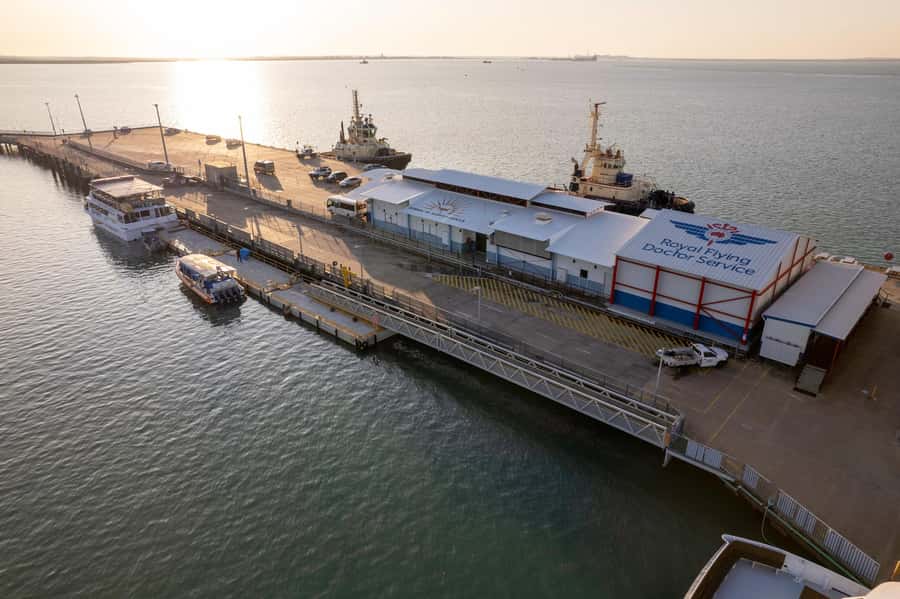
The RFDS Darwin Tourist Facility sits at 45 Stokes Hill Road, close to the waterfront in Darwin City. Inside, the attraction joins two stories that are both central to Northern Territory life, but very different in tone.
The first is the Royal Flying Doctor Service. Its aeromedical operations began in the Northern Territory in 1939, when aircraft and medical care helped connect people across huge distances. The display follows the service’s birth and growth, giving you a sense of why flying medical teams became so important in remote Australia.
The second story is the Bombing of Darwin Harbour in 1942. This was not a distant European war story. It happened here, in Australia, and the attraction focuses on the raids, the people caught in them, and the remarkable survival stories that followed.
I like this pairing because it gives the visit a clear shape. One half explains a service built to help people in isolated places. The other shows Australia facing direct attack during World War II. Together, they make the facility more than a single-subject museum.
Other Darwin days worth booking alongside this:
- Litchfield National Park and Jumping Crocodile Cruise
★ 5.0 · 2,119 reviews - Adelaide River Cruises – Jumping Crocodile Experience
★ 5.0 · 997 reviews - Sunset 3-Hour Cruise from Darwin with Dinner and Sparkling Wine
★ 5.0 · 980 reviews
Start with the staff briefing and exhibition plan
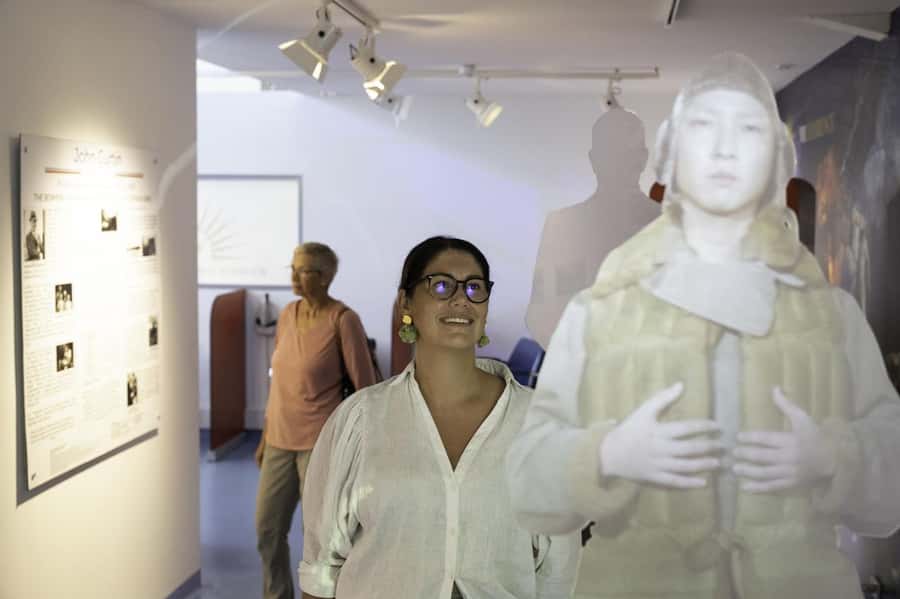
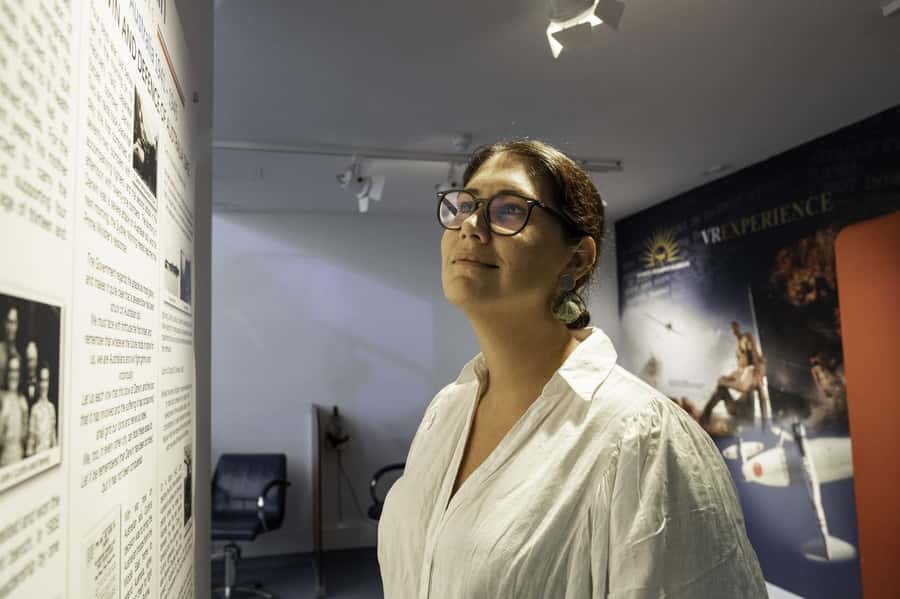
When you arrive, a staff member gives you an outline of the facility. This short introduction matters because some parts of the visit follow set times, especially the holographic cinema sessions and the Window of the 1942 bombing platform.
You are not joining a long guided tour. Instead, staff help you understand where to begin and when to return for the timed elements. After that, you can move through the displays at your own speed.
This arrangement works well if you prefer to pause over details, take in the visual material, or repeat an exhibit that catches your attention. It also means you need to pay attention to the session times. If you simply wander without checking the schedule, you could miss one of the technology-based presentations.
Plan for about 1.5 hours to see the facility properly. You might spend less time if you only want a quick look, but that would leave little room for the VR activities, aircraft display, holographic sessions, and historical material.
Follow the RFDS from 1939 into the modern era
The RFDS section introduces the service’s Northern Territory aeromedical operations, which began in 1939. The focus is not only on aircraft. You also learn about the growth of a service designed to bring medical help across large, remote distances.
The strongest part of this section is the link between the equipment and the human stories. Medical aviation can sound technical when reduced to dates and aircraft types. Here, the display uses heroic accounts and survival stories to show why the service mattered to real people.
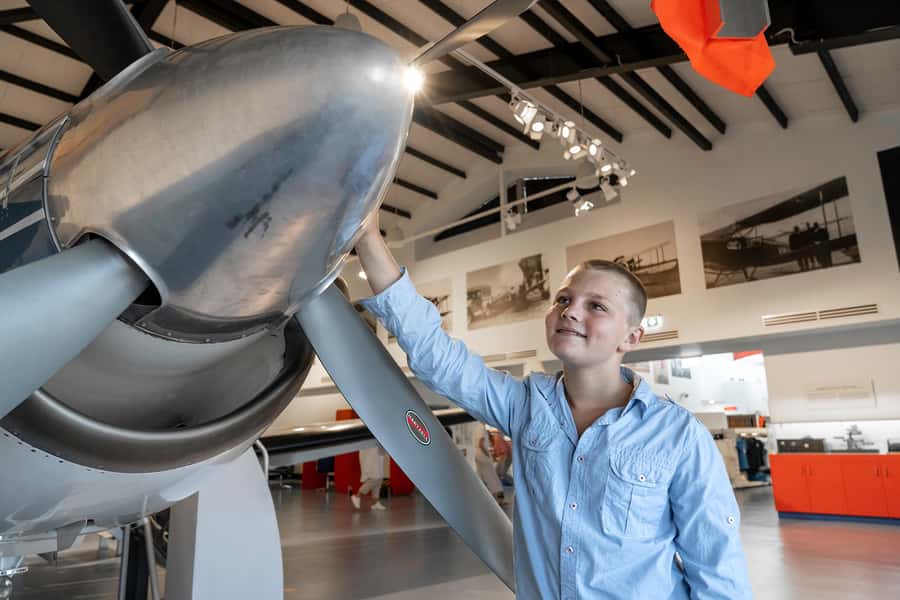
You can also enter or inspect a decommissioned RFDS Pilatus PC-12. Seeing the aircraft helps you understand the practical side of aeromedical work. A plane used for medical transport is not simply a passenger aircraft with a medical label. The fitted interior shows how air travel and patient care have to work together.
For families, the aircraft gives children something concrete to explore. For adults, it gives the RFDS story a useful physical reference. You are not only reading about the service. You are looking at the type of aircraft connected to that work.
The display is self-guided, so you will need to read, listen, and connect the information yourself. That can be a plus if you like choosing what interests you. It is less ideal if you want a guide to explain every object in sequence.
Watch the 1942 bombing story through holograms

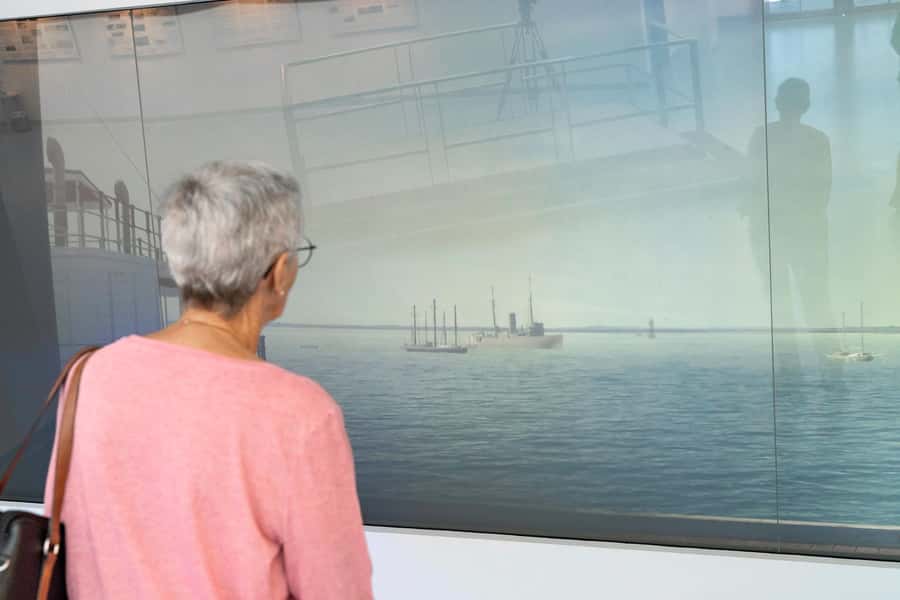
The Bombing of Darwin Harbour section uses state-of-the-art presentation technology to recreate the drama of the 1942 raids. The Window of the 1942 bombing platform is one of the timed elements, so check the schedule you receive on arrival.
The holographic cinema sessions add a theatrical layer to the history. Holograms can show people and events in a way that ordinary panels cannot, giving the story a stronger sense of movement and presence. The aim is not simply to display information. It is to place you closer to the personal side of the attacks.
The content includes stories of heroes and survivors, along with facts about the raids. That balance is important. The technology catches your attention, but the human accounts give the presentation its weight.
The attraction is particularly useful for anyone who knows little about the bombing of Darwin. A standard history display can leave you with a list of dates and names. The holographic approach gives you a more direct route into the event, then encourages you to explore further through the other exhibits.
The presentation style may not suit everyone. Some people prefer original objects, quiet galleries, and long written explanations. If you want a traditional museum format, the heavy use of screens and special effects could feel too polished. If you learn best through images and sound, it is likely to be one of the visit’s most effective features.
Same coast, a completely different day out:
- From Darwin: Litchfield Park Tour & Jumping Crocodile Cruise
★ 4.9 · 829 reviews - Charles Darwin Dinner Cruise
★ 4.5 · 820 reviews - Kakadu Day Tour from Darwin with Offroad Dreaming
★ 5.0 · 776 reviews - Cape Adieu Darwin Sunset Dinner Cruise
★ 5.0 · 750 reviews
Try two VR experiences, then return to the real displays
Your ticket includes two virtual reality experiences. These are not optional extras, so they add real value to the $21 admission price.
VR can make historic subjects easier to grasp because it asks you to look around rather than simply face a wall panel. The supplied information does not specify the exact length or content of each VR activity, so you should treat them as additional interactive elements rather than plan your visit around a precise schedule.
I would approach the VR in the right frame of mind. It is there to support the history, not replace it. Take time to read and listen before or after each activity. That way, you can connect the digital scene with the facts, people, and aircraft shown elsewhere in the facility.
The technology also helps explain why this attraction has earned strong feedback for its audio-visual presentation. A 4.8 out of 5 rating from 34 ratings suggests that the combined use of visual media and interactive displays is working for many people. One detailed response specifically praised the different ways of learning about both subjects and the newer technology.
You may also find that the visit takes longer than expected. The self-guided format makes it easy to stop, watch, try an activity, and then spend more time with a display than you planned.
Use the audio translator when you need extra help
Headset audio translators are included with admission. The facility’s stated language is English, while the translators provide help for visitors who need audio support in another language.
This is a practical inclusion rather than a flashy feature. It means the visit does not rely only on written English panels, particularly useful when the subject includes unfamiliar names, military details, or medical terms.
The available information does not specify every translation language, so check with staff on arrival if you need a particular one. The host or greeter operates in English, and staff remain available to assist as you move through the facility.
Because the visit is self-guided, the headset can also give you a clearer structure. You can listen, pause, and continue at your own pace rather than trying to keep up with a live guide.
Why the technology works, and where it does not
The facility’s technology is its main selling point. Holographic cinema, VR, interactive storytelling, and the bombing platform give the two subjects different forms of presentation. You are not asked to absorb everything from one long wall of text.
That variety is especially useful if you are visiting with a mixed group. One person may prefer the aircraft and practical details. Another may respond more strongly to the personal stories. Someone else may remember the VR or holograms best.
The tradeoff is that technology can sometimes compete with the subject. A dramatic presentation may leave a strong impression without answering every question you have about the bombing or the RFDS. I recommend treating the digital attractions as the entry point, then taking time with the supporting displays.
The experience also depends on the scheduled cinema and platform sessions. The staff briefing helps, but you still need to keep an eye on the timing. This is a small issue, yet it matters if you arrive late in the day.
What $21 buys you
At $21 per person, this is a fairly modest admission price for the amount included. You receive entry to the RFDS Darwin Tourist Facility, the self-guided exhibition, headset audio translators, two VR experiences, and holographic cinema sessions.
The value is strongest if you use all of those elements. A quick walk through the aircraft and a few displays would not make as strong a case for the price. Allowing the full 1.5 hours gives you time to see how the parts fit together.
The ticket also stays flexible. You can reserve now and pay later, and cancellation is available up to 24 hours before the visit for a full refund. The ticket is valid for six months, with availability and starting times checked at booking. That six-month validity is not the length of the visit. Your actual time inside is about 1.5 hours.
There is skip-the-ticket-line access, which can help you get inside without spending time waiting at the entrance. The facility is wheelchair accessible, another useful point if you are planning a visit with someone who needs step-free access.
Plan your timing at 45 Stokes Hill Road
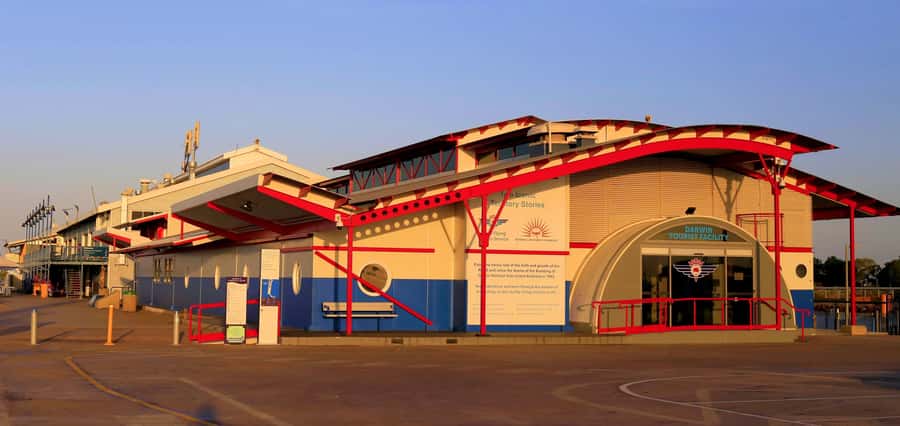
The meeting point is the RFDS Darwin Tourist Facility at 45 Stokes Hill Road, Darwin City, Northern Territory, postcode 0800. The attraction is located at Stokes Hill Wharf, so it fits naturally into a waterfront day in Darwin.
The main timing rule is simple. Last entry is 3:00 PM on normal trading days and 2:00 PM on public holidays. Do not arrive just before closing and expect to complete the full visit. You could miss the final holographic session or have too little time for the aircraft and VR exhibits.
I would schedule at least 1.5 hours, with a little extra breathing room if you like interactive displays. The facility is open to self-guided exploration, but some sessions run at set times, so arriving earlier gives you more choice.
English is the stated language, and the host or greeter is English-speaking. Headset audio translators are included, though you should ask staff what language options are available if that affects your decision.
Who will enjoy this Darwin attraction most
I would recommend this visit to anyone who wants a clear introduction to two major Darwin stories without committing to a full-day museum program. The combination of the RFDS and the 1942 bombing gives you variety, and the technology keeps the presentation moving.
Families may appreciate the aircraft, VR, and interactive storytelling. Those features provide more to do than simply read exhibit panels. The facility also suits history-minded visitors who want to understand the local impact of World War II and the practical role of the RFDS.
It is a good choice for people who prefer independent sightseeing. You can pause, move on, and spend more time where your interest lies. Staff are available when you need help, but you are not following a guide from room to room.
I would be more cautious if you want a quiet, object-led museum or a detailed lecture from a historian. The visit leans heavily on visual and interactive storytelling. It gives you a strong introduction, but it may not answer every specialist question.
Should you book the RFDS and Bombing of Darwin experience?
Book it if you want an accessible, technology-led introduction to Darwin’s wartime story and the Royal Flying Doctor Service. The $21 price is reasonable because it covers the VR activities, holographic sessions, audio translators, and the aircraft display, not just general entry.
Arrive early enough to use the full 1.5 hours and attend the timed presentations. If you prefer self-guided visits and learn well through audio-visual material, this is an easy recommendation. If you dislike VR or want a live guide, keep your expectations in check, but the mix of personal stories, real aircraft, and interactive history still gives the visit solid value.
FAQ
Where is the RFDS Darwin Tourist Facility?
The facility is at 45 Stokes Hill Road, Darwin City, Northern Territory 0800, Australia, at Stokes Hill Wharf.
How long should I allow for the visit?
Allow about 1.5 hours to view the facility in its entirety.
What does the admission ticket include?
The ticket includes a self-guided tour, headset audio translators, two virtual reality experiences, and holographic cinema sessions.
Is the visit guided?
The visit is self-guided. A staff member gives you an outline of the facility and explains timings for the holographic cinema sessions and the Window of the 1942 bombing platform.
Is the experience available in languages other than English?
English is the stated language, and headset audio translators are included. Ask staff about available translation options if you need a specific language.
What are the main subjects covered?
The attraction covers the birth and growth of the Royal Flying Doctor Service and the Bombing of Darwin Harbour in 1942.
Can I see a real RFDS aircraft?
Yes. You can view a decommissioned RFDS Pilatus PC-12 fitted as an aeromedical plane.
What is the latest entry time?
Last entry is 3:00 PM on normal trading days and 2:00 PM on public holidays.
Is the facility wheelchair accessible?
Yes, the facility is wheelchair accessible.
Can I cancel my booking?
You can cancel up to 24 hours in advance for a full refund. You can also reserve now and pay later, subject to availability.
Just added around Darwin
- Kakadu National Park Wildlife & Ubirr Rock Art Tour from Darwin★ 4.5 · 101 reviews
- Arnhem Land Yingana Injalak Hill Full Day Tour from Jabiru★ 5.0 · 132 reviews
- Jabiru 30 minute Scenic Flight★ 5.0 · 68 reviews
- Kakadu Adventure Tour★ 4.0 · 26 reviews
- Bombing of Darwin World War II Tour with Harbour Cruise★ 4.5 · 219 reviews
- Tiwi Islands Cultural Experience from Darwin Including Ferry★ 4.0 · 97 reviews
- 1-Hour Thunderball WWII Adventure Jet Skiing in Darwin★ 5.0 · 70 reviews
- Darwin Combo: The Bombing of Darwin Experience & Darwin Harbour Cruise★ 4.5 · 123 reviews
Darwin Tours, compared.
Litchfield National Park and Jumping Crocodile Cruise
Read our review →
Adelaide River Cruises – Jumping Crocodile Experience
Read our review →
Sunset 3-Hour Cruise from Darwin with Dinner and Sparkling Wine
Read our review →
Litchfield Park Tour & Jumping Crocodile Cruise
Read our review →

Kakadu Day Tour from Darwin with Offroad Dreaming
Read our review →
Browse the lists this tour appears in