
Reviewed · FARMS
Bundaberg: Monsoon Aquatics Coral Farm Guided Tour
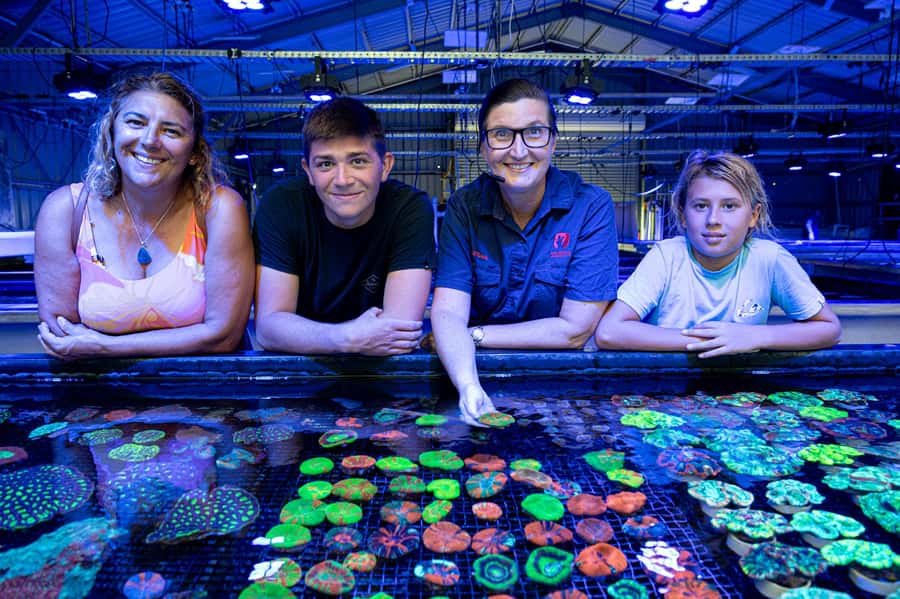
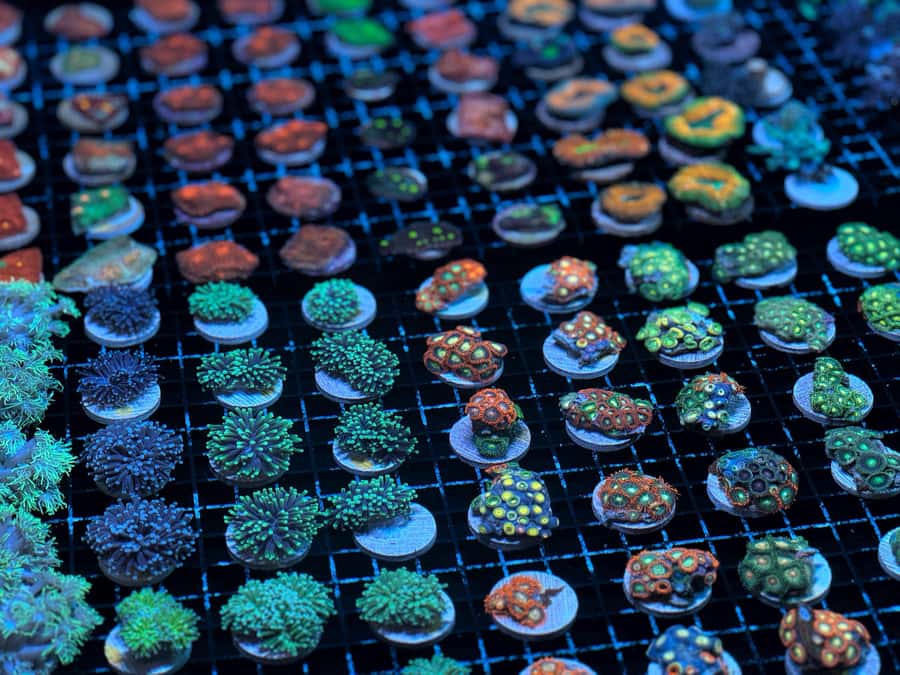
The remarkable thing here is that you are not simply looking at a finished aquarium display. You are walking through a working coral farm, where more than 70,000 corals are being grown and cared for. The tour connects the bright beauty of the reef with the careful science behind coral cultivation.
I like the one-hour format, which gives you a useful look without taking over your day, and I like the direct access to guides who explain the work in plain language. The $22 price also feels fair for a specialised, behind-the-scenes experience that supports coral reproduction.
The main consideration is that this is an educational farm tour, not a large public aquarium. Much of what you see is coral growing in long tanks, so very young children may lose interest if they need constant action, colour, and big fish displays.
In This Review
- Key points to know before you go
- What Monsoon Aquatics Coral Farm actually offers
- Meeting your guide at the Bundaberg farm
- Walking through 70,000 growing corals
- Seeing coral feeding in action
- The science behind coral cultivation
- Finishing with clownfish and marine life
- Why the $22 price offers good value
- Planning your visit to the Port of Bundaberg
- Is this tour good for children?
- Who should book Monsoon Aquatics?
- Booking, cancellation, and practical flexibility
- Should you book this coral farm tour?
- FAQ
- Where is Monsoon Aquatics Coral Farm located?
- How long does the guided tour last?
- How much does the tour cost?
- What can I see during the tour?
- Is the tour suitable for children?
- What should I wear?
- Can I bring food and drinks?
Key points to know before you go
- More than 70,000 corals: See coral at different stages of growth inside Australia’s largest coral farm.
- 200 marine species: The collection includes marine life gathered from around Australia’s extensive coastline.
- Live feeding demonstrations: Watch the staff feed coral and explain how these animals are cared for.
- Reef restoration research: Learn how coral cultivation can support the future health of Australia’s reefs.
- A good final stop for children: The clownfish collection, including everyone’s favourite Nemo fish, adds a lively finish.
- Practical footwear matters: Closed-toe, non-slip shoes are required because some floors may be slippery.
What Monsoon Aquatics Coral Farm actually offers
Monsoon Aquatics Coral Farm sits at the Port of Bundaberg on the Burnett River, about 20 minutes from the centre of Bundaberg. That location makes it an easy addition to a Bundaberg day, especially if you are already exploring the port area or planning other coastal activities.
The farm is not designed as a conventional aquarium. You will not spend the hour moving through grand halls filled with enormous tanks and theatrical lighting. Instead, you enter a working facility where coral is grown, monitored, fed, and prepared as part of a wider effort to support reef reproduction.
That difference matters when you decide if this tour suits you. I would choose it for a child who likes animals, science, or practical demonstrations. I would be more cautious with a very young child who expects a sea-life show with constant movement.
The setting gives you something many aquarium visits cannot: a look at the work behind the display. You see coral as a living subject that needs attention and the right conditions, not just as decoration around tropical fish.
A few more Australia trips to weigh up
- Amazing Yarra Valley Wine Tour + Chocolate, Farm Fresh, Gin
★ 5.0 · 1,566 reviews - Hidden Gems: Boutique Full-Day Wine, Farm & Lunch Tour
★ 5.0 · 881 reviews - Melbourne: Yarra Valley Wine, Choc, Farm Fresh, Gin Tour
★ 4.9 · 258 reviews
Meeting your guide at the Bundaberg farm
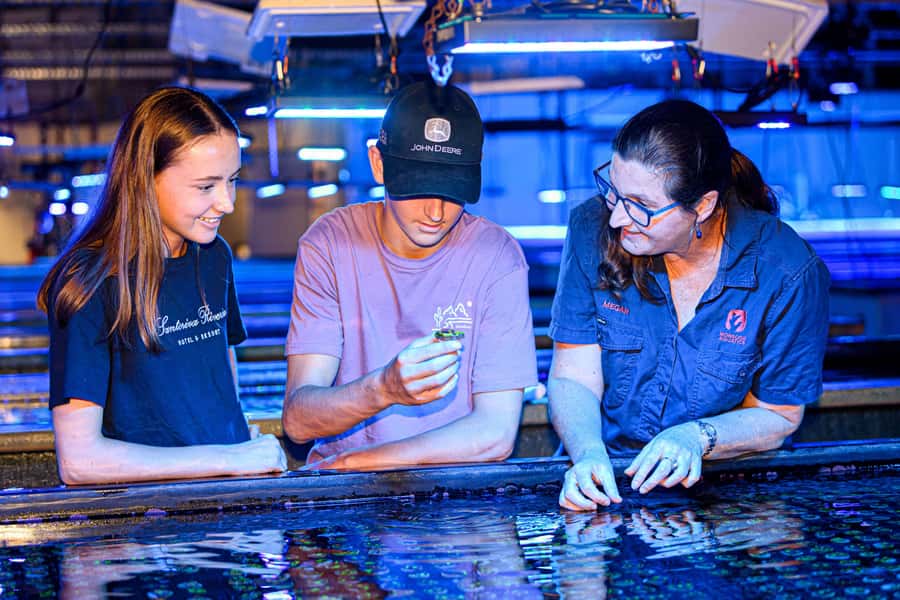
You meet the guide on the veranda at Monsoon Aquatics Coral Farm. The tour is conducted in English, and the small-group format is intended to give you time to ask questions rather than simply follow a script from room to room.
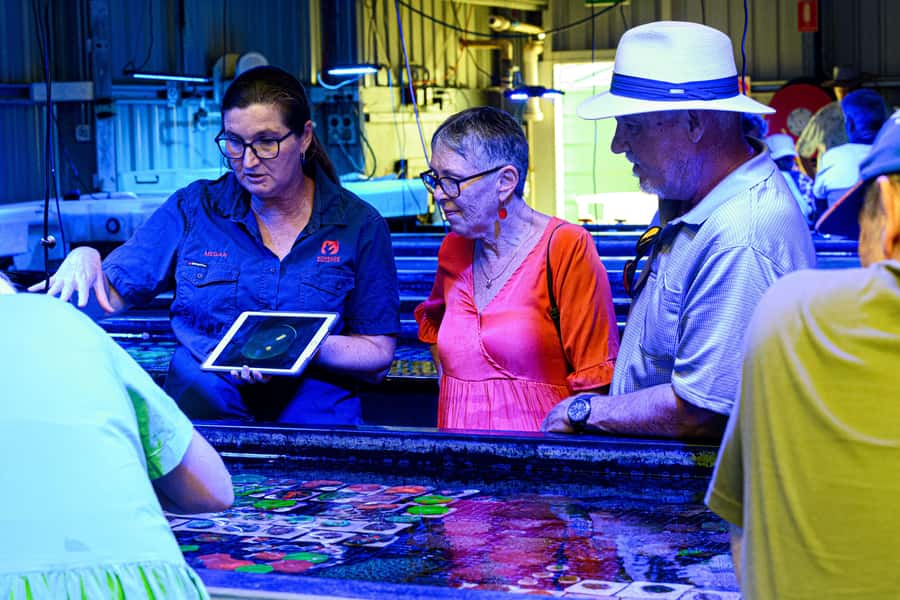
The quality of the guide matters a great deal here. This experience could become dry if the explanation turned into a list of tank names and coral types. The available information points to guides who are enthusiastic about the work and able to explain the subject in language children can understand.
That family-friendly approach is one of the strongest reasons to book. A guide has also offered to take family photos, a small but useful touch if you want a picture of everyone together without handing your phone to a stranger.
You should feel free to ask questions during the hour. The guide is there to explain the growing process, answer questions about coral care, and connect the farm’s daily work with reef restoration.
Walking through 70,000 growing corals
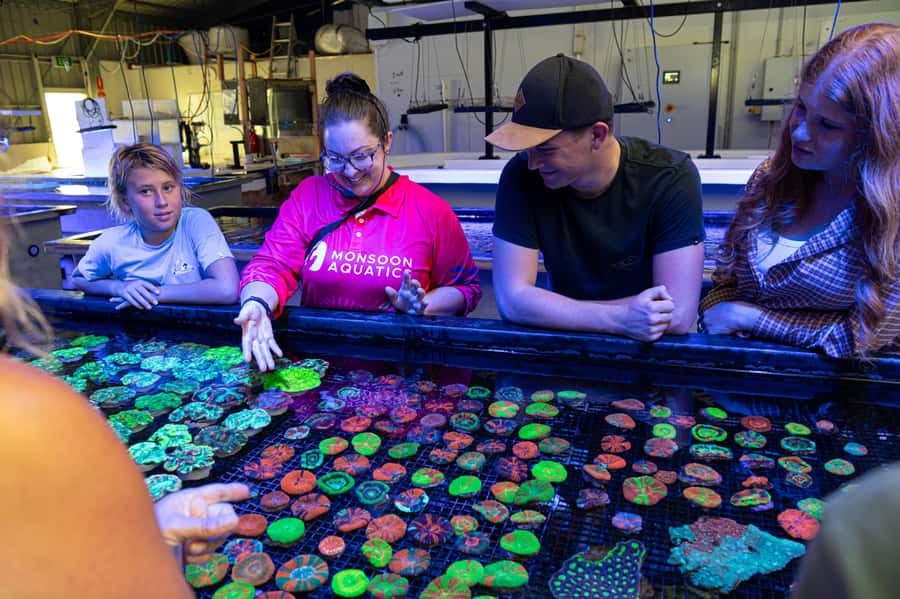
The central part of the visit takes you through the farm’s coral collection. More than 70,000 corals are held across the facility, along with around 200 marine species sourced from different parts of Australia’s coastline.
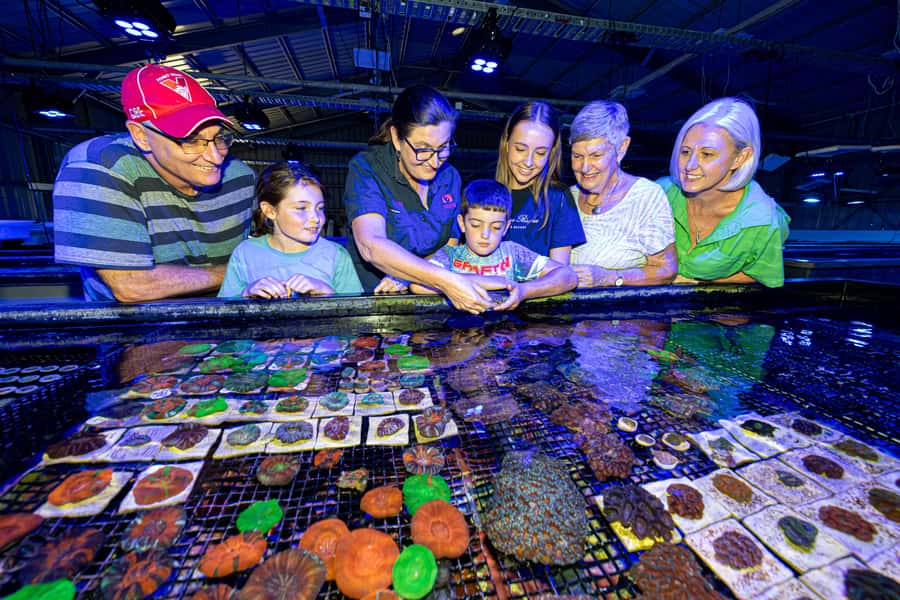
You will see corals in various sizes and stages of growth. The sight is less like a single polished reef scene and more like a working nursery, with coral developing in tanks and on small tiles.
This is where the tour asks you to look closely. A large aquarium can give you an instant picture of a finished reef. At Monsoon Aquatics, you get to consider how coral begins, how it is maintained, and how much care is needed before it becomes part of a larger reef community.
I find that approach useful because it makes reef conservation more concrete. Instead of hearing only that reefs need help, you see a facility focused on reproduction and cultivation. The work becomes practical: coral is grown, fed, observed, and supported over time.
The colours and forms should appeal to anyone who enjoys marine life, but keep your expectations realistic. The farm’s main purpose is cultivation and research, not entertainment. You may find the long tanks and smaller coral pieces more interesting than a young child does.
Seeing coral feeding in action
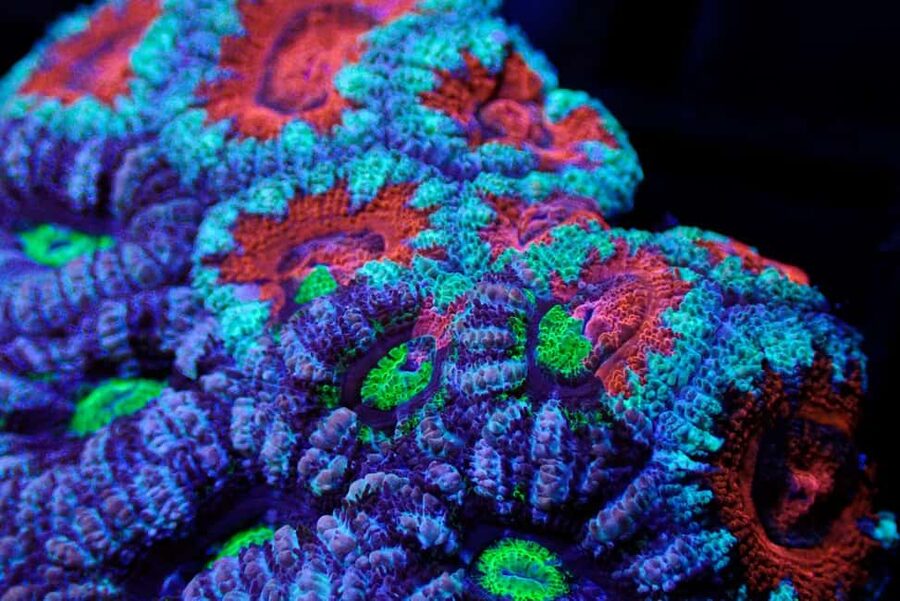
A live feeding demonstration gives the tour a welcome change of pace. You watch the staff feed coral while explaining what is happening and why care routines are important.
This is a useful moment to remember that coral is not simply rock. The supplied information describes these as amazing animals, and the demonstration helps you see them as living organisms with needs that must be understood.
The guide’s explanation is important here. Feeding is not just a quick visual trick. It gives you a way to understand the daily work involved in keeping coral healthy in a farm setting.
For children, a demonstration can make the subject easier to grasp. Rather than listening to a long explanation about marine biology, they can watch a real task and ask questions about it. For adults, it adds a practical layer to the visit and shows that coral cultivation involves more than placing fragments in a tank.
You are allowed to bring water, but other food and drinks are not allowed on the tour. Bring a bottle if you need one, but leave snacks and other drinks outside the tour area.
Same coast, a completely different day out:
- Sydney: Opera House Guided Tour with Entrance Ticket
★ 4.8 · 8,312 reviews - All Inclusive Blue Mountain,Scenic World,Lunch,Koalas,ferry
★ 5.0 · 7,832 reviews - Great Ocean Road Small-Group Eco Tour from Melbourne
★ 5.0 · 6,607 reviews - From Melbourne: Great Ocean Road, 12 Apostles, Wildlife Tour
★ 4.7 · 6,020 reviews
The science behind coral cultivation
Monsoon Aquatics presents coral growing as a blend of science, careful husbandry, and practical innovation. You learn how the team grows and nurtures coral, and how small pieces can be supported as they develop.
The value of this section depends partly on your curiosity. If you want a quick look at colourful marine life, the explanation may feel slower than a standard aquarium visit. If you want to understand how coral is reproduced and maintained, it gives you much more substance than a simple viewing experience.
I like that the farm lets you see a process rather than only a result. A mature reef can look effortless from a distance, but coral cultivation requires monitoring and patience. This tour gives you a clearer sense of the work required to help coral survive and reproduce.
The farm also shares information about research linked to reef restoration. You should not expect a full university lecture in a one-hour tour, but you will leave with a better idea of how facilities such as this can contribute to future reef work.
That message is hopeful without pretending the problems facing reefs are simple. The tour shows one practical area of action: growing coral and improving the knowledge needed to support reef recovery.
Finishing with clownfish and marine life
The clownfish collection provides the most obvious crowd-pleaser at the end of the visit. For families, this is likely to be the easiest part for children to connect with, especially if they already know the famous Nemo character.
The clownfish also offer a useful contrast with the coral tanks. You see how fish and coral relate within the wider reef environment, while getting a final burst of movement after spending time examining growing coral.
Do not book this expecting a huge fish show. The collection is a featured part of the farm, but the main subject remains coral cultivation. Think of the clownfish as a charming finish to a working coral tour rather than the reason for the entire visit.
Why the $22 price offers good value
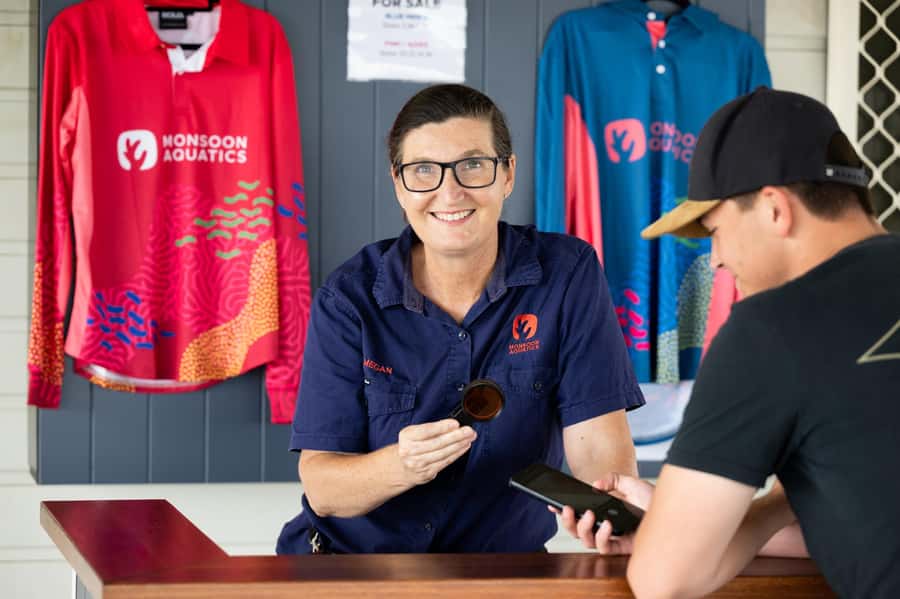
At $22 per person, this is a modestly priced guided experience. The tour lasts one hour, so you are paying for focused access to a specialist facility rather than a half-day outing.
I think the price works especially well for visitors who want something different from beaches, lookouts, and standard attractions. You get a guided explanation, access to a working coral farm, a feeding demonstration, and an introduction to reef restoration.
The value is less clear if you want a large aquarium experience. A conventional aquarium may offer more dramatic displays, larger fish tanks, and more obvious entertainment. Monsoon Aquatics gives you a closer look at the production and care side of marine conservation.
For families, the cost is also easier to justify because the tour can serve both educational and sightseeing purposes. Older children can ask questions about animals and ecosystems, while adults gain a more realistic understanding of how reef support work happens.
Onsite, you can also find Bundaberg Brewed Drinks, local macadamias, and a gift shop. These are useful extras before or after your tour, though food and drinks cannot be taken into the tour area.
Planning your visit to the Port of Bundaberg
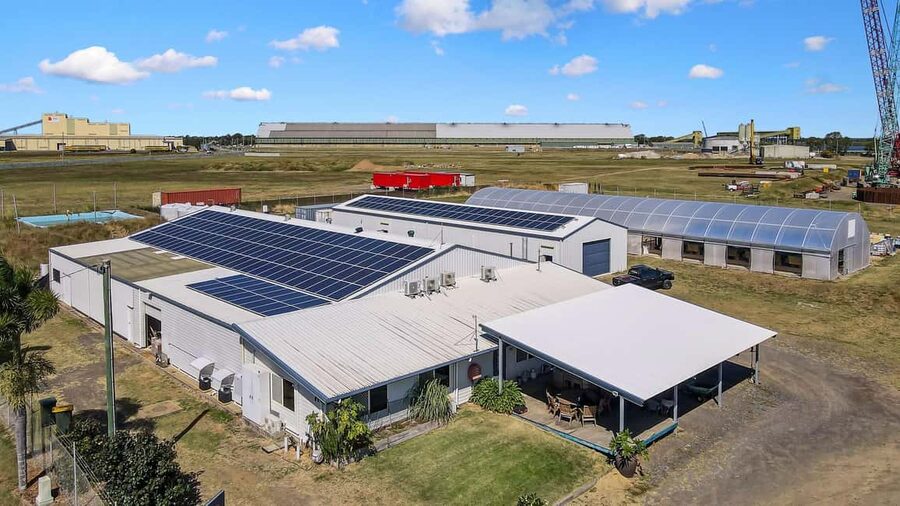
Allow enough time to reach the farm from central Bundaberg. The drive is about 20 minutes, and parking is available onsite for cars and RVs.
Caravan parking is available outside the gate. Use Apple Maps or Google Maps rather than relying on an older car GPS, since outdated systems may direct you to the wrong address.
Tours operate throughout the year, in rain or shine. That makes this a handy wet-weather option, especially when outdoor plans around Bundaberg are less appealing.
Wear closed-toe shoes with good grip. Non-slip footwear is required because some floors can be slippery, and open-toe shoes or bare feet are not permitted.
The farm is wheelchair accessible, but the footwear rule still applies. If you have access needs, it is sensible to consider the combination of wheelchair accessibility and potentially slippery floors when planning your visit.
The meeting point is the veranda, so arrive ready to check in there rather than looking for a separate visitor centre or aquarium entrance.
Is this tour good for children?
The answer depends on the child. The tour can work well for school-age children who enjoy animals, questions, or hands-on science. Guides aim to explain the subject in a way that children can understand, and the clownfish collection gives families a familiar point of interest.
Very young children may find the experience slower. Much of the tour involves looking at coral in long tanks, and this is a working farm rather than a heavily designed entertainment venue.
I would describe it as a good family learning activity, not a guaranteed hit for every age group. If your children can spend an hour listening, looking closely, and asking questions, they are more likely to enjoy it.
Adults should also resist the urge to judge the tour only by the size of the tanks. Its appeal comes from access to the growing process and the chance to see how coral is cared for before it can contribute to a reef.
Who should book Monsoon Aquatics?
I would recommend this tour to reef lovers, aquarium fans, families with curious older children, and anyone interested in conservation. It also suits visitors looking for a short Bundaberg activity that works in poor weather.
The tour is a particularly good choice if you want to support a working project rather than simply view finished displays. Your admission helps support coral reproduction, and the experience gives you a clearer picture of the practical work behind reef restoration.
I would think twice if your main goal is to see large tanks filled with colourful fish. You may still enjoy the clownfish, but the tour’s heart is the coral farm, the growing process, and the explanations from the guide.
The strong rating of 4.9 from 25 bookings fits the experience’s main strengths: clear explanations, enthusiastic guides, and a subject that feels useful rather than purely decorative. The guide’s ability to answer questions and speak to children is especially important because the subject could otherwise feel technical.
Booking, cancellation, and practical flexibility
The tour lasts one hour, with starting times based on availability. You can cancel up to 24 hours before the activity for a full refund.
A reserve-now, pay-later option is also available, which helps if your Bundaberg schedule may change. I would still check the available start time before arranging other plans, since the tour has a set duration and operates at the farm rather than from central Bundaberg.
The experience is guided in English. Bring closed-toe non-slip shoes and, if needed, water only. Leave other drinks and all food behind for the duration of the tour.
Should you book this coral farm tour?
Book it if you want a short, affordable, educational look at how coral is grown and supported. The combination of 70,000 corals, 200 marine species, a feeding demonstration, reef restoration research, and clownfish makes the hour feel focused but varied.
Skip it if you expect a traditional aquarium with enormous display tanks and constant fish activity. This is a working coral farm, and that means some of the most valuable moments are quiet ones, spent looking at coral fragments and listening to the guide explain how they develop.
For me, the best reason to go is the honest behind-the-scenes view. You leave not only having seen beautiful marine life, but also understanding that reef care involves patient, repeated work. At $22, that is a useful lesson and a worthwhile Bundaberg stop.
FAQ
Where is Monsoon Aquatics Coral Farm located?
The farm is at the Port of Bundaberg on the Burnett River, about 20 minutes from the heart of Bundaberg.
How long does the guided tour last?
The guided tour lasts one hour.
How much does the tour cost?
The listed price is $22 per person.
What can I see during the tour?
You can see more than 70,000 corals and around 200 marine species from around Australia’s coastline. The tour also includes coral feeding demonstrations, information about cultivation and reef restoration, and a clownfish collection.
Is the tour suitable for children?
The tour is suitable for families, and guides explain the subject in language children can understand. Very young children may find the working farm setting less engaging than a traditional aquarium.
What should I wear?
You must wear closed-toe, non-slip shoes. Open-toe shoes and bare feet are not permitted because some floors may be slippery.
Can I bring food and drinks?
Food and drinks are not allowed on the tour. You may bring water only. Fresh Bundaberg Brewed Drinks, local macadamias, and a gift shop are available onsite.
Just added around Australia
- Morning Cruise on the Murchison River in Kalbarri (April to Nov)★ 5.0 · 91 reviews
- Kalbarri Rock Lobster Tours★ 5.0 · 54 reviews
- Kalbarri Sunset & Coastal Cliff Cruise★ 5.0 · 59 reviews
- Kalbarri Whale Watching Tour Guided★ 5.0 · 35 reviews
- Kakadu National Park Wildlife & Ubirr Rock Art Tour from Darwin★ 4.5 · 101 reviews
- Jervis Bay Whale Watching Tour★ 4.5 · 353 reviews
- Arnhem Land Yingana Injalak Hill Full Day Tour from Jabiru★ 5.0 · 132 reviews
- Jabiru 30 minute Scenic Flight★ 5.0 · 68 reviews
Farms, compared.

Amazing Yarra Valley Wine Tour + Chocolate, Farm Fresh, Gin
Read our review →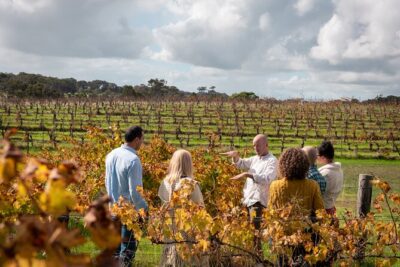
Hidden Gems: Boutique Full-Day Wine, Farm & Lunch Tour
Read our review →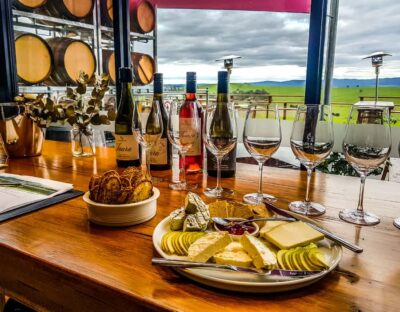
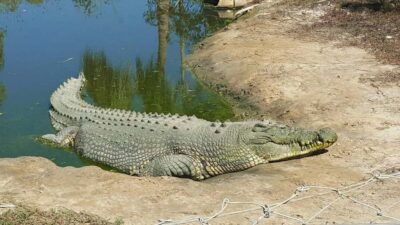
Rockhampton: Koorana Crocodile Farm Guided Tour
Read our review →
Hidden Gems Margaret River: Authentic Wine & Farm Experience
Read our review →
Incredible Islands Tour – Horizontal Falls & Cygnet Bay Pearl Farm
Read our review →
Cygnet Bay Pearl Farm Behind-the-Scenes Tour & Live Harvest
Read our review →
Barossa & Maggie Beers Farm (4 wine Tastings & Lunch included)
Read our review →Browse the lists this tour appears in