
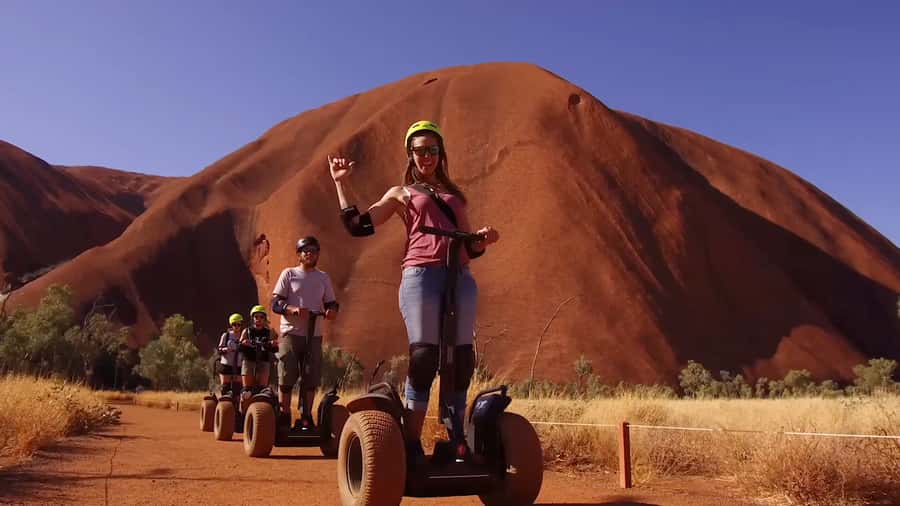
Reviewed · ULURU & OUTBACK TOURS
Uluru Base Segway Tour at Sunrise
Uluru looks most dramatic when the first light moves across its red walls, and this tour gives you a lively way to see the whole monolith before the heat builds. You ride a Segway around the base, then walk to Mutitjulu Waterhole, where Aboriginal culture, rock art, water, and quiet bush setting come together. The full circuit is the main prize.
I like the patient Segway instruction, especially for first-timers, and I like the small groups, which leave room for questions. Guides such as Charlie, Betty, Sammy, Sye, and Harley have been praised for mixing cultural stories with geology and practical help. The catch is the early start, the extra $38 national park fee, and the fact that sunrise depends entirely on the weather.
In This Review
- Key points to know before booking
- Why a Segway works so well at Uluru
- The early pickup and first light at Uluru
- Segway training before the main ride
- Mutitjulu Waterhole and the Kuniya area
- The 2.5-hour ride around Uluru’s base
- Culture, geology, and respectful guiding
- Weather, heat, and the wet-weather plan
- Is $143 a fair price?
- Who will enjoy this Uluru tour most?
- Should you book the Uluru Base Segway Tour?
- FAQ
- How long does the Uluru Base Segway Tour take?
- What does the itinerary include?
- Is breakfast included?
- Do I need to bring a national park ticket?
- What should I wear and bring?
- Can children or people over 65 join?
Key points to know before booking

- A full Uluru circuit by Segway: Cover the base faster than walking, with stops for stories, views, and photographs.
- Mutitjulu Waterhole on foot: Reach one of Uluru’s most important cultural places during a guided walk from Kuniya carpark.
- Strong training for beginners: The practice area can feel harder than the actual route, so do not panic if your first few minutes feel awkward.
- Small groups of up to 12: The format makes it easier to hear the guide and ask questions.
- Breakfast may be included: The spread can include muffins, croissants, jam, muesli, tea, coffee, and hot chocolate, depending on the option you book.
- Strict physical rules: You must be able to ride a bike, wear closed-toe shoes, and stay within the stated age and weight limits.
Why a Segway works so well at Uluru
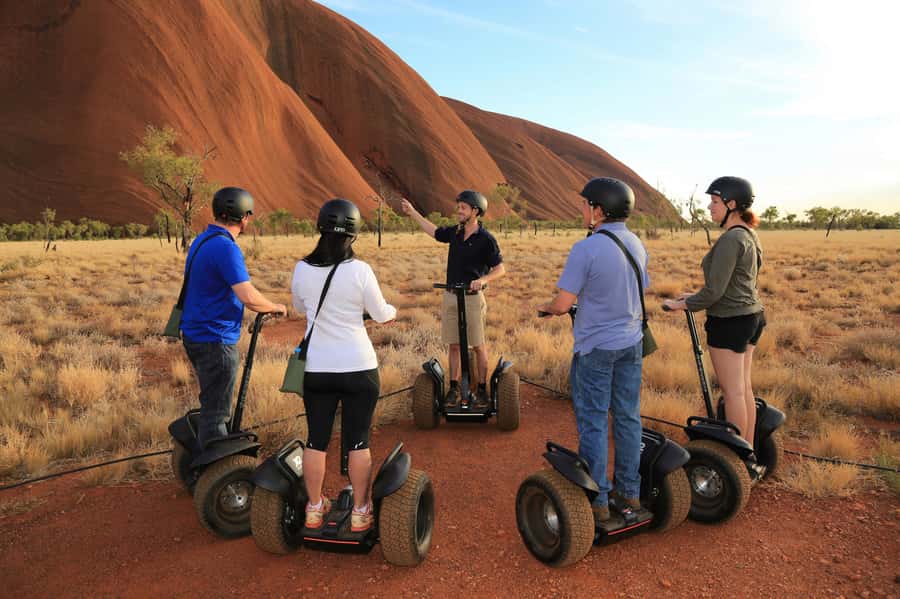
Walking around Uluru gives you time to notice small details, but the complete base route is a serious distance, especially once the sun is up. A Segway lets you cover more ground with less effort while keeping you outside, close to the rock, and quiet enough to hear your guide.
That balance matters. You are not sealed inside a bus looking through glass, and you are not spending the entire morning on foot. The machine handles much of the forward motion, leaving you free to look at the changing rock surfaces and the wide Central Australian setting.
The ride is also quieter than a motor vehicle. You move from one section of the base to another without engine noise, then stop to hear about Anangu culture, plants, animals, geology, and the European story of the area.
This is not a thrill ride. The pace is controlled, and the purpose is sightseeing. You will spend time standing on the Segway, so your feet may become sore. Still, several people who had never used one found the machines easier than expected after training.
More Uluru & Outback Tours in Uluru
- Uluru: Field of Light Sunrise Tour with Hot Drinks
★ 4.6 · 572 reviews - Uluru 15-Minute Helicopter Experience
★ 4.9 · 548 reviews - Yulara: Uluru & Kata Tjuta 25-Minute Helicopter Experience
★ 4.8 · 536 reviews
The early pickup and first light at Uluru
The tour lasts about five hours, including transport. Pickup is available from Ayers Rock Campground, Desert Gardens Hotel, Outback Pioneer Bar and Bottle Shop, and Sails in the Desert, with return to those same resort locations.
The bus ride to Uluru takes about 30 minutes. The schedule then allows roughly 45 minutes at the rock for sunrise and a light breakfast if you selected that option.
This is an early morning by any standard. You may be leaving your hotel around 4:30 a.m., depending on the seasonal start time. That makes the cool air welcome, but it also means you should prepare your clothes the night before.
Sunrise is worth the effort, but do not book this only for a guaranteed red-and-gold show. Clouds or rain can soften the effect, and one morning may produce only patches of changing color. The tour still has value in poor conditions, but the sunrise portion is naturally weather dependent.
In cooler months, bring serious layers. One account describes temperatures around 2 degrees Celsius, with multiple pairs of warm trousers, thermals, fleece, and a jacket needed against the wind. In hotter months, a cap, sunglasses, a sleeved shirt, and at least one litre of water per person are essential.
If breakfast is included, it gives you a useful pause before the ride. The spread has included warm croissants, muffins, muesli, jam, tea, coffee, and hot chocolate. It is simple rather than a full cooked meal, but it is more than a token snack and helps on such an early start.
Segway training before the main ride
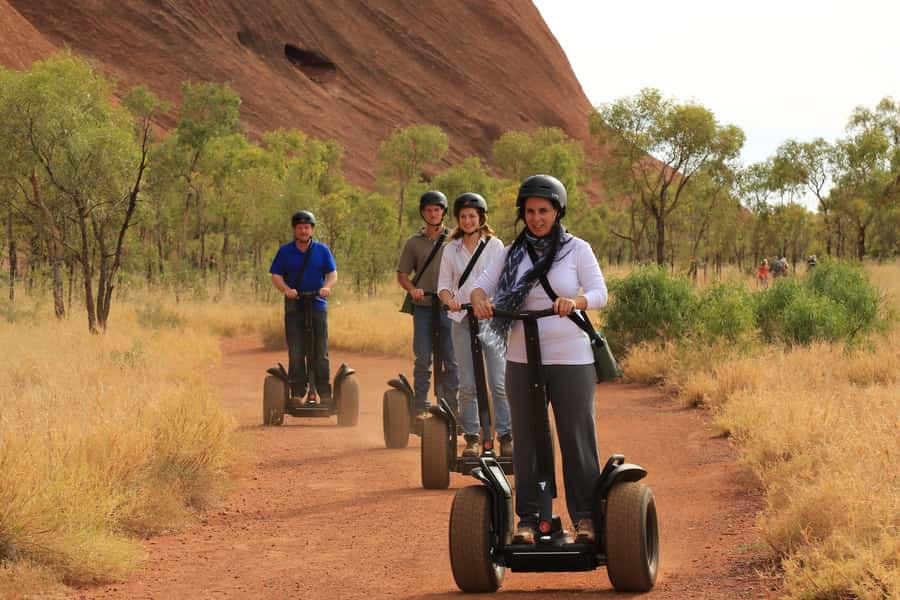
After arriving at the base area, your guide gives a safety briefing and takes you through a practice session. This is an important part of the tour, not a box to tick before the real activity.
You learn how to move, stop, turn, and control the Segway before setting off. The machines respond to shifts in your balance, so the first few minutes can feel strange. The practice course may even seem more difficult than the actual route. Once you are moving in a straight line on the tour, many beginners find it much easier.
The guides deserve particular credit here. Names attached to especially good instruction include Sammy, Lisa, Sye, Nick, Danielle, Jess, and Charlie, though your guide will depend on the day. The repeated theme is patience, calm correction, and enough time for nervous riders to gain control.
Do not treat the training as optional. Pay attention to stopping and turning, and tell the guide if you are unsure. A confident rider has more attention left for the rock, the stories, and the people around the group.
You will need closed-toe shoes. Flip-flops and other open-toed footwear are not accepted. Helmets and padding have been provided, and the equipment has been described as well maintained.
Mutitjulu Waterhole and the Kuniya area
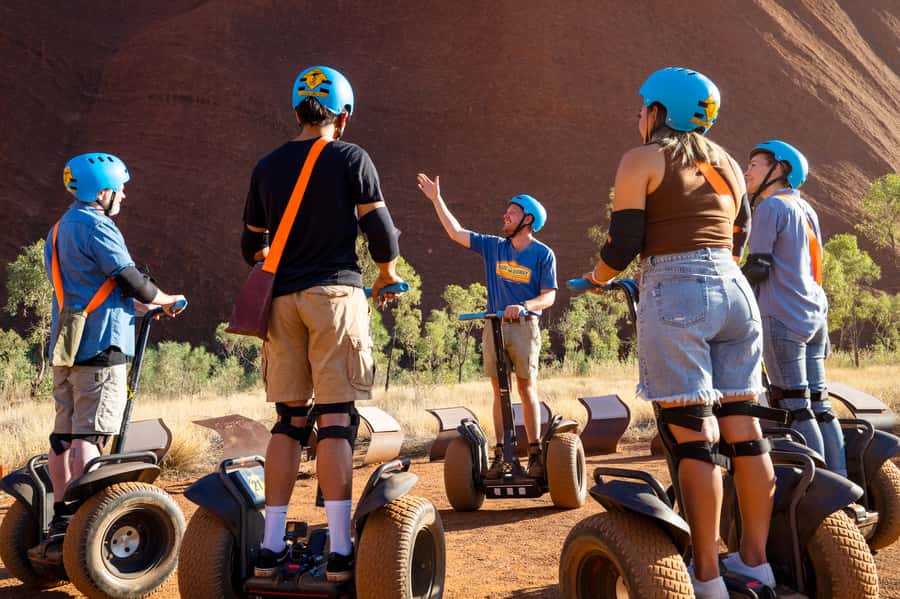
The guided walk to Mutitjulu Waterhole is one of the most meaningful parts of the morning. It begins around Kuniya carpark, at the base of Uluru, and takes about 30 minutes.
The waterhole gives you a different view of Uluru from the broad faces seen on the Segway circuit. Here, the focus shifts to water, shelter, Aboriginal culture, and the ways people have read and used this place over a very long period.
Your guide explains local Anangu stories and the significance of the area. The tour also brings together details about ancient drawings, rock formations, plants, and animals. The tone matters: this is a cultural place, not merely a scenic stop for a quick photograph.
The short walk is manageable for most suitable participants, but the ground may be uneven and the conditions can change after rain. The operator may use a wet-weather program when conditions affect the riding route. In one such case, the Segway portion was shortened or replaced, yet the walking program still reached places that would not have been seen on wheels.
Keep your camera ready, but listen first. The value of Mutitjulu Waterhole is not only the view. It is the explanation of why this particular cleft, pool, and rock shelter matter.
More uluru & outback tours in Yulara:
- Yulara: Uluru Sunrise and Kata Tjuta Day Trip by Bus
★ 4.5 · 469 reviews - Uluru: Sacred Sites & Sunset Tour with Wine & Cheeseboard
★ 4.5 · 450 reviews - From Yulara: Uluru Tour and Sunset BBQ
★ 4.6 · 320 reviews - Best of Uluru – Segway and Walking Tour
★ 4.8 · 204 reviews
The 2.5-hour ride around Uluru’s base
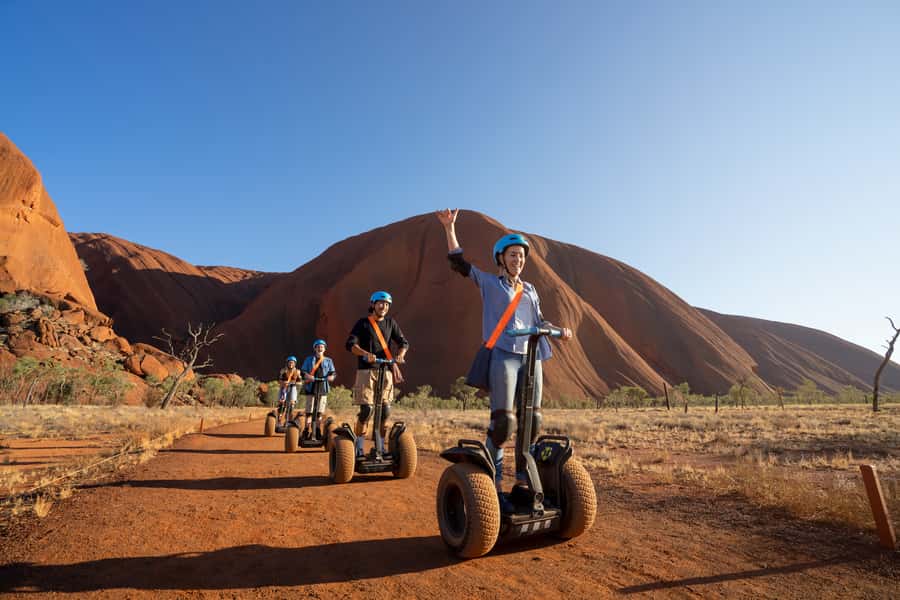
The main Segway ride lasts about two and a half hours. You travel around the full base, stopping at selected points while the guide explains what you are seeing.
This is where the tour earns its price for many people. A complete walk around Uluru can take much longer and demands more energy, particularly in warmer weather. The Segway lets you see the entire circuit and still leaves part of the day free for another activity at Ayers Rock Resort.
Expect a mix of riding and standing stops. You may hear about the formation of Uluru, the rock’s layers and weathering, local flora and fauna, Anangu traditions, and European contact. The strongest guides, including Charlie and Betty in past groups, have been praised for connecting those subjects rather than delivering a string of disconnected facts.
The stops are useful because Uluru changes as you move around it. Different walls, caves, grooves, shadows, and folds become visible from different angles. The rock is not one flat red surface. Its textures and colors shift with the sun, weather, and distance.
The ride also gives you a good sense of scale. From one viewpoint, Uluru can feel like a single giant object. Moving around its base shows how much the surrounding formations vary and how long the circuit really is.
One small limitation is that some people would prefer more frequent stops for photos. The guide has to balance scenery, safety, timing, and group control, so this is not a free-form photo tour. If photography is your main goal, you may want a separate visit to Uluru at another time of day.
Culture, geology, and respectful guiding
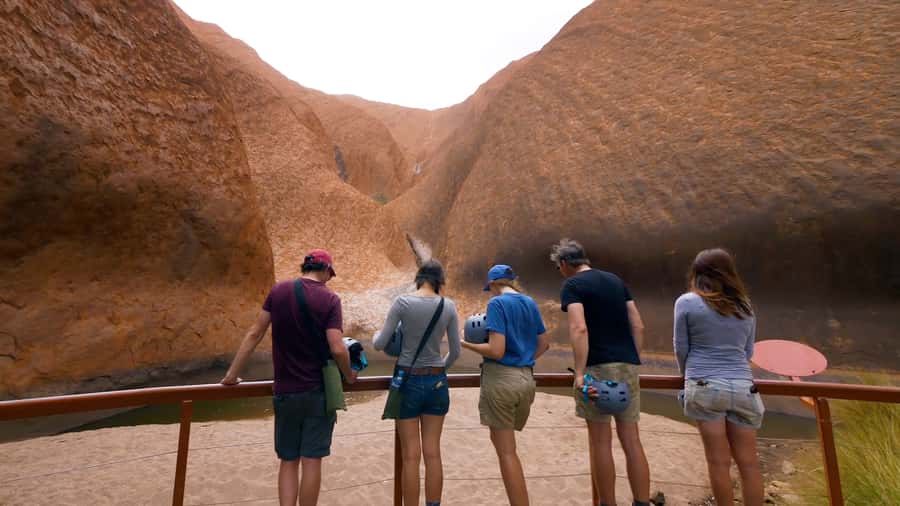
The tour is at its best when the guide explains Uluru as a living cultural place, not just a famous natural attraction. Anangu culture is central to the visit, and the guides are expected to handle that material with care.
You will hear about traditional stories, sacred areas, and the connection between people and country. The information is presented alongside geology and local natural details, giving you a fuller understanding of why Uluru matters.
The European history of the area is also included. That broader view helps place the rock within the story of modern Australia without pushing Aboriginal culture to the side.
Small groups make a real difference. With a maximum of 12 people, you have a better chance of hearing clearly and asking a question without holding up a large crowd. The guide can also watch how each person is handling the Segway, which is useful during training and on the route.
English is the live guiding language. Audio support is listed in French, German, Italian, Spanish, Chinese, and Japanese. If you need language assistance, check exactly how that audio option works when booking, since the guide-led commentary itself is in English.
Weather, heat, and the wet-weather plan
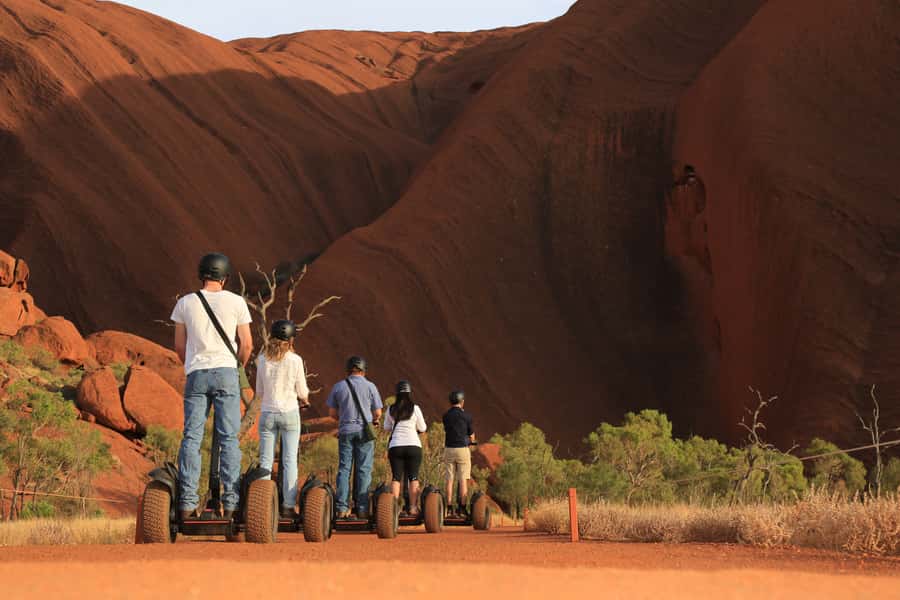
Uluru weather can change the shape of this experience. Rain may require a wet-weather track, and in some conditions the Segway circuit may be cancelled or replaced with more walking. One such morning still included the rock and key sights, with a partial refund when the planned ride could not go ahead.
That policy detail tells you something practical: the operator has a backup approach, but the exact experience is not guaranteed in difficult conditions. Ask locally if the forecast looks poor, especially if the sunrise matters to you. One past participant expected a confirmation but received no direct update, so do not assume bad weather means the company will call you.
Heat is the other concern. The early timing is a major advantage in warmer months, when walking around Uluru later can be hard going. Bring water even if breakfast is included. You need at least one litre per person, plus sun protection.
The tour is not suitable for pregnant people, wheelchair users, people with back problems, recent surgery, certain medical conditions, visual impairment, or anyone unable to ride a bike. Children under 12 cannot join. The recommended age range is 12 to 55, and participation is discouraged for people over 65 because of fall risk. There is also a maximum weight of 260 pounds, or 118 kilograms.
These limits are firm for good reason. A Segway is stable once you understand it, but it still demands balance, attention, and the ability to react.
Is $143 a fair price?
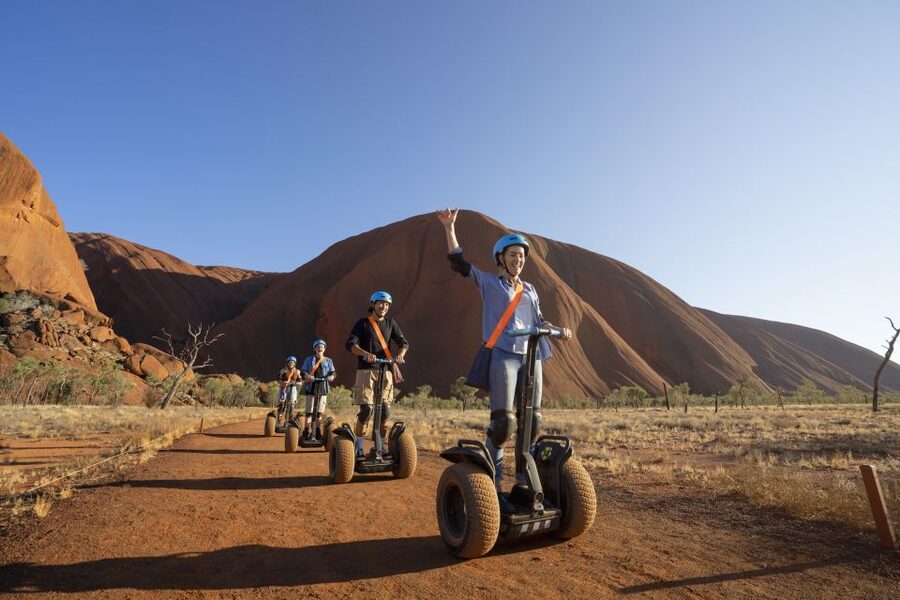
The listed cost is $143 per person, before the Uluru-Kata Tjuta National Park entry ticket of $38 per adult. That puts the basic adult total at $181, unless you already hold a valid park ticket or the pricing arrangement differs at checkout.
That is not a cheap morning, especially for a family of four. The value comes from the amount packed into five hours: resort transfers, sunrise time, Segway instruction, a full-base ride, a guided walk to Mutitjulu Waterhole, and breakfast if selected.
I would compare it with the effort and time required to explore the base independently. You would still need park entry, transport, water, and a plan for the walking route. The tour adds a trained guide, equipment, cultural interpretation, and the chance to cover the full circuit without spending the morning on foot.
For a solo visitor or couple who want an active signature experience, the price is easier to justify. Families should calculate carefully, since the total rises quickly and children under 12 cannot participate.
Free cancellation up to 24 hours before departure and reserve-now, pay-later booking make it easier to keep plans flexible. Those terms are useful in a region where weather and travel schedules can change, but read the booking conditions before committing.
Who will enjoy this Uluru tour most?
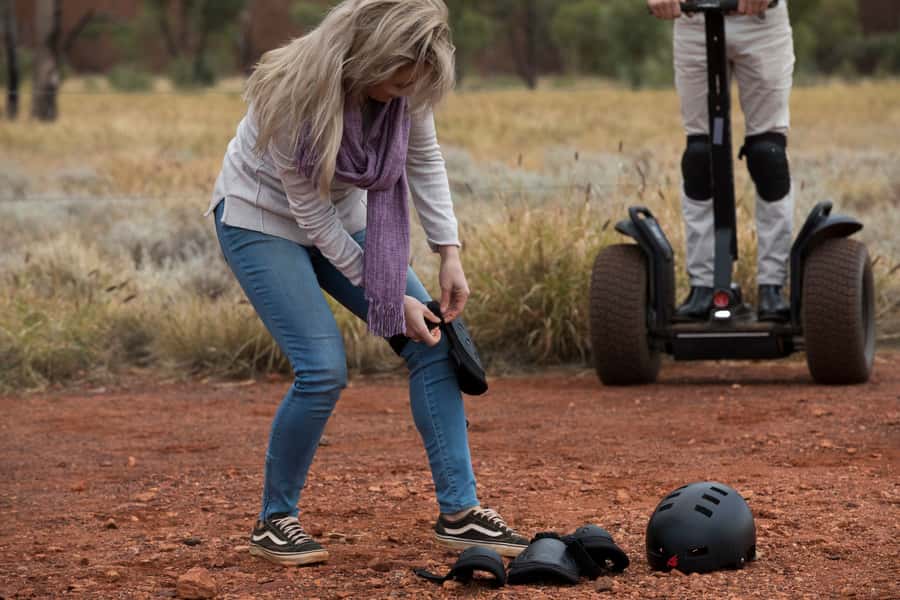
I would choose this for a first visit to Uluru if you want a strong overview without a long base walk. It suits active adults, older teenagers who meet the rules, and anyone curious about both Aboriginal culture and the geology of the rock.
It is particularly useful in the hotter months. The early start avoids the worst heat, and the Segway reduces the effort of covering the full base.
It also suits people who are nervous about Segways but willing to learn. The training receives repeated praise, and the practice section is designed to build control before the group leaves. You do not need prior Segway experience.
I would look elsewhere if you want a slow, private photography outing, dislike early mornings, have balance or mobility concerns, or are mainly interested in watching an uninterrupted sunrise. You should also reconsider if the extra park fee pushes the total beyond your budget.
Should you book the Uluru Base Segway Tour?
Book it if you want to see all of Uluru’s base in one morning, learn the cultural meaning of the area, and enjoy a hands-on way to move through the outback. The combination of patient instruction, small groups, Mutitjulu Waterhole, and strong guiding gives you more than a simple ride.
Before booking, check the sunrise time, forecast, pickup hotel, park entry cost, breakfast option, and physical requirements. Pack layers or sun protection according to the season, closed shoes, and at least one litre of water.
The best reason to choose this tour is practical: you cover a lot of ground while still feeling close to Uluru. The main reasons to hesitate are the total cost, the very early start, and weather-related changes. For the right person, it is one of the most efficient and enjoyable ways to meet the rock.
FAQ
How long does the Uluru Base Segway Tour take?
The tour lasts five hours, including hotel transfers, sunrise time, training, the Segway ride, and the guided walk to Mutitjulu Waterhole.
What does the itinerary include?
The schedule includes about 30 minutes of transport to Uluru, roughly 45 minutes for sunrise and a picnic, Segway training, a 2.5-hour ride around the base, a 30-minute guided visit to Mutitjulu Waterhole, and return transport.
Is breakfast included?
A light breakfast is included only if you select the relevant option. It may include muffins, croissants, jam, muesli, tea, coffee, and hot chocolate.
Do I need to bring a national park ticket?
Yes. Every participant must bring a Uluru-Kata Tjuta National Park entry ticket. The listed adult price is $38.
What should I wear and bring?
Wear closed-toe shoes, a cap, sunglasses, and a shirt with sleeves. Bring at least one litre of water per person. In cold weather, bring several warm layers.
Can children or people over 65 join?
Children under 12 cannot participate. The recommended age range is 12 to 55, and people over 65 are discouraged from joining because of the increased risk of injury from a fall.
More Morning in Yulara
- Kata Tjuta: Small Group Sunrise Tour with Picnic Breakfast
★ 4.7 · 113 reviews - Sydney: Harbour Sunrise Kayak Tour
★ 5.0 · 1,899 reviews - Sydney: Morning or Afternoon Harbour Sightseeing Cruise
★ 4.7 · 1,520 reviews - Morning World Heritage Cruise on the Gordon River from Strahan
★ 5.0 · 1,193 reviews
Just added around Yulara
- Best of Uluru – Segway and Walking Tour★ 4.8 · 204 reviews
- King’s Canyon: 15-minute Scenic Helicopter Tour★ 4.9 · 78 reviews
- Kata Tjuta: Small Group Sunrise Tour with Picnic Breakfast★ 4.7 · 113 reviews
- Yulara: Uluru and Kata Tjuta Sunset Helicopter Tour★ 4.9 · 148 reviews
- From Yulara: Uluru Tour and Sunset BBQ★ 4.6 · 320 reviews
- Uluru: Uluru Base Segway Tour★ 4.6 · 112 reviews
- From Yulara: 3-Hour Small Group Kata Tjuta Afternoon Tour★ 4.7 · 101 reviews
- Uluru: Sacred Sites & Sunset Tour with Wine & Cheeseboard★ 4.5 · 450 reviews
Uluru & Outback Tours, compared.


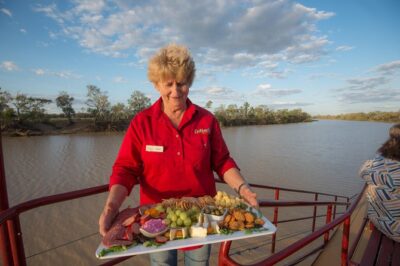
Drover’s Sunset Cruise includes Smithy’s Outback Dinner and Show
Read our review →
Ayers Rock Day Trip from Alice Springs Including BBQ Dinner
Read our review →
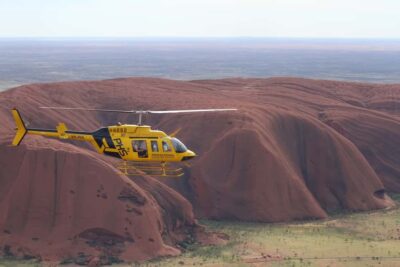
Uluru & Kata Tjuta 25-Minute Helicopter Experience
Read our review →
Browse the lists this tour appears in