

Reviewed · ULURU & OUTBACK TOURS
Uluru: Uluru Base Segway Tour
Uluru is enormous, and seeing its full base on foot takes time and energy. This 150-minute Segway tour lets you cover the whole circuit with very little effort, while stopping often to hear about Anangu culture, geology, plants, animals, and European contact. You get close views of the rock without the noise of a motor vehicle.
I like two things right away: the small group, limited to 10 people, and the patient training before you set off. First-time riders, including people in their 60s, have found the Segways easy to handle. The main catch is practical: you must drive yourself to Kuniya Carpark, and the national park entry fee is extra.
In This Review
- Key points at a glance
- Why a Segway works so well at Uluru
- Meeting at Kuniya Carpark
- Training before the ride
- Following the full Uluru base circuit
- Anangu culture and respectful sightseeing
- Heat, weather, and what to wear
- What the $133 price buys you
- Group size and guide quality
- Who should book this Uluru tour
- Booking details worth knowing
- Should you book the Uluru Base Segway Tour?
- FAQ
- Where does the Uluru Base Segway Tour meet?
- Are transfers from Ayers Rock Resort included?
- Is the Uluru-Kata Tjuta National Park entry fee included?
- Do I need previous Segway experience?
- What should I bring?
- Can children join the tour?
Key points at a glance
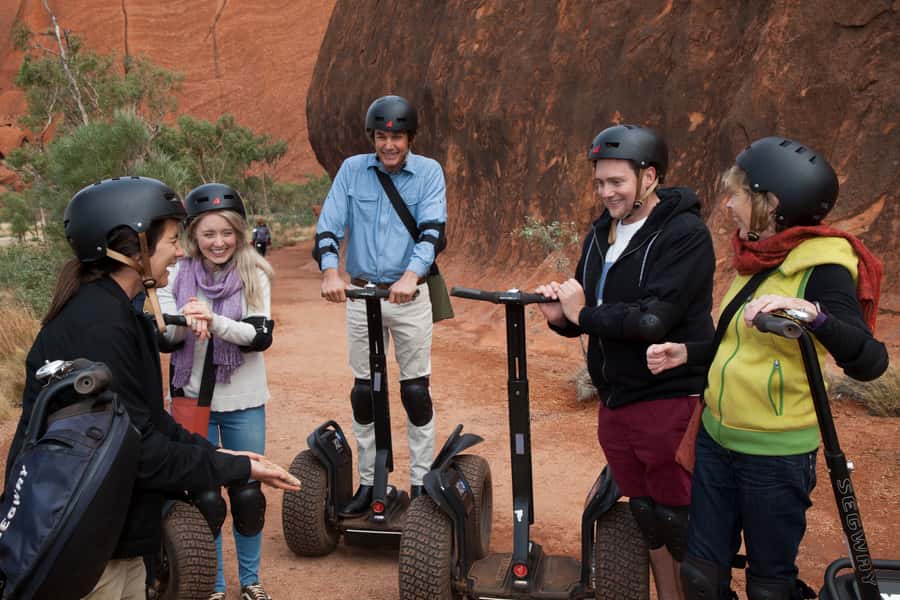
- See Uluru’s entire base: Cover the full base circuit rather than visiting only one lookout or short walking trail.
- Quiet, low-effort travel: The electric Segway makes little noise and saves your legs in the Central Australian heat.
- Strong guide-led interpretation: Expect clear explanations of Anangu culture, geology, flora, fauna, and European history.
- Beginner-friendly instruction: Training and protective equipment are included, and the machines are speed limited.
- Small-group setting: With no more than 10 participants, it is easier to hear the guide and ask questions.
- Plan your own arrival: Transfers are not included, and there is no public transport from Ayers Rock Resort to Uluru.
Why a Segway works so well at Uluru
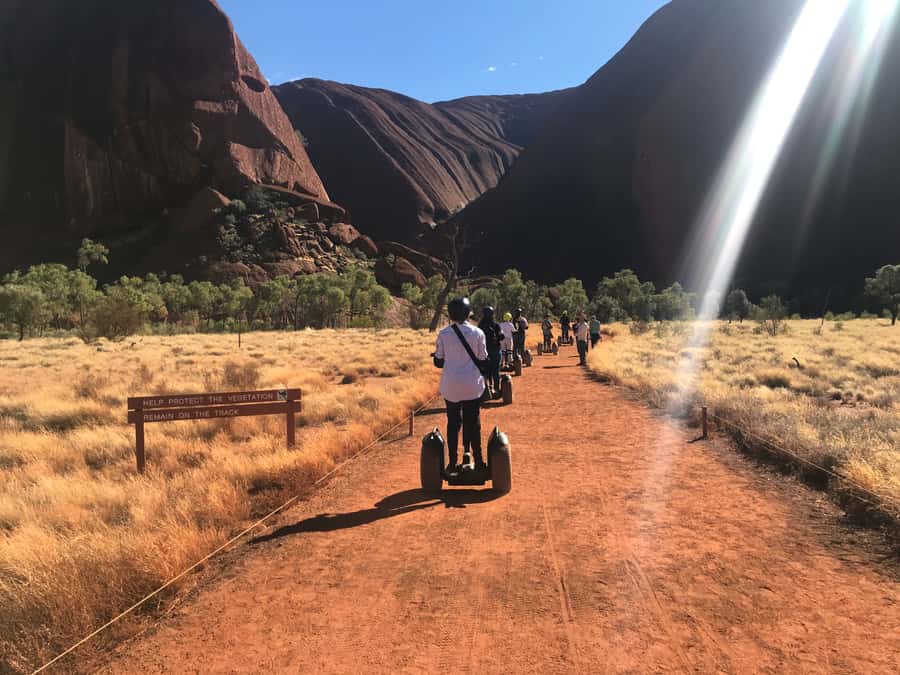
Uluru can look deceptively close from a distance. Once you reach the base, its scale becomes clearer. The rock stretches a long way, and walking the full base requires a good block of time, steady water intake, and comfort in an exposed desert setting.
The Segway solves the distance problem without turning the outing into a bus tour. You glide at a leisurely, speed-limited pace, with enough time to look around and listen. The machine is almost silent, so you hear the guide and the surrounding bush rather than an engine.
I especially like this way of moving because it keeps you outside. You are not looking through a coach window or rushing from one viewpoint to another. You remain close to the red rock, the surrounding scrub, and the changing shapes of the base.
This is not an adrenaline ride. The Segways are set up for steady sightseeing, not speed. That will please you if you want an easy outing, though anyone expecting a fast adventure may find the pace slower than expected.
More Uluru & Outback Tours in Uluru
- Uluru: Field of Light Sunrise Tour with Hot Drinks
★ 4.6 · 572 reviews - Uluru 15-Minute Helicopter Experience
★ 4.9 · 548 reviews - Yulara: Uluru & Kata Tjuta 25-Minute Helicopter Experience
★ 4.8 · 536 reviews
Meeting at Kuniya Carpark
You drive into Uluru-Kata Tjuta National Park and continue past the sunset viewing area. At the roundabout, turn right, then take the first left into Kuniya Carpark. The meeting point is at the back of the carpark.
The directions are simple once you are inside the park, but you need your own vehicle. There is no public transport to Uluru, and the distance from Ayers Rock Resort is too great for walking. That makes a rental car, private vehicle, or separate transfer essential.
Transfers from Ayers Rock Resort are not included in the $133 price. Check this carefully when planning your day, since the tour price is only one part of the outing’s cost.
You also need to pay the national park entry fee separately. The supplied booking information gives two different amounts, listing $38 per adult in one place and $25 cash per person in another. Fees can change, so confirm the current charge before you go. You can buy the pass online or at the park entry station, and you should have the required ticket or payment ready.
Training before the ride
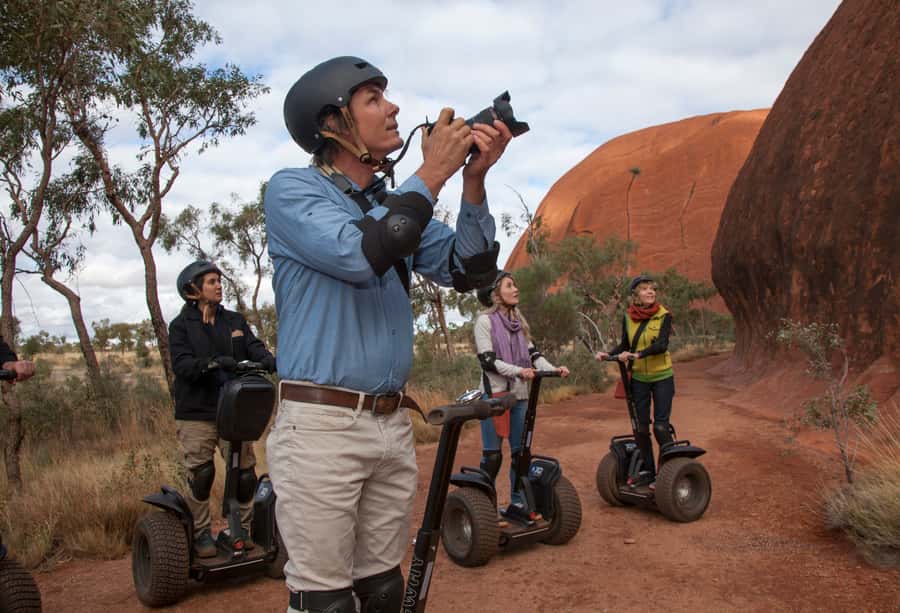
Your guide begins with a safety briefing and basic Segway instruction. You learn how to mount, balance, move forward, slow down, stop, and turn before joining the base circuit.
This training matters. A Segway responds to small shifts in your body, so it can feel unusual for the first few minutes. The guides allow practice time, and the machines are speed limited. That combination helps beginners gain control without feeling hurried.
Past guides have included Hallie, Charly, Kyle, Emma, Meghan, Meagan, and Nick. The strongest praise has consistently gone to the people leading the sessions, especially for patient instruction, friendly conversation, and clear explanations. That human element is important here. If you are nervous about your first Segway ride, tell the guide early and use the practice time fully.
You do not need previous Segway experience, but you must be able to ride a bicycle. Riders need to weigh between 45 and 117 kilograms, or roughly 99 to 258 pounds. The restrictions are firm: the activity is not suitable for children under 12, people over 70, pregnant women, wheelchair users, people with visual impairments, people with back problems, recent surgery, or certain pre-existing medical conditions.
People under 18 must be accompanied by a parent or guardian. Unaccompanied minors are not allowed.
Following the full Uluru base circuit
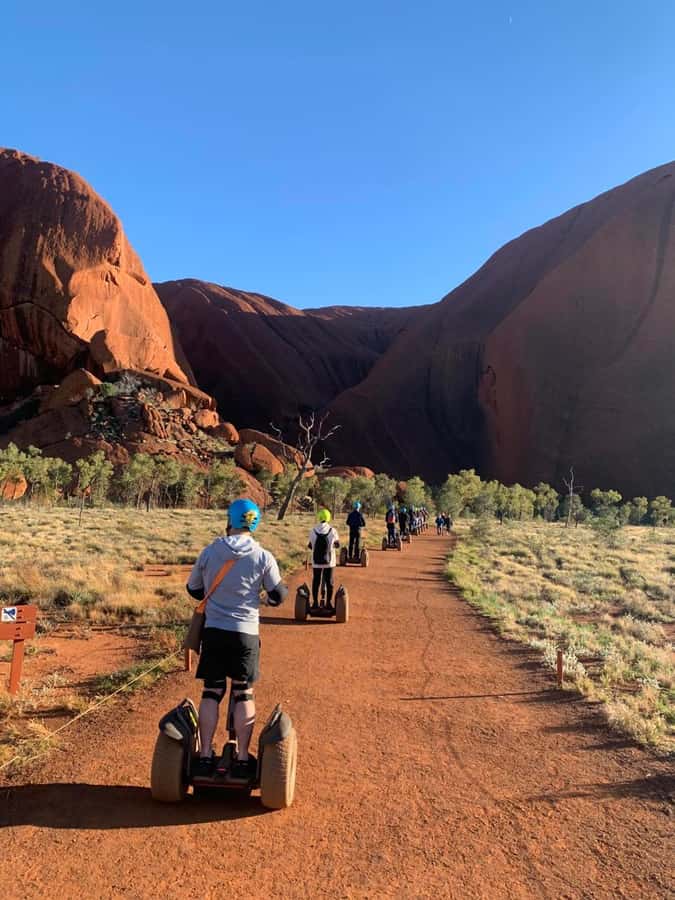
Once everyone is comfortable, the group begins the guided ride around the entire base. The tour is not described as a collection of fixed named stops, so your exact pauses can vary with the group and conditions. The structure is clear, though: ride, stop, listen, look closely, and continue.
At the base, you get a much better sense of Uluru’s form than from a distant viewing area. You can study folds in the rock, changes in color, sheltered sections, and the way the red surface meets the pale desert ground. The guide provides the setting and helps you notice details that are easy to miss when you are simply taking photographs.
The outing combines several subjects. You hear about Anangu culture and the significance of Uluru, along with local plants and animals, the rock’s geology, and the area’s European history. The cultural explanations are a key reason to choose a guided tour rather than simply circling the rock alone.
A guide can also give context to the places you pass. That does not mean every part of Uluru becomes a lecture. The best moments are likely to be short talks at useful stopping points, followed by quiet riding and time to take in the view.
One useful point for geology fans: make a point of asking questions. The tour includes geology, but one piece of feedback specifically wanted more attention on how the rock formed. If geological detail is your main interest, say so during the ride. The cultural material is a major part of the tour, while the balance between geology and other subjects may depend on your guide.
More uluru & outback tours in Yulara:
- Yulara: Uluru Sunrise and Kata Tjuta Day Trip by Bus
★ 4.5 · 469 reviews - Uluru: Sacred Sites & Sunset Tour with Wine & Cheeseboard
★ 4.5 · 450 reviews - Uluru Base Segway Tour at Sunrise
★ 4.9 · 378 reviews - From Yulara: Uluru Tour and Sunset BBQ
★ 4.6 · 320 reviews
Anangu culture and respectful sightseeing
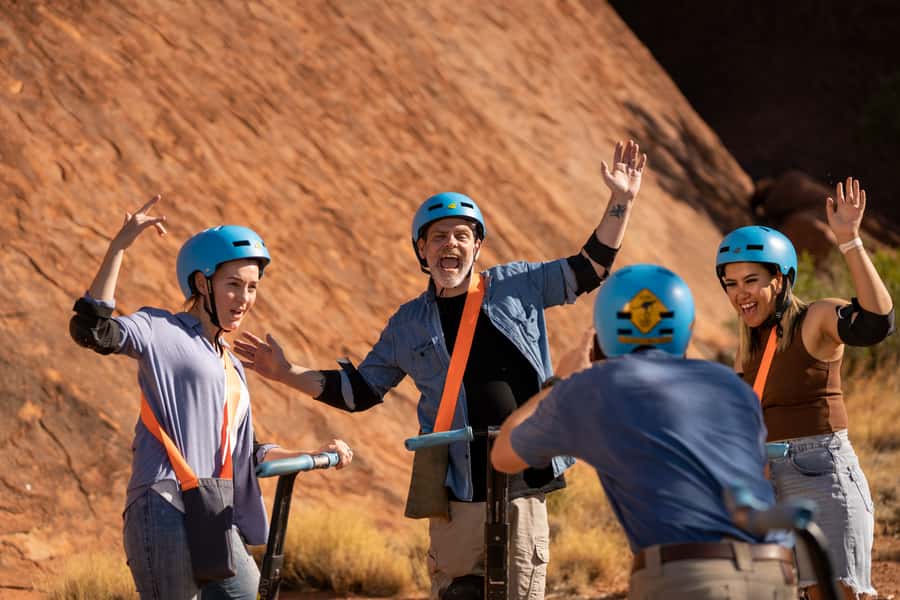
Uluru is not just a large natural feature. It is a place of great importance to the local Anangu people. A guided visit gives you a better chance of understanding that significance and of approaching the site with respect.
The tour introduces local Aboriginal culture through the guide’s explanations. That is valuable because you are not only looking at rock formations. You are learning how this place connects to living cultural traditions, stories, and the people who care for it.
The quality of this part depends heavily on the guide, and the named guides praised for their storytelling include Kyle, Emma, Meghan, Meagan, Nick, Hallie, and Charly. The most useful approach is to listen closely, avoid treating sacred places as ordinary photo stops, and ask questions politely.
The tour also covers European history. That gives you a wider picture of how Uluru came to be known, visited, managed, and interpreted in modern Australia. The two strands belong together, but they should not be confused. Aboriginal cultural significance is not simply a historical chapter to place beside geology. It remains central to the meaning of the site today.
Heat, weather, and what to wear
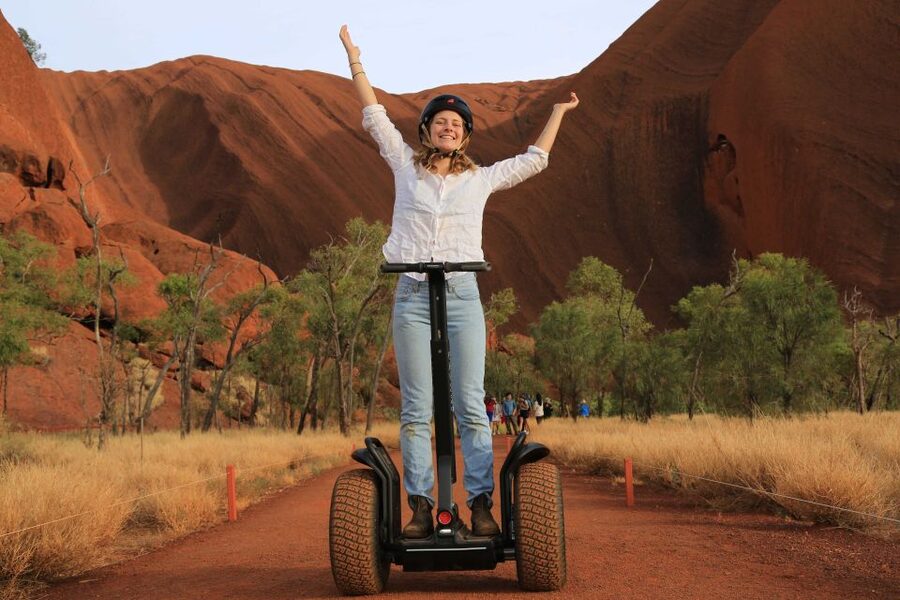
Central Australia can be hot, bright, and dry. The Segway reduces physical effort, but it does not remove your exposure to the sun. Bring at least one liter of water per person, plus a cap, sunglasses, and a shirt with sleeves.
Closed-toe shoes are required. Flip-flops are not accepted, so wear sturdy shoes before you arrive rather than hoping to change at the carpark. Comfortable clothing will help while standing and steering for the length of the tour.
Weather can change the look of Uluru dramatically. One outing took place during showers, giving the group a rare view of waterfalls and shifting colors on the rock. That kind of weather can create memorable conditions, but it also means you should be prepared to get wet.
The heat advice is not optional. One summer outing took place in 36-degree conditions, yet the rider found the tour manageable because the group was moving and not exerting itself heavily. Still, you should drink steadily and follow the guide’s instructions. A cooler day may be more comfortable, but every season has its own appeal.
What the $133 price buys you
At $133 per person, this is not a cheap way to reach Uluru. You are paying for the Segway, instruction, safety equipment, a small group, and 150 minutes of guided access around the base. You must then add your national park ticket and your transport to Kuniya Carpark.
The value depends on what you want from the visit. If you would struggle to walk the entire base, the Segway adds real value. One rider specifically chose it because walking all the way around the rock was not practical. You cover much more ground than you would on a short walk, without spending the whole time exhausted.
The tour also saves you from having to interpret the site alone. The guide connects the scenery with Anangu culture, geology, flora, fauna, and European history. That makes the price easier to justify for visitors who want context, not just a photo stop.
If you already have a car and plan to spend several days around Uluru, compare this outing with free or self-guided walks included in your wider schedule. The Segway tour is most worthwhile when you value the full base circuit, a live guide, and low physical effort.
Group size and guide quality
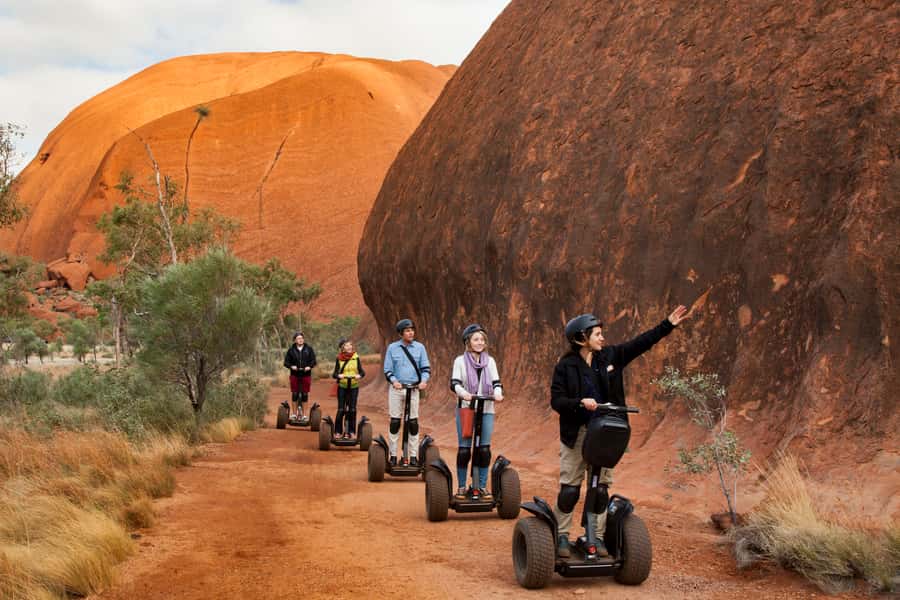
A maximum of 10 people is a good fit for this kind of activity. A smaller group makes training less chaotic, keeps the guide’s voice within reach, and allows for individual help during the first practice session.
The guide is the heart of the tour. Hallie was praised for taking care of the outing from start to finish, while Charly was singled out for making the ride enjoyable. Kyle’s storytelling about Indigenous people and his friendly pace earned special approval. Emma was noted for teaching cultural details that would be easy to miss alone.
Those names are not a promise about who will lead your departure. They do show the sort of guide-led experience the operator aims to provide. You should expect English commentary, with audio guide support listed in Spanish, Chinese, French, German, Italian, and Japanese.
The tour is generally leisurely rather than sporty. That helps mixed-age groups stay together, although children under 12 cannot join. It also means you can concentrate on the explanations and scenery instead of worrying about keeping up.
Who should book this Uluru tour
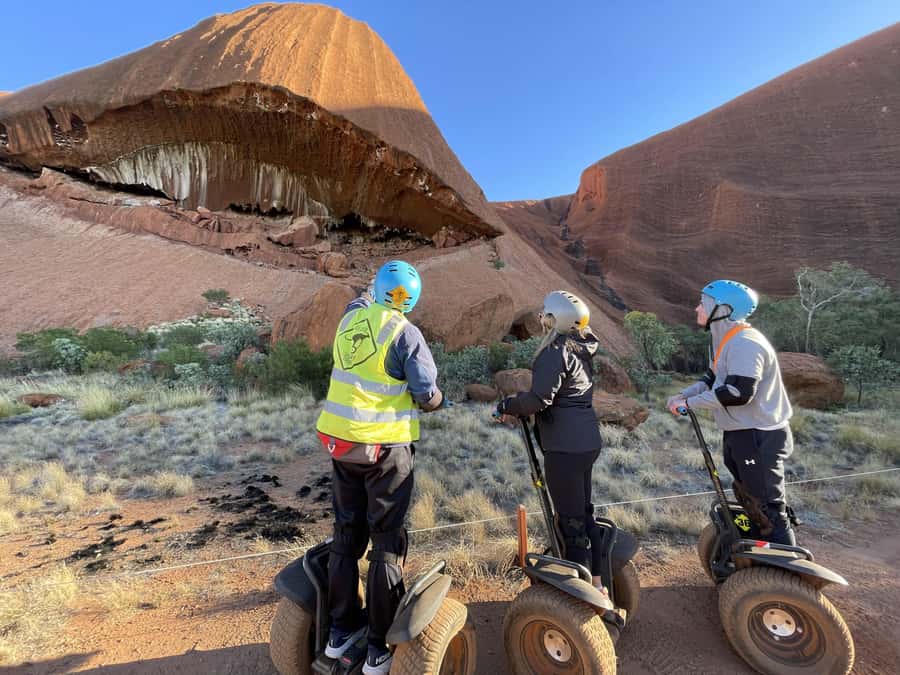
This is a strong choice for you if:
- You want to see the whole base but do not want to walk the full distance.
- You have never ridden a Segway and would like patient instruction.
- You enjoy learning about Aboriginal culture as part of a natural sight.
- You want a small group rather than a large vehicle tour.
- You are comfortable standing, balancing, and riding for 150 minutes.
- You have your own transport to Uluru.
It is less suitable if you want a fast, athletic ride, detailed geology above all else, or a completely flexible self-guided visit. It also will not work if you cannot meet the age, weight, mobility, health, or bicycle-riding requirements.
The tour can suit older riders within the stated age limit, provided they are comfortable on a bike and have no excluded medical conditions. A rider in their 60s found the Segway stable and manageable, but you should judge your own balance and stamina honestly.
Booking details worth knowing
The activity lasts 150 minutes, with starting times available according to the date you choose. English is the live tour language, and the listed audio support covers six additional languages.
Training, the Segway, and protective equipment are included. Water, appropriate clothing, the national park ticket, and transport are your responsibility.
You can cancel up to 24 hours before the activity for a full refund. The reserve-now, pay-later option also helps if your Uluru schedule is still changing, though you should still confirm the park entry requirement and driving arrangements before reserving.
Should you book the Uluru Base Segway Tour?
I would book it if your priority is seeing all of Uluru’s base with strong cultural interpretation and minimal strain. The quiet ride, small group, patient training, and guide-led stories make it a practical alternative to walking the full circuit.
I would skip it only if the $133 price plus park entry and transport stretches your budget, or if you prefer to move at your own pace. For most eligible visitors, especially first-time Segway riders and anyone worried about the heat or distance, it offers a useful mix of access, comfort, and learning.
FAQ
Where does the Uluru Base Segway Tour meet?
The meeting point is at the back of Kuniya Carpark at Uluru, Mutitjulu NT 0872, Australia. Drive into the national park, pass the sunset viewing area, turn right at the roundabout, and take the first left into Kuniya Carpark.
Are transfers from Ayers Rock Resort included?
No. You need your own transport to reach Uluru and Kuniya Carpark. There is no public transit to Uluru, and it is too far from the resort to walk.
Is the Uluru-Kata Tjuta National Park entry fee included?
No. The park entry ticket is separate. The supplied information lists $38 per adult in one place and $25 cash per person in another, so confirm the current fee before your visit.
Do I need previous Segway experience?
No. Segway training is included, and the guides provide time to practice. You must be able to ride a bicycle and meet the stated age, weight, and health requirements.
What should I bring?
Bring at least one liter of water per person, a cap, sunglasses, a shirt with sleeves, and closed-toe shoes. Flip-flops are not permitted.
Can children join the tour?
Children under 12 cannot participate. Riders under 18 must be accompanied by a parent or guardian, and unaccompanied minors are not allowed.
Just added around Yulara
- Best of Uluru – Segway and Walking Tour★ 4.8 · 204 reviews
- King’s Canyon: 15-minute Scenic Helicopter Tour★ 4.9 · 78 reviews
- Kata Tjuta: Small Group Sunrise Tour with Picnic Breakfast★ 4.7 · 113 reviews
- Yulara: Uluru and Kata Tjuta Sunset Helicopter Tour★ 4.9 · 148 reviews
- From Yulara: Uluru Tour and Sunset BBQ★ 4.6 · 320 reviews
- From Yulara: 3-Hour Small Group Kata Tjuta Afternoon Tour★ 4.7 · 101 reviews
- Uluru Base Segway Tour at Sunrise★ 4.9 · 378 reviews
- Uluru: Sacred Sites & Sunset Tour with Wine & Cheeseboard★ 4.5 · 450 reviews
Uluru & Outback Tours, compared.


Drover’s Sunset Cruise includes Smithy’s Outback Dinner and Show
Read our review →
Ayers Rock Day Trip from Alice Springs Including BBQ Dinner
Read our review →
Uluru & Kata Tjuta 25-Minute Helicopter Experience
Read our review →
Browse the lists this tour appears in