
Reviewed · HISTORICAL TOURS
Bombing of Darwin WWII Heritage Tours
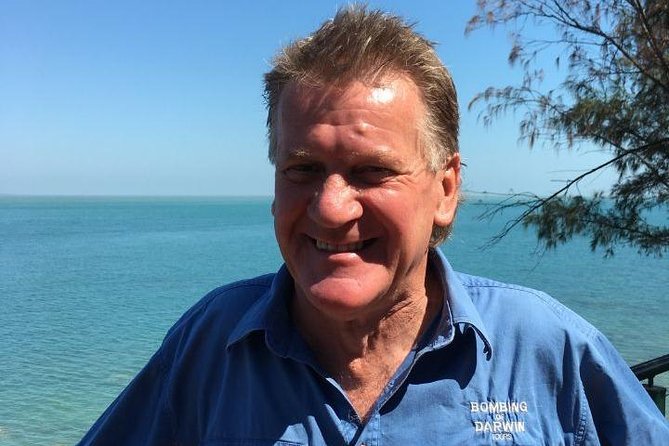
Darwin’s wartime story is not confined to a museum label. On this tour, guide Garry connects the Japanese attacks of 1942 with family memories, local places, photographs, and the city you see today. His father served in the Royal Australian Navy during World War II, several uncles were also involved, and Garry has written a book about the bombing.
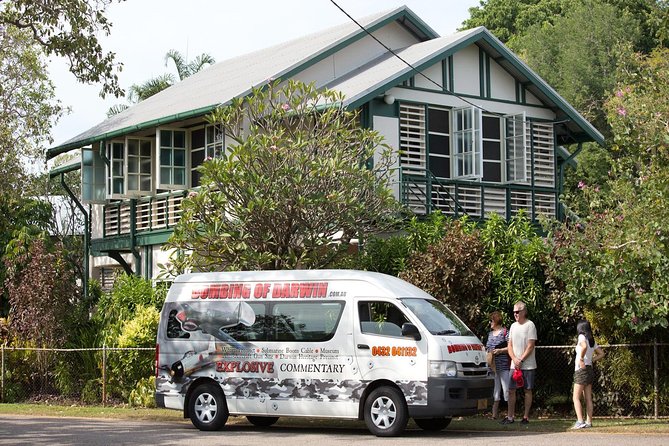
I like the personal storytelling and the useful one-hour visit to the Darwin Aviation Museum, where aircraft from several Australian conflicts help put the wartime story in a wider frame. I also like that this is a small-group outing rather than a large coach tour. The main caution is seating: although the tour can accommodate up to 11 people, one booking used a car with a cramped rear seat, which may not suit a taller or older passenger.
In This Review
- Key points to know
- Why Darwin’s 1942 attacks still matter
- Meeting Garry at 8:30 am
- Following the bombing through personal stories
- Seeing Darwin through wartime locations
- One hour at the Darwin Aviation Museum
- The guide’s style: facts, humor, and local color
- Is the $42 price good value?
- Who should book this Darwin tour?
- Booking, pickup, and cancellation details
- The bottom line: a personal way to understand Darwin
- FAQ
- What time does the Bombing of Darwin WWII Heritage Tour begin?
- How long does the tour last?
- Is pickup available?
- Is admission to the Darwin Aviation Museum included?
- How many people can join the tour?
- What is the cancellation policy?
Key points to know
- Garry’s family connection: His father and uncles served during the war, giving the tour a personal thread.
- A four-hour morning: The 8:30 am start leaves you with much of the day still free.
- Darwin Aviation Museum: Spend about one hour with aircraft linked to Australian conflicts, with admission included.
- More than the bombing: The route also helps you get your bearings around Darwin and its harbor.
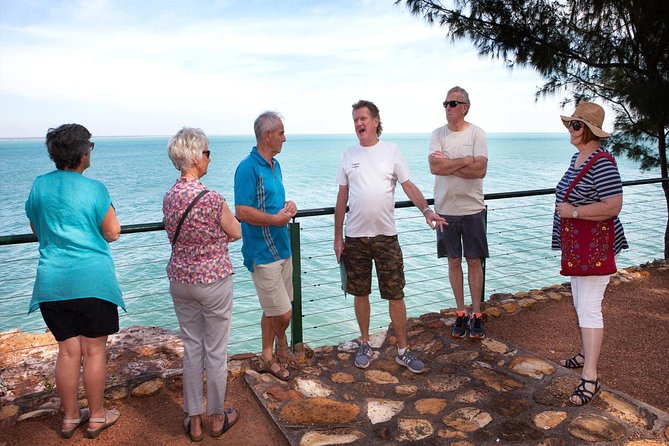
- Small-group format: A maximum of 11 people allows for questions and a more direct exchange with the guide.
- Check the vehicle: Pickup is offered, but seating can vary, so ask ahead if space or easy access matters.
Why Darwin’s 1942 attacks still matter
Darwin is often introduced as Australia’s tropical capital, a gateway to national parks and a place of big skies. Yet on February 19, 1942, it became the target of Japanese air raids. The attacks were part of the wider Pacific War and brought the conflict directly to Australian soil.
This tour focuses on that event from a local angle. Garry explains the bombing through people, places, and family stories, rather than treating it as only a list of aircraft, dates, and casualty figures. That approach matters because the bombing affected the town’s daily life, its military role, and the way the event was remembered afterward.
You should expect a blend of wartime history and a general introduction to Darwin. Garry points out modern sights along the way, so the tour can work well early in your stay. It gives you a basic map of the city while explaining why certain areas mattered during the war.
The tone is not solemn from start to finish. Garry uses humor and local stories to keep the morning moving. That will suit you if you like history with personality. If you prefer a quiet, formal military lecture, his style may feel more relaxed than expected.
A few more Darwin trips to weigh up
- Darwin History and Wartime Experience Tour
★ 5.0 · 144 reviews - Darwin Heritage Walk
★ 4.5 · 101 reviews - Darwin: Small Group 2-Hour Heritage Walk
★ 4.9 · 28 reviews
Meeting Garry at 8:30 am
The tour starts at 8:30 am and lasts about four hours. Pickup is offered, and the experience is also near public transportation, though the exact pickup arrangement should be confirmed when you book.
An early start makes sense in Darwin. You get the historical touring finished before the hottest part of the day, then have the afternoon for other plans. The timing also works well on a short visit, since you can add a museum, waterfront stop, or meal afterward.
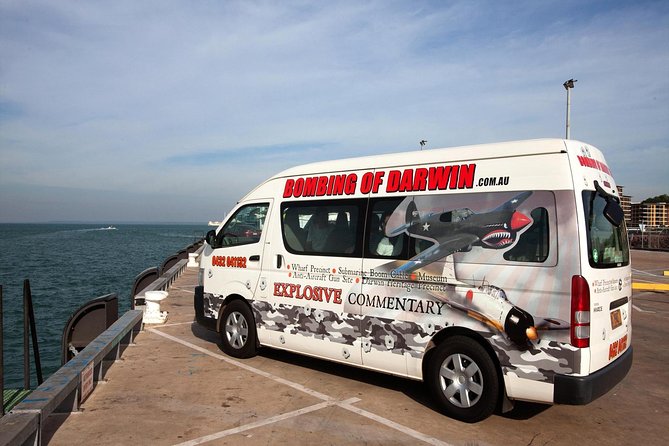
The group limit is 11 people. That is small enough for Garry to speak directly to the group and respond to questions without the distance you often get on a full-size coach. It also means the vehicle is an important part of the experience.
Do not assume that a maximum group of 11 means an 11-seat bus every time. One passenger reported being placed in a car, with a tight third seat in the rear. A six-foot-tall passenger in his late sixties found getting in and out difficult. If you need generous legroom, easy entry, or a particular seat, contact the operator before departure.
Following the bombing through personal stories
The strongest part of the tour is Garry’s narration. He has a family link to the period, and that gives him a reason to pursue details beyond the standard account. He has also written a book about the bombing, which several people bought after the tour.
You hear about the Japanese aerial attacks and the people caught up in them, but the emphasis is not only on military movement. Garry brings in individual experiences, local personalities, photographs, and stories about what happened during and after the raids. This can make the past easier to grasp than a display of dates alone.
His father’s Royal Australian Navy service and the wartime roles of other relatives form part of that connection. The result is a tour that feels rooted in Darwin rather than delivered from a generic script.
Garry also discusses what is often described as the less-public side of the bombing. Some accounts describe the event in broad terms, while local memories can reveal confusion, fear, gaps in official reporting, and the human effects of the raids. You should treat the tour as a strongly interpreted local account, not as a substitute for an academic course or a visit to every formal war memorial in Darwin.
That distinction is useful. The tour’s value comes from the way Garry explains and connects details. His stories may raise questions and offer angles you will not find in a short museum caption. If you want to check every claim against primary sources, leave room in your schedule for further reading.
Seeing Darwin through wartime locations
The outing visits several places tied to Darwin’s wartime story, though the available itinerary does not list every stop by name. As you move around the city, Garry explains how the bombing fits into Darwin’s geography and points out present-day sights.
That combination is practical. You are not just hearing about an event in an enclosed room. You are seeing the city and harbor while learning why Darwin mattered as a military base and regional port.
The city orientation is also useful for first-time visitors. You get a sense of the main areas and see how the modern city relates to the wartime story. One morning can therefore serve two purposes: a history tour and an introduction to Darwin.
The tradeoff is that the route is not presented as a fully itemized walking itinerary. If you want long periods at each individual site, check how much time is spent outside the vehicle. This tour appears designed to keep the story moving across several locations rather than provide an extended visit at each one.
Same coast, a completely different day out:
- Litchfield National Park and Jumping Crocodile Cruise
★ 5.0 · 2,119 reviews - Adelaide River Cruises – Jumping Crocodile Experience
★ 5.0 · 997 reviews - Sunset 3-Hour Cruise from Darwin with Dinner and Sparkling Wine
★ 5.0 · 980 reviews - From Darwin: Litchfield Park Tour & Jumping Crocodile Cruise
★ 4.9 · 829 reviews
One hour at the Darwin Aviation Museum
The Darwin Aviation Museum is the tour’s named stop, with about one hour allocated and admission included. The collection includes aircraft from most Australian war conflicts, not just World War II.
That wider scope is helpful. The bombing of Darwin sits within a larger story of Australian aviation and military service. Aircraft make the subject tangible, especially if you enjoy engineering, flight, or military technology.
You also get city and harbor views from the museum area. That gives the stop more than an indoor collection. You can connect the aircraft and the wartime account with the physical setting of Darwin.
One hour is enough for a useful introduction, but it is not a full museum day. If aircraft are your main interest, you may want more time than the tour allows. You can ask Garry how the hour is structured and decide if a separate return visit suits you.
For most people, though, the museum works well as one part of a broader morning. The tour supplies context, and the aircraft give you something concrete to look at. The two parts support each other.
The guide’s style: facts, humor, and local color
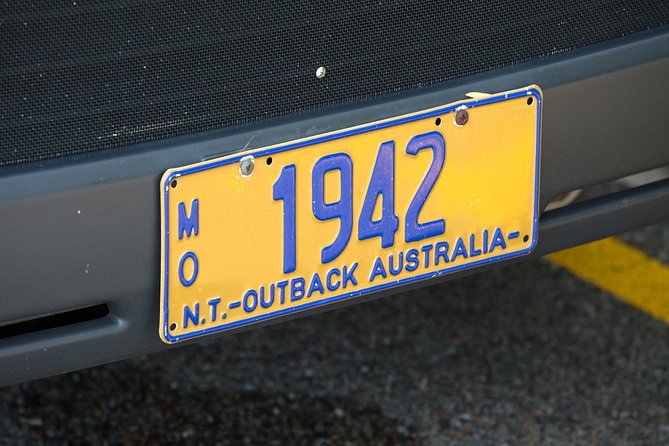
Garry’s presentation is a major reason to choose this experience. He is described as enthusiastic, engaging, and full of facts, but he also uses a light touch. Humorous local stories appear alongside serious accounts of the bombing.
That mix can make four hours feel less heavy. Military history includes loss and trauma, and a guide has to keep the subject approachable without making light of the event. Garry’s style includes jokes and amusing stories, so you should be comfortable with an informal presentation.
He also brings photographs and other media into the explanation. These visual aids help connect names and events to actual people and places. The tour is not simply a drive with continuous narration from the front seat.
His interests reach beyond the bombing itself. The material includes Darwin’s wartime past, its present-day sights, and, according to the tour descriptions, local stories connected with Cyclone Tracy. That makes the experience broader than a single military incident.
The result is best for you if you like a guide who tells stories and invites curiosity. It may be less suitable if you want a strictly chronological presentation with no side topics.
Is the $42 price good value?

At $42, this is a reasonably priced half-day experience, especially since admission to the Darwin Aviation Museum is included. You are paying for transport around Darwin, a guide for about four hours, a museum visit, and local interpretation.
The value improves if you are new to the city. A separate museum visit would give you the aircraft, but not necessarily the same city orientation or family-based account. A standard sightseeing outing might show you Darwin, but not explain the 1942 bombing in such detail.
The small-group limit adds value too. You are not paying only for a seat and a recorded commentary. You have a better chance to ask questions and hear answers suited to the group.
The price is less compelling if you have already visited the museum, know Darwin’s wartime sites well, or prefer to explore independently. You should also factor in the vehicle question. A low price is not a bargain if a cramped seat makes four hours uncomfortable.
For history-minded visitors, the cost is easy to justify. The tour offers a focused subject, a museum admission, and a guide with a clear personal connection. I would think of it as an orientation to Darwin’s war story rather than a complete account of every military site in the Top End.
Who should book this Darwin tour?
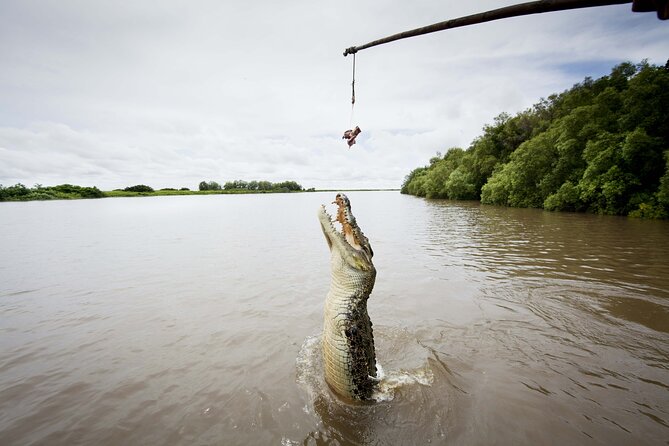
This is a strong choice for Australian history enthusiasts, military history fans, aviation lovers, and anyone who wants to understand Darwin beyond its tourist surface. It also suits families and mixed-interest groups because the tour includes general city sights, local stories, aircraft, and wartime information.
You do not need to be an expert. Garry explains the subject in an accessible way, and the humor keeps the morning from becoming too dense. The tour can also give school-age visitors a more human connection to a part of Australian history that may receive only brief classroom treatment.
The experience is especially useful near the start of your stay. Afterward, you will recognize parts of Darwin and have context for other museums, memorials, or historic places you visit.
Think carefully if you have mobility or seating concerns. The tour is described as suitable for most people, but the vehicle may be a car rather than a larger bus. Ask about the seating setup before booking if you are tall, older, or have trouble climbing into a low or tight rear seat.
The same applies to very young children, although no specific child policy is provided. Confirm directly if your party includes children or anyone needing special arrangements.
Booking, pickup, and cancellation details

Confirmation is normally sent at booking. If you book within one day of departure, confirmation arrives as soon as possible and depends on availability.
Free cancellation is available if you cancel at least 24 hours before the local start time. Cancellations or changes made inside that period are not refunded or accepted. The tour also needs a minimum number of participants, so if the operator cancels for that reason, you will be offered another date or experience, or a full refund.
The bottom line: a personal way to understand Darwin
I would book this tour if I wanted a focused introduction to Darwin’s World War II story and preferred a guide-led morning to reading plaques on my own. Garry’s family connection, book, photographs, humor, and local knowledge give the subject a personal edge.
The tour is also good value at $42, with museum admission included and city touring added to the main theme. Just confirm the vehicle and seating if comfort is important to you.
Skip it if your main goal is a long, detailed museum visit or a fully itemized battlefield itinerary. Choose it if you want to hear how the bombing affected Darwin, see the aviation collection, and understand the city through the eyes of a local guide.
FAQ
What time does the Bombing of Darwin WWII Heritage Tour begin?
The tour begins at 8:30 am.
How long does the tour last?
The experience lasts approximately four hours.
Is pickup available?
Yes, pickup is offered. The tour is also located near public transportation.
Is admission to the Darwin Aviation Museum included?
Yes, admission to the Darwin Aviation Museum is included. The visit lasts about one hour.
How many people can join the tour?
The tour has a maximum capacity of 11 people.
What is the cancellation policy?
You can cancel at least 24 hours before the local start time for a full refund. Cancellations or changes made less than 24 hours before departure are not accepted or refunded.
Just added around Darwin
- Kakadu National Park Wildlife & Ubirr Rock Art Tour from Darwin★ 4.5 · 101 reviews
- Arnhem Land Yingana Injalak Hill Full Day Tour from Jabiru★ 5.0 · 132 reviews
- Jabiru 30 minute Scenic Flight★ 5.0 · 68 reviews
- Kakadu Adventure Tour★ 4.0 · 26 reviews
- Bombing of Darwin World War II Tour with Harbour Cruise★ 4.5 · 219 reviews
- Tiwi Islands Cultural Experience from Darwin Including Ferry★ 4.0 · 97 reviews
- 1-Hour Thunderball WWII Adventure Jet Skiing in Darwin★ 5.0 · 70 reviews
- Darwin Combo: The Bombing of Darwin Experience & Darwin Harbour Cruise★ 4.5 · 123 reviews
Historical Tours, compared.

Ultimate Melbourne Walking Tour: History, Laneways & Culture
Read our review →
Puffing Billy Railway: Heritage Steam Train Journey
Read our review →
Morning World Heritage Cruise on the Gordon River from Strahan
Read our review →
Strahan: World Heritage Cruise on Gordon River with Lunch
Read our review →

Experience History onboard The Mary Valley Rattler
Read our review →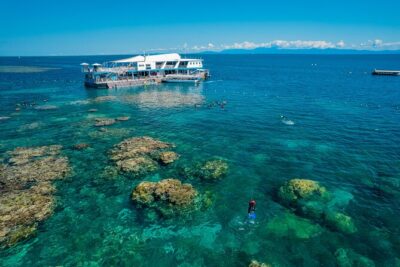
Snorkel & Dive the Reef: Sustainable, Scientific & Cultural Tour
Read our review →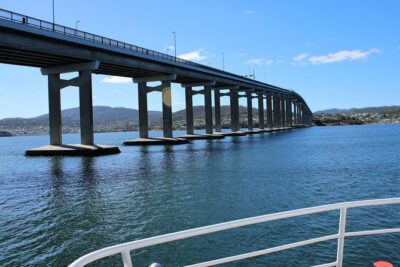
Derwent River Historic Harbour Cruise From Hobart
Read our review →Browse the lists this tour appears in