
Reviewed · HISTORICAL TOURS
Darwin: Small Group 2-Hour Heritage Walk
Darwin’s story is written in layers: World War II bombings, Cyclone Tracy, rebuilding, and the modern city’s multicultural character. This two-hour walk brings those layers together on streets where the past is easy to miss from a bus window.
I like the leisurely pace and the chance to reach places a vehicle cannot. I also like the personal touch from guide John, who explains Darwin through local knowledge and lived experience, not just dates and names.
The main drawback is simple: this is a proper walking tour in tropical Darwin. There are few places to sit, and you need enough fitness for two hours on foot. The English-only commentary and minimum age of 10 also narrow its appeal for some families.
In This Review
- Key details before you book
- Starting beneath Darwin’s pioneer statue
- Darwin’s past is best understood on foot
- World War II and the city’s hardest chapter
- Cyclone Tracy and the rebuilding of Darwin
- Rebuilt landmarks in the civic center
- Government House, Parliament House, and the Supreme Court
- Public art, tropical plants, and small discoveries
- What the two-hour format gives you
- Is $41 good value?
- Who will enjoy this Darwin walk?
- Practical ways to prepare
- Should you book the Walk Darwin Heritage Walk?
- FAQ
- Where does the Darwin Heritage Walk begin?
- Where does the walk finish?
- How long does the walking tour last?
- How much does the tour cost?
- How many people can join the tour?
- Is hotel pickup included?
- What language is the tour conducted in?
- What should I bring?
- Is the tour suitable for children?
Key details before you book
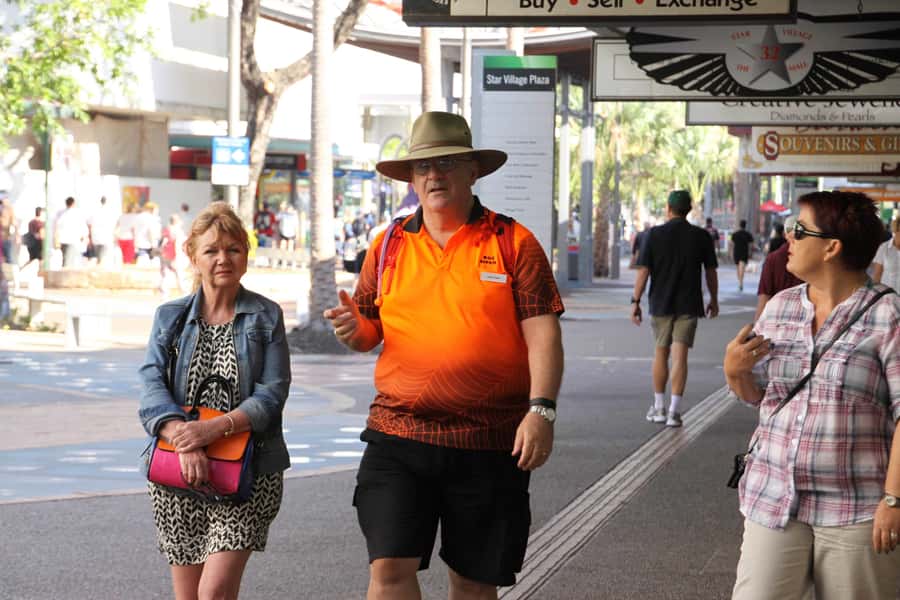
- Meet under the John McDouall Stuart statue: Look for the guide in a bright orange shirt at the Raintree Park meeting point.
- Hear Darwin’s most important turning points: The walk covers wartime bombing, Cyclone Tracy, reconstruction, and the city’s present-day cultural mix.
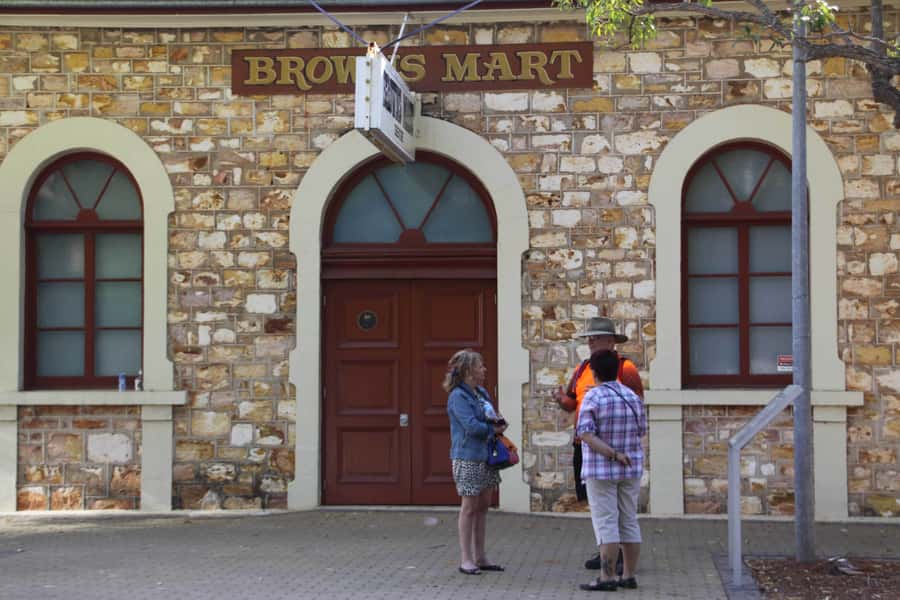
- See rebuilt civic landmarks: The old courthouse, former police station, Brown’s Mart Theatre, and Palmerston Town Hall ruins help explain how Darwin recovered and changed.
- Walk with no more than 10 people: The small group makes it easier to hear John and ask questions along the way.
- Allow for heat and limited rest stops: Bring water, sunscreen, a hat, and comfortable walking shoes.
- Finish near the Esplanade: The route ends at Knuckey Street and the Esplanade, useful for continuing your time in central Darwin.
Starting beneath Darwin’s pioneer statue
The tour begins under the statue of John McDouall Stuart, the explorer whose name appears across the Northern Territory. This is a practical meeting point in Raintree Park, but it also sets the tone for the walk: you start among reminders of the people who pushed into and mapped the region.
Your guide wears a bright orange shirt, so finding the right person should be straightforward. The tour needs at least two paying guests to operate and accepts no more than 10 participants. That size matters in a city walk. You can hear commentary without straining, and John has room to respond when you ask about a building, a date, or an odd detail along the route.
The pace is deliberately relaxed. That does not mean you will spend much time sitting. It means the walk is designed for looking, listening, and taking photographs rather than racing between points. Give yourself a little extra time before the start so you are not arriving hot and flustered.
A few more Darwin trips to weigh up
- Bombing of Darwin WWII Heritage Tours
★ 5.0 · 261 reviews - Darwin History and Wartime Experience Tour
★ 5.0 · 144 reviews - Darwin Heritage Walk
★ 4.5 · 101 reviews
Darwin’s past is best understood on foot
Darwin can feel young and modern at first glance, with broad streets, tropical plants, public art, and government buildings. Its past is less obvious than the city’s present. Walking lets John point out surviving structures and rebuilt sites that you could easily pass without knowing why they matter.
The route follows the paths of early pioneers through the central streets. Along the way, you get a practical sense of how Darwin grew from a remote northern settlement into the capital of the Northern Territory. The city’s story is not presented as a smooth march of progress. It includes destruction, loss, reconstruction, and constant adaptation to a harsh climate.
This is where the local guide makes a difference. John’s style, according to the tour details and guest comments, is friendly, personable, and generous with information. He also keeps an eye on comfort, including reminders about drinking water and protection from the sun. In Darwin, that is more than a courtesy.
World War II and the city’s hardest chapter
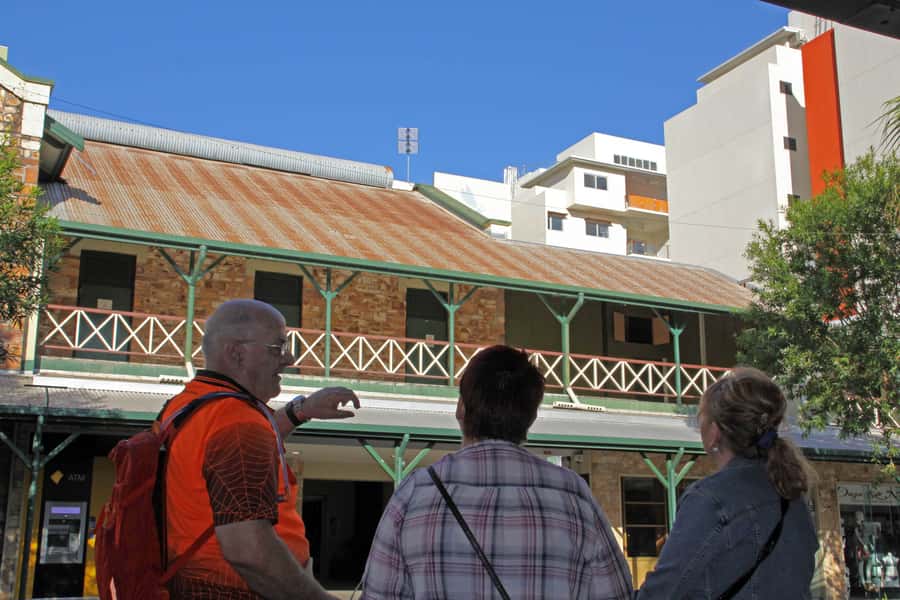
World War II is one of the key subjects on the walk. The bombing of Darwin changed the city’s place in Australian history and left a lasting mark on its identity. John explains that wartime period as part of the city’s broader development, helping you connect the central streets with events that reached far beyond them.
A walking tour is useful here because historical events can otherwise remain abstract. You are not only hearing that Darwin was attacked. You are seeing the civic center where the city had to function, recover, and rebuild. The exact stops and sequence can vary with the guide, but the commentary links the streets and buildings to the wider wartime story.
I would choose this tour early in a Darwin visit if you want a strong foundation for later sightseeing. Once you understand the city’s wartime role, other museums, memorials, and historic places make more sense. The walk does not replace a full museum visit, but it gives you a clear framework for one.
Cyclone Tracy and the rebuilding of Darwin
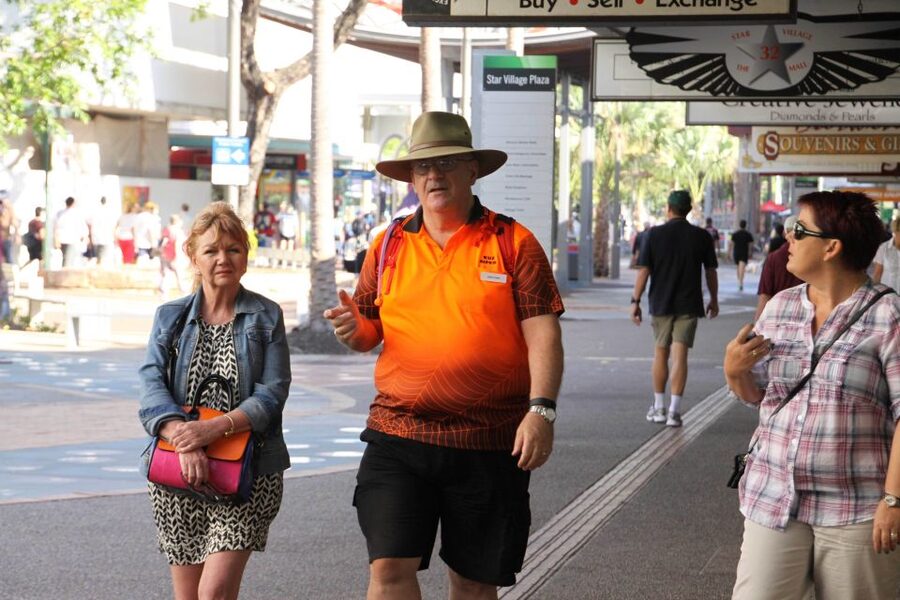
Cyclone Tracy is another central part of the story. The storm devastated Darwin in 1974, and its effects shaped the city you see today. John uses the storm to explain why Darwin looks different from many older Australian cities and how rebuilding altered its architecture and daily life.
This is one of the most useful parts for first-time visitors because it explains the contrast between old remnants and modern construction. Darwin’s past is not preserved in one untouched historic district. Instead, the city presents fragments, reconstructions, civic buildings, public artwork, and newer streets beside one another.
The walk also gives you a sense of the climate that has influenced Darwin’s design. Tropical plants and open public spaces are part of the experience, not just decoration. You will want to pause for photographs, but keep your water close and use sunscreen before you arrive. The heat can make a short city walk feel longer than it looks on a map.
Same coast, a completely different day out:
- Litchfield National Park and Jumping Crocodile Cruise
★ 5.0 · 2,119 reviews - Adelaide River Cruises – Jumping Crocodile Experience
★ 5.0 · 997 reviews - Sunset 3-Hour Cruise from Darwin with Dinner and Sparkling Wine
★ 5.0 · 980 reviews - From Darwin: Litchfield Park Tour & Jumping Crocodile Cruise
★ 4.9 · 829 reviews
Rebuilt landmarks in the civic center
Several important stops focus on buildings that survived, were damaged, or were painstakingly reconstructed. The old courthouse and police station offer a look at the administrative side of early Darwin. These buildings help you picture how law and public order operated in a small, isolated settlement.
Brown’s Mart Theatre adds a different note. It connects the historic center with performance and community life. Seeing it on foot is more revealing than simply hearing its name because John can place it among the surrounding streets and explain its role in the city’s development.
The remains of Palmerston Town Hall are another useful stop. The ruins point to the earlier name for Darwin and to the city’s changing civic identity. They also show how Darwin’s history survives in partial form. You are not walking through a perfectly preserved old town. You are reading clues in a city that has been repeatedly damaged and rebuilt.
These stops are especially valuable for visitors who enjoy architecture but do not want a specialist lecture. John gives the buildings a human scale. You can look at a wall, a facade, or a fragment and understand why it remains important.
Government House, Parliament House, and the Supreme Court
The route also takes in Government House, Parliament House, and the Supreme Court of the Northern Territory. Together, these buildings show Darwin as the political center of the territory today.
Government House connects the city with its formal colonial and administrative past. Parliament House represents the Northern Territory’s modern government, while the Supreme Court adds another piece of the civic picture. Seeing the three within one walk helps you understand the city’s role beyond its tourist waterfront and tropical setting.
These are exterior sightseeing points rather than a promise of interior access. That is worth keeping in mind if you are hoping to tour inside government buildings. The value here is the street-level context, the architecture, and the way John explains how these places fit into Darwin’s civic life.
Public art, tropical plants, and small discoveries
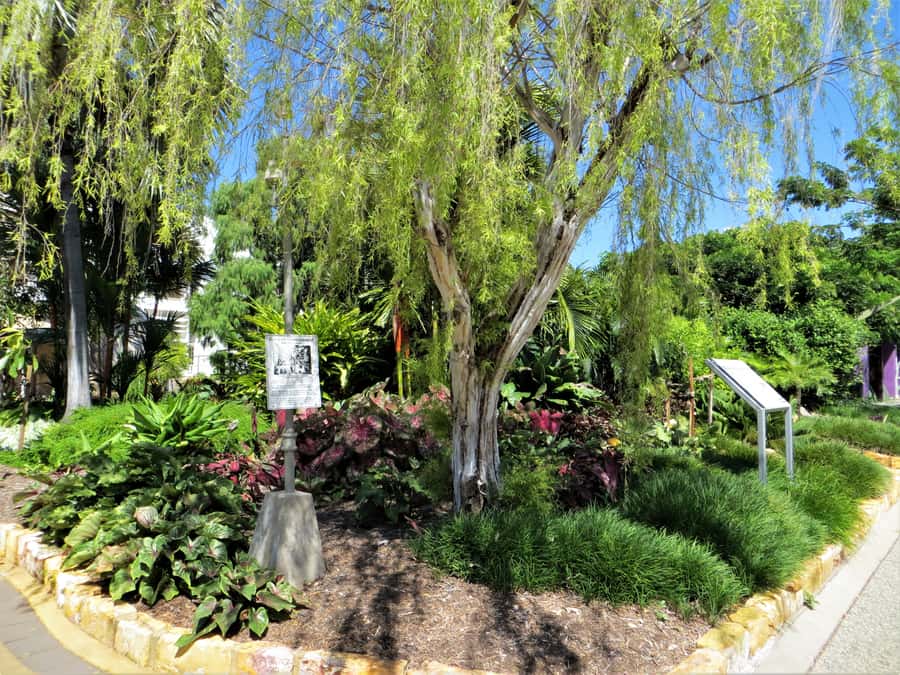
One reason I prefer a walk like this over a bus circuit is the freedom to notice small details. The tour includes opportunities to photograph public art, historic buildings, architecture, tropical plants, and wildlife. You may find that the most memorable moments are not always the formal landmarks.
A bus can show you more ground, but it cannot easily stop for a small piece of public art or let you examine a building at walking speed. On foot, you can look up, check details on a facade, and frame photographs without shooting through glass.
The tropical setting also changes the rhythm of the tour. Shade, sun, plants, and open streets all become part of the experience. The pace is not strenuous by design, but Darwin’s heat still demands attention. Wear practical shoes, carry water, and bring a hat. Bare feet are not allowed, and smoking and pets are also prohibited, although assistance dogs are permitted.
What the two-hour format gives you
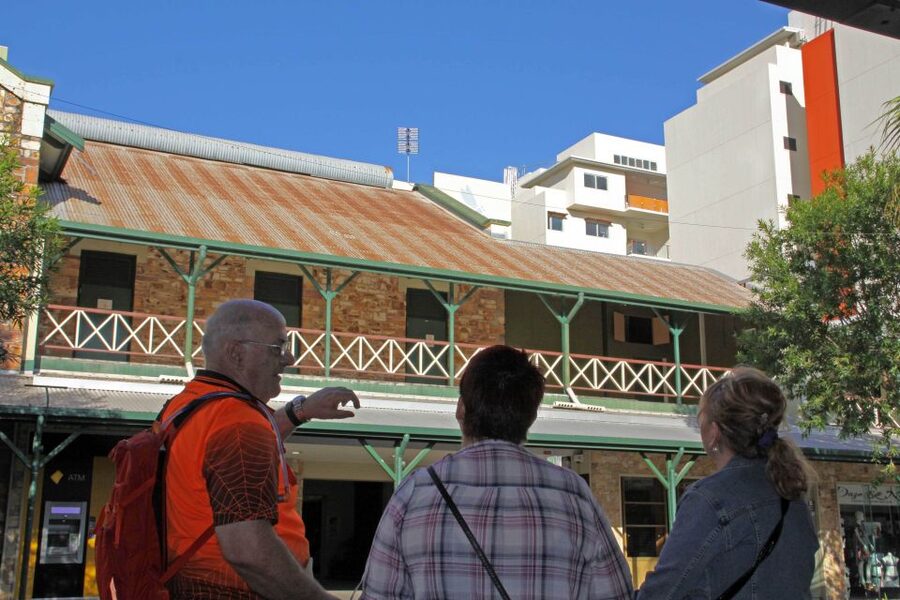
Two hours is a sensible length for this introduction. It is long enough to move beyond a quick orientation but short enough to fit around a museum visit, lunch, or another Darwin activity.
The route begins at the John McDouall Stuart statue and finishes at Knuckey Street and the Esplanade in Darwin City. Since there is no hotel pickup or drop-off, you need to make your own way to the starting point and arrange whatever comes next. The finish near the Esplanade gives you a useful central endpoint, but the activity itself does not include food, drinks, or transport.
The itinerary lists a series of sightseeing stops rather than long indoor visits. That means the two hours are mainly spent walking and listening. If you want a tour with frequent seating, air conditioning, or extensive time inside buildings, this is not the right format.
For most people, the relaxed pace is a strength. John has enough time to explain the setting and answer questions, and the group is small enough that the commentary does not feel like a speech shouted at a crowd.
Is $41 good value?
At $41 per person, the tour is priced as an affordable introduction to central Darwin. You are paying for two hours with a local guide, spoken English commentary, and access to a small-group experience limited to 10 people.
The real value depends on what you want from a city tour. If you mainly want to be transported between major attractions, a bus tour may cover more distance. If you want to understand why Darwin looks the way it does, the walking format gives you more context for the money.
I see particular value for visitors with limited time. One guest used the tour as a way to make good use of a short stay, and that is exactly where this experience fits. It helps you get your bearings, introduces the central civic area, and gives you historical background before you explore independently.
The price also compares well for anyone who appreciates the chance to ask questions. A group of two can feel almost private, while a full group of 10 is still far more manageable than a large coach party. The tour does not include refreshments, so budget for your own water and any food afterward.
Who will enjoy this Darwin walk?
This tour suits you if you like history explained in plain language, prefer a calm pace, and want to see a city through its streets rather than from a vehicle. It is also a good choice for first-time visitors who want an orientation before choosing museums, galleries, or other attractions.
It is particularly well suited to:
- Adults and children aged 10 or older who can walk for two hours
- Visitors interested in World War II and Cyclone Tracy
- People who enjoy architecture, public art, and civic buildings
- Travelers who value local stories and time for questions
- Visitors staying in or near central Darwin
- Anyone with only a short amount of time to understand the city
You should think twice if you have a low level of fitness or need regular seating. There are not many places to stop, sit, and rest. The tour is also conducted in English only, and children under 10 cannot join.
Practical ways to prepare
Put on sunscreen before you arrive, not halfway through the walk. Bring a sun hat, water, a camera, and hand sanitizer or tissues. Comfortable footwear matters because the route is on foot and the experience depends on moving between sites.
Check the start time when booking, since departure times vary with availability. Arrive at the John McDouall Stuart statue in Raintree Park and look for the bright orange shirt.
The activity offers free cancellation up to 24 hours before departure for a full refund, and you can reserve now while paying later. Those terms are useful if your Darwin plans are still shifting, but the more important practical question is your ability to handle the heat and walking time.
Should you book the Walk Darwin Heritage Walk?
I would book this tour if you want a clear, friendly introduction to Darwin’s center and prefer meaningful local explanation over a checklist of attractions. John’s relaxed manner, strong command of the city’s past, and attention to sun and hydration add real value to a short visit.
I would skip it if you want air-conditioned transport, long indoor visits, or a route with plenty of benches. For everyone else, $41 is a fair price for two hours that connect the WWII bombings, Cyclone Tracy, rebuilt landmarks, government buildings, and present-day Darwin. Book it near the start of your stay, bring water, and let the walk provide the context for the rest of your time in the city.
FAQ
Where does the Darwin Heritage Walk begin?
The tour begins under the John McDouall Stuart statue in Raintree Park. Your guide will be wearing a bright orange shirt.
Where does the walk finish?
The tour finishes at Knuckey Street and the Esplanade in Darwin City, Northern Territory.
How long does the walking tour last?
The guided walk lasts two hours.
How much does the tour cost?
The listed price is $41 per person.
How many people can join the tour?
The group is limited to 10 participants, and at least two paying guests are required for the tour to operate.
Is hotel pickup included?
No. Hotel pickup and drop-off are not included, so you need to reach the meeting point yourself.
What language is the tour conducted in?
The live commentary and guided tour are in English only.
What should I bring?
Bring a sun hat, camera, sunscreen, water, and hand sanitizer or tissues. Comfortable footwear is also sensible for a two-hour walk.
Is the tour suitable for children?
The tour is not suitable for children under 10 years old. Participants also need enough fitness for a two-hour walk with few places to sit and rest.
More 2-Hour Experiences in Darwin
- Corroboree Billabong Wetland Cruises – 2 hour Sunset Cruise
★ 5.0 · 214 reviews - Darwin Harbour: 2-Hour Gaze and Graze Sunset Cruise
★ 4.6 · 165 reviews - Melbourne: 2-Hour City Highlights River Cruise
★ 4.1 · 1,804 reviews - Surfers Paradise: 2 Hour Surf Experience on the Gold Coast
★ 4.9 · 1,132 reviews
Just added around Darwin
- Kakadu National Park Wildlife & Ubirr Rock Art Tour from Darwin★ 4.5 · 101 reviews
- Arnhem Land Yingana Injalak Hill Full Day Tour from Jabiru★ 5.0 · 132 reviews
- Jabiru 30 minute Scenic Flight★ 5.0 · 68 reviews
- Kakadu Adventure Tour★ 4.0 · 26 reviews
- Bombing of Darwin World War II Tour with Harbour Cruise★ 4.5 · 219 reviews
- Tiwi Islands Cultural Experience from Darwin Including Ferry★ 4.0 · 97 reviews
- 1-Hour Thunderball WWII Adventure Jet Skiing in Darwin★ 5.0 · 70 reviews
- Darwin Combo: The Bombing of Darwin Experience & Darwin Harbour Cruise★ 4.5 · 123 reviews
Historical Tours, compared.

Ultimate Melbourne Walking Tour: History, Laneways & Culture
Read our review →
Puffing Billy Railway: Heritage Steam Train Journey
Read our review →
Morning World Heritage Cruise on the Gordon River from Strahan
Read our review →
Strahan: World Heritage Cruise on Gordon River with Lunch
Read our review →

Experience History onboard The Mary Valley Rattler
Read our review →
Snorkel & Dive the Reef: Sustainable, Scientific & Cultural Tour
Read our review →
Derwent River Historic Harbour Cruise From Hobart
Read our review →Browse the lists this tour appears in