
Reviewed · HISTORICAL TOURS
Darwin Heritage Walk
Darwin’s story is written in layers: early civic buildings, wartime damage, Cyclone Tracy, modern government, and the daily life of a tropical city. This small-group walking tour brings those layers together, using the streets and facades of the CBD as its classroom.
I like the personal style of guides such as John, Robin, and Yvonne, who explain the city through anecdotes, local knowledge, and stories about its people. I also like the easy pace, shade breaks, photo stops, and the chance to see small details you could easily pass while walking alone. One consideration is that this is as much a listening tour as a walking tour, and the most compelling material may come later, after the opening section around the mall.
In This Review
- Key points to know before booking
- Why this walk helps you understand Darwin
- Star Village, a survivor from before Cyclone Tracy
- Brown’s Mart and the social life of old Darwin
- Old Town Hall and the people who shaped Palmerston
- The Administrator’s buildings and tropical government
- Parliament House and the modern city
- Bicentennial Park and the harbour finish
- The stories that give the route its weight
- Pace, shade, and what to wear
- A small group with room for questions
- Who will get the most from this Darwin walk
- Booking, timing, and cancellation
- Should you book the Darwin Heritage Walk?
- FAQ
- How long does the Darwin Heritage Walk last?
- Where does the tour start and finish?
- What time does the tour begin?
- Is the tour suitable for all fitness levels?
- What should I bring?
- What happens if the tour is cancelled?
Key points to know before booking
- Darwin’s past is still visible: See one of the few surviving pre-Cyclone Tracy buildings, old civic ruins, restored government buildings, and modern Parliament House.
- The guide makes the difference: John, Robin, and Yvonne are among the guides praised for clear stories, local insight, and patient answers to questions.
- Expect a relaxed two-hour walk: The route covers central Darwin, but there is plenty of standing and listening rather than nonstop walking.
- Cyclone Tracy and wartime Darwin take center stage: These two events explain much of the city’s character and modern shape.
- The group is capped at six: That makes it easier to ask questions and keep the commentary personal.
- Come prepared for the tropics: Wear enclosed non-slip shoes, bring water, sunscreen, and a hat, and dress for possible rain or heat.
Why this walk helps you understand Darwin
Darwin can look young at first glance. Much of the city was rebuilt after Cyclone Tracy struck in 1974, and modern offices, retail spaces, and government buildings now fill the central streets. Yet older traces remain, often in places that do not look historic until someone explains what you are seeing.
That is the real value here. You are not simply ticking off buildings. You are learning why a particular structure survived, how a site shaped civic life, and how Darwin repeatedly recovered from disaster and isolation.
The tour begins at John McDouall Stuart’s statue at the corner of The Mall and Knuckey Street at 8:30 am. It finishes near Lyons Cottage on The Esplanade, opposite the cottage at the intersection with Knuckey Street. Since there is no hotel pickup, plan to make your own way into the CBD. The central meeting point is near public transport.
The advertised duration is about two to two and a half hours. At $42.32 per person, I see this as a fair price if you want context rather than a quick orientation stroll. A private guide would normally cost far more, while a self-guided walk cannot answer your questions or adjust its pace around shade and photographs. The value is strongest at the beginning of a Darwin stay, when the stories can shape the way you view the rest of the city.
A few more Darwin trips to weigh up
- Bombing of Darwin WWII Heritage Tours
★ 5.0 · 261 reviews - Darwin History and Wartime Experience Tour
★ 5.0 · 144 reviews - Darwin: Small Group 2-Hour Heritage Walk
★ 4.9 · 28 reviews
Star Village, a survivor from before Cyclone Tracy
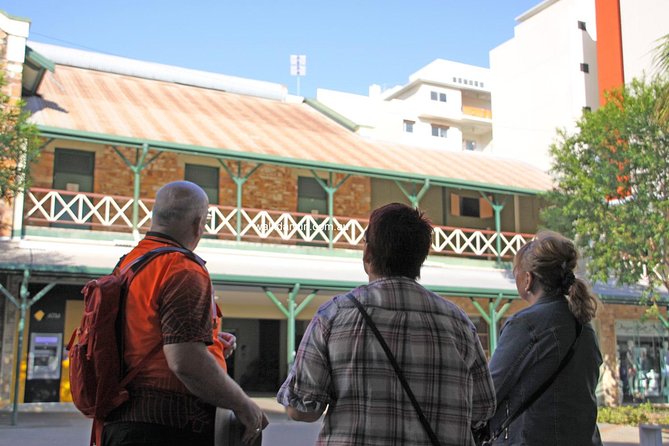
The first stop is Star Village, a former open-air cinema that has since become a stylish retail hub. Its modern use can make it easy to miss the significance of the building, but it is one of the few original structures remaining from before Cyclone Tracy.
You will spend around 10 minutes here, looking at the exterior and hearing how the site fits into old Darwin. This is a good introduction to the tour’s main idea: attractive or ordinary-looking buildings can carry several different chapters of the city’s past.
Do not expect a long interior visit. Admission is free, but the focus is on the building’s outside features and the guide’s account of its earlier life. If you prefer museums with displays and labels, this stop may feel brief. If you enjoy having a local point out details you would otherwise overlook, it sets the right tone.
Brown’s Mart and the social life of old Darwin
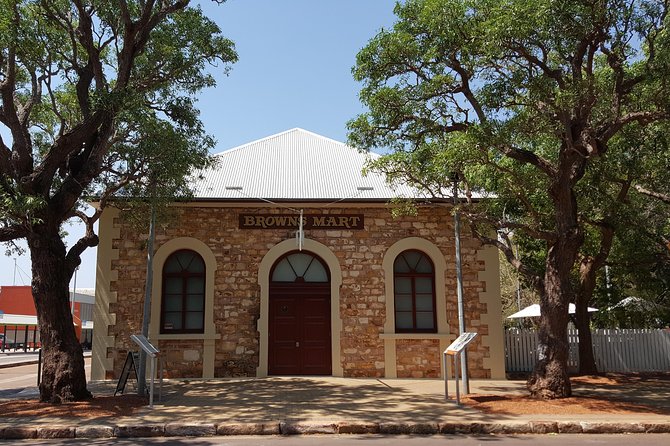
Brown’s Mart Theatre has been part of Darwin’s social culture for more than a century. The guide discusses the exterior and explains why this building has mattered to the city over such a long period.
The stop lasts about 10 minutes. It is another example of the tour’s preference for stories over formal entry tickets. You will not spend the morning moving through galleries. Instead, you pause in the street, listen, look closely, and then continue.
This format works particularly well in Darwin, where heat can make a long indoor or outdoor schedule tiring. The stops are short enough to keep the route manageable, and the commentary gives you a reason to return to certain sites later if you want a closer look.
Old Town Hall and the people who shaped Palmerston

The Old Town Hall, once known as Palmerston Town Hall, is now in ruins. That may sound less impressive than a restored landmark, but the remains offer a direct reminder of Darwin’s early civic life and the people who passed through it.
The guide uses this stop to place Darwin’s pioneers and early administration into the wider story of the settlement. You will spend roughly 10 minutes here. The ruins are especially useful for understanding that Darwin’s past is not preserved only in handsome facades. Sometimes the absence of a building tells just as much.
This part of the walk may appeal to anyone interested in how a remote northern town developed its public institutions. It also gives the tour a useful change of mood after the commercial setting of Star Village and Brown’s Mart.
Same coast, a completely different day out:
- Litchfield National Park and Jumping Crocodile Cruise
★ 5.0 · 2,119 reviews - Adelaide River Cruises – Jumping Crocodile Experience
★ 5.0 · 997 reviews - Sunset 3-Hour Cruise from Darwin with Dinner and Sparkling Wine
★ 5.0 · 980 reviews - From Darwin: Litchfield Park Tour & Jumping Crocodile Cruise
★ 4.9 · 829 reviews
The Administrator’s buildings and tropical government
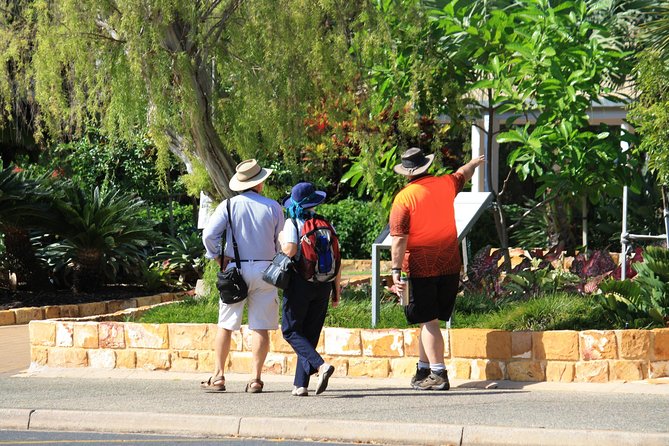
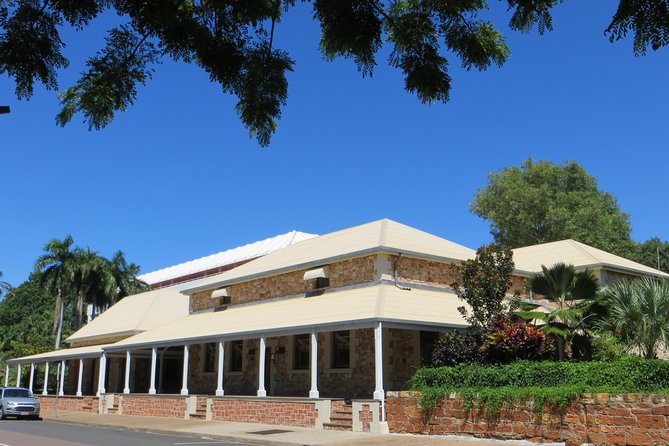
The restored buildings and gardens connected with the Administrator of the Northern Territory provide one of the most visually appealing pauses. They reflect government life in Darwin’s earlier years and continue to serve an official purpose today.
The guide explains what you are seeing from the outside, with about 10 minutes allocated to the stop. The contrast between restored heritage buildings and current government offices helps you understand how Darwin uses its past without turning the whole CBD into a museum.
I would pay attention to the gardens as well as the buildings. The tropical setting matters here. Darwin’s climate shaped how people lived, built, worked, and maintained public spaces, and this stop gives that practical side of the story a clear setting.
Parliament House and the modern city
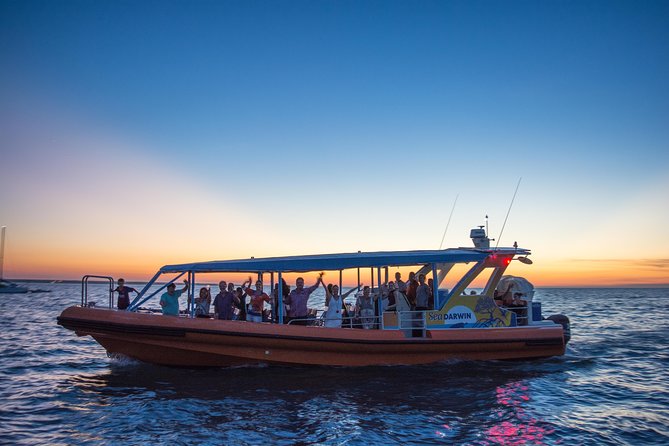
Parliament House is a grand building overlooking Darwin Harbour. Here, the focus shifts from early Palmerston to the self-governing Northern Territory and the modern city’s political life.
You will spend about 10 minutes at the exterior. The building provides a useful counterpoint to the ruins and older structures earlier in the walk. Darwin is not only a city recovering from its past. It is also a capital with an active civic role today.
The guide may discuss current affairs and Northern Territory politics, depending on the questions and interests of the group. This is one reason the small maximum of six matters. You can ask for more detail instead of simply moving on with a large crowd.
Bicentennial Park and the harbour finish
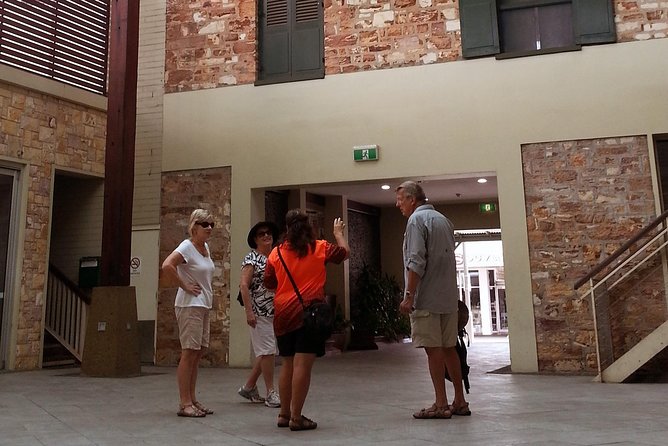
The final major stop is Bicentennial Park, which follows the edge of Darwin Harbour and provides a broad green setting for leisure and recreation. The tour allows about 15 minutes here, making it the longest listed stop.
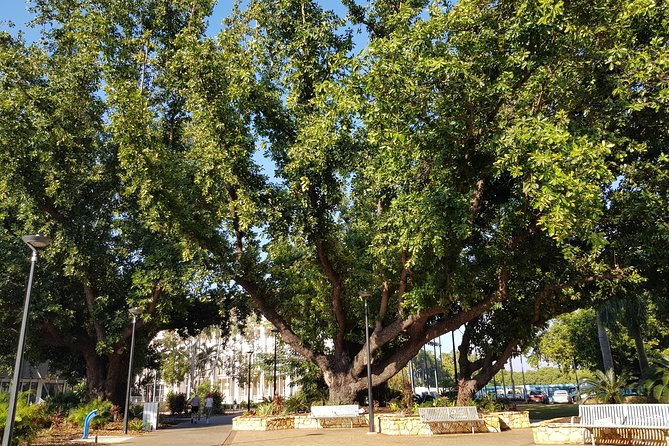
The park contains reminders of early Darwin, along with less obvious points of interest that your guide can identify. You will have opportunities to take photographs and enjoy the harbour outlook. The route then ends near Lyons Cottage on The Esplanade.
This closing section is important because it connects the city’s built history with its waterfront setting. It also seems to be where the tour’s themes come together most clearly: survival, remembrance, government, and everyday city life.
One practical note: the walk is not designed as a fast sightseeing circuit. You may cover less ground than expected because the guide pauses to explain sites in detail. That suits me, since the point is to understand Darwin rather than rush through it, but anyone wanting maximum sightseeing time should know what they are booking.
The stories that give the route its weight
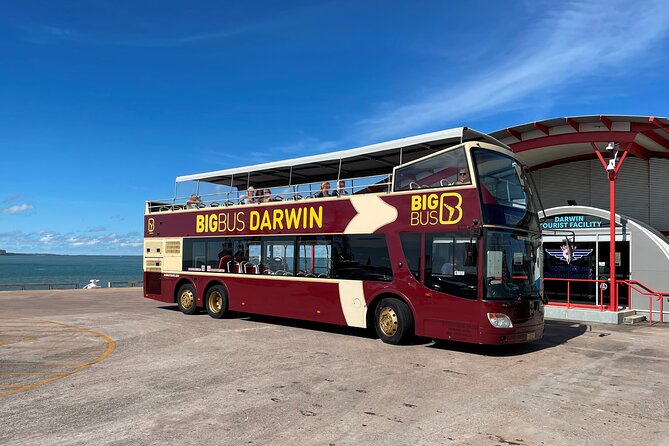
The bombing of Darwin during the Second World War and Cyclone Tracy are major subjects. Both events changed the city, and the guide explains how they affected buildings, residents, and Darwin’s later development.
These subjects receive strong emphasis, so come ready for a history tour rather than a light stroll with occasional facts. The tone is generally personal and conversational, with guides sharing anecdotes about local characters and their own connection to Darwin. John, in particular, has been praised for his passion for the Northern Territory and for answering questions at length.
The strongest guides do more than recite dates. They help you picture how a building was used, why a site mattered, or how the city responded after a crisis. That approach makes a small area of central Darwin feel much larger in meaning.
There is one important limitation in the material covered. At least one participant felt the tour did not give enough attention to the Larrakia people, first contact, colonisation, and the fact that the land was not ceded. The tour introduces the Larrakia calendar, but you should ask your guide directly if you want more detail on Larrakia history and the ongoing effects of colonisation. That is not a minor issue, and it is worth knowing before you book.
Pace, shade, and what to wear
The walk is suited to people with a moderate level of fitness. You will walk and stand for up to two and a half hours, but the pace is described as easy or slow rather than strenuous.
The tropical climate is the main practical challenge. Bring drinking water, sunscreen, and a hat. Enclosed non-slip walking shoes are recommended, which is sensible for uneven surfaces and changing weather. The tour runs in all weather conditions, so dress appropriately for heat or rain.
Guides have made a point of stopping in shaded places when possible. That is especially helpful if you burn easily or find prolonged standing in direct sun uncomfortable. Still, shade is not guaranteed at every point, so your own sun protection remains important.
Children must be accompanied by an adult. Service animals are allowed. The route is near public transport, but the activity does not include hotel transfers, food, or drinks.
A small group with room for questions
The maximum group size is six people. That is a real advantage for a history walk because you can ask about a building, request clarification, or steer the conversation toward subjects that interest you.
A small group also makes the route feel less like a procession. You can stop for pictures without holding up a large crowd, and the guide can watch the pace more closely. The downside is that the tour requires at least two people to operate, so a booking could be affected if that minimum is not met.
The experience includes a local guide and spoken commentary. It does not include entry to attractions, meals, drinks, or transport. The listed stops are viewed from public areas, and admission is free.
Who will get the most from this Darwin walk
I would choose this tour if you want a clear introduction to Darwin’s central CBD before exploring on your own. It is particularly useful for first-time visitors, history fans, and anyone who prefers local stories to a recorded audio guide.
It also suits people who want a gentle morning activity. You will not be pushed through a long route, and the frequent pauses make it possible to listen, take photographs, and ask questions.
I would think twice if you want a high-energy walk, lots of interior visits, or a tour focused mainly on Indigenous history. The route can feel slow at the start, especially around the mall, and some of its strongest material arrives in the latter part. If the Larrakia story is central to your plans, ask in advance how much time the guide can devote to it.
Booking, timing, and cancellation
This experience is often booked about 45 days in advance, so reserving early is sensible if your Darwin dates are fixed. Confirmation is provided at booking, and the mobile ticket makes it easy to carry the details on your phone.
You can cancel for a full refund up to 24 hours before the 8:30 am start time. Changes or cancellations inside that window are not accepted for a refund. If poor weather stops the walk, or the minimum number is not reached, you will be offered another date or experience, or a full refund.
Should you book the Darwin Heritage Walk?
Book it if you want Darwin’s buildings to make sense, not just appear as photo stops. The best part is the combination of a compact route, highly personal guiding, wartime and cyclone stories, and small details in the CBD that are easy to miss alone.
I would schedule it early in your stay. You will finish near the harbour with a better sense of what you are looking at, and you can use the guide’s local suggestions to plan the rest of your time. At $42.32, it offers good value for a small-group introduction, provided you are happy to listen as much as you walk and understand that the route may not fully explore Larrakia history.
FAQ
How long does the Darwin Heritage Walk last?
The tour lasts approximately two to two and a half hours.
Where does the tour start and finish?
It starts at John McDouall Stuart, at the corner of The Mall and Knuckey Street in Darwin City. It ends at the intersection of The Esplanade and Knuckey Street, opposite Lyons Cottage.
What time does the tour begin?
The start time is 8:30 am.
Is the tour suitable for all fitness levels?
You should have a moderate level of physical fitness. The tour includes walking and standing, and good enclosed non-slip walking shoes are recommended.
What should I bring?
Bring a camera, sunscreen, a hat, and drinking water. Dress appropriately because the tour operates in all weather conditions.
What happens if the tour is cancelled?
If poor weather or an insufficient number of bookings causes cancellation, you will be offered a different date or experience, or a full refund. You can also cancel up to 24 hours before the start time for a full refund.
Just added around Darwin
- Kakadu National Park Wildlife & Ubirr Rock Art Tour from Darwin★ 4.5 · 101 reviews
- Arnhem Land Yingana Injalak Hill Full Day Tour from Jabiru★ 5.0 · 132 reviews
- Jabiru 30 minute Scenic Flight★ 5.0 · 68 reviews
- Kakadu Adventure Tour★ 4.0 · 26 reviews
- Bombing of Darwin World War II Tour with Harbour Cruise★ 4.5 · 219 reviews
- Tiwi Islands Cultural Experience from Darwin Including Ferry★ 4.0 · 97 reviews
- 1-Hour Thunderball WWII Adventure Jet Skiing in Darwin★ 5.0 · 70 reviews
- Darwin Combo: The Bombing of Darwin Experience & Darwin Harbour Cruise★ 4.5 · 123 reviews
Historical Tours, compared.

Ultimate Melbourne Walking Tour: History, Laneways & Culture
Read our review →
Puffing Billy Railway: Heritage Steam Train Journey
Read our review →
Morning World Heritage Cruise on the Gordon River from Strahan
Read our review →
Strahan: World Heritage Cruise on Gordon River with Lunch
Read our review →

Experience History onboard The Mary Valley Rattler
Read our review →
Snorkel & Dive the Reef: Sustainable, Scientific & Cultural Tour
Read our review →
Derwent River Historic Harbour Cruise From Hobart
Read our review →Browse the lists this tour appears in