
Reviewed · HISTORICAL TOURS
Darwin History and Wartime Experience Tour
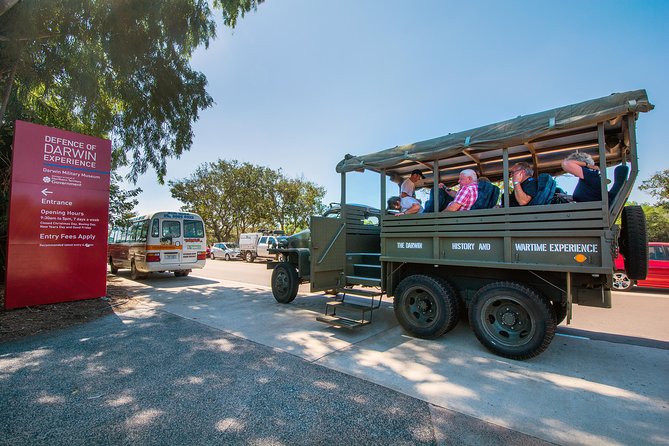
Darwin’s past feels close when you ride through town in Betty, a restored World War II Studebaker truck. The 80-minute trip links early explorers, the 1942 Japanese air raids, the city’s wartime role, and Cyclone Tracy with the places passing your seat.
I like the period vehicle, which gives the tour a real sense of place, and I like the clear, continuous commentary, supported by 1940s music and period speeches. The main consideration is comfort and access: you must climb five steps, and the open, historic vehicle is not the same as a modern air-conditioned coach.
The optional East Point Military Museum adds useful context, especially if you want displays and outdoor exhibits after the drive. Museum admission costs extra, and you need to tell the operator when booking if you plan to get off and rejoin a later bus.
In This Review
- Key points to know before you book
- Why a World War II truck changes the Darwin tour
- The 80-minute route through Darwin’s past
- The 1942 bombing, explained from the streets
- Early explorers, postwar Darwin, and Cyclone Tracy
- Adding East Point Military Museum
- What the $42 price buys you
- Comfort, access, and practical planning
- Who will get the most from this experience
- My booking advice
- FAQ
- Where does the Darwin History and Wartime Experience Tour begin?
- Where does the tour finish?
- How long does the main tour last?
- What vehicle is used for the tour?
- Is the East Point Military Museum included?
- Can I leave the tour to visit the museum and rejoin later?
- Is the tour suitable for everyone?
Key points to know before you book
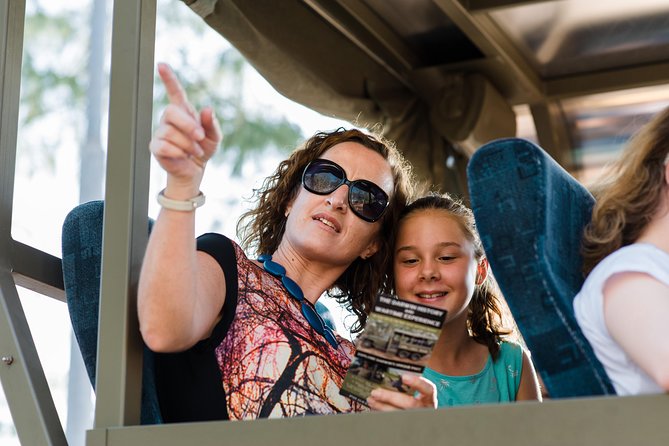
- Ride in Betty, a World War II Studebaker: The truck is the heart of the experience and gives the tour a character a standard city bus cannot match.
- Hear Darwin’s story as you drive: Commentary covers early exploration, the 1942 bombing, wartime transport, shipping losses, and Cyclone Tracy.
- Add East Point Military Museum: Adults pay $20, seniors $15, and children aged 5 to 15 pay $10.
- Expect a small group: The vehicle carries a maximum of 18 people, which helps the guide keep the narration personal.
- Allow 80 minutes for the main tour: You return to the Top End Visitor Information Centre at 6 Bennett Street.
- Plan for five steps: Most people can take part, but you must be able to climb into and out of the truck.
Why a World War II truck changes the Darwin tour
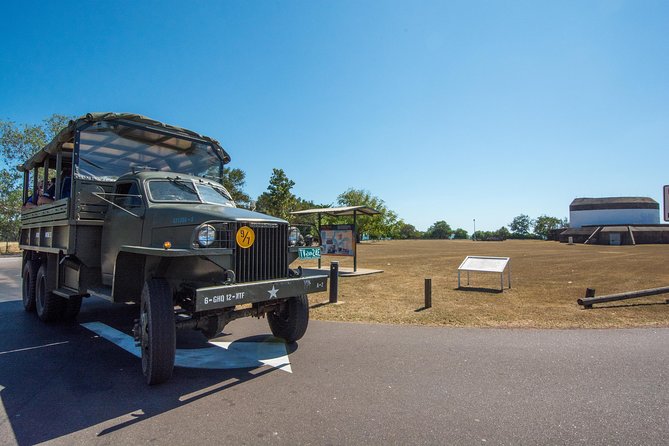
You can see Darwin by modern bus, but the old Studebaker changes how you read the city. Sitting in a vehicle built for the era makes wartime stories feel less remote. The truck is not just transport between sights. It sets the mood before the guide begins speaking.
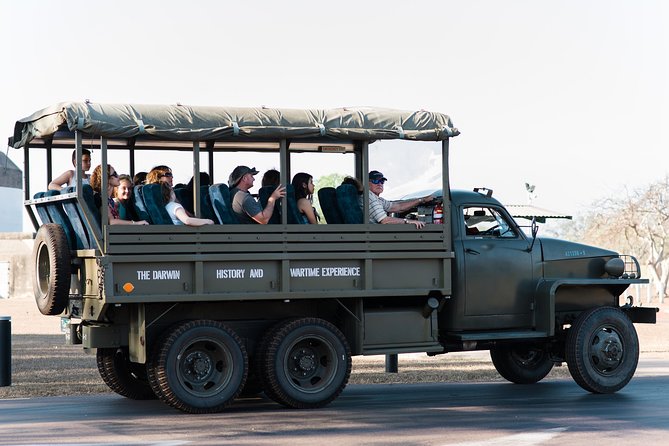
The vehicle is known as Betty, and it has been restored and fitted with upgraded seating. The result is a historic ride that remains reasonably comfortable for a short city circuit, though you should not expect the quiet, smooth suspension of a new coach.
The truck also helps families and history fans stay focused. A 15-year-old may not be keen on a long museum lecture, but an old army vehicle, period music, and a moving tour give the subject some life. At the same time, the content is broad enough for anyone who simply wants a useful introduction to Darwin.
The maximum group size is 18. That matters because the tour depends heavily on spoken commentary. A small vehicle makes it easier to hear the guide, and you can ask questions without trying to catch someone’s attention across a large coach.
A few more Darwin trips to weigh up
- Bombing of Darwin WWII Heritage Tours
★ 5.0 · 261 reviews - Darwin Heritage Walk
★ 4.5 · 101 reviews - Darwin: Small Group 2-Hour Heritage Walk
★ 4.9 · 28 reviews
The 80-minute route through Darwin’s past
The tour begins at the Top End Visitor Information Centre on Bennett Street in Darwin City. From there, you settle into Betty and listen as the guide frames the city’s story.
This is not a hop-on, hop-off sightseeing route with a long list of formal stops. Most of the experience happens from your seat while the truck moves through Darwin. The guide points out places tied to the city’s past and explains what happened there or nearby.
The wartime section receives the most attention. You hear about the Japanese attacks on Darwin in 1942, including the damage to the town and the losses in Darwin Harbour. The talk also covers the military and civilian effects, which is important because the bombing was not only a military event. It changed daily life, transport, shipping, and the future of the town.
The commentary also reaches beyond the war. Early explorers and the origins of Darwin help explain how the settlement developed before the attacks. Later, the story moves to Cyclone Tracy, the disaster that reshaped the city after the war.
I like this wider time span. If you only want aircraft, weapons, and battle dates, the tour may feel broader than expected. If you want to understand Darwin as a living city, the mix works well. You get the wartime chapter, but you also see how the city’s story continued through rebuilding and major change.
The guide’s delivery is a major part of the value. The narration is live and continuous, with dates, locations, and anecdotes woven into the drive. Guides such as Dave have been praised for answering questions and presenting the material without a stiff, scripted feel. The operator also uses 1940s music and speeches from prime ministers and presidents of the period to support the setting.
The 1942 bombing, explained from the streets
Darwin’s wartime story can be easy to miss if you only visit the main town centre. The tour gives you a framework for understanding why Darwin mattered and how the attacks affected the city.
As you pass places connected with the war, the guide explains the strategic importance of the Top End and the scale of the Japanese air raids. The stories include shipping losses in Darwin Harbour, an especially useful detail if you know little about the attacks.
The truck makes this section more than a list of facts. You are seated in a vehicle associated with the same period, listening to period audio while moving through the city that carries the story. It does not recreate combat, and it should not be treated as a theme-park performance. Its strength is simpler: the setting helps you pay attention.
The tone can also be serious. The tour deals with loss, fear, and the disruption caused by war. That is appropriate, but families with young children should know that this is a history lesson with difficult subjects, not just a fun ride in an old truck.
The guide connects military events with ordinary life. That wider view is one reason I would suggest taking the tour early in your stay. It gives you background for later visits around Darwin, and it helps you notice details that might otherwise pass without meaning.
Early explorers, postwar Darwin, and Cyclone Tracy
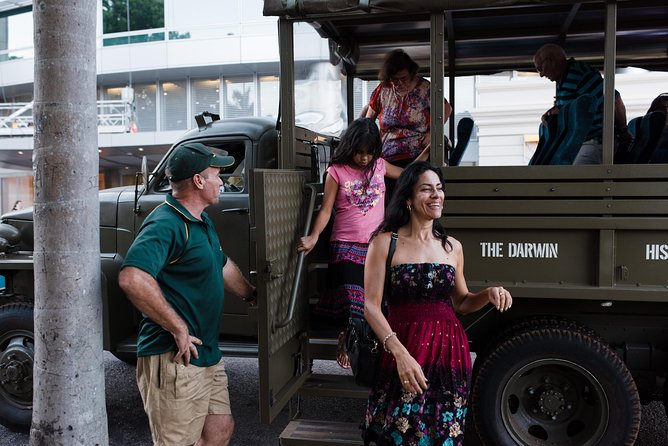
The tour does not stop in 1945. Its account of Darwin begins with early explorers and continues into the postwar years.
That broader timeline gives you a better sense of how Darwin developed. You are not simply hearing about an attack in isolation. The guide places the wartime period between the city’s early beginnings and its later recovery.
Cyclone Tracy is another key chapter. The storm devastated Darwin in 1974 and remains central to the city’s modern identity. Including it alongside the 1942 bombing shows how Darwin has had to rebuild after more than one major disaster.
For first-time visitors, this is useful orientation. You get more than a military tour. You get an introduction to the forces that shaped the city, from exploration and defence to natural disaster and rebuilding.
The scope does mean the commentary moves quickly. In 80 minutes, no subject can receive the depth of a full museum visit. I see the tour as a strong overview rather than the final word on any one event. History fans who want detailed artefacts, documents, or long periods inside galleries should add the museum.
Same coast, a completely different day out:
- Litchfield National Park and Jumping Crocodile Cruise
★ 5.0 · 2,119 reviews - Adelaide River Cruises – Jumping Crocodile Experience
★ 5.0 · 997 reviews - Sunset 3-Hour Cruise from Darwin with Dinner and Sparkling Wine
★ 5.0 · 980 reviews - From Darwin: Litchfield Park Tour & Jumping Crocodile Cruise
★ 4.9 · 829 reviews
Adding East Point Military Museum
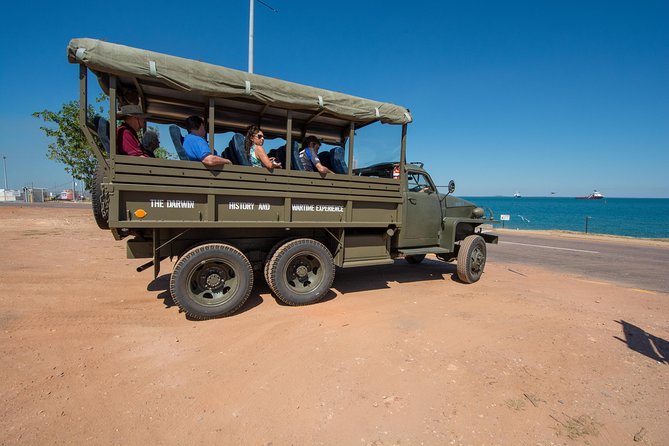
The museum stop is optional and costs extra. Adult admission is $20, seniors pay $15, children aged 5 to 15 pay $10, and children under 5 enter free.
If you choose this add-on, tell the operator when you book. The bus can arrange to collect you later, but you should not simply decide at the last moment and assume the vehicle will wait.
The East Point Military Museum gives the wartime section a physical follow-up. The drive explains places and events around Darwin. The museum lets you spend more time with military displays and outdoor exhibits, including the shaded grounds of the old museum.
I would add it if you have the time and a real interest in military history. It is also a good choice if the drive leaves you wanting more detail. The stop turns a short city tour into a fuller half-day-style outing, depending on how long you spend there.
The extra cost is reasonable for the right audience, but it changes the value calculation. At $42, the main tour is a compact introduction. Once you add museum admission, you are paying more for a fuller history experience. That makes sense for a committed history fan, while a casual visitor may prefer the truck ride alone.
The shaded outdoor grounds are a useful detail in Darwin’s heat. You can wander there after getting off, but a small amount of walking is involved, so wear sensible shoes and bring water if you plan to explore beyond the main displays.
What the $42 price buys you
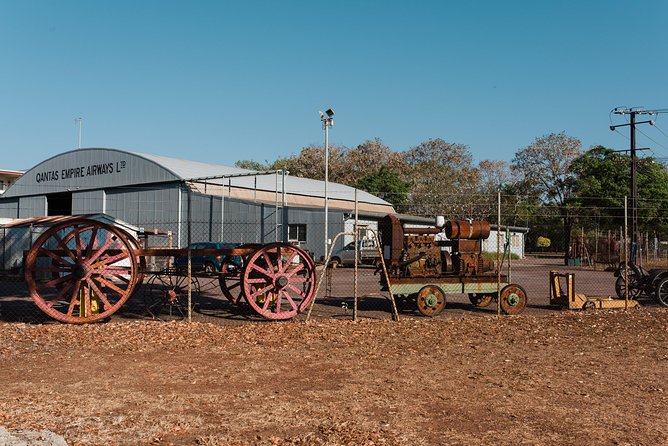
The main tour costs $42 and lasts about one hour and 20 minutes. That works out to a fair price if you want a guided introduction to Darwin without spending half a day on a large sightseeing coach.
Your fare includes local taxes, a professional driver-guide, and live commentary. Food and drinks are not included, though you may bring personal food and non-alcoholic drinks aboard. Alcohol and cigarettes are prohibited on the vehicle.
The best value comes from the combination of transport and interpretation. You are not paying only to sit in an old truck. You are paying for a guide who explains what you are seeing and connects separate parts of Darwin’s past.
I would compare it with a self-guided visit this way: walking or driving yourself may cost less, but you would need to research the sites and build your own route. The tour saves time and gives you a clear story in one sitting. If your stay in Darwin is short, that efficiency matters.
It is less valuable if you dislike vehicle tours or already know Darwin’s wartime history in detail. The route is compact, and most information comes through the spoken narrative rather than extended stops. You should choose it for the guide’s interpretation and the unusual truck, not for a long list of photo breaks.
Comfort, access, and practical planning
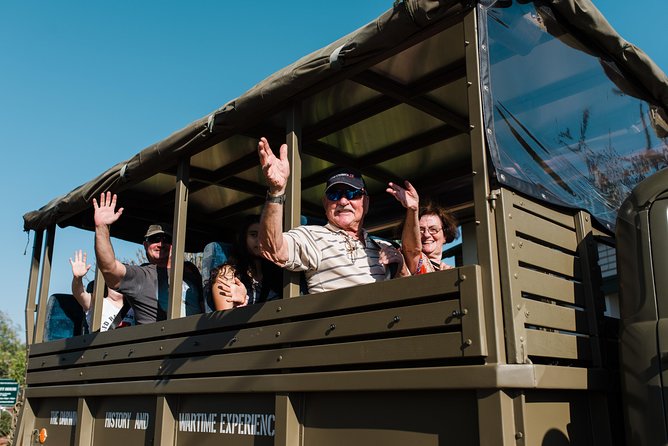
The vehicle holds no more than 18 people, but space is still limited compared with a modern coach. You must be able to ascend and descend five steps. A small amount of walking is involved, particularly if you visit the museum.
Child booster seats can fit, but families must provide their own. Service animals are allowed, and the tour operates near public transport.
The activity is subject to favourable weather. Darwin’s conditions can change, and poor weather may lead to a different date or a full refund. Minimum numbers also apply, so the operator may cancel if too few people book. In that case, you receive an alternative option or a full refund.
You can cancel free of charge up to 24 hours before the start time. Cancellation or changes inside that 24-hour window are not accepted for a refund. Cut-off times use Darwin local time.
I would book with a little flexibility if your schedule allows. That is especially sensible during unsettled weather or when you are arranging the museum add-on.
Who will get the most from this experience
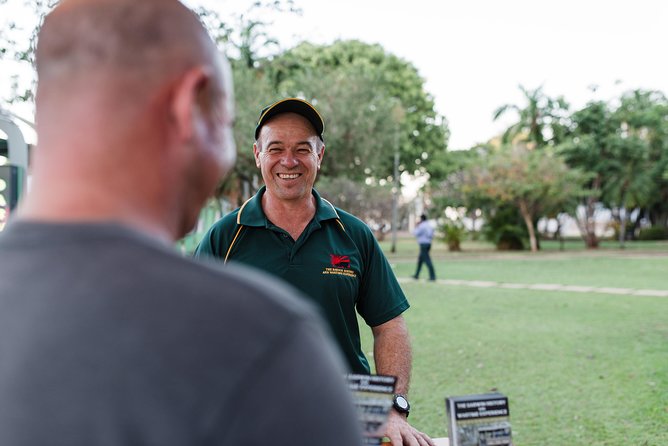
This tour suits you best if you fall into one of these groups:
- You want a clear introduction to Darwin soon after arrival.
- You have an interest in World War II and the bombing of Darwin.
- You enjoy unusual transport and period vehicles.
- You have limited time and want a guided city overview.
- You are travelling with an older child or teenager who may respond well to the truck.
- You want to connect military history with the wider story of Darwin.
It also suits people with a family connection to wartime transport or the evacuation of Darwin. The personal setting can make the subject especially meaningful.
I would be more cautious if you need step-free access, prefer a fully enclosed modern vehicle, or want to spend most of your time inside museum galleries. The truck is part of the appeal, but it also sets limits on access and comfort.
My booking advice
I would book this as an early Darwin activity, especially if you have only a short stay. The tour gives you a quick mental map and explains why the city looks and feels the way it does.
Choose the museum option if you want more than an overview. The extra admission is worthwhile for a serious history fan, and the later pickup means you can explore rather than rushing back to the meeting point.
At $42, the main experience offers good value for its small group, live guide, period truck, and broad historical scope. Book it for a personal, story-led introduction to Darwin, not as a full museum replacement. If five steps are manageable and you enjoy history with a little character, this is an easy recommendation.
FAQ
Where does the Darwin History and Wartime Experience Tour begin?
The tour begins at the Top End Visitor Information Centre, 6 Bennett Street, Darwin City, Northern Territory 0800.
Where does the tour finish?
The activity ends back at the meeting point at the Top End Visitor Information Centre.
How long does the main tour last?
The main tour lasts approximately one hour and 20 minutes.
What vehicle is used for the tour?
The tour uses a restored World War II Studebaker truck, known as Betty.
Is the East Point Military Museum included?
No. Museum admission is separate. Adults pay $20, seniors pay $15, children aged 5 to 15 pay $10, and children under 5 enter free.
Can I leave the tour to visit the museum and rejoin later?
Yes, but you must tell the operator when booking if you intend to get off at the museum so a later pickup can be arranged.
Is the tour suitable for everyone?
Most people can participate, but you must be able to climb five steps. A small amount of walking is involved, and child booster seats must be supplied by families.
Just added around Darwin
- Kakadu National Park Wildlife & Ubirr Rock Art Tour from Darwin★ 4.5 · 101 reviews
- Jabiru 30 minute Scenic Flight★ 5.0 · 68 reviews
- Arnhem Land Yingana Injalak Hill Full Day Tour from Jabiru★ 5.0 · 132 reviews
- Kakadu Adventure Tour★ 4.0 · 26 reviews
- Bombing of Darwin World War II Tour with Harbour Cruise★ 4.5 · 219 reviews
- Tiwi Islands Cultural Experience from Darwin Including Ferry★ 4.0 · 97 reviews
- 1-Hour Thunderball WWII Adventure Jet Skiing in Darwin★ 5.0 · 70 reviews
- Darwin Combo: The Bombing of Darwin Experience & Darwin Harbour Cruise★ 4.5 · 123 reviews
Historical Tours, compared.

Ultimate Melbourne Walking Tour: History, Laneways & Culture
Read our review →
Puffing Billy Railway: Heritage Steam Train Journey
Read our review →
Morning World Heritage Cruise on the Gordon River from Strahan
Read our review →
Strahan: World Heritage Cruise on Gordon River with Lunch
Read our review →

Experience History onboard The Mary Valley Rattler
Read our review →
Snorkel & Dive the Reef: Sustainable, Scientific & Cultural Tour
Read our review →
Derwent River Historic Harbour Cruise From Hobart
Read our review →Browse the lists this tour appears in