
Reviewed · ULURU & OUTBACK TOURS
Full Uluru Base Walk at Sunrise Including breakfast
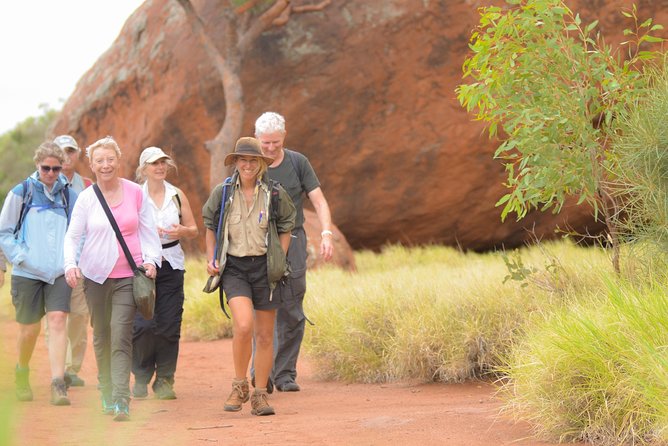
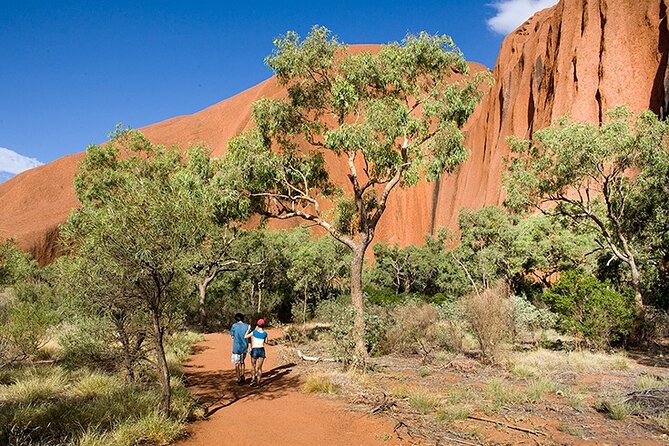
Uluru changes as you walk around it. From a distance, the rock can seem like one smooth red shape. Up close, you find shaded caves, waterholes, ancient rock art, cracks, folds, and quiet corners that reveal its great size. This sunrise tour gives you the full 12-kilometre base walk, not just a lookout stop.
I like the early start for two good reasons: the air is cooler, and a small group makes it easier to hear the guide. Guides including Rachel, Lucy, Flo, Andy, and Graham have been praised for clear storytelling about Anangu culture, Tjukurpa creation stories, plants, animals, and geology. The main consideration is the breakfast. It is a practical trail snack pack, not a cooked meal served at a table, and you carry it as you walk.
In This Review
- Key points to know
- Why the full base walk is worth your morning
- Hotel pickup and the quiet road to the park
- Sunrise at Uluru, with cultural care
- The Mala Walk and Kantju Gorge
- Kuniya, Liru, and Mutitjulu Waterhole
- What you actually get for breakfast
- Pace, surface, and how hard the walk feels
- Why a small group improves this Uluru experience
- The guides shape the day
- Price, timing, and who gets the best value
- Weather, cancellations, and practical limits
- Should you book the full Uluru sunrise walk?
- FAQ
- How long is the Uluru base walk?
- What time does the tour begin?
- Is the walking route difficult?
- Is breakfast included?
- Is the Uluru park entry fee included?
- How many people are in the group?
- What happens if the tour is canceled because of bad weather?
Key points to know
- A full 12-kilometre circuit: You walk around the entire base of Uluru on mostly flat, marked ground.
- A pre-sunrise start: Hotel pickup gets you moving in the coolest and quietest part of the morning.
- Small groups matter: The maximum is 15 people, with many departures running at around six to eleven.
- Cultural stories are central: Hear Tjukurpa stories connected with Kuniya, Liru, and the Mala people.
- Breakfast is portable: Expect simple energy food, fruit, drinks, and hot water for tea or coffee in a supplied satchel.
- Budget for the park fee: The adult Uluru-Kata Tjuta National Park entry charge is an additional A$38 and lasts 72 hours.
Why the full base walk is worth your morning
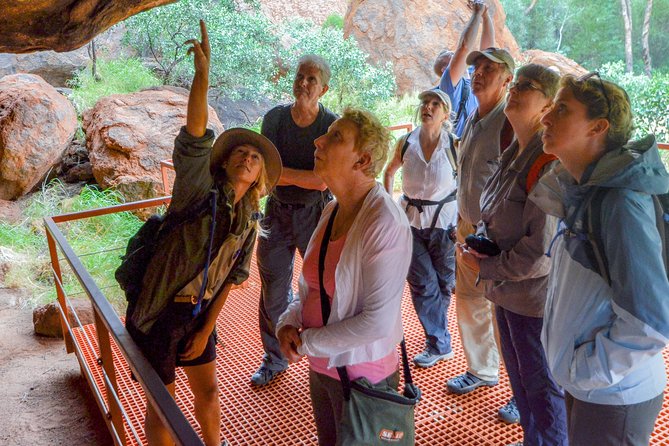
The best reason to choose this outing is simple: it lets you see Uluru at walking pace. A short stop at a viewing area gives you the famous outline. The base trail gives you the detail.
The route covers about 7.5 miles, or 12 kilometres. It is generally flat and follows a marked path, so the challenge comes from distance, heat, sun, and the occasional sandy section rather than steep climbing. You should have a moderate level of fitness, comfortable walking shoes, sunscreen, and enough water.
The timing is a smart part of the plan. You leave your Ayers Rock Resort accommodation before sunrise, enter Uluru-Kata Tjuta National Park, and begin the walk just before daylight. The first part can feel cold, especially in the cooler months. Later, the sun can make the same easy path feel much harder.
I would wear layers that you can remove and carry. Several sections remain shaded after sunrise, so do not assume the desert will warm up at once. You should also use toilets whenever you reach them, since facilities are not beside every part of the circuit.
More Uluru & Outback Tours in Uluru
- Uluru: Field of Light Sunrise Tour with Hot Drinks
★ 4.6 · 572 reviews - Uluru 15-Minute Helicopter Experience
★ 4.9 · 548 reviews - Yulara: Uluru & Kata Tjuta 25-Minute Helicopter Experience
★ 4.8 · 536 reviews
Hotel pickup and the quiet road to the park
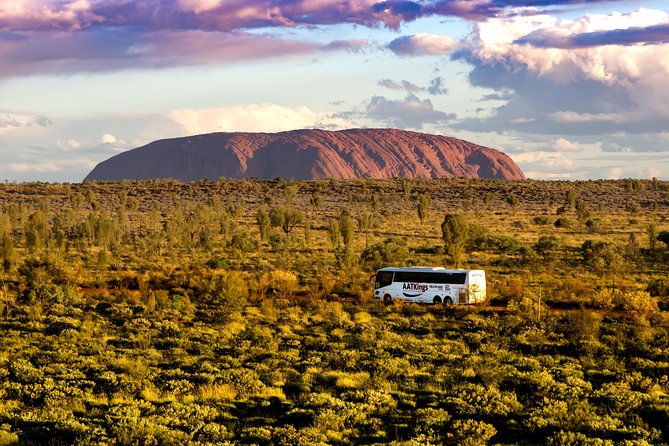
The tour collects you from your Ayers Rock Resort accommodation in an air-conditioned Mercedes-Benz Sprinter. That transfer matters at this hour. You do not need to drive in the dark, find the park entrance, or work out the best starting point while half-awake.
Your guide handles the park entry. The adult entry fee is not included, and the listed cost is A$38 per person. You can buy the pass online before arriving or purchase it through the guide in the morning. It remains valid for 72 hours, which can be useful if you plan another visit to the park soon.
The tour price is $171.42 per person, before the entry fee. That is not a bargain-priced park transfer, but it pays for a six-hour outing, transport, a guide, a small group, and the complete base circuit. If you have limited time around Yulara, the value is stronger because one morning covers Uluru’s major walking areas and cultural stops.
If you have a rental car, you can walk the base trail independently. The guided option earns its cost through the stories and explanations. A phone app or self-guided route can help you follow the path, but it cannot answer questions or explain why a particular cave, waterhole, or stretch of rock matters.
Sunrise at Uluru, with cultural care
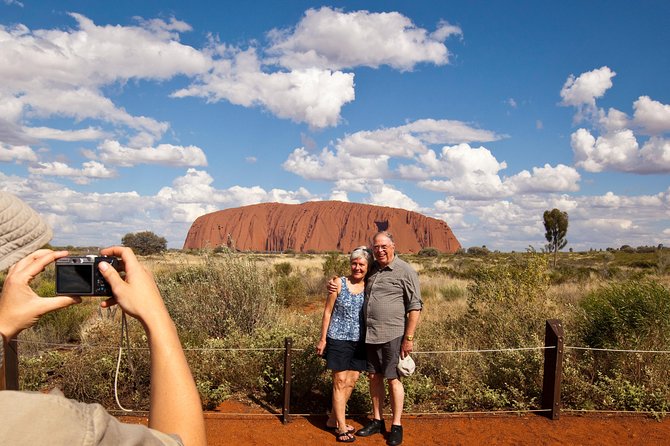
The sunrise portion may not look exactly like the postcard image you expect. The walk begins in an area with cultural sensitivities, and photography may be restricted in certain places. One part of the experience can involve watching the light change without taking photos of the rock, so be ready to follow local guidance.
That is not a flaw in the tour. It is part of visiting Uluru respectfully. Your guide explains where photography is allowed and where it is not. Keep your camera away when asked, and you will pay closer attention to the changing light, the shape of the rock, and the sounds around you.
The guides give the morning a human focus. Rachel has been praised for using diagrams and pictures to make the creation stories easier to follow. Lucy is known for an engaging manner and a brisk pace with regular stops. Flo has been described as energetic and clear, while Andy has been praised for mixing humor with useful facts.
Guide quality can vary from one departure to another, as it does on any guided outing. The strongest reports describe guides who keep the group together, explain the cultural material with respect, and make time for questions. One useful point to know is that a guide may begin speaking before every person has reached the stopping point, so stay close if you want to catch every detail.
The Mala Walk and Kantju Gorge
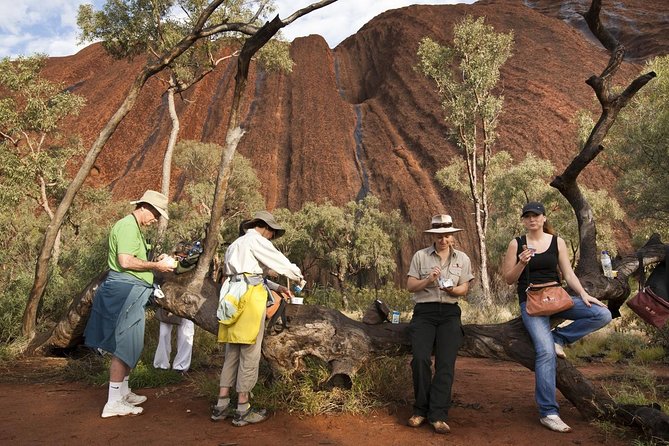
One of the first important areas is the Mala Walk toward Kantju Gorge. Here, the guide introduces stories connected with the Mala people and points out features in the rock and surrounding country.
The value of this stop is not just visual. Uluru is an important cultural place for the Anangu people, and the rock is understood through Tjukurpa, often described as Creation Time stories. These accounts connect people, animals, landforms, law, and proper behavior. Your guide helps place what you see into that wider cultural setting.
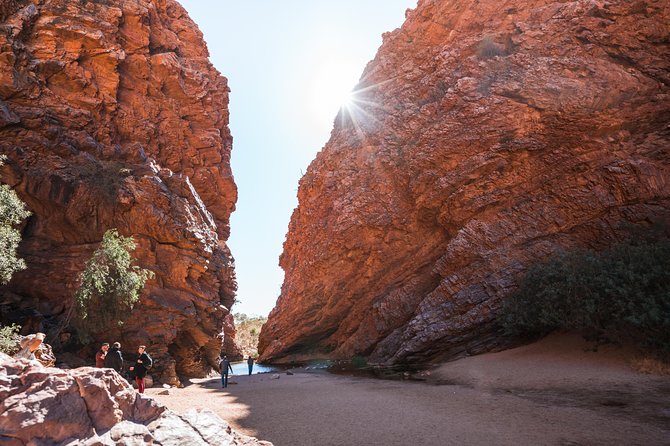
Kantju Gorge also shows why the base walk is more rewarding than a distant view. You can look closely at the rock’s vertical walls, shaded spaces, and changes in texture. The route is not a mountain hike, but it keeps giving you new angles on a familiar icon.
Same coast, a completely different day out:
- Yulara: Uluru Sunrise and Kata Tjuta Day Trip by Bus
★ 4.5 · 469 reviews - Uluru: Sacred Sites & Sunset Tour with Wine & Cheeseboard
★ 4.5 · 450 reviews - Segway the FULL base of Uluru
★ 5.0 · 449 reviews - Uluru (Ayers Rock) Sunset + Outback Barbecue Dinner & Star Talk
★ 4.0 · 426 reviews
Kuniya, Liru, and Mutitjulu Waterhole
Later, the walk leads toward Mutitjulu Waterhole, with stories of Kuniya, the woma python, and Liru, the venomous snake. These stories are tied to specific places, so you hear them while looking at the rock formations they help explain.
This is where a good guide makes a real difference. The cultural material is not a loose collection of legends delivered on a bus. It is linked to the route, the waterhole, the rock, and the responsibilities associated with the place.
The waterhole is also a welcome pause on a long walk. You may see a different side of Uluru here, with more shade and a calmer sense of space. The tour description includes waterholes and ancient rock-art sites along the circuit, though the amount of time at each point depends on the group’s pace and the guide’s plan.
Some areas may have photography rules. Do not treat every striking wall or painting as a photo opportunity. The guide’s instructions are part of the visit, not an interruption to it.
What you actually get for breakfast
Breakfast is carried in a supplied satchel, so you are not stopping at a permanent café or sitting down to a cooked spread. The pack is designed for a long walk in a hot, remote setting.
Based on the food described for this experience, you can expect simple items such as a bar or granola-style snack, biscuits, fruit, juice, milk, and water. Hot water is provided for tea or coffee, and some departures may also offer hot chocolate. The exact contents can vary, so tell the operator about dietary needs when booking.
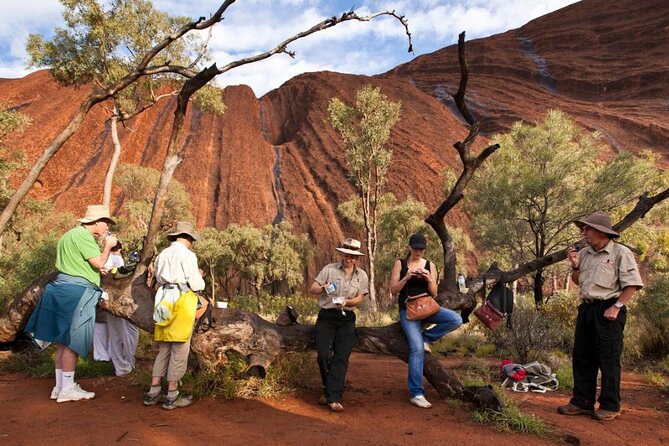
I see the breakfast as fuel rather than a feature meal. It is handy to have food early in the morning, and several walkers appreciated the chance to stop, eat, and listen to the desert sounds. If you want a larger breakfast, bring extra snacks of your own. You will carry the satchel during the walk, which is worth remembering when packing light.
The portable format also explains why the meal is simple. A full setup would take time, space, and extra equipment. Here, the priority is getting you around the base while the air is still cool.
Pace, surface, and how hard the walk feels
Do not let the word flat fool you. Twelve kilometres is a substantial morning, even without hills.
The trail is mostly even and easy to follow, but sandy sections can slow you down. Some guides keep a brisk pace to complete the circuit in about five hours of walking, with stops for stories, views, waterholes, and breakfast. You need enough stamina to walk for several hours and return to the vehicle without exhausting yourself.
Comfortable walking shoes are essential. Bring sunscreen and water, and wear a hat if you use one. The desert can shift from cold before sunrise to hot in direct sun, so layers are more useful than one heavy jacket.
The tour is not suited to anyone looking for a short stroll. It is also not a technical hike, and the path is not described as treacherous. If you can comfortably walk 12 kilometres on an ordinary day, you should find the route manageable, provided you prepare for heat and keep your own pace in mind.
Why a small group improves this Uluru experience
The maximum group size is 15, and many departures are much smaller. Groups of six, eight, or even three have been reported for this experience. That changes the feel of the morning.
A small group makes it easier to hear stories in the wind and ask a question without holding up a busload of people. It also lets the guide notice if someone needs a short pause or has missed an explanation. You still need to keep up with the group, but the outing feels less like a procession.
The small-group format is especially useful for the cultural side of the tour. Tjukurpa stories deserve attention, and a guide can use pictures, diagrams, and gestures more effectively when the group is gathered close.
The trade-off is that a brisk group pace may not suit everyone. One guide may pause often, while another may keep the walk moving. If you prefer a very slow, stop-and-start outing, ask about the expected pace before booking.
The guides shape the day
The strongest part of this tour is the human interpretation. Guides such as Rachel, Lucy, Flo, Andy, Graham, Lucia, Emily, Pete, Lily, and Trent are named in the feedback connected with different departures. Their approaches differ, but the repeated strengths are friendliness, clear explanations, respect for Anangu culture, and storytelling tied to the places along the route.
Rachel is praised for bringing stories to life with visual aids. Lily has been noted for explaining local plants and animals. Pete is described as friendly and well informed, while Trent kept a sensible pace and focused on Uluru’s cultural importance.
You should not book expecting one particular guide unless the operator confirms that person for your date. Still, these details show what the guiding is meant to provide: more than directions around a path. The guide connects geology, environment, history, and culture as you walk.
The experience has an overall rating of 4.8 from 408 reviews, with 95 percent recommending it. Those figures suggest a reliable outing, but they do not remove the practical caveats about the distance, breakfast, pace, or weather.
Price, timing, and who gets the best value
At $171.42 per person, plus the A$38 adult park fee, this is a sizeable morning expense. I think it offers good value if you want a guided, all-around introduction to Uluru and do not have much time in Yulara.
You receive hotel transfers, an air-conditioned vehicle, a professional guide, the full base walk, and portable breakfast supplies. The tour lasts about six hours, including transport and the walk. For a first visit, that is a lot of ground and context in one outing.
The value is weaker if you already have a car, plenty of time, and a strong interest in walking independently. The base trail can be done without this tour, and an independent walker avoids the guide fee and group schedule. You also lose the spoken cultural stories and the help with park entry.
I would choose this tour if you want the morning organized from start to finish, especially if you are staying at Ayers Rock Resort without a car. I would skip it only if 12 kilometres feels excessive, you want a substantial sit-down breakfast, or you prefer complete control over your pace.
Weather, cancellations, and practical limits
The experience requires suitable weather. If poor conditions cause cancellation, you are offered another date or a full refund. It also requires a minimum number of participants, so a cancellation is possible if that number is not reached.
For your own booking, cancellation is generous only when handled early. Cancel at least six full days before the start time for a full refund. Cancellations two to six full days beforehand receive 50 percent, while cancellations less than two full days before the start time are not refunded. The cut-off uses local time.
Dietary requirements should be provided when booking. The walk involves a moderate amount of walking on an even surface, but the length still calls for preparation. Mobile tickets are accepted, and hotel pickup is offered from Ayers Rock Resort accommodation.
Should you book the full Uluru sunrise walk?
Book it if you want to understand Uluru from close range, have the fitness for 12 kilometres, and value a guide who can explain Anangu culture and Tjukurpa stories as the places appear. The early hour is a gift in the Red Centre: cooler air, softer light, and fewer distractions.
Go independently if you have a car, several days, and the confidence to manage the trail, park pass, food, water, and timing yourself. The guided version is best for a first visit or a short stay. Just pack layers, sturdy shoes, sunscreen, extra water, and realistic expectations about the simple breakfast. The rock gives you the spectacle. The walking and storytelling give you the understanding.
FAQ
How long is the Uluru base walk?
The full base trail is approximately 12 kilometres, or 7.5 miles. The walking portion takes about five hours, within an overall tour duration of roughly six hours.
What time does the tour begin?
Your guide collects you before sunrise from your Ayers Rock Resort accommodation. The walk begins just before the sun rises.
Is the walking route difficult?
The route is mostly flat and follows an even, marked surface. Some sandy areas can be harder, and the 12-kilometre distance requires a moderate level of fitness.
Is breakfast included?
Yes. An outback picnic breakfast is included and carried in a supplied satchel. It consists of simple portable food and drinks, with tea or coffee available using hot water.
Is the Uluru park entry fee included?
No. Adults must pay the A$38 Uluru-Kata Tjuta National Park entry fee separately. The pass is valid for 72 hours.
How many people are in the group?
The maximum group size is 15 people. Some departures may have fewer participants.
What happens if the tour is canceled because of bad weather?
You will be offered a different date or a full refund if poor weather causes the experience to be canceled. A different date, another experience, or a full refund is also offered if the minimum number of participants is not reached.
More Morning in Uluru
- Uluru Base Segway Tour at Sunrise
★ 4.9 · 378 reviews - Kata Tjuta: Small Group Sunrise Tour with Picnic Breakfast
★ 4.7 · 113 reviews - Sydney: Harbour Sunrise Kayak Tour
★ 5.0 · 1,899 reviews - Sydney: Morning or Afternoon Harbour Sightseeing Cruise
★ 4.7 · 1,520 reviews
More Walking Tours in Uluru
- Best of Uluru – Segway and Walking Tour
★ 4.8 · 204 reviews - Sydney Opera House Official Guided Walking Tour
★ 4.5 · 3,770 reviews - From Sydney: Blue Mountains Tour with Waterfall Walk & Lunch
★ 4.8 · 2,400 reviews - Sydney The Rocks Guided Walking Tour
★ 5.0 · 1,546 reviews
Just added around Uluru
- Best of Uluru – Segway and Walking Tour★ 4.8 · 204 reviews
- King’s Canyon: 15-minute Scenic Helicopter Tour★ 4.9 · 78 reviews
- Kata Tjuṯa Sunset Tour with Sparkling Wine and Cheeseboard★ 4.3 · 54 reviews
- Kata Tjuta: Small Group Sunrise Tour with Picnic Breakfast★ 4.7 · 113 reviews
- Yulara: Uluru and Kata Tjuta Sunset Helicopter Tour★ 4.9 · 148 reviews
- From Yulara: Uluru Tour and Sunset BBQ★ 4.6 · 320 reviews
- From Yulara: 3-Hour Small Group Kata Tjuta Afternoon Tour★ 4.7 · 101 reviews
- Uluru: Uluru Base Segway Tour★ 4.6 · 112 reviews
Uluru & Outback Tours, compared.


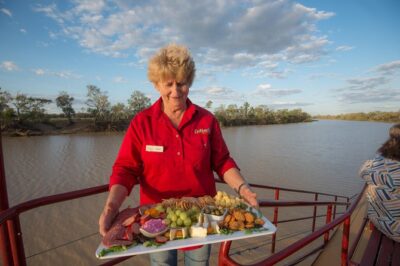
Drover’s Sunset Cruise includes Smithy’s Outback Dinner and Show
Read our review →
Ayers Rock Day Trip from Alice Springs Including BBQ Dinner
Read our review →
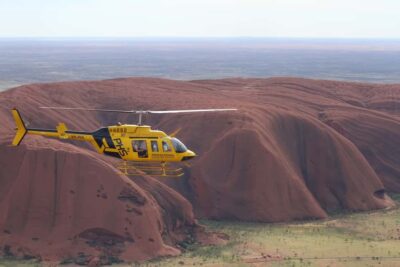
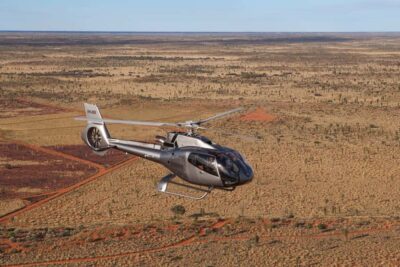
Uluru & Kata Tjuta 25-Minute Helicopter Experience
Read our review →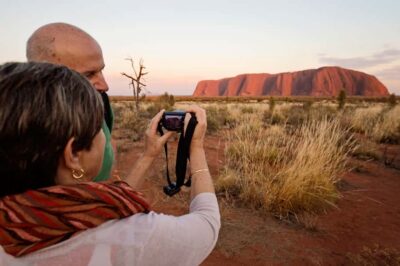
Browse the lists this tour appears in